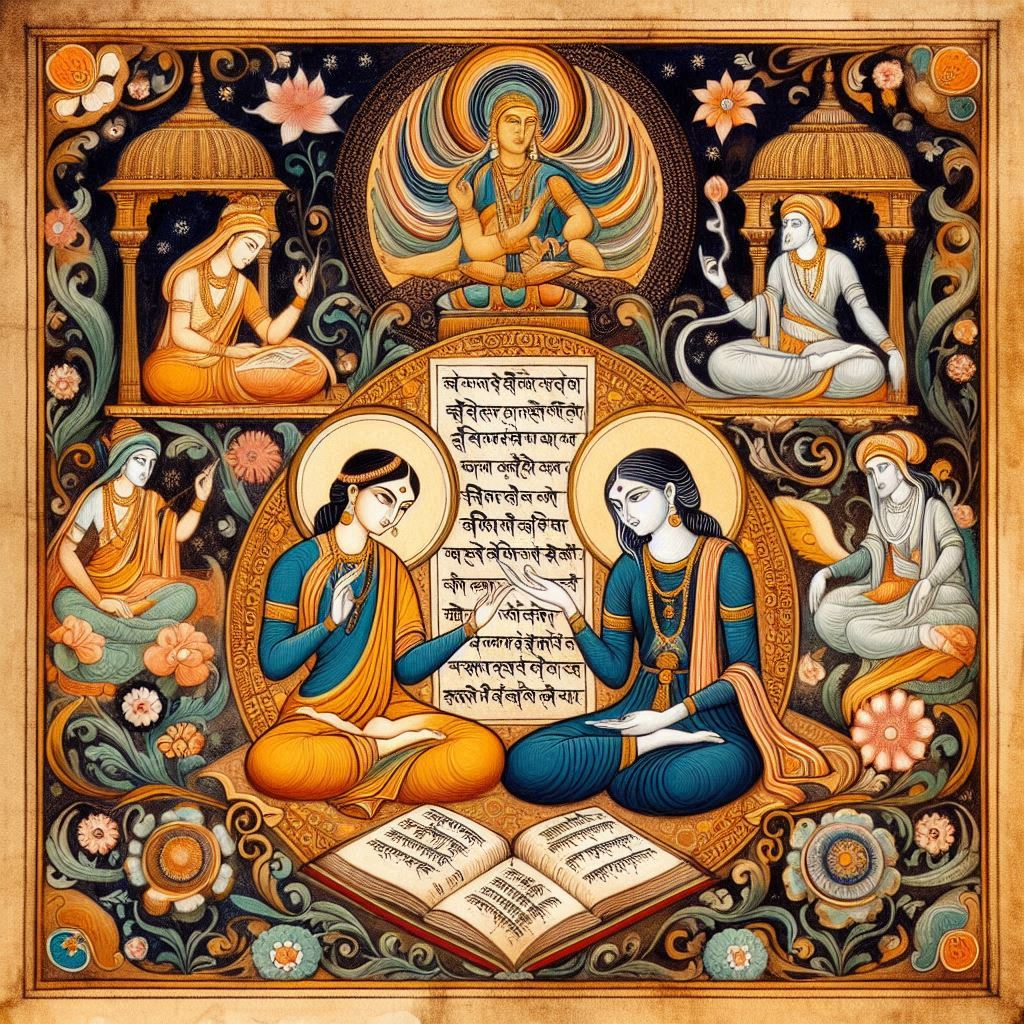
Verse#25
मूलपाठः (Actual Verse): भीमः- भोः कस्यायं स्वरः। खगशतविरुते विरौति तारं द्रुमगहने दृढसंकटे वनेऽस्मिन्। जनयति च मनोज्वरं स्वरोऽयं बहुसदृशो हि धनञ्जयस्वरस्य ।। 25 ।।
पदच्छेदः (Split of the Verse): भीमः, भोः, कस्य, अयम्, स्वरः। खगशतविरुते, विरौति, तारं द्रुमगहने, दृढसंकटे, वने, अस्मिन्। जनयति, च, मनोज्वरं, स्वरः, अयम् बहुसदृशः, हि, धनञ्जयस्वरस्य।
Word-by-Word Meaning:
- भीमः (Bhīmaḥ) – Bhima
- भोः (Bhoḥ) – Oh!
- कस्य (Kasya) – Whose
- अयम् (Ayam) – This
- स्वरः (Svaraḥ) – Sound
- खगशतविरुते (Khagaśatavirutē) – Amidst the chirping of hundreds of birds
- विरौति (Virauti) – Echoes
- तारं (Tāraṁ) – High-pitched
- द्रुमगहने (Drumagahanē) – In the dense forest
- दृढसंकटे (Dṛḍhasaṅkaṭē) – In the difficult situation
- वने (Vanē) – In the forest
- अस्मिन् (Asmin) – This
- जनयति (Janayati) – Generates
- च (Ca) – And
- मनोज्वरं (Manojvaraṁ) – Mental fever (anxiety)
- स्वरः (Svaraḥ) – Sound
- अयम् (Ayam) – This
- बहुसदृशः (Bahusadṛśaḥ) – Very similar
- हि (Hi) – Indeed
- धनञ्जयस्वरस्य (Dhanañjayasvarasya) – To the sound of Dhananjaya (Arjuna)
भावार्थः (Meaning of the verse): Bhima: “Whose sound is this? Amidst the chirping of hundreds of birds, a high-pitched sound echoes in this dense forest, in this difficult situation. This sound generates mental anxiety and is indeed very similar to the sound of Dhananjaya (Arjuna).”
Verse#25-Continued
मूलपाठः (Actual Verse): घटोत्कचः- चिरायते खलु ब्राह्मणवटुः। अतिक्रामति मातुराहारकालः। किं नु खलु करिष्ये। भवतु दृष्टम्। उच्चैः शब्दापयामि। भो मध्यम! शीघ्रमागच्छ।
पदच्छेदः (Split of the Verse): घटोत्कचः- चिरायते, खलु, ब्राह्मणवटुः। अतिक्रामति, मातुः, आहारकालः। किं, नु, खलु, करिष्ये। भवतु, दृष्टम्। उच्चैः, शब्दापयामि। भो, मध्यम! शीघ्रम्, आगच्छ।
Word-by-Word Meaning:
- चिरायते (Cirāyate) – Delays
- खलु (Khalu) – Indeed
- ब्राह्मणवटुः (Brāhmaṇavaṭuḥ) – Brahmin boy
- अतिक्रामति (Atikrāmati) – Passes
- मातुः (Mātuḥ) – Mother’s
- आहारकालः (Āhārakālaḥ) – Mealtime
- किं (Kim) – What
- नु (Nu) – Indeed
- खलु (Khalu) – Indeed
- करिष्ये (Kariṣye) – Shall do
- भवतु (Bhavatu) – Let it be
- दृष्टम् (Dṛṣṭam) – Seen
- उच्चैः (Uccaiḥ) – Loudly
- शब्दापयामि (Śabdāpayāmi) – I will call out
- भो (Bho) – Oh!
- मध्यम (Madhyama) – Middle one (referring to the middle brother)
- शीघ्रम् (Śīghram) – Quickly
- आगच्छ (Āgaccha) – Come
भावार्थः (Meaning of the verse): Ghatotkacha: “The Brahmin boy is indeed delayed. The mother’s mealtime is passing. What indeed shall I do? Let it be seen. I will call out loudly. Oh middle one! Come quickly.”