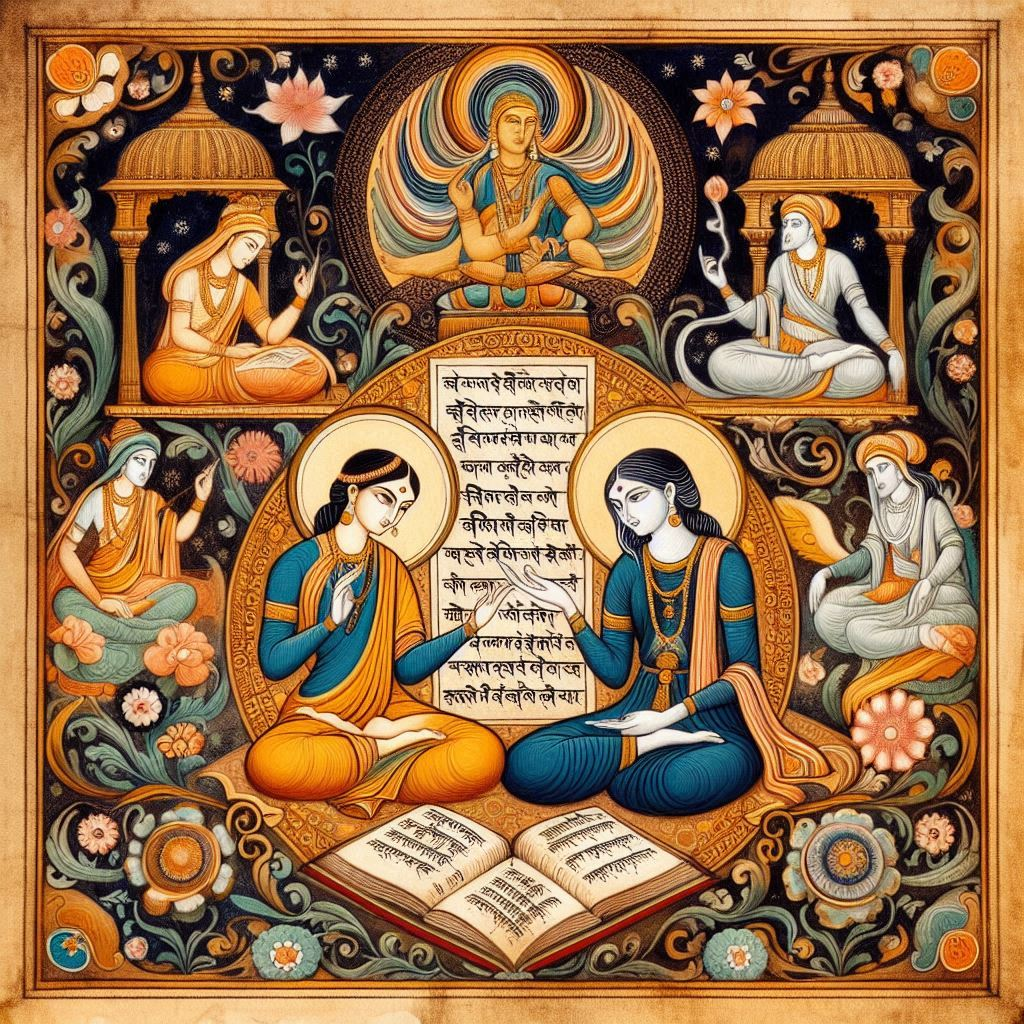
Verse:
आसीत् अशेष-नरपति-शिरः-समभ्यर्चित-शासनः पाकशासन इवापरः, चतुरुदधि-माला-मेखलाया भुवो भर्ता, प्रताप-अनुराग-अवनत-समस्त-सामन्त-चक्रः, कर्ता महाश्चर्याणाम्, आहर्ता क्रतूनाम्, आदर्शः सर्वशास्त्राणाम्, उत्पत्तिः कलानाम्, कुलभवनं गुणानाम्, आश्रयो रसिकानाम्, राजा शूद्रको नाम ॥
Split of the Verse:
आसीत् अशेष-नरपति-शिरः-समभ्यर्चित-शासनः पाकशासन इव अपरः, चतुर्-उदधि-माला-मेखलाया भुवः भर्ता, प्रताप-अनुराग-अवनत-समस्त-सामन्त-चक्रः, कर्ता महाश्चर्याणाम्, आहर्ता क्रतूनाम्, आदर्शः सर्व-शास्त्राणाम्, उत्पत्तिः कलानाम्, कुल-भवनं गुणानाम्, आश्रयः रसिकानाम्, राजा शूद्रकः नाम ॥
Word-by-Word Meaning:
- आसीत् = Was
- अशेष = All
- नरपति = Kings
- शिरः = Heads
- समभ्यर्चित = Worshipped
- शासनः = Rule
- पाकशासन = Indra (King of Gods)
- इव = Like
- अपरः = Another
- चतुर् = Four
- उदधि = Oceans
- माला = Garland
- मेखलाया = Girdle
- भुवः = Earth
- भर्ता = Lord
- प्रताप = Valor
- अनुराग = Affection
- अवनत = Bowed
- समस्त = All
- सामन्त = Feudatories
- चक्रः = Circle
- कर्ता = Doer
- महाश्चर्याणाम् = Great wonders
- आहर्ता = Performer
- क्रतूनाम् = Sacrifices
- आदर्शः = Ideal
- सर्व = All
- शास्त्राणाम् = Scriptures
- उत्पत्तिः = Origin
- कलानाम् = Arts
- कुल = Family
- भवनं = Abode
- गुणानाम् = Qualities
- आश्रयः = Refuge
- रसिकानाम् = Connoisseurs
- राजा = King
- शूद्रकः = Shudraka (Name)
- नाम = Named
भावार्थः (Meaning of the verse):
“There was a king named Shudraka, whose rule was worshipped by all kings, like Indra among gods. He was the lord of the earth girdled by the four oceans. His valor and affection made all feudatories bow to him. He was the doer of great wonders, performer of sacrifices, ideal of all scriptures, origin of arts, abode of qualities, and refuge of connoisseurs.”
Comparison of Shudraka with Dharma, Yama, Kubera, Agni, Earth, Lakshmi, Saraswati, Moon, Wind, Brihaspati, Kamadeva, Sun, & Lord Narayana
Verse:
यश्च मनसि धर्मेण, कोपे यमेन, प्रसादे धनदेन, प्रतापे वह्निना, भुजे भुवा, दृशि श्रिया, वाचि सरस्वत्या, मुखे शशिना, बले मरुता, प्रज्ञायां सुरगुरुणा, रूपे मनसिजेन, तेजसि सवित्रा च वसता, सर्वदेवमयस्य प्रकटित-विश्वरूप-आकृतेः अनुकरोति भगवतो नारायणस्य ॥
Split of the Verse:
यः च मनसि धर्मेण, कोपे यमेन, प्रसादे धनदेन, प्रतापे वह्निना, भुजे भुवा, दृशि श्रिया, वाचि सरस्वत्या, मुखे शशिना, बले मरुता, प्रज्ञायां सुरगुरुणा, रूपे मनसिजेन, तेजसि सवित्रा च वसता, सर्वदेवमयस्य प्रकटित-विश्वरूप-आकृतेः अनुकरोति भगवतः नारायणस्य ॥
Word-by-Word Meaning:
यः = Who
च = And
मनसि = In mind
धर्मेण = By righteousness
कोपे = In anger
यमेन = By Yama (god of death)
प्रसादे = In grace
धनदेन = By Kubera (god of wealth)
प्रतापे = In valor
वह्निना = By fire
भुजे = In arm
भुवा = By earth
दृशि = In sight
श्रिया = By Lakshmi (goddess of wealth)
वाचि = In speech
सरस्वत्या = By Saraswati (goddess of knowledge)
मुखे = In face
शशिना = By moon
बले = In strength
मरुता = By wind
प्रज्ञायां = In wisdom
सुरगुरुणा = By Brihaspati (teacher of gods)
रूपे = In form
मनसिजेन = By Kamadeva (god of love)
तेजसि = In brilliance
सवित्रा = By sun
च = And
वसता = By residing
सर्वदेवमयस्य = Of all gods
प्रकटित = Manifested
विश्वरूप = Universal form
आकृतेः = Form
अनुकरोति = Imitates
भगवतः = Of the Lord
नारायणस्य = Of Narayana (Vishnu)
भावार्थः (Meaning of the verse):
“Who, in mind, is righteous like Dharma, in anger like Yama, in grace like Kubera, in valor like fire, in arm like earth, in sight like Lakshmi, in speech like Saraswati, in face like the moon, in strength like the wind, in wisdom like Brihaspati, in form like Kamadeva, in brilliance like the sun, and who, residing in the universal form of all gods, imitates the manifested form of Lord Narayana.”
Beauty of City Vidisha
Verse:
तस्य च राज्ञो जल-अवगाहन-आयात-जयङ्कुञ्जर-कुम्भ-सिन्दूर-सन्ध्यायमान-सलिलया वेत्रवत्या सरिता परिगता विदिशा अभिधाना नगरी राजधान्यासीत् ॥
Split of the Verse:
तस्य च राज्ञः जल-अवगाहन-आयात-जयङ्कुञ्जर-कुम्भ-सिन्दूर-सन्ध्यायमान-सलिलया वेत्रवत्या सरिता परिगता विदिशा अभिधाना नगरी राजधान्या आसीत् ॥
Word-by-Word Meaning:
तस्य = His
च = And
राज्ञः = Of the king
जल = Water
अवगाहन = Immersion
आयात = Arrival
जयङ्कुञ्जर = Victorious elephant
कुम्भ = Forehead
सिन्दूर = Vermilion
सन्ध्यायमान = Resembling twilight
सलिलया = With water
वेत्रवत्या = By the Vetravati river
सरिता = River
परिगता = Surrounded
विदिशा = Vidisha (name of the city)
अभिधाना = Named
नगरी = City
राजधान्या = Capital
आसीत् = Was
भावार्थः (Meaning of the verse):
“The capital city of that king was Vidisha, which was surrounded by the Vetravati river, whose waters resembled the twilight hue of the vermilion on the forehead of a victorious elephant arriving for water immersion.”
A Youthful Monarch Shudraka’s Joyful Rule
Verse:
स तस्याम् अवजित-अशेष-भुवन-मण्डलतया विगत-राज्य-चिन्ता-भार-निर्वृतः, वलयमिव लीलया भुजेन भुवनभारम् उद्वहन्, अमरगुरुमपि प्रज्ञया उपहसद्भिः अनेक-कुल-क्रम-आगतैः असकृद्-आलोचित-नीति-शास्त्र-निर्मल-मनोभिः अलुब्धैः स्निग्धैः प्रबुद्धैः अमात्यैः परिवृतः, समान-वयो-विद्या-अलङ्कारैः अग्राम्य-परिहास-कुशलैः इङ्गिताकार-वेदिभिः केसरि-किशोरकैः इव विक्रमैकरसैः अपि विनयव्यवहारिभिः आत्मनः प्रतिबिम्बैः इव राजपुत्रैः सह रममाणः प्रथमे वयसि सुखम् अतिचिरम् उवास ।
Split:
स तस्याम् अवजित-अशेष-भुवन-मण्डलतया विगत-राज्य-चिन्ता-भार-निर्वृतः, वलयम्+इव लीलया भुजेन भुवन+भारम् उद्वहन्, अमर+गुरुम्+अपि प्रज्ञया उपहसद्भिः अनेक+कुल+क्रम+आगतैः असकृत्+आलोचित+नीति+शास्त्र+निर्मल+मनोभिः अलुब्धैः स्निग्धैः प्रबुद्धैः अमात्यैः परिवृतः, समान+वयः+विद्या+अलङ्कारैः अग्राम्य+परिहास+कुशलैः इङ्गित+आकार+वेदिभिः केसरि+किशोरकैः इव विक्रम+एक+रसैः अपि विनय+व्यवहारिभिः आत्मनः प्रतिबिम्बैः इव राज+पुत्रैः सह रममाणः प्रथमे वयसि सुखम् अतिचिरम् उवास ।
Meaning:
स = He
तस्याम् = In that
अवजित-अशेष-भुवन-मण्डलतया = By conquering the entire world
अवजित = Conquered
अशेष = Entire
भुवन = World
मण्डलतया = By the circle
विगत-राज्य-चिन्ता-भार-निर्वृतः = Relieved from the burden of royal worries
विगत = Relieved
राज्य = Kingdom
चिन्ता = Worries
भार = Burden
निर्वृतः = Relieved
वलयम्+इव = Like a bracelet
वलयम् = Bracelet
इव = Like
लीलया = Playfully
भुजेन = With his arm
भुवन+भारम् = The burden of the world
भुवन = World
भारम् = Burden
उद्वहन् = Bearing
अमर+गुरुम्+अपि = Even the teacher of the gods
अमर = Immortal (Gods)
गुरुम् = Teacher
अपि = Even
प्रज्ञया = By wisdom
उपहसद्भिः = Mocking
अनेक+कुल+क्रम+आगतैः = By many generations of families
अनेक = Many
कुल = Families
क्रम = Sequence
आगतैः = Arrived
असकृत्+आलोचित+नीति+शास्त्र+निर्मल+मनोभिः = By those whose minds are purified by repeatedly contemplating the scriptures of ethics
असकृत् = Repeatedly
आलोचित = Contemplated
नीति = Ethics
शास्त्र = Scriptures
निर्मल = Pure
मनोभिः = Minds
अलुब्धैः = Unattached
स्निग्धैः = Affectionate
प्रबुद्धैः = Enlightened
अमात्यैः = Ministers
परिवृतः = Surrounded
समान+वयः+विद्या+अलङ्कारैः = By those of similar age, education, and adornments
समान = Similar
वयः = Age
विद्या = Education
अलङ्कारैः = Adornments
अग्राम्य+परिहास+कुशलैः = Skilled in refined humor
अग्राम्य = Refined
परिहास = Humor
कुशलैः = Skilled
इङ्गित+आकार+वेदिभिः = Knowing gestures and expressions
इङ्गित = Gestures
आकार = Expressions
वेदिभिः = Knowing
केसरि+किशोरकैः = Like young lions
केसरि = Lion
किशोरकैः = Young
इव = Like
विक्रम+एक+रसैः = With the same valor
विक्रम = Valor
एक = One
रसैः = Essence
अपि = Even
विनय+व्यवहारिभिः = Conducting with humility
विनय = Humility
व्यवहारिभिः = Conducting
आत्मनः = Of himself
प्रतिबिम्बैः = Reflections
इव = Like
राज+पुत्रैः = With princes
राज = King
पुत्रैः = Sons
सह = With
रममाणः = Enjoying
प्रथमे = In the first
वयसि = Age
सुखम् = Happiness
अतिचिरम् = For a long time
उवास = Lived
भावार्थः (Meaning of the Verse)
“He, having conquered the entire world, was relieved from the burden of royal worries. Bearing the burden of the world playfully with his arm like a bracelet, he was surrounded by ministers who were wise, affectionate, and unattached, whose minds were purified by repeatedly contemplating the scriptures of ethics. Enjoying the company of princes who were like reflections of himself, skilled in refined humor, knowing gestures and expressions, and conducting themselves with humility, he lived happily for a long time in his youth.”
The Ambitious Monarch’s Disregard for Women
Verse:
तस्य च अतिविजिगीषुतया महासत्त्वतया च तृणमिव लघुवृत्ति स्त्रैणम् आकलयतः, प्रथमे वयसि वर्तमानस्यापि, रूपवतो अपि, संतानार्थिभिः अमात्यैः अपेक्षितस्यापि, वनिता-व्यतिकरस्य उपरि द्वेष इव आसीत् |
Split:
तस्य च अतिविजिगीषुतया महासत्त्वतया च तृणम्+इव लघु+वृत्ति स्त्रैणम् आकलयतः, प्रथमे वयसि वर्तमानस्य+अपि, रूपवत: अपि, संतानार्थिभिः अमात्यैः अपेक्षितस्य+अपि, वनिता+व्यतिकरस्य उपरि द्वेष इव आसीत् |
Word-by-Word Meaning
- तस्य = His
- च = And
- अतिविजिगीषुतया = With great ambition to conquer
- अति = Great
- विजिगीषु = Ambitious to conquer
- तया = By
- महासत्त्वतया = By great courage
- महा = Great
- सत्त्वतया = By courage
- च = And
- तृणम्+इव = Like a blade of grass
- तृणम् = Grass
- इव = Like
- लघु+वृत्ति = Of light conduct
- लघु = Light
- वृत्ति = Conduct
- स्त्रैणम् = Womanly
- आकलयतः = Considering
- प्रथमे वयसि = In the first age (youth)
- प्रथमे = First
- वयसि = Age
- वर्तमानस्य+अपि = Even while existing
- वर्तमानस्य = Existing
- अपि = Even
- रूपवत: अपि = Even though handsome
- रूपवत: = Handsome
- अपि = Even
- संतानार्थिभिः = By those desiring progeny
- संतान = Progeny
- अर्थिभिः = Desiring
- अमात्यैः = By ministers
- अपेक्षितस्य+अपि = Even though expected
- अपेक्षितस्य = Expected
- अपि = Even
- वनिता+व्यतिकरस्य = Of association with women
- वनिता = Women
- व्यतिकरस्य = Of association
- उपरि = Over
- द्वेष = Hatred
- इव = Like
- आसीत् = Was
भावार्थः (Meaning of the Verse)
“Despite his great ambition to conquer and immense courage, he considered womanly conduct as insignificant as a blade of grass. Even in his youth, though handsome and desired by ministers for progeny, he had an aversion to association with women.”
The Conqueror’s Intellectual Pastimes, Diverse Pursuits, and Enjoyment of Arts & Culture
Verse:
सत्यपि लावण्यवति विनयवति अन्वयवति हृदयहारिणि च अवरोधजने, स कदाचित् स्वयम् आरब्धमृदङवाद्यः संगीतकप्रसङ्गेन, कदाचित् मृगयाव्यापारेण, कदाचित् काव्य-प्रबन्ध-रचनेन, कदाचिच्छास्त्रालापेन, कदाचिद् आख्यानक-आख्यायिका-इतिहास-पुराण-आकर्णनेन, कदाचिद् आलेख्यविनोदेन, कदाचिद् वीणया, कदाचिद् दर्शन-आगत-मुनिजन-चरण-शुश्रूषया, कदाचिद् अक्षरच्युतक-मात्राच्युतक-बिन्दुमती-गूढचतुर्थपाद-प्रहेलिका-प्रदानादिभिः, वनिता+परङ्मुखः सुहृत्+परिवृतः दिवसम् अनयत् ।
यथैव च दिवसम्, एवम् आरब्ध-विविध-क्रीडा-परिहास-चतुरैः सुहृद्भिः उपेतो निशाम् अनैषीत् ॥
Split:
सत्यपि लावण्यवति विनयवति अन्वयवति हृदय+हारिणि च अवरोध+जने, स कदाचित् स्वयम् आरब्ध+मृदङ+वाद्यः संगीतक+प्रसङ्गेन, कदाचित् मृगया+व्यापारेण, कदाचित् काव्य+प्रबन्ध+रचनेन, कदाचित् शास्त्र+आलापेन, कदाचित् आख्यानक+आख्यायिका+इतिहास+पुराण+आकर्णनेन, कदाचित् आलेख्य+विनोदेन, कदाचित् वीणया, कदाचित् दर्शन+आगत+मुनि+जन+चरण+शुश्रूषया, कदाचित् अक्षर+च्युतक+मात्रा+च्युतक+बिन्दुमती+गूढ+चतुर्थ+पाद+प्रहेलिका+प्रदान+आदिभिः, वनिता+परङ्मुखः सुहृत्+परिवृतः दिवसम् अनयत् ।
यथा+एव च दिवसम्, एवम् आरब्ध+विविध+क्रीडा+परिहास+चतुरैः सुहृद्भिः उपेतः निशाम् अनैषीत् ॥
Word-by-Word Meaning
- सत्यपि = Even though
- लावण्यवति = Beautiful
- विनयवति = Modest
- अन्वयवति = Of noble lineage
- हृदय+हारिणि = Heart-stealing
- हृदय = Heart
- हारिणि = Stealing
- च = And
- अवरोध+जने = In the women of the harem
- अवरोध = Harem
- जने = People
- स = He
- कदाचित् = Sometimes
- स्वयम् = Himself
- आरब्ध+मृदङ+वाद्यः = Playing the drum himself
- आरब्ध = Started
- मृदङ = Drum
- वाद्यः = Playing
- संगीतक+प्रसङ्गेन = In musical gatherings
- संगीतक = Musical
- प्रसङ्गेन = Gatherings
- कदाचित् = Sometimes
- मृगया+व्यापारेण = In hunting activities
- मृगया = Hunting
- व्यापारेण = Activities
- कदाचित् = Sometimes
- काव्य+प्रबन्ध+रचनेन = In composing poetry
- काव्य = Poetry
- प्रबन्ध = Composition
- रचनेन = Creating
- कदाचित् = Sometimes
- शास्त्र+आलापेन = In discussing scriptures
- शास्त्र = Scriptures
- आलापेन = Discussion
- कदाचित् = Sometimes
- आख्यानक+आख्यायिका+इतिहास+पुराण+आकर्णनेन = In listening to stories, tales, histories, and Puranas
- आख्यानक = Stories
- आख्यायिका = Tales
- इतिहास = Histories
- पुराण = Puranas
- आकर्णनेन = Listening
- कदाचित् = Sometimes
- आलेख्य+विनोदेन = In painting
- आलेख्य = Painting
- विनोदेन = Amusement
- कदाचित् = Sometimes
- वीणया = With the Veena
- कदाचित् = Sometimes
- दर्शन+आगत+मुनि+जन+चरण+शुश्रूषया = In serving the feet of visiting sages
- दर्शन = Seeing
- आगत = Arrived
- मुनि = Sage
- जन = People
- चरण = Feet
- शुश्रूषया = Serving
- कदाचित् = Sometimes
- अक्षर+च्युतक+मात्रा+च्युतक+बिन्दुमती+गूढ+चतुर्थ+पाद+प्रहेलिका+प्रदान+आदिभिः = In giving riddles involving letters, syllables, dots, and hidden fourth lines
- अक्षर = Letters
- च्युतक = Dropped
- मात्रा = Syllables
- च्युतक = Dropped
- बिन्दुमती = With dots
- गूढ = Hidden
- चतुर्थ = Fourth
- पाद = Line
- प्रहेलिका = Riddles
- प्रदान = Giving
- आदिभिः = And so on
- वनिता+परङ्मुखः = Indifferent to women
- वनिता = Women
- परङ्मुखः = Indifferent
- सुहृत्+परिवृतः = Surrounded by friends
- सुहृत् = Friends
- परिवृतः = Surrounded
- दिवसम् = Day
- अनयत् = Spent
- यथा+एव = Just as
- यथा = Just as
- एव = Indeed
- च = And
- दिवसम् = Day
- एवम् = Similarly
- आरब्ध+विविध+क्रीडा+परिहास+चतुरैः = By those skilled in various playful activities and jokes
- आरब्ध = Started
- विविध = Various
- क्रीडा = Playful activities
- परिहास = Jokes
- चतुरैः = Skilled
- सुहृद्भिः = By friends
- उपेतः = Surrounded
- निशाम् = Night
- अनैषीत् = Spent
भावार्थः (Meaning of the Verse)
“Even though there were beautiful, modest, noble, and heart-stealing women in the harem, he sometimes played the drum himself in musical gatherings, sometimes engaged in hunting activities, sometimes composed poetry, sometimes discussed scriptures, sometimes listened to stories, tales, histories, and Puranas, sometimes amused himself with painting, sometimes played the Veena, sometimes served the feet of visiting sages, sometimes gave riddles involving letters, syllables, dots, and hidden fourth lines. Indifferent to women, he spent his days surrounded by friends. Just as he spent his days, similarly, he spent his nights surrounded by friends skilled in various playful activities and jokes.”
Entry of Chandal girl (The Chandal Girl’s Plea as The King’s Unexpected Visitor)
Verse:
एकदा तु नातिदूरोदिते भगवति सहस्रमरीचिमालिनि राजानम् आस्थानमण्डपगतम् अङ्गनाजनविरुद्धेन वामपार्श्व-अवलम्बिना कौक्षेयकेण भीषणरमणीयाकृतिः प्रतीहारी समुपसृत्य क्षितितल-निहित-जानु-कर-कमला सविनयम् अब्रवीत् — “ देव, द्वारस्थिता सुरलोकम् आरोहतः त्रिशङ्कुरिव कुपित-शतमख-हुंकार-निपातिता राजलक्ष्मीः दक्षिणापथादागता चाण्डालकन्यका पञ्जरस्थं शुकमादाय देवं विज्ञापयति — ‘ सकल-भुवनतल-सर्वरत्नानाम् उदधिरिव एकभाजनं देवः ।
Split:
एकदा तु नातिदूर+उदिते भगवति सहस्र+मरीचि+मालिनि राजानम् आस्थान+मण्डप+गतम् अङ्गन+जन+विरुद्धेन वाम+पार्श्व+अवलम्बिना कौक्षेयकेण भीषण+रमणीय+आकृतिः प्रतीहारी समुपसृत्य क्षिति+तल+निहित+जानु+कर+कमला सविनयम् अब्रवीत् — “ देव, द्वार+स्थिता सुर+लोकम् आरोहतः त्रिशङ्कुः+इव कुपित+शतमख+हुंकार+निपातिता राज+लक्ष्मीः दक्षिण+अपथ+आदागता चाण्डाल+कन्यका पञ्जर+स्थं शुकम्+आदाय देवं विज्ञापयति — ‘ सकल+भुवन+तल+सर्व+रत्नानाम् उदधिः+इव एक+भाजनं देवः ।
Word-by-Word Meaning
- एकदा = Once
- तु = But
- नातिदूर+उदिते = Not far risen
- नातिदूर = Not far
- उदिते = Risen
- भगवति = The blessed one
- सहस्र+मरीचि+मालिनि = Adorned with a thousand rays
- सहस्र = Thousand
- मरीचि = Rays
- मालिनि = Adorned
- राजानम् = King
- आस्थान+मण्डप+गतम् = Gone to the assembly hall
- आस्थान = Assembly
- मण्डप = Hall
- गतम् = Gone
- अङ्गन+जन+विरुद्धेन = Opposed by the women
- अङ्गन = Women
- जन = People
- विरुद्धेन = Opposed
- वाम+पार्श्व+अवलम्बिना = Leaning on the left side
- वाम = Left
- पार्श्व = Side
- अवलम्बिना = Leaning
- कौक्षेयकेण = With a silk garment
- भीषण+रमणीय+आकृतिः = Having a fearsome and beautiful appearance
- भीषण = Fearsome
- रमणीय = Beautiful
- आकृतिः = Appearance
- प्रतीहारी = Doorkeeper
- समुपसृत्य = Approaching
- क्षिति+तल+निहित+जानु+कर+कमला = With knees and hands placed on the ground
- क्षिति = Ground
- तल = Surface
- निहित = Placed
- जानु = Knee
- कर = Hand
- कमला = Lotus
- सविनयम् = Humbly
- अब्रवीत् = Said
- देव = O Lord
- द्वार+स्थिता = Standing at the door
- द्वार = Door
- स्थिता = Standing
- सुर+लोकम् = Heaven
- सुर = Gods
- लोकम् = World
- आरोहतः = Ascending
- त्रिशङ्कुः+इव = Like Trishanku
- त्रिशङ्कुः = Trishanku
- इव = Like
- कुपित+शतमख+हुंकार+निपातिता = Thrown down by the angry roar of Indra
- कुपित = Angry
- शतमख = Indra
- हुंकार = Roar
- निपातिता = Thrown down
- राज+लक्ष्मीः = Royal fortune
- राज = King
- लक्ष्मीः = Fortune
- दक्षिण+अपथ+आदागता = Arrived from the southern path
- दक्षिण = Southern
- अपथ = Path
- आदागता = Arrived
- चाण्डाल+कन्यका = Daughter of a Chandal
- चाण्डाल = Chandal
- कन्यका = Daughter
- पञ्जर+स्थं = Caged
- पञ्जर = Cage
- स्थं = Placed
- शुकम्+आदाय = Bringing a parrot
- शुकम् = Parrot
- आदाय = Bringing
- देवं = To the lord
- विज्ञापयति = Informs
- सकल+भुवन+तल+सर्व+रत्नानाम् = Of all the jewels of the entire world
- सकल = Entire
- भुवन = World
- तल = Surface
- सर्व = All
- रत्नानाम् = Jewels
- उदधिः+इव = Like the ocean
- उदधिः = Ocean
- इव = Like
- एक+भाजनं = One container
- एक = One
- भाजनं = Container
- देवः = Lord
भावार्थः (Meaning of the Verse)
“Once, when the sun adorned with a thousand rays had not risen far, the king was in the assembly hall. A doorkeeper, with a fearsome yet beautiful appearance, approached him, leaning on her left side with a silk garment, and humbly said with her knees and hands placed on the ground, ‘O Lord, a Chandal girl, who has been thrown down like Trishanku by the angry roar of Indra, has arrived from the southern path. She brings a caged parrot and informs the lord that he is like the ocean, the one container of all the jewels of the entire world.’”
The Parrot’s Royal Reception
Verse:
विहङ्गमश्चायम् आश्चर्यभूतो निखिलभुवनतलरत्नम् इति कृत्वा देवपादमूलम् आदाय आगताहम् इच्छामि देवदर्शनसुखम् अनुभवितुम् ’ इति । एतदाकर्ण्य देवः प्रमाणम् ” इत्युक्त्वा विरराम । उपजातकुतूहलस्तु राजा समीपवर्तिनां राज्ञामालोक्य मुखानि ‘ को दोषः । प्रवेश्यताम् ’ इत्यादिदेश ॥
Split:
विहङ्गमः+च+अयम् आश्चर्य+भूतः निखिल+भुवन+तल+रत्नम् इति कृत्वा देव+पाद+मूलम् आदाय आगत+अहम् इच्छामि देव+दर्शन+सुखम् अनुभवितुम् इति । एतत्+आकर्ण्य देवः प्रमाणम् इति+उक्त्वा विरराम । उपजात+कुतूहलः+तु राजा समीप+वर्तिनाम् राज्ञाम्+आलोक्य मुखानि को दोषः । प्रवेश्यताम् इति+आदिदेश ॥
Word-by-Word Meaning
- विहङ्गमः+च+अयम् = This bird also
- विहङ्गमः = Bird
- च = And
- अयम् = This
- आश्चर्य+भूतः = Wonderful
- आश्चर्य = Wonder
- भूतः = Become
- निखिल+भुवन+तल+रत्नम् = Jewel of the entire world
- निखिल = Entire
- भुवन = World
- तल = Surface
- रत्नम् = Jewel
- इति कृत्वा = Thinking thus
- इति = Thus
- कृत्वा = Doing
- देव+पाद+मूलम् = At the feet of the lord
- देव = Lord
- पाद = Feet
- मूलम् = Base
- आदाय = Bringing
- आगत+अहम् = I have come
- आगत = Come
- अहम् = I
- इच्छामि = I wish
- देव+दर्शन+सुखम् = The joy of seeing the lord
- देव = Lord
- दर्शन = Seeing
- सुखम् = Joy
- अनुभवितुम् = To experience
- इति = Thus
- एतत्+आकर्ण्य = Hearing this
- एतत् = This
- आकर्ण्य = Hearing
- देवः = The lord
- प्रमाणम् = Indeed
- इति+उक्त्वा = Saying thus
- इति = Thus
- उक्त्वा = Saying
- विरराम = Stopped
- उपजात+कुतूहलः+तु = But with newly arisen curiosity
- उपजात = Newly arisen
- कुतूहलः = Curiosity
- तु = But
- राजा = The king
- समीप+वर्तिनाम् = Of those nearby
- समीप = Nearby
- वर्तिनाम् = Of those present
- राज्ञाम्+आलोक्य = Looking at the faces of the queens
- राज्ञाम् = Of the queens
- आलोक्य = Looking
- मुखानि = Faces
- को दोषः = What is the harm
- को = What
- दोषः = Harm
- प्रवेश्यताम् = Let her be admitted
- इति+आदिदेश = Ordered thus
- इति = Thus
- आदिदेश = Ordered
भावार्थः (Meaning of the Verse)
“This bird, being a wonder and considered the jewel of the entire world, has been brought to the feet of the lord. I have come wishing to experience the joy of seeing the lord,’ she said. Hearing this, the lord said, ‘Indeed,’ and stopped. But with newly arisen curiosity, the king, looking at the faces of the nearby queens, said, ‘What is the harm? Let her be admitted,’ and ordered thus.”
Verse:
अथ प्रतीहारी नरपतिवचनानन्तरम् उत्थाय तां मातङ्गकुमारीं प्रावेशयत् ।
Split:
अथ प्रतीहारी नरपति+वचन+अनन्तरम् उत्थाय तां मातङ्ग+कुमारीं प्रावेशयत् ।
Word-by-Word Meaning
- अथ = Then
- प्रतीहारी = Doorkeeper
- नरपति+वचन+अनन्तरम् = After the king’s words
- नरपति = King
- वचन = Words
- अनन्तरम् = After
- उत्थाय = Rising
- तां = Her
- मातङ्ग+कुमारीं = Chandal girl
- मातङ्ग = Chandal
- कुमारीं = Girl
- प्रावेशयत् = Admitted
भावार्थः (Meaning of the Verse)
“Then, the doorkeeper, after the king’s words, rose and admitted the Chandal girl.”
The Chandal Girl’s Encounter with Royalty
Verse:
प्रविश्य च सा नरपतिसहस्रमध्यवर्तिनम्, अवलम्बितस्थूलमुक्ताकलापस्य कनकशृङ्खलानियमितमणिदण्डिकाचतुष्टयस्य, गगनसिन्धुफेनपटलपाण्डुरस्य नातिमहतो दुकूलवितानस्य अधस्तात् इन्दुकान्तमणिपर्यङ्किकानिषण्णम्, उद्धूयमानकनकदण्डचामरकलापम्, अमृतफेनधवले गोरोचनालिखितहंसमिथुनसनाथपर्यन्ते चारुचामरपवनप्रनर्तितदशे दुकूले वसानम्, अतिसुरभि-चन्दन-अनुलेपन-धवलित-उरःस्थलम्, उपरिविन्यस्तकुङ्कमस्थासकम्, अमलकलधौतपट्टायतम् अष्टमीचन्द्रशकलाकारम् ऊर्णासनाथं ललाटदेशमुद्वहन्तम्, अपरिमितपरिवारजनमप्यद्वितीयम्, आविरतप्रवृत्तदानमप्यमदम्, राजानमद्राक्षीत् ॥
Split:
प्रविश्य च सा नरपति+सहस्र+मध्यवर्तिनम्, अवलम्बित+स्थूल+मुक्ता+कलापस्य कनक+शृङ्खला+नियमित+मणि+दण्डिका+चतुष्टयस्य, गगन+सिन्धु+फेन+पटल+पाण्डुरस्य नाति+महतः दुकूल+वितानस्य अधस्तात् इन्दु+कान्त+मणि+पर्यङ्किका+निषण्णम्, उद्धूयमान+कनक+दण्ड+चामर+कलापम्, अमृत+फेन+धवले गोरोचना+लिखित+हंस+मिथुन+सनाथ+पर्यन्ते चारु+चामर+पवन+प्रनर्तित+दशे दुकूले वसानम्, अति+सुरभि+चन्दन+अनुलेपन+धवलित+उरःस्थलम्, उपरि+विन्यस्त+कुङ्कम+स्थासकम्, अमल+कल+धौत+पट्ट+आयतम् अष्टमी+चन्द्र+शकल+आकारम् ऊर्णा+सनाथं ललाट+देशम्+उद्वहन्तम्, अपरिमित+परिवार+जनम्+अपि+अद्वितीयम्, आविरत+प्रवृत्त+दानम्+अपि+अमदम्, राजानम्+अद्राक्षीत् ॥
Word-by-Word Meaning
- प्रविश्य = Entering
- च = And
- सा = She
- नरपति+सहस्र+मध्यवर्तिनम् = In the midst of a thousand kings
- नरपति = King
- सहस्र = Thousand
- मध्यवर्तिनम् = In the midst
- अवलम्बित+स्थूल+मुक्ता+कलापस्य = With a garland of large hanging pearls
- अवलम्बित = Hanging
- स्थूल = Large
- मुक्ता = Pearls
- कलापस्य = Garland
- कनक+शृङ्खला+नियमित+मणि+दण्डिका+चतुष्टयस्य = With four golden chains adorned with gems
- कनक = Golden
- शृङ्खला = Chain
- नियमित = Adorned
- मणि = Gems
- दण्डिका = Rod
- चतुष्टयस्य = Four
- गगन+सिन्धु+फेन+पटल+पाण्डुरस्य = White like the foam of the ocean in the sky
- गगन = Sky
- सिन्धु = Ocean
- फेन = Foam
- पटल = Cover
- पाण्डुरस्य = White
- नाति+महतः = Not very large
- नाति = Not very
- महतः = Large
- दुकूल+वितानस्य = Of the silk canopy
- दुकूल = Silk
- वितानस्य = Canopy
- अधस्तात् = Below
- इन्दु+कान्त+मणि+पर्यङ्किका+निषण्णम् = Seated on a moon-like gem couch
- इन्दु = Moon
- कान्त = Like
- मणि = Gem
- पर्यङ्किका = Couch
- निषण्णम् = Seated
- उद्धूयमान+कनक+दण्ड+चामर+कलापम् = With a golden rod fan being waved
- उद्धूयमान = Being waved
- कनक = Golden
- दण्ड = Rod
- चामर = Fan
- कलापम् = Garland
- अमृत+फेन+धवले = White like the foam of nectar
- अमृत = Nectar
- फेन = Foam
- धवले = White
- गोरोचना+लिखित+हंस+मिथुन+सनाथ+पर्यन्ते = With a pair of swans drawn with yellow pigment at the edge
- गोरोचना = Yellow pigment
- लिखित = Drawn
- हंस = Swan
- मिथुन = Pair
- सनाथ = Adorned
- पर्यन्ते = Edge
- चारु+चामर+पवन+प्रनर्तित+दशे = With the ten directions fanned by beautiful fans
- चारु = Beautiful
- चामर = Fan
- पवन = Wind
- प्रनर्तित = Fanned
- दशे = Ten directions
- दुकूले = In silk
- वसानम् = Wearing
- अति+सुरभि+चन्दन+अनुलेपन+धवलित+उरःस्थलम् = With the chest whitened by very fragrant sandalwood paste
- अति = Very
- सुरभि = Fragrant
- चन्दन = Sandalwood
- अनुलेपन = Paste
- धवलित = Whitened
- उरःस्थलम् = Chest
- उपरि+विन्यस्त+कुङ्कम+स्थासकम् = With a saffron mark placed above
- उपरि = Above
- विन्यस्त = Placed
- कुङ्कम = Saffron
- स्थासकम् = Mark
- अमल+कल+धौत+पट्ट+आयतम् = With a pure, well-washed cloth
- अमल = Pure
- कल = Well
- धौत = Washed
- पट्ट = Cloth
- आयतम् = Spread
- अष्टमी+चन्द्र+शकल+आकारम् = Shaped like the eighth-day moon
- अष्टमी = Eighth day
- चन्द्र = Moon
- शकल = Fragment
- आकारम् = Shape
- ऊर्णा+सनाथं = Adorned with a woolen mark
- ऊर्णा = Wool
- सनाथं = Adorned
- ललाट+देशम्+उद्वहन्तम् = Bearing on the forehead
- ललाट = Forehead
- देशम् = Region
- उद्वहन्तम् = Bearing
- अपरिमित+परिवार+जनम्+अपि+अद्वितीयम् = With an unlimited retinue, yet unique
- अपरिमित = Unlimited
- परिवार = Retinue
- जनम् = People
- अपि = Yet
- अद्वितीयम् = Unique
- अपरिमित+परिवार+जनम्+अपि+अद्वितीयम् = With an unlimited retinue, yet unique
- अपरिमित = Unlimited
- परिवार = Retinue
- जनम् = People
- अपि = Yet
- अद्वितीयम् = Unique
- आविरत+प्रवृत्त+दानम्+अपि+अमदम् = Continuously giving, yet humble
- आविरत = Continuously
- प्रवृत्त = Engaged
- दानम् = Giving
- अपि = Yet
- अमदम् = Humble
- राजानम्+अद्राक्षीत् = Saw the king
- राजानम् = King
- अद्राक्षीत् = Saw
भावार्थः (Meaning of the Verse)
“Entering, she saw the king in the midst of a thousand kings, adorned with a garland of large hanging pearls and four golden chains adorned with gems. Below a silk canopy, white like the foam of the ocean in the sky, he was seated on a moon-like gem couch. A golden rod fan was being waved, and he wore a silk garment with a pair of swans drawn with yellow pigment at the edge. His chest was whitened by very fragrant sandalwood paste, with a saffron mark placed above. He bore a woolen mark on his forehead, shaped like the eighth-day moon. With an unlimited retinue, yet unique, continuously giving, yet humble, she saw the king.”
The Parrot’s Audacious Attempt & The Assembly’s Shock
Verse:
आलोक्य च सा दूरस्थितैव वेणुलतामादाय नरपतिप्रबोधनार्थम् असकृत् सभाकुट्टिममाजघान ; येन सकलमेव तद्राजकमेकपदे तेन वेणुलताध्वनिना युगपदावलितवदनम् अवनिपालमुखादाकृष्य चक्षुस्तदभिमुखमासीत् ॥
Split:
आलोक्य च सा दूर+स्थित+एव वेणु+लताम्+आदाय नरपति+प्रबोधन+अर्थम् असकृत् सभा+कुट्टिमम्+आजघान ; येन सकलम्+एव तत्+राजकम्+एक+पदे तेन वेणु+लता+ध्वनिना युगपद्+आवलित+वदनम् अवनि+पाल+मुखात्+आकृष्य चक्षुः+तत्+अभिमुखम्+आसीत् ॥
Word-by-Word Meaning
- आलोक्य = Seeing
- च = And
- सा = She
- दूर+स्थित+एव = Standing at a distance
- दूर = Distance
- स्थित = Standing
- एव = Indeed
- वेणु+लताम्+आदाय = Taking a bamboo stick
- वेणु = Bamboo
- लताम् = Stick
- आदाय = Taking
- नरपति+प्रबोधन+अर्थम् = For the purpose of awakening the king
- नरपति = King
- प्रबोधन = Awakening
- अर्थम् = For the purpose
- असकृत् = Repeatedly
- सभा+कुट्टिमम्+आजघान = Struck the floor of the assembly
- सभा = Assembly
- कुट्टिमम् = Floor
- आजघान = Struck
- येन = By which
- सकलम्+एव = Entirely
- सकलम् = Entire
- एव = Indeed
- तत्+राजकम्+एक+पदे = That assembly in one moment
- तत् = That
- राजकम् = Assembly
- एक = One
- पदे = Moment
- तेन वेणु+लता+ध्वनिना = By the sound of the bamboo stick
- तेन = By that
- वेणु = Bamboo
- लता = Stick
- ध्वनिना = Sound
- युगपद्+आवलित+वदनम् = Simultaneously turned faces
- युगपद् = Simultaneously
- आवलित = Turned
- वदनम् = Faces
- अवनि+पाल+मुखात्+आकृष्य = Drawing the eyes from the king’s face
- अवनि = Earth
- पाल = Protector (King)
- मुखात् = From the face
- आकृष्य = Drawing
- चक्षुः+तत्+अभिमुखम्+आसीत् = The eyes were directed towards her
- चक्षुः = Eyes
- तत् = Towards her
- अभिमुखम् = Directed
- आसीत् = Were
भावार्थः (Meaning of the Verse)
“Seeing this, she, standing at a distance, took a bamboo stick and repeatedly struck the floor of the assembly to awaken the king. By the sound of the bamboo stick, the entire assembly in one moment turned their faces simultaneously, drawing their eyes from the king’s face towards her.”
Verse:
अवनिपतिस्तु दूरात् ‘ आलोकय ’ इत्यभिधाय प्रतीहार्या निर्दिश्यमाना ताम् अनवरतकृतव्यायामतया यौवनापगमेऽप्यशिथिलशरीरसंधिना
Split:
अवनिपतिः+तु दूरात् ‘ आलोकय ’ इति+अभिधाय प्रतीहार्या निर्दिश्यमाना ताम् अनवरत+कृत+व्यायामतया यौवन+अपगमे+अपि+अशिथिल+शरीर+संधिना
Word-by-Word Meaning
- अवनिपतिः+तु = But the king
- अवनिपतिः = King
- तु = But
- दूरात् = From a distance
- आलोकय = Look
- इति+अभिधाय = Saying thus
- इति = Thus
- अभिधाय = Saying
- प्रतीहार्या = By the doorkeeper
- निर्दिश्यमाना = Being pointed out
- ताम् = Her
- अनवरत+कृत+व्यायामतया = Due to continuous exercise
- अनवरत = Continuous
- कृत = Done
- व्यायामतया = Exercise
- यौवन+अपगमे+अपि = Even in the decline of youth
- यौवन = Youth
- अपगमे = Decline
- अपि = Even
- अशिथिल+शरीर+संधिना = With firm body joints
- अशिथिल = Firm
- शरीर = Body
- संधिना = Joints
भावार्थः (Meaning of the Verse)
“But the king, from a distance, saying ‘Look,’ pointed her out to the doorkeeper. She, due to continuous exercise, had firm body joints even in the decline of youth.”
The Chandal Girl’s Radiant Appearance
Verse:
पुरुषेणाधिष्ठितपुरोभागाम्, आकुलाकुलकाकपक्षधारिणा कनकशलाकानिर्मितं पञ्जरमुद्वहता चाण्डालदारकेणानुगम्यमानाम्, आगुल्फावलम्बिना नीलकञ्चुकेनाच्छन्नशरीराम्, उपरि रक्तांशुकरचितावगुण्ठनाम्, मेखलादाम्ना परिगतजघनस्थलाम्, अतिस्थूलमुक्ताफलघटितेन शुचिना हारेण कृतकण्ठग्रहाम्, श्रियमिव हस्तस्थितकमलशोभाम्, यक्षाधिपलक्ष्मीमिवालकोद्भासिनीम्, अचिरोपरूढयौवनामतिशयरूपाकृतिमनिमेषलोचनो ददर्श ॥
Split:
पुरुषेण+अधिष्ठित+पुरोभागाम्, आकुल+आकुल+काक+पक्ष+धारिणा कनक+शलाका+निर्मितम् पञ्जरम्+उद्वहता चाण्डाल+दारकेण+अनुगम्यमानाम्, आगुल्फ+आवलम्बिना नील+कञ्चुकेन+आच्छन्न+शरीराम्, उपरि रक्त+अंशुक+रचित+आवगुण्ठनाम्, मेखला+दाम्ना परिगत+जघन+स्थलाम्, अति+स्थूल+मुक्ता+फल+घटितेन शुचिना हारेण कृत+कण्ठ+ग्रहाम्, श्रियम्+इव हस्त+स्थित+कमल+शोभाम्, यक्ष+अधिप+लक्ष्मीम्+इव आलोक+उद्भासिनीम्, अचिर+उपरूढ+यौवनाम्+अति+शय+रूप+आकृतिम्+अनिमेष+लोचनः ददर्श ॥
Word-by-Word Meaning
- पुरुषेण+अधिष्ठित+पुरोभागाम् = Led by a man
- पुरुषेण = By a man
- अधिष्ठित = Led
- पुरोभागाम् = In front
- आकुल+आकुल+काक+पक्ष+धारिणा = With disheveled crow-like hair
- आकुल+आकुल = Disheveled
- काक = Crow
- पक्ष = Hair
- धारिणा = Bearing
- कनक+शलाका+निर्मितम् = Made of golden rods
- कनक = Golden
- शलाका = Rods
- निर्मितम् = Made
- पञ्जरम्+उद्वहता = Carrying a cage
- पञ्जरम् = Cage
- उद्वहता = Carrying
- चाण्डाल+दारकेण+अनुगम्यमानाम् = Followed by a Chandal boy
- चाण्डाल = Chandal
- दारकेण = Boy
- अनुगम्यमानाम् = Followed
- आगुल्फ+आवलम्बिना = Hanging down to the ankles
- आगुल्फ = Ankles
- आवलम्बिना = Hanging down
- नील+कञ्चुकेन+आच्छन्न+शरीराम् = Covered with a blue bodice
- नील = Blue
- कञ्चुकेन = Bodice
- आच्छन्न = Covered
- शरीराम् = Body
- उपरि रक्त+अंशुक+रचित+आवगुण्ठनाम् = With a red veil above
- उपरि = Above
- रक्त = Red
- अंशुक = Veil
- रचित = Made
- आवगुण्ठनाम् = Veil
- मेखला+दाम्ना परिगत+जघन+स्थलाम् = With a girdle around the hips
- मेखला = Girdle
- दाम्ना = With
- परिगत = Around
- जघन = Hips
- स्थलाम् = Place
- अति+स्थूल+मुक्ता+फल+घटितेन शुचिना हारेण कृत+कण्ठ+ग्रहाम् = Wearing a necklace of large pearls
- अति = Very
- स्थूल = Large
- मुक्ता = Pearls
- फल = Fruit
- घटितेन = Made
- शुचिना = Pure
- हारेण = Necklace
- कृत = Made
- कण्ठ = Neck
- ग्रहाम् = Wearing
- श्रियम्+इव हस्त+स्थित+कमल+शोभाम् = Like Lakshmi with a lotus in her hand
- श्रियम् = Lakshmi
- इव = Like
- हस्त = Hand
- स्थित = Holding
- कमल = Lotus
- शोभाम् = Beauty
- यक्ष+अधिप+लक्ष्मीम्+इव आलोक+उद्भासिनीम् = Like the wealth of the lord of the Yakshas, shining brightly
- यक्ष = Yaksha
- अधिप = Lord
- लक्ष्मीम् = Wealth
- इव = Like
- आलोक = Light
- उद्भासिनीम् = Shining
- अचिर+उपरूढ+यौवनाम् = Recently blossomed youth
- अचिर = Recently
- उपरूढ = Blossomed
- यौवनाम् = Youth
- अति+शय+रूप+आकृतिम् = Extremely beautiful form
- अति = Very
- शय = Beautiful
- रूप = Form
- आकृतिम् = Shape
- अनिमेष+लोचनः = With unblinking eyes
- अनिमेष = Unblinking
- लोचनः = Eyes
- ददर्श = Saw
भावार्थः (Meaning of the Verse)
“The king saw her, led by a man, with disheveled crow-like hair, carrying a cage made of golden rods, followed by a Chandal boy. Her body was covered with a blue bodice, with a red veil above, a girdle around her hips, and a necklace of large pearls. She looked like Lakshmi holding a lotus in her hand, like the wealth of the lord of the Yakshas, shining brightly. Recently blossomed youth, extremely beautiful form, the king saw her with unblinking eyes.”
The King’s Reflection on Caste and Beauty, Creator’s Paradox & Chandal’s Unjust Birth
Verse:
समुपजातविस्मयस्य चाभून्मनसि महीपतेः — “अहो विधातुरस्थाने रूपनिष्पादनप्रयत्नः । तथा हि – यदि नाम इयम् आत्मरूप-उपहसित-अशेष-रूप-संपद्-उत्पादिता, किमर्थम् अपगतस्पर्शे कृतं कुले जन्म । मन्ये च, मातङ्गजाति-स्पर्श-दोष-भयात् अस्पृशतेयम् उत्पादिता प्रजापतिना; अन्यथा कथम् इयमक्लिष्टता लावण्यस्य ।
Split:
समुपजात+विस्मयस्य च+अभूत्+मनसि महीपतेः — “अहो विधातुः+अस्थाने रूप+निष्पादन+प्रयत्नः । तथा हि – यदि नाम इयम् आत्म+रूप+उपहसित+अशेष+रूप+संपद्+उत्पादिता, किमर्थम् अपगत+स्पर्शे कृतं कुले जन्म । मन्ये च, मातङ्ग+जाति+स्पर्श+दोष+भयात् अस्पृशता+इयम् उत्पादिता प्रजापतिना; अन्यथा कथम् इयम्+अक्लिष्टता लावण्यस्य ।
Word-by-Word Meaning
- समुपजात+विस्मयस्य = Filled with wonder
- समुपजात = Arisen
- विस्मयस्य = Wonder
- च+अभूत्+मनसि = And in the mind
- च = And
- अभूत् = Was
- मनसि = In the mind
- महीपतेः = Of the king
- महीपतेः = King
- अहो = Oh
- विधातुः+अस्थाने = Inappropriate effort of the creator
- विधातुः = Creator
- अस्थाने = Inappropriate
- रूप+निष्पादन+प्रयत्नः = Effort in creating beauty
- रूप = Beauty
- निष्पादन = Creating
- प्रयत्नः = Effort
- तथा हि = Indeed
- यदि नाम = If indeed
- इयम् = This
- आत्म+रूप+उपहसित+अशेष+रूप+संपद्+उत्पादिता = Created with beauty mocking all other forms
- आत्म = Self
- रूप = Beauty
- उपहसित = Mocking
- अशेष = All
- रूप = Forms
- संपद् = Wealth
- उत्पादिता = Created
- किमर्थम् = Why
- अपगत+स्पर्शे = In a low caste
- अपगत = Low
- स्पर्शे = Caste
- कृतं कुले जन्म = Born in such a family
- कृतं = Made
- कुले = Family
- जन्म = Birth
- मन्ये च = I think
- मन्ये = I think
- च = And
- मातङ्ग+जाति+स्पर्श+दोष+भयात् = Due to fear of the impurity of the Chandal caste
- मातङ्ग = Chandal
- जाति = Caste
- स्पर्श = Touch
- दोष = Impurity
- भयात् = Fear
- अस्पृशता+इयम् = Untouchable
- अस्पृशता = Untouchable
- इयम् = This
- उत्पादिता प्रजापतिना = Created by the creator
- उत्पादिता = Created
- प्रजापतिना = By the creator
- अन्यथा = Otherwise
- कथम् = How
- इयम्+अक्लिष्टता लावण्यस्य = This unblemished beauty
- इयम् = This
- अक्लिष्टता = Unblemished
- लावण्यस्य = Beauty
भावार्थः (Meaning of the Verse)
“The king, filled with wonder, thought in his mind, ‘Oh, what an inappropriate effort of the creator! Indeed, if this beauty, mocking all other forms, was created, why was she born in a low caste? I think, due to fear of the impurity of the Chandal caste, she was made untouchable by the creator; otherwise, how could this unblemished beauty exist?’”
Verse:
न हि करतलस्पर्शलेशितानाम् अवयवानामीदृशी भवति कान्तिः” इत्येवमादि चिन्तयन्तमेव राजानम् ईषदवगलितकर्णपल्लवावतंसा प्रगल्भवनितेव कन्यका प्रणनाम ।
Split:
न हि करतल+स्पर्श+लेशितानाम् अवयवानाम्+ईदृशी भवति कान्तिः” इति+एवम्+आदि चिन्तयन्तम्+एव राजानम् ईषत्+अवगलित+कर्ण+पल्लव+आवतंसा प्रगल्भ+वनिता+इव कन्यका प्रणनाम ।
Word-by-Word Meaning
- न हि = Indeed not
- करतल+स्पर्श+लेशितानाम् = Touched by the hand
- करतल = Hand
- स्पर्श = Touch
- लेशितानाम् = Slightly
- अवयवानाम् = Of the limbs
- ईदृशी = Such
- भवति = Becomes
- कान्तिः = Beauty
- इति+एवम्+आदि = Thus thinking
- इति = Thus
- एवम् = Like this
- आदि = Beginning
- चिन्तयन्तम्+एव = Thinking
- चिन्तयन्तम् = Thinking
- एव = Only
- राजानम् = King
- ईषत्+अवगलित+कर्ण+पल्लव+आवतंसा = With slightly fallen ear ornaments
- ईषत् = Slightly
- अवगलित = Fallen
- कर्ण = Ear
- पल्लव = Leaf
- आवतंसा = Ornaments
- प्रगल्भ+वनिता+इव = Like a bold woman
- प्रगल्भ = Bold
- वनिता = Woman
- इव = Like
- कन्यका = Girl
- प्रणनाम = Bowed
भावार्थः (Meaning of the Verse)
“Indeed, such beauty does not come from limbs touched by the hand,” thus thinking, the king, with slightly fallen ear ornaments, like a bold woman, the girl bowed.”
The Parrot’s Extraordinary Abilities / A Scholarly Bird for the King / A Precious Gift from the Chandal Girl
Verse:
कृतप्रणामायां च तस्यां मणिकुट्टिमोपविष्टायां स पुरुषस्तं विहङ्गमादाय पञ्जरगतमेव किंचिदुपसृत्य राज्ञे न्यवेदयत् ; अब्रवीच्च — ‘ देव, विदितसकलशास्त्रार्थः, वेदिता गीतश्रुतीनाम्, काव्यनाटकाख्यायिकाख्यानकप्रभृतीनाम् अपरिमितानां सुभाषितानाम् अध्येता स्वयं च कर्ता, गजतुरगपुरुषस्त्रीलक्षणाभिज्ञः सकलभूतलरत्नभूतोऽयं वैशम्पायनो नाम शुकः; सर्वरत्नानां चोदधिरिव देवो भाजनमिति कृत्वा एनम् आदाय अस्मत्स्वामिदुहिता देवपादमूलमायाता ।
Split:
कृत+प्रणामायाम् च तस्याम् मणि+कुट्टिम+उपविष्टायाम् स पुरुषः तं विहङ्गम् आदाय पञ्जर+गतम् एव किंचित् उपसृत्य राज्ञे न्यवेदयत् ; अब्रवीत् च — ‘ देव, विदित+सकल+शास्त्र+अर्थः, वेदिता गीत+श्रुतीनाम्, काव्य+नाटक+आख्यायिका+आख्यानक+प्रभृतीनाम् अपरिमितानाम् सुभाषितानाम् अध्येता स्वयं च कर्ता, गज+तुरग+पुरुष+स्त्री+लक्षण+अभिज्ञः सकल+भूतल+रत्न+भूतः अयं वैशम्पायनः नाम शुकः; सर्व+रत्नानाम् च उदधिः इव देवः भाजनम् इति कृत्वा एनम् आदाय अस्मत्+स्वामि+दुहिता देव+पाद+मूलम् आयाता ।
Word-by-Word Meaning
- कृत+प्रणामायाम् = Having bowed
- कृत = Made
- प्रणामायाम् = Bow
- च तस्याम् = And she
- च = And
- तस्याम् = She
- मणि+कुट्टिम+उपविष्टायाम् = Seated on a jeweled floor
- मणि = Jewel
- कुट्टिम = Floor
- उपविष्टायाम् = Seated
- स पुरुषः = That man
- स = That
- पुरुषः = Man
- तं विहङ्गम् = That bird
- तं = That
- विहङ्गम् = Bird
- आदाय = Taking
- पञ्जर+गतम् = In a cage
- पञ्जर = Cage
- गतम् = In
- एव किंचित् = A little
- एव = Only
- किंचित् = A little
- उपसृत्य = Approaching
- राज्ञे न्यवेदयत् = Informed the king
- राज्ञे = To the king
- न्यवेदयत् = Informed
- अब्रवीत् च = And said
- अब्रवीत् = Said
- च = And
- देव = O Lord
- विदित+सकल+शास्त्र+अर्थः = Knower of all scriptures
- विदित = Known
- सकल = All
- शास्त्र = Scriptures
- अर्थः = Meaning
- वेदिता गीत+श्रुतीनाम् = Knower of musical notes
- वेदिता = Knower
- गीत = Song
- श्रुतीनाम् = Notes
- काव्य+नाटक+आख्यायिका+आख्यानक+प्रभृतीनाम् = Of poetry, drama, stories, and tales
- काव्य = Poetry
- नाटक = Drama
- आख्यायिका = Stories
- आख्यानक = Tales
- प्रभृतीनाम् = And so on
- अपरिमितानाम् सुभाषितानाम् = Of countless wise sayings
- अपरिमितानाम् = Countless
- सुभाषितानाम् = Wise sayings
- अध्येता स्वयं च कर्ता = A scholar and also a creator
- अध्येता = Scholar
- स्वयं = Himself
- च = And
- कर्ता = Creator
- गज+तुरग+पुरुष+स्त्री+लक्षण+अभिज्ञः = Knower of the characteristics of elephants, horses, men, and women
- गज = Elephant
- तुरग = Horse
- पुरुष = Man
- स्त्री = Woman
- लक्षण = Characteristics
- अभिज्ञः = Knower
- सकल+भूतल+रत्न+भूतः = A gem of the entire earth
- सकल = Entire
- भूतल = Earth
- रत्न = Gem
- भूतः = Being
- अयं वैशम्पायनः नाम शुकः = This parrot named Vaishampayana
- अयं = This
- वैशम्पायनः = Vaishampayana
- नाम = Named
- शुकः = Parrot
- सर्व+रत्नानाम् च उदधिः इव = Like an ocean of all gems
- सर्व = All
- रत्नानाम् = Of gems
- उदधिः = Ocean
- इव = Like
- देवः भाजनम् इति कृत्वा = Considering the king as the receptacle
- देवः = King
- भाजनम् = Receptacle
- इति कृत्वा = Considering
- एनम् आदाय = Bringing him
- एनम् = Him
- आदाय = Bringing
- अस्मत्+स्वामि+दुहिता = Our master’s daughter
- अस्मत् = Our
- स्वामि = Master
- दुहिता = Daughter
- देव+पाद+मूलम् आयाता = Has come to the king’s feet
- देव = King
- पाद = Feet
- मूलम् = Base
- आयाता = Has come
भावार्थः (Meaning of the Verse)
“When she had bowed and seated herself on the jeweled floor, the man, taking the bird in the cage, approached the king a little and informed him; and said, ‘O Lord, this parrot named Vaishampayana is a knower of all scriptures, musical notes, poetry, drama, stories, and countless wise sayings. He is a scholar and also a creator, knowledgeable in the characteristics of elephants, horses, men, and women, and a gem of the entire earth. Considering the king as the receptacle of all gems, our master’s daughter has brought him to the king’s feet.’”
Verse:
तदयमात्मीयः क्रियताम् ’ इत्युक्त्वा नरपतेः पुरो निधाय पञ्जरमसावपससार ॥
- Split of the Verse:
तत् अयम् आत्मीयः क्रियताम् इति उक्त्वा नरपतेः पुरः निधाय पञ्जरम् असौ अपससार ॥
- Word-by-Word Meaning:
- तत् (tat) = that
- अयम् (ayam) = this
- आत्मीयः (ātmīyaḥ) = belonging to oneself
- क्रियताम् (kriyatām) = let it be done
- इति (iti) = thus
- उक्त्वा (uktvā) = having said
- नरपतेः (narapateḥ) = of the king
- पुरः (puraḥ) = in front of
- निधाय (nidhāya) = having placed
- पञ्जरम् (pañjaram) = cage
- असौ (asau) = he
- अपससार (apasasāra) = departed
- भावार्थः (Meaning of the verse):
“Having said, ‘Let this be done,’ and placing the cage in front of the king, he departed.”
A Royal Bird’s Poetic Victory
Actual Verse:
अपसृते च तस्मिन्, स विहङ्गगराजो राजाभिमुखो भूत्वा समुन्नमय्य दक्षिणं चरणम् अतिस्पष्टवर्णस्वरसंस्कारया गिरा कृतजयशब्दो राजानमुद्दिश्यामिमाम् आर्यां पपाठ —
- Split of the Verse:
अपसृते च तस्मिन्, स विहङ्ग-गराजः राज-अभिमुखः भूत्वा समुन्नमय्य दक्षिणं चरणम् अतिस्पष्ट-वर्ण-स्वर-संस्कारया गिरा कृत-जय-शब्दः राजानम् उद्दिश्य इमाम् आर्यां पपाठ —
- Word-by-Word Meaning:
- अपसृते (apasṛte) = having departed
- च (ca) = and
- तस्मिन् (tasmin) = in that
- स (sa) = he
- विहङ्ग-गराजः (vihaṅga-garājaḥ) = king of birds (garuḍa)
- राज-अभिमुखः (rājābhimukhaḥ) = facing the king
- भूत्वा (bhūtvā) = having become
- समुन्नमय्य (samunnamayya) = raising
- दक्षिणं (dakṣiṇam) = right
- चरणम् (caraṇam) = foot
- अतिस्पष्ट-वर्ण-स्वर-संस्कारया (atispaṣṭa-varṇa-svara-saṃskārayā) = with very clear pronunciation and intonation
- गिरा (girā) = with voice
- कृत-जय-शब्दः (kṛta-jaya-śabdaḥ) = having made a victorious sound
- राजानम् (rājānam) = the king
- उद्दिश्य (uddiśya) = addressing
- इमाम् (imām) = this
- आर्यां (āryām) = noble verse
- पपाठ (papāṭha) = recited
- भावार्थः (Meaning of the verse):
“After he had departed, the king of birds, facing the king, raised his right foot and, with very clear pronunciation and intonation, made a victorious sound and recited this noble verse addressing the king.”
This verse describes the majestic actions of the king of birds, Garuda, as he addresses the king with a noble verse, emphasizing his clear and powerful voice.
A Poetic Depiction of Grief / The Suffering of the Enemy’s Wives / The Impact of War on Women
Actual Verse:
स्तनयुगमश्रुस्नातं समीपतरवर्ति हृदयशोकाग्नेः । चरति विमुक्ताहारं व्रतमिव भवतो रिपुस्त्रीणाम् ॥
Split of the Verse:
स्तन+युगम् अश्रु+स्नातम् समीप+तर+वर्ति हृदय+शोक+अग्नेः | चरति विमुक्त+आहारम् व्रतम्+इव भवतः रिपु+स्त्रीणाम् ||
Word-by-Word Breakdown:
Sanskrit Word | Sanskrit Synonyms | English Meaning |
स्तन (Stana) | उरः, कुच | Breast |
युगम् (Yugam) | युगलम्, द्वन्द्वम् | Pair |
अश्रु (Aśru) | बाष्पः, नेत्रजलम् | Tear |
स्नातम् (Snātam) | स्नानम्, अभिषिक्तम् | Bathed |
समीप (Samīpa) | निकटम्, सन्निकर्षः | Near |
तर (Tara) | अधिकम्, श्रेष्ठम् | More, Superior |
वर्ति (Varti) | स्थितिः, निवासः | Situated, Present |
हृदय (Hṛdaya) | चित्तम्, मनः | Heart |
शोक (Śoka) | दुःखम्, विषादः | Sorrow |
अग्नेः (Agneḥ) | वह्निः, अनलः | Fire |
चरति (Carati) | गच्छति, विचरति | Moves, Wanders |
विमुक्त (Vimukta) | मुक्तः, निर्गतः | Free, Released |
आहारम् (Āhāram) | भोजनम्, खाद्यम् | Food |
व्रतम् (Vratam) | नियमः, संकल्पः | Vow, Fast |
इव (Iva) | यथा, सदृशम् | Like, As |
भवतः (Bhavataḥ) | तव, ते | Your |
रिपु (Ripu) | शत्रुः, वैरी | Enemy |
स्त्रीणाम् (Strīṇām) | योषिताम्, नारीणाम् | Of women |
भावार्थः (Meaning of the verse):
“The pair of breasts, bathed in tears, situated near the heart’s fire of sorrow, moves around without food, like a vow, belonging to your enemy’s women.”
This verse poetically describes the sorrow and suffering of the women related to the enemy, emphasizing their grief and the impact of their loss.
The King’s Marvel at the Parrot Vaishampayana’s Linguistic Prowess & Eloquence
Actual Verse:
राजा तु तां श्रुत्वा संजातविस्मयः सहर्षम् आसन्नवर्तिनम् अतिवयसम् अग्रजन्मानम् अखिलमन्त्रिमण्डले प्रधानम् अमात्यं कुमारपालितनामानम् अब्रवीत् — “ श्रुता भवद्भिरस्य विहङ्गमस्य स्पष्टता वर्णोच्चारणे, स्वरे च मधुरता ? प्रथमं तावदिदमेव महदाश्चर्यम्, यदयमसङ्कीर्णवर्णप्रविभागाम् अभिव्यक्तमात्रानुस्वारसंस्कारयोगविशेषसंयुक्तपरिस्फुटाक्षरां गिरम् उदीरयति ।
Split of the Verse:
राजा तु तां श्रुत्वा संजात+विस्मयः सहर्षम् आसन्न+वर्तिनम् अति+वयसम् अग्र+जन्मानम् अखिल+मन्त्रि+मण्डले प्रधानम् अमात्यं कुमार+पालित+नामानम् अब्रवीत् — “ श्रुता भवद्भिः अस्य विहङ्गमस्य स्पष्टता वर्ण+उच्चारणे, स्वरे च मधुरता ? प्रथमं तावत् इदम् एव महत् आश्चर्यम्, यत् अयम् असङ्कीर्ण+वर्ण+प्रविभागाम् अभिव्यक्त+मात्र+अनुस्वार+संस्कार+योग+विशेष+संयुक्त+परिस्फुट+अक्षरां गिरम् उदीरयति ।
Word-by-Word Breakdown:
Sanskrit Word | Sanskrit Synonyms | English Meaning |
राजा (Rājā) | नृपः, भूपः | King |
तु (Tu) | किन्तु, परन्तु | But |
तां (Tām) | तस्याः, ताम् | Her |
श्रुत्वा (Śrutvā) | शृण्वन्, श्रवणम् | Hearing |
संजात (Saṃjāta) | उत्पन्नः, जनितः | Arisen |
विस्मयः (Vismayaḥ) | आश्चर्यम्, चमत्कारः | Wonder |
सहर्षम् (Saharṣam) | हर्षेण, आनन्देन | Joyfully |
आसन्न (Āsanna) | समीपः, निकटः | Near |
वर्तिनम् (Vartinam) | स्थितम्, निवासिन् | Present |
अति (Ati) | अतीव, अत्यन्तम् | Very |
वयसम् (Vayasam) | आयुः, वयोः | Age |
अग्र (Agra) | पूर्वः, श्रेष्ठः | Foremost |
जन्मानम् (Janmānam) | जातिः, उत्पत्तिः | Birth |
अखिल (Akhila) | सम्पूर्णः, सर्वः | Entire |
मन्त्रि (Mantri) | सचिवः, मन्त्रदातः | Minister |
मण्डले (Maṇḍale) | समूहः, वृत्तम् | Assembly |
प्रधानम् (Pradhānam) | मुख्यः, श्रेष्ठः | Chief |
अमात्यं (Amātyam) | मन्त्री, सचिवः | Minister |
कुमार (Kumāra) | बालकः, राजपुत्रः | Prince |
पालित (Pālita) | रक्षितः, पोषितः | Protected |
नामानम् (Nāmānam) | नाम, संज्ञा | Named |
अब्रवीत् (Abravīt) | उक्तवान्, भाषितवान् | Said |
श्रुता (Śrutā) | शृणुता, श्रवणम् | Heard |
भवद्भिः (Bhavadbhiḥ) | युष्माभिः, त्वया | By you |
अस्य (Asya) | तस्य, एतस्य | Of this |
विहङ्गमस्य (Vihaṅgamasya) | पक्षिणः, खगस्य | Of the bird |
स्पष्टता (Spaṣṭatā) | स्पष्टम्, स्पष्टता | Clarity |
वर्ण (Varṇa) | अक्षरः, वर्णः | Letter |
उच्चारणे (Uccāraṇe) | उच्चारणम्, उच्चारः | Pronunciation |
स्वरे (Svare) | ध्वनिः, रागः | Tone |
मधुरता (Madhuratā) | माधुर्यम्, मधुरता | Sweetness |
प्रथमं (Prathamaṃ) | आदौ, पूर्वम् | First |
तावत् (Tāvat) | यावत्, तावत् | So much |
इदम् (Idam) | एतत्, इदम् | This |
एव (Eva) | केवलम्, एव | Only |
महत् (Mahat) | महान्, विशालः | Great |
आश्चर्यम् (Āścaryam) | विस्मयः, चमत्कारः | Wonder |
यत् (Yat) | यः, यत् | That |
अयम् (Ayam) | एषः, अयम् | This |
असङ्कीर्ण (Asaṅkīrṇa) | विशुद्धः, निर्मलः | Unmixed |
वर्ण (Varṇa) | अक्षरः, वर्णः | Letter |
प्रविभागाम् (Pravibhāgām) | विभागः, विभाजनम् | Division |
अभिव्यक्त (Abhivyakta) | प्रकटः, अभिव्यक्तः | Manifest |
मात्र (Mātra) | केवलम्, मात्र | Only |
अनुस्वार (Anusvāra) | अनुस्वारः, अनुस्वारः | Nasal sound |
संस्कार (Saṃskāra) | संस्कारः, संस्कारः | Refinement |
योग (Yoga) | संयोजनम्, योगः | Combination |
विशेष (Viśeṣa) | विशेषः, विशेषः | Special |
संयुक्त (Saṃyukta) | युक्तः, संयुक्तः | Joined |
परिस्फुट (Parisphuṭa) | स्पष्टः, परिस्फुटः | Clear |
अक्षरां (Akṣarāṃ) | वर्णम्, अक्षरम् | Letter |
गिरम् (Giram) | वाक्यम्, वाणी | Speech |
उदीरयति (Udīrayati) | उच्चारयति, कथयति | Utters |
भावार्थः (Meaning of the verse):
“The king, having heard her, was filled with wonder and joyfully said to the chief minister Kumarapalita, who was nearby and of advanced age, ‘Have you heard the clarity of this bird’s pronunciation and the sweetness of its tone? This is indeed a great wonder, that it utters speech with clear, distinct letters, combined with special refinements of nasal sounds and other phonetic features.’”
The Parrot Vaishampayana’s Eloquent Expression & Remarkable Display of Human Intellect
Actual Verse:
तत्र पुनरपरम् अभिमतविषये तिरश्चोऽपि मनुजस्येव संस्कारवतो बुद्धिपूर्वा प्रवृत्तिः । तथा हि — अनेन समुत्क्षिप्तदक्षिणचरणेनोच्चार्य जयशब्दम् अयम् आर्यां मामुद्दिश्य अतिस्फुटाक्षरं गीता ।
Split of the Verse:
तत्र पुनः अपरम् अभिमत+विषये तिरश्चः अपि मनुजस्य इव संस्कारवत: बुद्धि+पूर्वा प्रवृत्तिः । तथा हि — अनेन समुत्क्षिप्त+दक्षिण+चरणेन उच्चार्य जय+शब्दम् अयम् आर्यां माम् उद्दिश्य अति+स्फुट+अक्षरं गीता ।
Word-by-Word Breakdown:
Sanskrit Word | Sanskrit Synonyms | English Meaning |
तत्र (Tatra) | तस्मिन्, तत्र | There |
पुनः (Punaḥ) | पुनरपि, पुनः | Again |
अपरम् (Aparam) | अन्यत्, अपरम् | Another |
अभिमत (Abhimata) | इच्छित, अभिलषित | Desired |
विषये (Viṣaye) | क्षेत्रे, विषय | Subject |
तिरश्चः (Tiraścaḥ) | पशुः, तिर्यक् | Animal |
अपि (Api) | च, अपि | Even |
मनुजस्य (Manujasya) | नरस्य, मानवस्य | Of man |
इव (Iva) | यथा, सदृशम् | Like |
संस्कारवत: (Saṃskāravataḥ) | शिक्षित, संस्कृत | Cultured |
बुद्धि (Buddhi) | प्रज्ञा, मेधा | Intellect |
पूर्वा (Pūrvā) | प्राचीन, पूर्व | Prior |
प्रवृत्तिः (Pravṛttiḥ) | क्रिया, आचरण | Action |
तथा (Tathā) | एवं, तथापि | Thus |
हि (Hi) | नूनम्, हि | Indeed |
अनेन (Anena) | एतेन, अनेन | By this |
समुत्क्षिप्त (Samutkṣipta) | उत्थापित, उन्नत | Raised |
दक्षिण (Dakṣiṇa) | वाम, दक्षिण | Right |
चरणेन (Caraṇena) | पादेन, चरण | Foot |
उच्चार्य (Uccārya) | उच्चारित, उच्चारण | Uttering |
जय (Jaya) | विजय, जय | Victory |
शब्दम् (Śabdam) | ध्वनि, नाद | Sound |
अयम् (Ayam) | एषः, अयम् | This |
आर्यां (Āryām) | श्रेष्ठ, आर्य | Noble |
माम् (Mām) | अहम्, माम् | Me |
उद्दिश्य (Uddiśya) | लक्ष्य, उद्दिष्ट | Addressing |
अति (Ati) | अत्यन्त, अति | Very |
स्फुट (Sphuṭa) | स्पष्ट, स्फुट | Clear |
अक्षरं (Akṣaraṃ) | वर्ण, अक्षर | Letter |
गीता (Gītā) | गायन, गान | Sung |
भावार्थः (Meaning of the verse):
“There, again, in the desired subject, even an animal acts with intellect like a cultured man. Thus, by raising its right foot and uttering the sound of victory, this bird, addressing me, has sung with very clear letters.”
This verse highlights the remarkable ability of the bird to act with intelligence and clarity, akin to a cultured human, and its impressive articulation of sounds.
Actual Verse:
प्रायेण हि पक्षिणः पशवश्च भयाहारनिद्रासंज्ञामात्रवेदिनो भवन्ति । इदं महच्चित्रम् ” इत्युक्तवति भूभुजि कुमारपालितः किंचित्स्मितवदनो नृपमवादीत् — “ देव, किमत्र चित्रम् ।
Split of the Verse:
प्रायेण हि पक्षिणः पशवः च भय+आहार+निद्रा+संज्ञा+मात्र+वेदिनः भवन्ति । इदं महत् चित्रम् ” इति उक्तवति भूभुजि कुमार+पालितः किंचित् स्मित+वदनः नृपम् अवादीत् — “ देव, किम् अत्र चित्रम् ।
Word-by-Word Breakdown:
Sanskrit Word | Sanskrit Synonyms | English Meaning |
प्रायेण (Prāyeṇa) | साधारणतः, सामान्यतः | Generally |
हि (Hi) | नूनम्, हि | Indeed |
पक्षिणः (Pakṣiṇaḥ) | विहङ्गः, खगः | Birds |
पशवः (Paśavaḥ) | मृगः, तिर्यक् | Animals |
च (Ca) | तथा, अपि | And |
भय (Bhaya) | त्रासः, भीतिः | Fear |
आहार (Āhāra) | भोजनम्, खाद्यम् | Food |
निद्रा (Nidrā) | शयनम्, स्वप्नः | Sleep |
संज्ञा (Saṃjñā) | ज्ञानम्, बोधः | Awareness |
मात्र (Mātra) | केवलम्, मात्र | Only |
वेदिनः (Vedinaḥ) | ज्ञातः, अवगतः | Knowing |
भवन्ति (Bhavanti) | सन्ति, भवन्ति | Are |
इदं (Idam) | एतत्, इदम् | This |
महत् (Mahat) | महान्, विशालः | Great |
चित्रम् (Citram) | आश्चर्यम्, चमत्कारः | Wonder |
इति (Iti) | एवम्, इति | Thus |
उक्तवति (Uktavati) | भाषितवान्, उक्तवान् | Having said |
भूभुजि (Bhūbhuji) | नृपे, राजनि | King |
कुमार (Kumāra) | बालकः, राजपुत्रः | Prince |
पालितः (Pālitaḥ) | रक्षितः, पोषितः | Protected |
किंचित् (Kiṃcit) | अल्पम्, किंचित् | Slightly |
स्मित (Smita) | हासः, मन्दहासः | Smile |
वदनः (Vadanaḥ) | मुखम्, आननः | Face |
नृपम् (Nṛpam) | राजानम्, नृपः | King |
अवादीत् (Avādīt) | उक्तवान्, भाषितवान् | Said |
देव (Deva) | ईश्वरः, प्रभुः | Lord |
किम् (Kim) | का, किम् | What |
अत्र (Atra) | अस्मिन्, अत्र | Here |
चित्रम् (Citram) | आश्चर्यम्, चमत्कारः | Wonder |
भावार्थः (Meaning of the verse):
“Generally, birds and animals are only aware of fear, food, and sleep. This is indeed a great wonder,” said the king. Kumarapalita, with a slight smile on his face, replied to the king, “Lord, what is the wonder here?”
This verse highlights the common perception that animals and birds are primarily driven by basic instincts, and it questions the wonder in their behavior.
Actual Verse:
एते हि शुकशारिकाप्रभृतयो विहंगमविशेषा यथाश्रुतां वाचमुच्चारयन्ति इति अधिगतमेव देवेन । तत्रापि अन्यजन्मोपात्तसंस्कारानुबन्धेन वा पुरुषप्रयत्नेन वा संस्कारातिशय उपजायत इति नातिचित्रम् । अन्यत् — एतेषामपि पुरा पुरुषाणामिव अतिपरिस्फुटाभिधाना वागासीत् ।
Split of the Verse:
एते हि शुक+शारिका+प्रभृतयः विहंगम+विशेषाः यथा+श्रुताम् वाचम् उच्चारयन्ति इति अधिगतम् एव देवेन । तत्र अपि अन्य+जन्म+उपात्त+संस्कार+अनुबन्धेन वा पुरुष+प्रयत्नेन वा संस्कार+अतिशयः उपजायत इति न अति+चित्रम् । अन्यत् — एतेषाम् अपि पुरा पुरुषाणाम् इव अति+परिस्फुट+अभिधाना वाक् आसीत् ।
Word-by-Word Breakdown:
Sanskrit Word | Sanskrit Synonyms | English Meaning |
एते (Ete) | एषः, एते | These |
हि (Hi) | नूनम्, हि | Indeed |
शुक (Śuka) | तोता, शुकः | Parrot |
शारिका (Śārikā) | मैना, शारिका | Myna |
प्रभृतयः (Prabhṛtayaḥ) | आदयः, प्रभृतयः | And others |
विहंगम (Vihaṅgama) | पक्षी, विहंगः | Bird |
विशेषाः (Viśeṣāḥ) | भेदः, विशेषः | Special |
यथा (Yathā) | तद्वत्, यथा | As |
श्रुताम् (Śrutām) | श्रवणम्, श्रुत | Heard |
वाचम् (Vācam) | वाणी, वाक् | Speech |
उच्चारयन्ति (Uccārayanti) | उच्चारित, उच्चारण | Utter |
इति (Iti) | एवम्, इति | Thus |
अधिगतम् (Adhigatam) | ज्ञातम्, अधिगत | Known |
एव (Eva) | केवलम्, एव | Only |
देवेन (Devena) | ईश्वरः, प्रभुः | By the king |
तत्र (Tatra) | तस्मिन्, तत्र | There |
अपि (Api) | च, अपि | Even |
अन्य (Anya) | अन्यः, अपरः | Other |
जन्म (Janma) | उत्पत्ति, जन्म | Birth |
उपात्त (Upātta) | प्राप्त, उपात्त | Acquired |
संस्कार (Saṃskāra) | शिक्षा, संस्कार | Culture |
अनुबन्धेन (Anubandhena) | सम्बन्धः, अनुबन्ध | Connection |
वा (Vā) | अथवा, वा | Or |
पुरुष (Puruṣa) | नरः, मानवः | Man |
प्रयत्नेन (Prayatnena) | प्रयासः, प्रयत्न | Effort |
संस्कार (Saṃskāra) | शिक्षा, संस्कार | Culture |
अतिशयः (Atiśayaḥ) | अधिक, अतिशय | Excellence |
उपजायत (Upajāyata) | उत्पन्न, उपजायत | Arises |
इति (Iti) | एवम्, इति | Thus |
न (Na) | न, नहि | Not |
अति (Ati) | अत्यन्त, अति | Very |
चित्रम् (Citram) | आश्चर्यम्, चमत्कार | Wonder |
अन्यत् (Anyat) | अन्य, अपर | Another |
एतेषाम् (Eteṣām) | एषः, एते | Of these |
अपि (Api) | च, अपि | Even |
पुरा (Purā) | प्राचीन, पुरातन | Ancient |
पुरुषाणाम् (Puruṣāṇām) | नरः, मानवः | Of men |
इव (Iva) | यथा, सदृशम् | Like |
अति (Ati) | अत्यन्त, अति | Very |
परिस्फुट (Parisphuṭa) | स्पष्ट, परिस्फुट | Clear |
अभिधाना (Abhidhānā) | नाम, अभिधान | Expression |
वाक् (Vāk) | वाणी, वाक् | Speech |
आसीत् (Āsīt) | अस्ति, आसीत् | Was |
भावार्थः (Meaning of the verse):
“These parrots, mynas, and other birds indeed utter the speech they have heard, as known by the king. Even there, due to the connection with the culture acquired from previous births or through human effort, excellence in culture arises, which is not very surprising. Moreover, in ancient times, even these birds had speech as clear as that of humans.”
This verse emphasizes the remarkable ability of birds to mimic human speech and suggests that their clarity of expression can be attributed to cultural influences from past lives or human training.
The Time for the King’s Daily Ritual
Actual Verse:
अग्निशापात् तु अपरिस्फुटालापता शुकानामुपजाता, करिणां च जिह्वापरिवृत्तिः” इति । एवमुञ्चारयत्येव तस्मिन्, अशिशिरकिरणम् अम्बरतलस्य मध्यम् आरूढम् आवेदयन् नाडिकाच्छेदप्रहतपटुपटहनादानुसारी मध्याह्नशङ्खध्वनिरुदतिष्ठत् । तमाकर्ण्य च समासन्नस्नानसमयो विसर्जितराजलोकः क्षितिपतिरास्थानमण्डपादुत्तस्थौ।
Split of the Verse:
अग्नि+शापात् तु अपरिस्फुट+आलापता शुकानाम् उपजाता, करिणाम् च जिह्वा+परिवृत्तिः” इति । एवम् उच्चारयति एव तस्मिन्, अशिशिर+किरणम् अम्बर+तलस्य मध्यम् आरूढम् आवेदयन् नाडिका+च्छेद+प्रहत+पटु+पटहन+आदानुसारी मध्याह्न+शङ्ख+ध्वनिः उदतिष्ठत् । तम् आकर्ण्य च समासन्न+स्नान+समयः विसर्जित+राज+लोकः क्षितिपतिः आस्थान+मण्डपात् उत्तस्थौ।
Word-by-Word Breakdown:
Sanskrit Word | Sanskrit Synonyms | English Meaning |
अग्नि (Agni) | वह्निः, अनलः | Fire |
शापात् (Śāpāt) | श्रापः, अभिशापः | Curse |
तु (Tu) | किन्तु, परन्तु | But |
अपरिस्फुट (Aparisphuṭa) | अस्पष्ट, अपरिस्फुट | Indistinct |
आलापता (Ālāpatā) | वाक्, भाषणम् | Speech |
शुकानाम् (Śukānām) | तोतानाम्, शुकः | Of parrots |
उपजाता (Upajātā) | उत्पन्न, उपजाता | Arisen |
करिणाम् (Kariṇām) | गजानाम्, हस्तिनः | Of elephants |
जिह्वा (Jihvā) | जिव्हा, जिह्वा | Tongue |
परिवृत्तिः (Parivṛttiḥ) | परिवर्तनम्, परिवृत्तिः | Turning |
इति (Iti) | एवम्, इति | Thus |
एवम् (Evam) | एवं, तथापि | Thus |
उच्चारयति (Uccārayati) | उच्चारित, उच्चारण | Utters |
तस्मिन् (Tasmin) | तस्मिन्, तत्र | There |
अशिशिर (Aśiśira) | शीतल, अशिशिर | Cool |
किरणम् (Kiraṇam) | रश्मिः, किरण | Ray |
अम्बर (Ambara) | आकाशः, नभः | Sky |
तलस्य (Talasya) | भूमेः, तल | Surface |
मध्यम् (Madhyam) | मध्य, मध्यम | Middle |
आरूढम् (Ārūḍham) | आरोहित, आरूढ | Ascended |
आवेदयन् (Āvedayan) | सूचयति, आवेदयन् | Announcing |
नाडिका (Nāḍikā) | नाडी, नाडिका | Clock |
छेद (Cheda) | विच्छेदः, छेद | Cutting |
प्रहत (Prahat) | प्रहारः, प्रहत | Striking |
पटु (Paṭu) | तीव्र, पटु | Sharp |
पटहन (Paṭahana) | नादः, पटहन | Sound |
आनुसारी (Ānusārī) | अनुसरण, आनुसारी | Following |
मध्याह्न (Madhyāhna) | अपराह्ण, मध्याह्न | Noon |
शङ्ख (Śaṅkha) | शंखः, शङ्ख | Conch |
ध्वनिः (Dhvaniḥ) | नादः, ध्वनि | Sound |
उदतिष्ठत् (Udatishṭhat) | उत्पन्न, उदतिष्ठत | Arose |
तम् (Tam) | तस्मिन्, तम् | That |
आकर्ण्य (Ākarṇya) | श्रुत्वा, आकर्ण्य | Hearing |
समासन्न (Samāsanna) | समीप, समासन्न | Near |
स्नान (Snāna) | शौच, स्नान | Bath |
समयः (Samayaḥ) | कालः, समय | Time |
विसर्जित (Visarjita) | त्यक्त, विसर्जित | Dismissed |
राज (Rāja) | नृपः, भूपः | King |
लोकः (Lokaḥ) | जनः, लोक | People |
क्षितिपतिः (Kṣitipatiḥ) | नृपः, भूपः | King |
आस्थान (Āsthāna) | सभा, आस्थान | Court |
मण्डपात् (Maṇḍapāt) | मण्डपः, मण्डप | Pavilion |
उत्तस्थौ (Uttasthau) | उत्थित, उत्तस्थौ | Rose |
भावार्थः (Meaning of the verse):
“Due to the curse of fire, the indistinct speech of parrots and the turning of the tongues of elephants arose. While he was thus speaking, the midday conch sound, following the sharp striking of the clock, arose, announcing the ascent of the cool rays to the middle of the sky. Hearing this, the king, dismissing the people of the court, rose from the pavilion as it was time for his bath.”
This verse describes the events and the king’s actions as he responds to the midday signal, emphasizing the routine and the natural phenomena involved.
Actual Verse:
अथ चलति महीपतौ अन्योन्यम् अतिरभस-संचलन-चालित-अङ्गद-पत्रभङ्ग-मकर-कोटि-पाटित-अंशुक-पटानाम्, गमनप्रणामलालसानाम् अहमहमिकया, वक्षःस्थलप्रेङ्खोलितहारलतानाम्, उत्तिष्ठताम् आसीत् अतिमहान् संभ्रमो महीपतीनाम् ।
Split of the Verse:
अथ चलति महीपतौ अन्योन्यम् अति+रभस+संचलन+चालित+अङ्गद+पत्र+भङ्ग+मकर+कोटि+पाटित+अंशुक+पटानाम्, गमन+प्रणाम+लालसानाम् अहमहमिकया, वक्षः+स्थल+प्रेङ्खोलित+हार+लतानाम्, उत्तिष्ठताम् आसीत् अति+महान् संभ्रमः महीपतीनाम् ।
Word-by-Word Breakdown:
Sanskrit Word | Sanskrit Synonyms | English Meaning |
अथ (Atha) | ततः, अनन्तरम् | Then |
चलति (Calati) | गच्छति, संचलति | Moving |
महीपतौ (Mahīpatau) | नृपे, भूपे | King |
अन्योन्यम् (Anyonyam) | परस्परम्, अन्योन्य | Each other |
अति (Ati) | अत्यन्त, अति | Very |
रभस (Rabhasa) | वेगः, रभस | Speed |
संचलन (Saṃcalana) | गमनम्, संचलन | Movement |
चालित (Cālita) | प्रेरित, चालित | Driven |
अङ्गद (Aṅgada) | बाजूबन्दः, अङ्गद | Armlet |
पत्र (Patra) | पर्णः, पत्र | Leaf |
भङ्ग (Bhaṅga) | विच्छेदः, भङ्ग | Breaking |
मकर (Makara) | मीनः, मकर | Crocodile |
कोटि (Koṭi) | शिखरः, कोटि | Edge |
पाटित (Pāṭita) | विदारित, पाटित | Torn |
अंशुक (Aṃśuka) | वस्त्रः, अंशुक | Cloth |
पटानाम् (Paṭānām) | वस्त्राणाम्, पट | Cloths |
गमन (Gamana) | गमनम्, गमन | Movement |
प्रणाम (Praṇāma) | नमस्कारः, प्रणाम | Salutation |
लालसानाम् (Lālasānām) | इच्छुक, लालसा | Eager |
अहमहमिकया (Ahamahamikayā) | प्रतिस्पर्धया, अहमहमिकया | With competition |
वक्षः (Vakṣaḥ) | उरः, वक्षः | Chest |
स्थल (Sthala) | स्थानम्, स्थल | Place |
प्रेङ्खोलित (Preṅkholita) | दोलायमान, प्रेङ्खोलित | Swinging |
हार (Hāra) | माला, हार | Necklace |
लतानाम् (Latānām) | लताः, लता | Creepers |
उत्तिष्ठताम् (Uttiṣṭhatām) | उत्थित, उत्तिष्ठताम् | Rising |
आसीत् (Āsīt) | अस्ति, आसीत् | Was |
अति (Ati) | अत्यन्त, अति | Very |
महान् (Mahān) | विशालः, महान् | Great |
संभ्रमः (Saṃbhramaḥ) | व्याकुलता, संभ्रम | Confusion |
महीपतीनाम् (Mahīpatīnām) | नृपाणाम्, महीपतिः | Of kings |
भावार्थः (Meaning of the verse):
“Then, as the king moved, there was great confusion among the kings, with their armlets and cloths torn by the swift movements, eager for salutation, competing with each other, and their necklaces swinging on their chests.”
This verse describes the scene of confusion and eagerness among the kings as they move swiftly, causing their ornaments and clothes to be disturbed
Actual Verse:
इतश्चेतश्च निष्पतन्तीनां स्कन्धदेशावसक्तचामराणां चामरग्राहिणीनां पदे पदे रणितमणीनां मणिनूपुराणां निनादेन, प्रतीहारीणां च पुरः ससंभ्रमं समुत्सारितजनानां भवनप्रासादकुञ्जेषु उच्चरितप्रतिशब्दतया दीर्घतामुपगतेनालोकशब्देन, प्रचलितजनचरणशतसंक्षोभभयादपहाय कुसुमप्रकरमुत्पततां च मधुलिहां हुंकृतेन, संक्षोभात् अतित्वरितपदप्रवृत्तैः अवनिपतिभिः केयूरकोटिताडितानां क्वणितमुखररत्नदाम्नां च मणिस्तम्भानां रणितेन सर्वतः क्षुभितमिव तदास्थानभवनमभवत् ॥
Split of the Verse:
इतः च इतः च निष्पतन्तीनां स्कन्ध+देश+आवसक्त+चामराणां चामर+ग्राहिणीनां पदे पदे रणित+मणीनां मणि+नूपुराणां निनादेन, प्रतीहारीणां च पुरः ससंभ्रमं समुत्सारित+जनानां भवन+प्रासाद+कुञ्जेषु उच्चरित+प्रतिशब्द+तया दीर्घताम् उपगतेन आलोक+शब्देन, प्रचलित+जन+चरण+शत+संक्षोभ+भयात् अपहाय कुसुम+प्रकरम् उत्पततां च मधु+लिहां हुंकृतेन, संक्षोभात् अति+त्वरित+पद+प्रवृत्तैः अवनि+पतिभिः केयूर+कोटि+ताडितानां क्वणित+मुखर+रत्न+दाम्नां च मणि+स्तम्भानां रणितेन सर्वतः क्षुभितम् इव तत् आस्थान+भवनम् अभवत् ॥
Word-by-Word Breakdown:
Sanskrit Word | Sanskrit Synonyms | English Meaning |
इतः (Itaḥ) | अस्मात्, इतः | Here |
च (Ca) | तथा, अपि | And |
निष्पतन्तीनां (Niṣpatantīnām) | निर्गच्छन्तीनाम्, निष्पतन्तीनाम् | Emerging |
स्कन्ध (Skandha) | अंसः, स्कन्ध | Shoulder |
देश (Deśa) | स्थानम्, देश | Place |
आवसक्त (Āvasakta) | लम्बित, आवसक्त | Hanging |
चामराणां (Cāmarāṇām) | वीजानाम्, चामर | Fans |
चामर (Cāmara) | वीजः, चामर | Fan |
ग्राहिणीनां (Grāhiṇīnām) | धारिणीनाम्, ग्राहिणी | Holders |
पदे पदे (Pade Pade) | प्रत्येक, पदे पदे | At every step |
रणित (Raṇita) | निनादः, रणित | Sound |
मणीनां (Maṇīnām) | रत्नानाम्, मणि | Jewels |
मणि (Maṇi) | रत्नम्, मणि | Jewel |
नूपुराणां (Nūpurāṇām) | पादाङ्गदः, नूपुर | Anklets |
निनादेन (Ninādena) | ध्वनिः, निनाद | Sound |
प्रतीहारीणां (Pratīhārīṇām) | द्वारपालः, प्रतीहारी | Doorkeepers |
पुरः (Puraḥ) | अग्रे, पुरः | In front |
ससंभ्रमं (Sasaṃbhramaṃ) | सव्याकुल, ससंभ्रम | With confusion |
समुत्सारित (Samutsārita) | निष्कासित, समुत्सारित | Dismissed |
जनानां (Janānām) | लोकः, जन | People |
भवन (Bhavana) | गृहः, भवन | Building |
प्रासाद (Prāsāda) | महलः, प्रासाद | Palace |
कुञ्जेषु (Kuñjeṣu) | उपवनः, कुञ्ज | Groves |
उच्चरित (Uccarita) | उच्चारित, उच्चार | Echoed |
प्रतिशब्द (Pratiśabda) | प्रतिध्वनिः, प्रतिशब्द | Echo |
तया (Tayā) | तेन, तया | By that |
दीर्घताम् (Dīrghatām) | लम्ब, दीर्घ | Length |
उपगतेन (Upagatena) | प्राप्त, उपगतेन | Reached |
आलोक (Āloka) | प्रकाशः, आलोक | Light |
शब्देन (Śabdena) | ध्वनिः, शब्द | Sound |
प्रचलित (Pracalita) | संचलित, प्रचलित | Moving |
जन (Jana) | लोकः, जन | People |
चरण (Caraṇa) | पादः, चरण | Feet |
शत (Śata) | शतकम्, शत | Hundred |
संक्षोभ (Saṃkṣobha) | व्याकुलता, संक्षोभ | Agitation |
भयात् (Bhayāt) | त्रासः, भय | Fear |
अपहाय (Apahāya) | त्यक्त्वा, अपहाय | Leaving |
कुसुम (Kusuma) | पुष्पः, कुसुम | Flower |
प्रकरम् (Prakaram) | समूहः, प्रकर | Cluster |
उत्पततां (Utpatatāṃ) | उड्डयन, उत्पतत | Flying |
मधु (Madhu) | मधुरः, मधु | Honey |
लिहां (Lihāṃ) | चाटुः, लिह | Licking |
हुंकृतेन (Huṃkṛtena) | गर्जन, हुंकृत | Roar |
संक्षोभात् (Saṃkṣobhāt) | व्याकुलता, संक्षोभ | Agitation |
अति (Ati) | अत्यन्त, अति | Very |
त्वरित (Tvarita) | शीघ्र, त्वरित | Swift |
पद (Pada) | पादः, पद | Step |
प्रवृत्तैः (Pravṛttaiḥ) | आरम्भः, प्रवृत्त | Engaged |
अवनि (Avani) | पृथ्वी, अवनि | Earth |
पतिभिः (Patibhiḥ) | नृपः, पतिः | Kings |
केयूर (Keyūra) | बाजूबन्दः, केयूर | Armlet |
कोटि (Koṭi) | शिखरः, कोटि | Edge |
ताडितानां (Tāḍitānāṃ) | प्रहारः, ताडित | Struck |
क्वणित (Kvaṇita) | निनादः, क्वणित | Sound |
मुखर (Mukhara) | ध्वनिः, मुखर | Resonant |
रत्न (Ratna) | मणिः, रत्न | Jewel |
दाम्नां (Dāmnāṃ) | माला, दाम | Garland |
मणि (Maṇi) | रत्नम्, मणि | Jewel |
स्तम्भानां (Stambhānāṃ) | खम्भः, स्तम्भ | Pillar |
रणितेन (Raṇitena) | ध्वनिः, रणित | Sound |
सर्वतः (Sarvataḥ) | सर्वत्र, सर्वतः | Everywhere |
क्षुभितम् (Kṣubhitaṃ) | व्याकुल, क्षुभित | Agitated |
इव (Iva) | यथा, सदृशम् | Like |
तत् (Tat) | एतत्, तत् | That |
आस्थान (Āsthāna) | सभा, आस्थान | Court |
भवनम् (Bhavanam) | गृहः, भवन | Building |
अभवत् (Abhavat) | अस्ति, अभवत | Became |
भावार्थः (Meaning of the verse):
“Here and there, as the kings moved, the fans held by the attendants hanging from their shoulders made a jingling sound at every step, and the anklets of the attendants echoed. The doorkeepers, in front, hurriedly dismissed the people, and the sound of their footsteps echoed in the palace groves. The buzzing of the bees, disturbed by the movement of the people, added to the noise. The kings, moving swiftly, struck the jewel-adorned
Actual Verse:
अथ विसर्जितराजलोकः ‘ विश्रम्यताम् ’ इति स्वयमेवाभिधाय तां चाण्डालकन्यकाम्, वैशम्पायनः प्रवेश्यतामभ्यंन्तरम्’ इति ताम्बूलकरङ्कवाहिनीमादिश्य, कतिपयाप्तराजपुत्रपरिवृतो नरपतिरभ्यन्तरं प्राविशत् । अपनीताशेषभूषणश्च दिवसकर इव विगलितकिरणजालः समुपाहृतसमुचितव्यायामोपकरणो व्यायामभूमिमयासीत् ।
Split of the Verse:
अथ विसर्जित+राज+लोकः ‘ विश्रम्यताम् ’ इति स्वयम् एव अभिधाय तां चाण्डाल+कन्यकाम्, वैशम्पायनः प्रवेश्यताम् अभ्यन्तरम् इति ताम्बूल+करङ्क+वाहिनीम् आदिश्य, कतिपय+आप्त+राज+पुत्र+परिवृतः नर+पतिः अभ्यन्तरम् प्राविशत् । अपनीत+अशेष+भूषणः च दिवस+कर इव विगलित+किरण+जालः समुपाहृत+समुचित+व्यायाम+उपकरणः व्यायाम+भूमिम् अयासीत् ।
Word-by-Word Breakdown:
Sanskrit Word | Sanskrit Synonyms | English Meaning |
अथ (Atha) | ततः, अनन्तरम् | Then |
विसर्जित (Visarjita) | त्यक्त, विसर्जित | Dismissed |
राज (Rāja) | नृपः, भूपः | King |
लोकः (Lokaḥ) | जनः, लोक | People |
विश्रम्यताम् (Viśramyatām) | विश्रान्तिः, विश्रम्यताम् | Rest |
इति (Iti) | एवम्, इति | Thus |
स्वयम् (Svayam) | आत्मना, स्वयम् | Himself |
एव (Eva) | केवलम्, एव | Only |
अभिधाय (Abhidhāya) | उक्त्वा, अभिधाय | Saying |
तां (Tāṃ) | ताम्, तस्य | That |
चाण्डाल (Cāṇḍāla) | अछूतः, चाण्डाल | Outcaste |
कन्यकाम् (Kanyakām) | बालिका, कन्या | Girl |
वैशम्पायनः (Vaiśampāyanaḥ) | वैशम्पायनः | Name of a sage |
प्रवेश्यताम् (Praveśyatām) | प्रवेशः, प्रवेश्यताम् | Enter |
अभ्यन्तरम् (Abhyantaram) | अन्तः, अभ्यन्तर | Inside |
ताम्बूल (Tāmbūla) | पानः, ताम्बूल | Betel |
करङ्क (Karaṅka) | पात्रम्, करङ्क | Box |
वाहिनीम् (Vāhinīm) | वाहकः, वाहिनी | Carrier |
आदिश्य (Ādiśya) | आज्ञापयति, आदिश्य | Ordering |
कतिपय (Katipaya) | अल्प, कतिपय | Few |
आप्त (Āpta) | विश्वस्त, आप्त | Trusted |
राज (Rāja) | नृपः, भूपः | King |
पुत्र (Putra) | सुतः, पुत्र | Son |
परिवृतः (Parivṛtaḥ) | परिवेष्टित, परिवृत | Surrounded |
नर (Nara) | मानवः, नर | Man |
पतिः (Patiḥ) | स्वामी, पतिः | Lord |
प्राविशत् (Prāviśat) | प्रविष्ट, प्राविशत | Entered |
अपनीत (Apanīta) | त्यक्त, अपनीत | Removed |
अशेष (Aśeṣa) | सम्पूर्ण, अशेष | All |
भूषणः (Bhūṣaṇaḥ) | आभूषणम्, भूषण | Ornaments |
दिवस (Divasa) | दिनम्, दिवस | Day |
कर (Kara) | हस्तः, कर | Ray |
इव (Iva) | यथा, सदृशम् | Like |
विगलित (Vigalita) | पतित, विगलित | Fallen |
किरण (Kiraṇa) | रश्मिः, किरण | Ray |
जालः (Jālaḥ) | जालम्, जाल | Net |
समुपाहृत (Samupāhṛta) | समर्पित, समुपाहृत | Brought |
समुचित (Samucita) | उचित, समुचित | Appropriate |
व्यायाम (Vyāyāma) | कसरत्, व्यायाम | Exercise |
उपकरणः (Upakaraṇaḥ) | साधनम्, उपकरण | Equipment |
व्यायाम (Vyāyāma) | कसरत्, व्यायाम | Exercise |
भूमिम् (Bhūmim) | स्थलम्, भूमिः | Ground |
अयासीत् (Ayāsīt) | प्रयत्नः, अयासीत | Engaged |
भावार्थः (Meaning of the verse):
“Then, dismissing the royal assembly, the king himself said, ‘Let there be rest,’ and ordered the betel box carrier to bring in the outcaste girl, Vaishampayana. Surrounded by a few trusted princes, the king entered the inner chambers. Removing all his ornaments, like the sun shedding its rays, he engaged in exercise with the appropriate equipment on the exercise ground.”
This verse describes the king’s actions as he dismisses the assembly, orders the entry of an outcaste girl, and prepares for his exercise routine.
King Sudhraka’s Daily routines
The king’s actions as he moves to the bathing ground
Actual Verse:
स तस्यां च समानवयोभिः सह राजपुत्रैः कृतमधुरव्यायामः, तत्कालं विरलजनेऽपि राजकुले समुत्सारणाधिकारमुचितमाचरद्भिः दण्डिभिरुपदिश्यमानमार्गः, गन्धोदकपूर्णकनकमयजलद्रोणीसनाथमध्याम्, उपस्थापितस्फाटिकास्नानपीठाम्, एकान्तनिहितैरतिसुरभिगन्धसलिलपूर्णैः स्नानकलशैरुपशोभितां स्नानभूमिमगच्छत् ॥
Split of the Verse:
स तस्यां च समान+वयोभिः सह राज+पुत्रैः कृत+मधुर+व्यायामः, तत्कालं विरल+जने अपि राज+कुले समुत्सारण+अधिकार+मुचितम् आचरद्भिः दण्डिभिः उपदिश्यमान+मार्गः, गन्ध+उदक+पूर्ण+कनक+मय+जल+द्रोणी+सनाथ+मध्याम्, उपस्थापित+स्फाटिक+स्नान+पीठाम्, एकान्त+निहितैः अति+सुरभि+गन्ध+सलिल+पूर्णैः स्नान+कलशैः उपशोभिताम् स्नान+भूमिम् अगच्छत् ॥
Word-by-Word Breakdown:
Sanskrit Word | Sanskrit / Hindi Synonyms | English Meaning |
स (Sa) | सः, एषः | He |
तस्यां (Tasyām) | तत्र, तस्याम् | There |
च (Ca) | तथा, अपि | And |
समान (Samāna) | तुल्य, समान | Same |
वयोभिः (Vayobhiḥ) | आयुः, वयो | Age |
सह (Saha) | सहित, सह | With |
राज (Rāja) | नृपः, भूपः | King |
पुत्रैः (Putraiḥ) | सुतः, पुत्र | Sons |
कृत (Kṛta) | निर्मित, कृत | Done |
मधुर (Madhura) | मिष्ट, मधुर | Sweet |
व्यायामः (Vyāyāmaḥ) | कसरत्, व्यायाम | Exercise |
तत्कालं (Tatkālaṃ) | तत्क्षणम्, तत्काल | Immediately |
विरल (Virala) | विरलः, विरल | Sparse |
जने (Jane) | लोकः, जन | People |
अपि (Api) | तथा, अपि | Even |
राज (Rāja) | नृपः, भूपः | King |
कुले (Kule) | वंशः, कुल | Family |
समुत्सारण (Samutsāraṇa) | निष्कासन, समुत्सारण | Dismissal |
अधिकार (Adhikāra) | सत्ता, अधिकार | Authority |
उचितम् (Ucitam) | योग्य, उचित | Appropriate |
आचरद्भिः (Ācaradbhiḥ) | कृत, आचरद्भिः | Done |
दण्डिभिः (Daṇḍibhiḥ) | प्रहरी, दण्डी | Guards |
उपदिश्यमान (Upadiśyamāna) | निर्देशित, उपदिश्यमान | Directed |
मार्गः (Mārgaḥ) | पन्थाः, मार्ग | Path |
गन्ध (Gandha) | सुगन्धः, गन्ध | Fragrance |
उदक (Udaka) | जलम्, उदक | Water |
पूर्ण (Pūrṇa) | सम्पूर्ण, पूर्ण | Full |
कनक (Kanaka) | सुवर्ण, कनक | Gold |
मय (Maya) | निर्मित, मय | Made of |
जल (Jala) | वारि, जल | Water |
द्रोणी (Droṇī) | पात्रम्, द्रोणी | Basin |
सनाथ (Sanātha) | सुसज्जित, सनाथ | Adorned |
मध्याम् (Madhyām) | मध्ये, मध्य | Middle |
उपस्थापित (Upasthāpita) | प्रस्तुत, उपस्थापित | Presented |
स्फाटिक (Sphāṭika) | क्रिस्टल, स्फाटिक | Crystal |
स्नान (Snāna) | शौच, स्नान | Bath |
पीठाम् (Pīṭhām) | आसन्दः, पीठ | Seat |
एकान्त (Ekānta) | एकान्तः, एकान्त | Solitary |
निहितैः (Nihitaiḥ) | स्थापित, निहित | Placed |
अति (Ati) | अत्यन्त, अति | Very |
सुरभि (Surabhi) | सुगन्ध, सुरभि | Fragrant |
गन्ध (Gandha) | सुगन्धः, गन्ध | Fragrance |
सलिल (Salila) | जलम्, सलिल | Water |
पूर्णैः (Pūrṇaiḥ) | सम्पूर्ण, पूर्ण | Full |
स्नान (Snāna) | शौच, स्नान | Bath |
कलशैः (Kalaśaiḥ) | घटः, कलश | Pots |
उपशोभिताम् (Upaśobhitām) | अलङ्कृत, उपशोभित | Adorned |
स्नान (Snāna) | शौच, स्नान | Bath |
भूमिम् (Bhūmim) | स्थलम्, भूमिः | Ground |
अगच्छत् (Agacchat) | गच्छति, अगच्छत | Went |
भावार्थः (Meaning of the verse):
“He, having performed sweet exercises with the princes of the same age, immediately went to the bathing ground, which was adorned with golden water basins filled with fragrant water, directed by the guards who were performing their duties even in the sparsely populated royal palace. The bathing ground was equipped with a crystal bathing seat and adorned with solitary placed pots filled with very fragrant water.”
This verse describes the king’s actions as he moves to the bathing ground, which is beautifully adorned and prepared for his bath.
Sure! Let’s break down the given verse in the same detailed manner as the example provided.
Actual Verse:
ततश्च तत्र निर्वर्तिताभिषेको विषधरनिर्मोकपरिलघुनी धवले परिधाय धौतवाससी, अतिधवलजलधरच्छेदशुचिना दुकूलपट्टपल्लवेन कृतशिरोवेष्टनः, संपादितपितृजलक्रियो मन्त्रपूतेन तोयाञ्जलिना दिवसकरमभिप्रणम्य देवगृहमगमत् ।
Split of the Verse:
ततः च तत्र निर्वर्तित+अभिषेकः विषधर+निर्मोक+परिलघुनी धवले परिधाय धौत+वाससी, अति+धवल+जलधर+च्छेद+शुचिना दुकूल+पट्ट+पल्लवेन कृत+शिरो+वेष्टनः, संपादित+पितृ+जल+क्रियः मन्त्र+पूतेन तोय+अञ्जलिना दिवस+करम् अभि+प्रणम्य देव+गृहम् अगमत् ।
Word-by-Word Breakdown:
Sanskrit Word | Sanskrit /Hindi Synonyms | English Meaning |
ततः (Tataḥ) | ततः, अनन्तरम् | Then |
च (Ca) | तथा, अपि | And |
तत्र (Tatra) | तस्मिन्, तत्र | There |
निर्वर्तित (Nirvartita) | सम्पन्न, निर्वर्तित | Completed |
अभिषेकः (Abhiṣekaḥ) | स्नानम्, अभिषेक | Ablution |
विषधर (Viṣadhara) | सर्पः, विषधर | Serpent |
निर्मोक (Nirmoka) | त्वक्, निर्मोक | Shedding |
परिलघुनी (Parilaghunī) | लघु, परिलघुनी | Light |
धवले (Dhavale) | श्वेत, धवल | White |
परिधाय (Paridhāya) | धारण, परिधाय | Wearing |
धौत (Dhauta) | शुद्ध, धौत | Washed |
वाससी (Vāsasī) | वस्त्र, वासस् | Clothes |
अति (Ati) | अत्यन्त, अति | Very |
धवल (Dhavala) | श्वेत, धवल | White |
जलधर (Jaladhara) | मेघः, जलधर | Cloud |
छेद (Cheda) | विच्छेदः, छेद | Cut |
शुचिना (Śucinā) | पवित्र, शुचि | Pure |
दुकूल (Dukūla) | वस्त्रः, दुकूल | Fine cloth |
पट्ट (Paṭṭa) | पटः, पट्ट | Silk |
पल्लवेन (Pallavena) | अंकुरः, पल्लव | Sprout |
कृत (Kṛta) | निर्मित, कृत | Done |
शिरो (Śiro) | मस्तकः, शिरः | Head |
वेष्टनः (Veṣṭanaḥ) | आवरणम्, वेष्टन | Wrapping |
संपादित (Saṃpādita) | सम्पन्न, संपादित | Performed |
पितृ (Pitṛ) | पिता, पितृ | Ancestor |
जल (Jala) | वारि, जल | Water |
क्रियः (Kriyaḥ) | कर्म, क्रिया | Ritual |
मन्त्र (Mantra) | स्तोत्रः, मन्त्र | Sacred chant |
पूतेन (Pūtena) | शुद्ध, पूत | Purified |
तोय (Toya) | जलम्, तोय | Water |
अञ्जलिना (Añjalinā) | हस्तः, अञ्जलि | Handful |
दिवस (Divasa) | दिनम्, दिवस | Day |
करम् (Karam) | हस्तः, कर | Ray |
अभि (Abhi) | प्रति, अभि | Towards |
प्रणम्य (Praṇamya) | नमः, प्रणम्य | Bowing |
देव (Deva) | ईश्वरः, देव | God |
गृहम् (Gṛham) | गृहः, गृहम् | House |
अगमत् (Agamat) | गच्छति, अगमत् | Went |
भावार्थः (Meaning of the verse):
“Then, having completed the ablution, wearing light white clothes like the shedding of a serpent’s skin, with a head wrapping made of very white fine cloth, having performed the ancestor water rituals with purified water, bowing towards the sun, he went to the temple.”
This verse describes the actions of the Kingwho, after completing his ablution and ancestor rituals, bows to the sun and proceeds to the temple.
Sure! Let’s break down the given verse in the same detailed manner as the example provided.
Actual Verse:
उपरचितपशुपतिपूजनश्च निष्क्रम्य देवगृहान्निवर्तिताग्निकार्यो विलेपनभूमौ मृगमदकर्पूरकुङ्कुमवाससुरभिणा चन्दनेनानुलिप्तसर्वाङ्गो विरचितामोदिमालतीकुसुमशेखरः कृताम्बरपरिवर्ती रत्नकर्णपूरमात्राभरणः समुचितभोजनैः सह भूपतिभिराहारम् अभिमतरसास्वादजातप्रीतिरवनिपो निर्वर्तयामास ॥
Split of the Verse:
उपरचित+पशुपति+पूजनः च निष्क्रम्य देव+गृहात् निवर्तित+अग्नि+कार्यः विलेपन+भूमौ मृग+मद+कर्पूर+कुङ्कुम+वास+सुरभिणा चन्दनेन अनुलिप्त+सर्व+अङ्गः विरचित+अमोधि+मालती+कुसुम+शेखरः कृत+अम्बर+परिवर्ती रत्न+कर्ण+पूर+मात्र+आभरणः समुचित+भोजनैः सह भूपतिभिः आहारम् अभिमत+रस+आस्वाद+जात+प्रीतिः अवनिपः निर्वर्तयामास ।
Word-by-Word Breakdown:
Sanskrit Word | Sanskrit / Hindi Synonyms | English Meaning |
उपरचित (Uparacita) | निर्मित, उपरचित | Performed |
पशुपति (Paśupati) | शिवः, पशुपति | Lord Shiva |
पूजनः (Pūjanaḥ) | अर्चनम्, पूजन | Worship |
च (Ca) | तथा, अपि | And |
निष्क्रम्य (Niṣkramya) | निर्गच्छति, निष्क्रम्य | Exiting |
देव (Deva) | ईश्वरः, देव | God |
गृहात् (Gṛhāt) | भवनात्, गृह | House |
निवर्तित (Nivartita) | समाप्त, निवर्तित | Completed |
अग्नि (Agni) | वह्निः, अग्नि | Fire |
कार्यः (Kāryaḥ) | कर्म, कार्य | Ritual |
विलेपन (Vilepana) | लेपनम्, विलेपन | Anointing |
भूमौ (Bhūmau) | स्थलम्, भूमिः | Ground |
मृग (Mṛga) | पशुः, मृग | Deer |
मद (Mada) | मत्तः, मद | Musk |
कर्पूर (Karpūra) | कपूरः, कर्पूर | Camphor |
कुङ्कुम (Kuṅkuma) | केसरः, कुङ्कुम | Saffron |
वास (Vāsa) | गन्धः, वास | Fragrance |
सुरभिणा (Surabhiṇā) | सुगन्ध, सुरभि | Fragrant |
चन्दनेन (Candana) | चन्दनम्, चन्दन | Sandalwood |
अनुलिप्त (Anulipta) | लेपित, अनुलिप्त | Anointed |
सर्व (Sarva) | सम्पूर्ण, सर्व | All |
अङ्गः (Aṅgaḥ) | शरीरः, अङ्ग | Body |
विरचित (Viracita) | निर्मित, विरचित | Made |
अमोधि (Amodhi) | सुगन्ध, अमोधि | Fragrant |
मालती (Mālatī) | मल्लिका, मालती | Jasmine |
कुसुम (Kusuma) | पुष्पः, कुसुम | Flower |
शेखरः (Śekharaḥ) | मुकुटः, शेखर | Crown |
कृत (Kṛta) | निर्मित, कृत | Done |
अम्बर (Ambara) | वस्त्रः, अम्बर | Cloth |
परिवर्ती (Parivartī) | परिवेष्टित, परिवर्ती | Wrapped |
रत्न (Ratna) | मणिः, रत्न | Jewel |
कर्ण (Karna) | श्रवणः, कर्ण | Ear |
पूर (Pūra) | पूर्ण, पूर | Filled |
मात्र (Mātra) | केवल, मात्र | Only |
आभरणः (Ābharaṇaḥ) | भूषणम्, आभरण | Ornament |
समुचित (Samucita) | उचित, समुचित | Appropriate |
भोजनैः (Bhojanaiḥ) | आहारः, भोजन | Meals |
सह (Saha) | सहित, सह | With |
भूपतिभिः (Bhūpatibhiḥ) | नृपः, भूपः | Kings |
आहारम् (Āhāram) | भोजनम्, आहार | Food |
अभिमत (Abhimata) | इच्छित, अभिमत | Desired |
रस (Rasa) | स्वादः, रस | Taste |
आस्वाद (Āsvāda) | स्वादः, आस्वाद | Enjoyment |
जात (Jāta) | उत्पन्न, जात | Born |
प्रीतिः (Prītiḥ) | आनन्दः, प्रीति | Pleasure |
अवनिपः (Avanipaḥ) | नृपः, अवनिप | King |
निर्वर्तयामास (Nirvartayāmāsa) | सम्पन्न, निर्वर्तयामास | Completed |
भावार्थः (Meaning of the verse):
“After performing the worship of Lord Shiva and exiting the temple, having completed the fire rituals, he went to the anointing ground. There, his entire body was anointed with fragrant sandalwood mixed with musk, camphor, and saffron. Wearing a crown of fragrant jasmine flowers, wrapped in fine cloth, adorned with only jeweled earrings, he, along with the kings, enjoyed a meal. The king, pleased with the desired tastes, completed his meal.”
This verse describes the king’s actions after worship, including anointing, dressing, and enjoying a meal with other kings.
Actual Verse:
परिपीतधूमवर्तिरुपस्पृश्य च गृहीतताम्बूलः तस्मात् प्रमृष्टमणिकुट्टिमात् प्रदेशादुत्थाय, नातिदूरवर्तिन्या ससंभ्रमप्रधावितया प्रतीहार्या प्रसारितं बाहुमवलम्ब्य, अभ्यन्तरसंचारसमुचितेन परिजनेनानुगम्यमानः, धवलांशुकजवनिकापरिगतपर्यन्ततया स्फटिकमणिमयभित्तिबद्धमिवोपलक्ष्यमणम्, अतिसुरभिणा मृगनाभिपरिगतेनामोदिना चन्दनवारिणा सिक्तशिशिरमणिभूमिम्, उत्कीर्णसालभञ्जिकानिवहेन गन्धसलिलक्षालितेन कलधौतमयेन स्तम्भसंचयेन विराजमानं, कुसुमामोदवासितप्रच्छदपटेन पट्टोपधानाध्यासितशिरोधाम्ना शयनेन सनाथीकृतवेदिकम् आस्थानमण्डपमयासीत् ।
Split of the Verse:
परिपीत+धूम+वर्तिः उपस्पृश्य च गृहीत+ताम्बूलः तस्मात् प्रमृष्ट+मणि+कुट्टिमात् प्रदेशात् उत्थाय, न अति+दूर+वर्तिन्या स+संभ्रम+प्रधावितया प्रतीहार्या प्रसारितं बाहुम् अवलम्ब्य, अभ्यन्तर+संचार+समुचितेन परिजनेन अनुगम्यमानः, धवल+अंशुक+जवनिका+परिगत+पर्यन्ततया स्फटिक+मणि+मय+भित्ति+बद्धम् इव उपलक्ष्यमाणम्, अति+सुरभिणा मृग+नाभि+परिगतेन अमोदिना चन्दन+वारिणा सिक्त+शिशिर+मणि+भूमिम्, उत्कीर्ण+साल+भञ्जिका+निवहेन गन्ध+सलिल+क्षालितेन कल+धौत+मयेन स्तम्भ+संचयेन विराजमानम्, कुसुम+अमोद+वासित+प्रच्छद+पटेन पट्ट+उपधान+अध्यासित+शिरःधाम्ना शयनेन सनाथीकृत+वेदिकम् आस्थान+मण्डपम् अयासीत् ।
Word-by-Word Breakdown:
Sanskrit Word | Sanskrit /Hindi Synonyms | English Meaning |
परिपीत (Paripīta) | पान, परिपीत | Fully drunk |
धूम (Dhūma) | धूम्र, धूम | Smoke |
वर्तिः (Vartiḥ) | दीपः, वर्तिः | Wick |
उपस्पृश्य (Upaspṛśya) | स्पर्श, उपस्पृश्य | Touching |
च (Ca) | तथा, अपि | And |
गृहीत (Gṛhīta) | धृत, गृहीत | Taken |
ताम्बूलः (Tāmbūlaḥ) | पानः, ताम्बूल | Betel |
तस्मात् (Tasmāt) | ततः, तस्मात् | From there |
प्रमृष्ट (Pramṛṣṭa) | शुद्ध, प्रमृष्ट | Cleaned |
मणि (Maṇi) | रत्न, मणि | Jewel |
कुट्टिमात् (Kuṭṭimāt) | मण्डपः, कुट्टिम | Floor |
प्रदेशात् (Pradeśāt) | स्थानात्, प्रदेश | Place |
उत्थाय (Utthāya) | उठ, उत्थाय | Rising |
न (Na) | न, न | Not |
अति (Ati) | अत्यन्त, अति | Very |
दूर (Dūra) | दूर, दूर | Far |
वर्तिन्या (Vartinyā) | स्थित, वर्तिन्य | Present |
स (Sa) | सः, स | With |
संभ्रम (Saṃbhrama) | शीघ्र, संभ्रम | Haste |
प्रधावितया (Pradhāvitayā) | दौड, प्रधावित | Running |
प्रतीहार्या (Pratīhāryā) | द्वारपाल, प्रतीहार | Doorkeeper |
प्रसारितं (Prasāritaṃ) | विस्तृत, प्रसारित | Extended |
बाहुम् (Bāhum) | हस्तः, बाहु | Arm |
अवलम्ब्य (Avalambya) | आश्रित, अवलम्ब्य | Holding |
अभ्यन्तर (Abhyantara) | अन्तः, अभ्यन्तर | Inner |
संचार (Saṃcāra) | गमन, संचार | Movement |
समुचितेन (Samucitena) | योग्य, समुचित | Appropriate |
परिजनेन (Parijanena) | सेवक, परिजन | Attendants |
अनुगम्यमानः (Anugamyamānaḥ) | अनुसर, अनुगम्यमान | Followed |
धवल (Dhavala) | श्वेत, धवल | White |
अंशुक (Aṃśuka) | वस्त्र, अंशुक | Cloth |
जवनिका (Javanikā) | परदा, जवनिका | Curtain |
परिगत (Parigata) | परिवेष्टित, परिगत | Covered |
पर्यन्ततया (Paryantatayā) | अन्त, पर्यन्त | End |
स्फटिक (Sphaṭika) | क्रिस्टल, स्फटिक | Crystal |
मणि (Maṇi) | रत्न, मणि | Jewel |
मय (Maya) | निर्मित, मय | Made of |
भित्ति (Bhitti) | दीवार, भित्ति | Wall |
बद्धम् (Baddham) | बन्धित, बद्ध | Bound |
इव (Iva) | यथा, इव | Like |
उपलक्ष्यमाणम् (Upalakṣyamāṇam) | दृष्ट, उपलक्ष्यमाण | Visible |
अति (Ati) | अत्यन्त, अति | Very |
सुरभिणा (Surabhiṇā) | सुगन्ध, सुरभि | Fragrant |
मृग (Mṛga) | पशु, मृग | Deer |
नाभि (Nābhi) | नाभि, नाभि | Navel |
परिगतेन (Parigatena) | परिवेष्टित, परिगतेन | Surrounded |
अमोदिना (Amodinā) | सुगन्ध, अमोद | Fragrance |
चन्दन (Candana) | चन्दन, चन्दन | Sandalwood |
वारिणा (Vāriṇā) | जल, वारि | Water |
सिक्त (Sikta) | सिंचित, सिक्त | Sprinkled |
शिशिर (Śiśira) | शीतल, शिशिर | Cool |
मणि (Maṇi) | रत्न, मणि | Jewel |
भूमिम् (Bhūmim) | स्थल, भूमि | Ground |
उत्कीर्ण (Utkīrṇa) | उत्कीर्ण, उत्कीर्ण | Carved |
साल (Sāla) | वृक्ष, साल | Sala tree |
भञ्जिका (Bhañjikā) | मूर्ति, भञ्जिका | Statue |
निवहेन (Nivahena) | समूह, निवह | Group |
गन्ध (Gandha) | सुगन्ध, गन्ध | Fragrance |
सलिल (Salila) | जल, सलिल | Water |
क्षालितेन (Kṣālitena) | धुला, क्षालित | Washed |
कल (Kala) | कला, कल | Art |
धौत (Dhauta) | धुला, धौत | Washed |
मयेन (Mayena) | निर्मित, मय | Made of |
स्तम्भ (Stambha) | खम्भा, स्तम्भ | Pillar |
संचयेन (Saṃcayena) | समूह, संचय | Collection |
विराजमानम् (Virājamānam) | शोभित, विराजमान | Adorned |
कुसुम (Kusuma) | पुष्प, कुसुम | Flower |
अमोद (Amoda) | सुगन्ध, अमोद | Fragrance |
वासित (Vāsita) | सुगन्धित, वासित | Perfumed |
प्रच्छद (Pracchada) | आवरण, प्रच्छद | Cover |
पट (Paṭa) | वस्त्र, पट | Cloth |
पट्ट (Paṭṭa) | पट, पट्ट | Silk |
उपधान (Upadhāna) | तकिया, उपधान | Pillow |
अध्यसित (Adhyāsita) | स्थापित, अध्यसित | Placed |
शिरःधाम्ना (Śiraḥdhāmnā) | मस्तक, शिरःधाम | Headrest |
शयनेन (Śayanena) | शय्या, शयन | Bed |
सनाथीकृत (Sanāthīkṛta) | सुसज्जित, सनाथीकृत | Adorned |
वेदिकम् (Vedikam) | मंच, वेदिका | Platform |
आस्थान (Āsthāna) | दरबार, आस्थान | Court |
मण्डपम् (Maṇḍapam) | मंडप, मण्डप | Pavilion |
अयासीत् (Ayāsīt) | गच्छति, अयासीत | Went |
भावार्थः (Meaning of the verse):
“Touching the fully burnt incense wick and taking betel leaves, he rose from the cleaned jeweled floor. Holding the extended arm of the doorkeeper who ran towards him in haste, he was followed by attendants appropriate for inner movement. He appeared as if bound by the crystal jeweled walls covered with white cloth curtains. The cool jeweled floor was sprinkled with fragrant sandalwood water mixed with musk. The pavilion was adorned with carved statues of Sala trees, washed with fragrant water, and decorated with a collection of golden pillars. The platform was adorned with a bed covered with a perfumed flower cloth, with a silk pillow placed as a headrest. The king went to the court pavilion.”
This verse describes the king’s movements and the beautifully adorned surroundings as he proceeds to the court pavilion.
Actual Verse:
तत्र च शयनतलनिषण्णः क्षितितलोपविष्टया शनैः शनैरुत्सङ्गनिहितासिलतया खङ्गवाहिन्या नवनलिनदलकोमलेन करसंपुटेन संवाह्यमानचरणः तत्कालोचितदर्शनैः अवनिपतिभिः अमात्यैर्मित्रैश्च सह तास्ताः कथाः कुर्वन्मुहूर्तमिवासांचक्रे । ततो नातिदूरवर्तिनीम् ‘ अन्तःपुराद्वैशम्पायनमादायागच्छ ’ इति समुपजाततद्वृत्तान्तप्रश्नकुतूहलो राजा प्रतीहारीमादिदेश ।
Sanskrit Word | Sanskrit / Hindi Synonyms | English Meaning |
तत्र (Tatra) | तस्मिन्, तत्र | There |
च (Ca) | तथा, अपि | And |
शयनतल (Śayanatala) | शय्या, शयनतल | Bed |
निषण्णः (Niṣaṇṇaḥ) | स्थित, निषण्ण | Reclining |
क्षितितल (Kṣititala) | भूमिः, क्षितितल | Ground |
उपविष्टया (Upaviṣṭayā) | स्थित, उपविष्ट | Sitting |
शनैः (Śanaiḥ) | धीरे, शनैः | Slowly |
शनैः (Śanaiḥ) | धीरे, शनैः | Slowly |
उत्सङ्ग (Utsaṅga) | गोद, उत्सङ्ग | Lap |
निहित (Nihita) | स्थापित, निहित | Placed |
असिलता (Asilatā) | तलवार, असिलता | Sword |
खङ्गवाहिन्या (Khaṅgavāhinyā) | तलवारधारी, खङ्गवाहिन्य | Sword-bearer |
नवनलिन (Navanalina) | नवीनकमल, नवनलिन | Fresh lotus |
दल (Dala) | पत्र, दल | Petal |
कोमलेन (Komalena) | मृदु, कोमल | Soft |
करसंपुटेन (Karasaṃpuṭena) | हस्त, करसंपुट | Handful |
संवाह्यमान (Saṃvāhyamāna) | मालिश, संवाह्यमान | Massaged |
चरणः (Caraṇaḥ) | पाद, चरण | Feet |
तत्काल (Tatkāla) | तत्क्षण, तत्काल | Immediate |
उचित (Ucita) | योग्य, उचित | Appropriate |
दर्शनैः (Darśanaiḥ) | दृष्टि, दर्शन | Sight |
अवनिपतिभिः (Avanipatibhiḥ) | नृप, अवनिपति | Kings |
अमात्यैः (Amātyaiḥ) | मंत्री, अमात्य | Ministers |
मित्रैः (Mitraiḥ) | सखा, मित्र | Friends |
सह (Saha) | सहित, सह | With |
तास्ताः (Tāstāḥ) | ताः, तास्ता | Those |
कथाः (Kathāḥ) | वार्ता, कथा | Stories |
कुर्वन् (Kurvan) | कर्ता, कुर्वन् | Doing |
मुहूर्तम् (Muhūrtam) | क्षण, मुहूर्त | Moment |
इव (Iva) | यथा, इव | Like |
आसांचक्रे (Āsāṃcakre) | आरम्भ, आसांचक्रे | Began |
ततः (Tataḥ) | ततः, अनन्तरम् | Then |
न (Na) | न, न | Not |
अति (Ati) | अत्यन्त, अति | Very |
दूर (Dūra) | दूर, दूर | Far |
वर्तिनीम् (Vartinīm) | स्थित, वर्तिन | Present |
अन्तःपुरात् (Antaḥpurāt) | अन्तःपुर, अन्तःपुर | Inner chamber |
वैशम्पायनम् (Vaiśampāyanam) | वैशम्पायन, वैशम्पायन | Vaishampayana |
आदाय (Ādāya) | ग्रहण, आदाय | Taking |
आगच्छ (Āgaccha) | आगमन, आगच्छ | Come |
इति (Iti) | यथा, इति | Thus |
समुपजात (Samupajāta) | उत्पन्न, समुपजात | Arose |
तत् (Tat) | तत्, तत् | That |
वृत्तान्त (Vṛttānta) | समाचार, वृत्तान्त | News |
प्रश्न (Praśna) | प्रश्न, प्रश्न | Question |
कुतूहलः (Kutūhalaḥ) | जिज्ञासा, कुतूहल | Curiosity |
राजा (Rājā) | नृप, राजा | King |
प्रतीहारीम् (Pratīhārīm) | द्वारपाल, प्रतीहारी | Doorkeeper |
आदिदेश (Ādideśa) | आदेश, आदिदेश | Ordered |
भावार्थः (Meaning of the verse):
“Reclining on the bed, with his feet being slowly massaged by the sword-bearer who had placed the sword on her lap, the king engaged in conversations with the kings, ministers, and friends who were appropriate for the occasion. After a moment, he ordered the doorkeeper, who was not far away, to bring Vaishampayana from the inner chamber, as he was curious to know the news.”
This verse describes the king’s relaxed state, his interactions with his companions, and his curiosity to hear news from Vaishampayana.
Actual Verse:
अथ मुहूर्तादिव वैशम्पायनः प्रतीहार्या गृहीतपञ्जरः कनकवेत्रलतावलम्बिना किंचिदवनतपूर्वकायेन सितकञ्चुकावच्छन्नवपुषा कञ्चुकिनानुगम्यमानो राजान्तिकमाजगाम ।
Sanskrit Word | Sanskrit Synonyms | English Meaning |
अथ (Atha) | ततः, अथ | Then |
मुहूर्तात् (Muhūrtāt) | क्षणात्, मुहूर्त | Moment |
इव (Iva) | यथा, इव | Like |
वैशम्पायनः (Vaiśampāyanaḥ) | वैशम्पायन, वैशम्पायन | Vaishampayana |
प्रतीहार्या (Pratīhāryā) | द्वारपाल, प्रतीहारी | Doorkeeper |
गृहीत (Gṛhīta) | धृत, गृहीत | Taken |
पञ्जरः (Pañjaraḥ) | पिंजरा, पञ्जर | Cage |
कनक (Kanaka) | सुवर्ण, कनक | Gold |
वेत्रलता (Vetralatā) | बेंत, वेत्रलता | Cane |
अवलम्बिना (Avalambinā) | आश्रित, अवलम्ब | Holding |
किंचित् (Kiṃcit) | अल्प, किंचित् | Slightly |
अवनत (Avanata) | झुका, अवनत | Bent |
पूर्वकायेन (Pūrvakāyena) | अग्रभाग, पूर्वकाय | Front part |
सित (Sita) | श्वेत, सित | White |
कञ्चुक (Kaṃcuka) | वस्त्र, कञ्चुक | Garment |
अवच्छन्न (Avacchanna) | आच्छादित, अवच्छन्न | Covered |
वपुषा (Vapuṣā) | शरीर, वपु | Body |
कञ्चुकिन (Kaṃcukina) | वस्त्रधारी, कञ्चुकिन | Garment-wearer |
अनुगम्यमानः (Anugamyamānaḥ) | अनुसर, अनुगम्यमान | Followed |
राजान्तिकम् (Rājāntikam) | राजसमक्ष, राजान्तिक | Near the king |
आजगाम (Ājagāma) | आगमन, आजगाम | Came |
भावार्थः (Meaning of the verse):
“Then, after a moment, Vaishampayana, holding a golden cane and slightly bent forward, wearing a white garment, followed by the doorkeeper, came near the king.”
This verse describes Vaishampayana’s approach to the king, highlighting his appearance and the presence of the doorkeeper.
Actual Verse:
क्षितितलनिहितकरतलस्तु कञ्चुकी राजानं व्यज्ञापयत् — “ देव, देव्यो विज्ञापयन्ति — देवादेशात् एष वैशम्पायनः स्नातः कृताहारश्च देवपादमूलं प्रतीहार्या नीतः ” इत्यभिधाय गते च तस्मिन्, राजा वैशम्पायनमपृच्छत् — ‘कच्चिदभिमतम् आस्वादितमभ्यन्तरे भवता किंचिदशनजातम्’ इति ।
Split of the Actual Verse:
क्षितितल+निहित+कर+तल+स्तु कञ्चुकी राजानं व्यज्ञापयत् — “ देव, देव्यो विज्ञापयन्ति — देवा+देशात् एष वैशम्पायनः स्नातः कृत+आहार+श्च देव+पाद+मूलं प्रतीहार्या नीतः ” इति+अभिधाय गते च तस्मिन्, राजा वैशम्पायनम् अपृच्छत् — ‘कच्चित्+अभिमतम् आस्वादितम् अभ्यन्तरे भवता किंचित्+अशन+जातम्’ इति ।
Word-by-Word Split and English Meaning:
Sanskrit Word | Sanskrit Synonyms | English Meaning |
क्षितितल (Kṣititala) | पृथ्वी+तल | Surface of the Earth |
निहित (Nihita) | स्थापित | Placed |
कर (Kara) | हस्त | Hand |
तल (Tala) | पृष्ठ | Palm |
तु (Tu) | किन्तु | But |
कञ्चुकी (Kaṅcukī) | रक्षक | Guard |
राजानं (Rājānam) | नृपम् | King |
व्यज्ञापयत् (Vyajñāpayat) | सूचयति | Informed |
देव (Deva) | ईश्वर | Lord |
देव्यो (Devyo) | देवताः | Goddesses |
विज्ञापयन्ति (Vijñāpayanti) | सूचयन्ति | Inform |
देवा+देशात् (Devādeśāt) | ईश्वर+आज्ञया | By the order of the Lord |
एष (Eṣa) | अयम् | This |
वैशम्पायनः (Vaiśampāyanaḥ) | वैशम्पायन | Vaishampayana |
स्नातः (Snātaḥ) | स्नानं कृतवान् | Bathed |
कृत+आहार (Kṛta+āhāra) | भोजनं कृतवान् | Taken food |
देव+पाद+मूलं (Deva+pāda+mūlaṃ) | ईश्वर+पाद+मूलम् | At the feet of the Lord |
प्रतीहार्या (Pratīhāryā) | द्वारपालक | Gatekeeper |
नीतः (Nītaḥ) | गमनं कृतवान् | Taken |
इति+अभिधाय (Iti+abhidhāya) | इति+कथयित्वा | Saying thus |
गते (Gate) | गच्छति | Gone |
तस्मिन् (Tasmin) | तत्र | There |
राजा (Rājā) | नृपः | King |
वैशम्पायनम् (Vaiśampāyanam) | वैशम्पायन | Vaishampayana |
अपृच्छत् (Apṛcchat) | पृष्टवान् | Asked |
कच्चित्+अभिमतम् (Kaccit+abhimatam) | कच्चित्+प्रियम् | Whether liked |
आस्वादितम् (Āsvāditam) | स्वादं कृतवान् | Tasted |
अभ्यन्तरे (Abhyantare) | अन्तः | Inside |
भवता (Bhavatā) | त्वया | By you |
किंचित्+अशन+जातम् (Kiṃcit+aśana+jātam) | किंचित्+भोजन+प्रकारम् | Some kind of food |
भावार्थः (Meaning of the verse):
“The guard, with his hands placed on the ground, informed the king, ‘O Lord, the goddesses inform that by the order of the Lord, Vaishampayana has bathed, taken food, and has been brought to the feet of the Lord by the gatekeeper.’ After saying this and leaving, the king asked Vaishampayana, ‘Did you taste any kind of food inside that you liked?’”
Actual Verse:
स प्रत्युवाच — ‘ देव, किं वा नास्वादितम् । आमत्तकोकिललोचनच्छविः नीलपाटलः कषायमधुरः प्रकाममापीतो जम्बूफलरसः । हरिनखरभिन्नमत्तमातङ्गकुम्भमुक्तरक्तार्द्रमुक्ताफलात्विंषि खण्डितानि दाडिमबीजानि । नलिनीदलहरिन्ति द्राक्षाफलस्वादूनि च दलितानि स्वेच्छया प्राचीनामलकीफलानि ।
Split of the Actual Verse:
स प्रत्युवाच — ‘ देव, किं वा न+अस्वादितम् । आमत्त+कोकिल+लोचन+च्छविः नील+पाटलः कषाय+मधुरः प्रकामम्+आपीतः जम्बू+फल+रसः । हरि+नख+रभिन्न+मत्त+मातङ्ग+कुम्भ+मुक्त+रक्त+आर्द्र+मुक्ता+फल+आत्विंषि खण्डितानि दाडिम+बीजानि । नलिनी+दल+हरिन्ति द्राक्षा+फल+स्वादूनि च दलितानि स्वेच्छया प्राचीन+आमलकी+फलानि ।
Word-by-Word Split and English Meaning:
Sanskrit Word | Sanskrit Synonyms | English Meaning |
स (Sa) | सः | He |
प्रत्युवाच (Pratyuvāca) | प्रत्युक्तवान् | Replied |
देव (Deva) | ईश्वर | Lord |
किं (Kim) | किम् | What |
वा (Vā) | अथवा | Or |
न (Na) | न | Not |
अस्वादितम् (Asvāditam) | न स्वादं कृतम् | Not tasted |
आमत्त (Āmatta) | पक्क | Ripe |
कोकिल (Kokila) | कोयल | Cuckoo |
लोचन (Locana) | नेत्र | Eye |
छविः (Chaviḥ) | वर्ण | Color |
नील (Nīla) | श्याम | Blue |
पाटलः (Pāṭalaḥ) | गुलाबी | Pink |
कषाय (Kaṣāya) | तिक्त | Astringent |
मधुरः (Madhuraḥ) | मीठा | Sweet |
प्रकामम् (Prakāmam) | अत्यन्तम् | Abundantly |
आपीतः (Āpītaḥ) | पानं कृतवान् | Drunk |
जम्बू (Jambū) | जामुन | Jambu (Blackberry) |
फल (Phala) | फलम् | Fruit |
रसः (Rasaḥ) | रस | Juice |
हरि (Hari) | हरिण | Deer |
नख (Nakha) | नख | Nail |
रभिन्न (Rabhinn) | विदारित | Torn |
मत्त (Matta) | मद | Intoxicated |
मातङ्ग (Mātaṅga) | गज | Elephant |
कुम्भ (Kumbha) | घट | Pot |
मुक्त (Mukta) | मुक्त | Released |
रक्त (Rakta) | रक्त | Red |
आर्द्र (Ārdra) | आर्द्र | Wet |
मुक्ताफल (Muktāphala) | मोती | Pearl |
आत्विंषि (Ātviṃṣi) | आभरण | Ornament |
खण्डितानि (Khaṇḍitāni) | टुकड़े | Pieces |
दाडिम (Dāḍima) | अनार | Pomegranate |
बीजानि (Bījāni) | बीज | Seeds |
नलिनी (Nalinī) | कमलिनी | Lotus |
दल (Dala) | पत्ता | Leaf |
हरिन्ति (Harinti) | हरिण | Deer |
द्राक्षा (Drākṣā) | अंगूर | Grapes |
फल (Phala) | फल | Fruit |
स्वादूनि (Svādūni) | स्वादिष्ट | Tasty |
च (Ca) | और | And |
दलितानि (Dalitāni) | तोड़े | Plucked |
स्वेच्छया (Svecchayā) | अपनी इच्छा से | At will |
प्राचीन (Prācīna) | पुराना | Ancient |
आमलकी (Āmalakī) | आंवला | Amla (Gooseberry) |
फलानि (Phalāni) | फल | Fruits |
भावार्थः (Meaning of the verse):
“He replied, ‘O Lord, what has not been tasted? The juice of the ripe jambu fruit, which is blue and pink like the eyes of a cuckoo, astringent and sweet, has been drunk abundantly. The pieces of pomegranate seeds, which are like pearls released from the wet red pot broken by the nails of an intoxicated elephant, have been eaten. The tasty grapes, plucked at will, and the ancient amla fruits have also been enjoyed.’”
Actual Verse:
किं वा प्रलपितेन बहुना । सर्वमेव देवीभिः स्वयं करतलोपनीयमानममृतायते ’ इति । एवंवादिनो वचनमाक्षिप्य नरपतिरब्रवीत् — “आस्तां तावत्सर्वमेवदम् । अपनयतु नः कुतूहलम् । आवेदयतु भवानादितः प्रभृति कार्त्स्न्येन ।
Split of the Actual Verse:
किं वा प्रलपितेन बहुना । सर्वम्+एव देवीभिः स्वयं करतल+उपनीय+मानम् अमृतायते ’ इति । एवं+वादिनः वचनम्+आक्षिप्य नर+पतिः अब्रवीत् — “आस्तां तावत् सर्वम्+एव+इदम् । अपनयतु नः कुतूहलम् । आवेदयतु भवान् आदितः प्रभृति कार्त्स्न्येन ।
Word-by-Word Split and English Meaning:
Sanskrit Word | Sanskrit Synonyms | English Meaning |
किं (Kim) | किम् | What |
वा (Vā) | अथवा | Or |
प्रलपितेन (Pralapitena) | वचनम् | Talk |
बहुना (Bahunā) | अधिकेन | Much |
सर्वम् (Sarvam) | सम्पूर्णम् | All |
एव (Eva) | नूनम् | Indeed |
देवीभिः (Devībhiḥ) | देवताभिः | By the goddesses |
स्वयं (Svayam) | स्वतः | By themselves |
करतल (Karatal) | हस्ततल | Palm |
उपनीय (Upanīya) | समीपम् | Brought near |
मानम् (Mānam) | सम्मानम् | Respect |
अमृतायते (Amṛtāyate) | अमृतवत् | Like nectar |
इति (Iti) | इति | Thus |
एवं (Evaṃ) | तथा | Thus |
वादिनः (Vādinaḥ) | वक्तुः | Speaker |
वचनम् (Vacanam) | वाक्यम् | Words |
आक्षिप्य (Ākṣipya) | खण्डयित्वा | Interrupting |
नरपतिः (Narapatiḥ) | राजा | King |
अब्रवीत् (Abravīt) | उक्तवान् | Said |
आस्तां (Āstāṃ) | स्थिरम् | Let it be |
तावत् (Tāvat) | यावत् | For now |
इदम् (Idam) | एतत् | This |
अपनयतु (Apanayatu) | दूरं करोतु | Remove |
नः (Naḥ) | अस्माकम् | Our |
कुतूहलम् (Kutūhalam) | उत्सुकता | Curiosity |
आवेदयतु (Āvedayatu) | सूचयतु | Inform |
भवान् (Bhavān) | त्वम् | You |
आदितः (Āditaḥ) | प्रारम्भात् | From the beginning |
प्रभृति (Prabhṛti) | आरभ्य | Starting |
कार्त्स्न्येन (Kārtsnyena) | सम्पूर्णतया | Completely |
भावार्थः (Meaning of the verse):
“What is the use of much talk? Everything brought by the goddesses themselves to the palm is like nectar.” Interrupting the speaker, the king said, “Let it be for now. Remove our curiosity. Inform us completely from the beginning.”
Actual Verse:
आत्मनो जन्म कस्मिन्देशे ? भवान्कथं जातः ? केन वा नाम कृतम् ? का माता ? कस्ते पिता ? कथं वेदानामागमः ? कथं शास्त्राणां परिचयः ? कुतः कलाः समासादिताः ? किं जन्मान्तरानुस्मरणम् ? उत वरप्रदानम् ? अथवा विहङ्गवेषधारी कश्चिच्छन्नं निवससि ? के वा पूर्वमुषितम् ? कियद्वा वयः ? कथं पञ्जरबन्धः ? कथं चाण्डालहस्तगमनम् ? इह वा कथमागमनम् ?” इति ।
Split of the Actual Verse:
आत्मनः जन्म कस्मिन्+देशे ? भवान्+कथं जातः ? केन वा नाम कृतम् ? का माता ? कः+ते पिता ? कथं वेदानाम्+आगमः ? कथं शास्त्राणाम्+परिचयः ? कुतः कलाः समासादिताः ? किम् जन्मान्तर+अनुस्मरणम् ? उत वर+प्रदानम् ? अथवा विहङ्ग+वेष+धारी कश्चित्+छन्नं निवससि ? के वा पूर्वम्+उषितम् ? कियत्+वा वयः ? कथं पञ्जर+बन्धः ? कथं चाण्डाल+हस्त+गमनम् ? इह वा कथम्+आगमनम् ?” इति ।
Word-by-Word Split and English Meaning:
Sanskrit Word | Sanskrit Synonyms | English Meaning |
आत्मनः (Ātmanaḥ) | स्वस्य | Of oneself |
जन्म (Janma) | उत्पत्तिः | Birth |
कस्मिन् (Kasmin) | कस्याम् | In which |
देशे (Deśe) | प्रदेशे | Region |
भवान् (Bhavān) | त्वम् | You |
कथं (Kathaṃ) | केन प्रकारेण | How |
जातः (Jātaḥ) | उत्पन्नः | Born |
केन (Kena) | कस्य | By whom |
वा (Vā) | अथवा | Or |
नाम (Nāma) | संज्ञा | Name |
कृतम् (Kṛtam) | निर्मितम् | Given |
का (Kā) | कः | Who (feminine) |
माता (Mātā) | जननी | Mother |
कः (Kaḥ) | कः | Who (masculine) |
ते (Te) | तव | Your |
पिता (Pitā) | जनकः | Father |
कथं (Kathaṃ) | केन प्रकारेण | How |
वेदानाम् (Vedānām) | वेदस्य | Of the Vedas |
आगमः (Āgamaḥ) | आगमनम् | Arrival |
शास्त्राणाम् (Śāstrāṇām) | ग्रन्थानाम् | Of the scriptures |
परिचयः (Paricayaḥ) | ज्ञानम् | Knowledge |
कुतः (Kutaḥ) | कस्मात् | From where |
कलाः (Kalāḥ) | विद्याः | Arts |
समासादिताः (Samāsāditāḥ) | प्राप्ताः | Acquired |
किम् (Kim) | किम् | What |
जन्मान्तर (Janmāntara) | पुनर्जन्म | Previous birth |
अनुस्मरणम् (Anusmaraṇam) | स्मरणम् | Recollection |
उत (Uta) | अथवा | Or |
वर (Vara) | वरदानम् | Boon |
प्रदानम् (Pradānam) | दानम् | Giving |
अथवा (Athavā) | अथवा | Or |
विहङ्ग (Vihaṅga) | पक्षी | Bird |
वेष (Veṣa) | रूपम् | Form |
धारी (Dhārī) | धारयति | Wearing |
कश्चित् (Kaścit) | कश्चन | Someone |
छन्नं (Channaṃ) | गुप्तम् | Hidden |
निवससि (Nivasasi) | वससि | Reside |
के (Ke) | कः | Who (plural) |
वा (Vā) | अथवा | Or |
पूर्वम् (Pūrvam) | पूर्वे | Previously |
उषितम् (Uṣitam) | निवासितम् | Lived |
कियत् (Kiyat) | कति | How much |
वा (Vā) | अथवा | Or |
वयः (Vayaḥ) | आयुः | Age |
कथं (Kathaṃ) | केन प्रकारेण | How |
पञ्जर (Pañjara) | पिंजरा | Cage |
बन्धः (Bandhaḥ) | बन्धनम् | Binding |
कथं (Kathaṃ) | केन प्रकारेण | How |
चाण्डाल (Cāṇḍāla) | अछूत | Outcaste |
हस्त (Hasta) | कर | Hand |
गमनम् (Gamanam) | गमनम् | Going |
इह (Iha) | अत्र | Here |
वा (Vā) | अथवा | Or |
कथम् (Katham) | केन प्रकारेण | How |
आगमनम् (Āgamanam) | आगमनम् | Arrival |
भावार्थः (Meaning of the verse):
“Where were you born? How were you born? By whom was your name given? Who is your mother? Who is your father? How did you come to know the Vedas? How did you become acquainted with the scriptures? From where did you acquire the arts? Do you remember your past life? Or did you receive a boon? Or are you someone disguised as a bird living in hiding? Who lived here before? How old are you? How did you get imprisoned? How did you come into the hands of an outcaste? And how did you come here?”
Actual Verse:
वैशम्पायनस्तु स्वयमुपजातकुतूहलेन सबहुमानमवनिपतिना पृष्टो मुहूर्तमिव ध्यात्वा सादरमब्रवीत् — “देव, महतीयं कथा । यदि कौतुकमाकर्ण्यताम् —
Split of the Actual Verse:
वैशम्पायनः+तु स्वयम्+उपजात+कुतूहलेन स+बहुमानम्+अवनिपतिना पृष्टः मुहूर्तम्+इव ध्यात्वा सादरम्+अब्रवीत् — “देव, महती+इयं कथा । यदि कौतुकम्+आकर्ण्यताम् —
Word-by-Word Split and English Meaning:
Sanskrit Word | Sanskrit Synonyms | English Meaning |
वैशम्पायनः (Vaiśampāyanaḥ) | वैशम्पायन | Vaishampayana |
तु (Tu) | किन्तु | But |
स्वयम् (Svayam) | स्वतः | Himself |
उपजात (Upajāta) | उत्पन्न | Arisen |
कुतूहलेन (Kutūhalena) | उत्सुकता | Curiosity |
स (Sa) | सः | He |
बहुमानम् (Bahumānam) | सम्मानम् | Respect |
अवनिपतिना (Avanipatinā) | नरेशेन | By the king |
पृष्टः (Pṛṣṭaḥ) | पृष्टवान् | Asked |
मुहूर्तम् (Muhūrtam) | क्षणम् | Moment |
इव (Iva) | यथा | Like |
ध्यात्वा (Dhyātvā) | चिन्तयित्वा | Thinking |
सादरम् (Sādaram) | आदरेण | Respectfully |
अब्रवीत् (Abravīt) | उक्तवान् | Said |
देव (Deva) | ईश्वर | Lord |
महती (Mahatī) | महान् | Great |
इयं (Iyaṃ) | एषा | This |
कथा (Kathā) | वार्ता | Story |
यदि (Yadi) | यदि | If |
कौतुकम् (Kautukam) | उत्सुकता | Curiosity |
आकर्ण्यताम् (Ākarṇyatām) | श्रूयताम् | Be heard |
भावार्थः (Meaning of the verse):
“Vaishampayana, with curiosity arising within himself, respectfully asked by the king, thought for a moment and respectfully said, ‘O Lord, this is a great story. If there is curiosity, let it be heard.’”
Let’s break down the given verse in a similar manner to the previous examples.
Actual Verse:
अस्ति पूर्वापरजलनिधिवेलावलग्ना मध्यदेशालंकारभूता मेखलेव भुवः, वनकरिकुलमदजलसेकसंवर्धितैः अतिविकचधवलकुसुमनिकरम् अत्युच्चतया तारागणमिव शिखरदेशलग्नमुद्वहद्भिः पादपैरुपशोभिता, मधुमदोपरक्तकरलीकपोलकोमलच्छविना संचरद्वनदेवताचरणालक्तकरसञ्जतेनेव पल्लवप्रचयेन संछादिता, प्रेताधिपनगरीव सदासंनिहितमृत्युभीषणा महिषाधिष्ठिता च, कात्यायनीव प्रचलितखङ्गभीषणा रक्तचन्दनालंकृता च, कंचित्प्रलयवेलेव महावराहदंष्ट्रासमुखातधरणिमण्डला, क्वचित्समरभूमिरिव शरशतनिचिता, क्वचिन्नारायणमूर्तिरिव तमालनीला, क्वचिद्विराटनगरीव कीचकशतावृता, विन्ध्याटवी नाम ॥
Split of the Actual Verse:
अस्ति पूर्व+अपर+जल+निधि+वेला+अवलग्ना मध्य+देश+आलंकार+भूता मेखला+इव भुवः, वन+करि+कुल+मद+जल+सेक+संवर्धितैः अति+विकच+धवल+कुसुम+निकरम् अति+उच्च+तया तारा+गणम्+इव शिखर+देश+लग्नम्+उद्वहद्भिः पादपैः+उपशोभिता, मधु+मद+उपरक्त+करली+कपोल+कोमल+च्छविना संचरद्+वन+देवता+चरण+आलक्तक+रस+सञ्जतेन+इव पल्लव+प्रचयेन संछादिता, प्रेत+अधिप+नगरी+इव सदा+संनिहित+मृत्यु+भीषणा महिष+अधिष्ठिता च, कात्यायनी+इव प्रचलित+खङ्ग+भीषणा रक्त+चन्दन+आलंकृता च, कंचित्+प्रलय+वेला+इव महा+वराह+दंष्ट्रा+समुखात्+धरणि+मण्डला, क्वचित्+समर+भूमि+इव शर+शत+निचिता, क्वचित्+नारायण+मूर्ति+इव तमाल+नीला, क्वचित्+विराट+नगरी+इव कीचक+शत+आवृता, विन्ध्य+अटवी नाम ॥
Word-by-Word Split and English Meaning:
Sanskrit Word | Sanskrit Synonyms | English Meaning |
अस्ति (Asti) | विद्यमानम् | Exists |
पूर्व (Pūrva) | प्राच्य | Eastern |
अपर (Apara) | पश्चिम | Western |
जल (Jala) | वारि | Water |
निधि (Nidhi) | समुद्र | Ocean |
वेला (Velā) | तीर | Shore |
अवलग्ना (Avalagnā) | संलग्ना | Attached |
मध्य (Madhya) | केन्द्र | Central |
देश (Deśa) | प्रदेश | Region |
आलंकार (Ālaṃkāra) | भूषण | Ornament |
भूता (Bhūtā) | रूपिणी | Formed |
मेखला (Mekhalā) | करधनी | Girdle |
इव (Iva) | यथा | Like |
भुवः (Bhuvaḥ) | पृथिवी | Earth |
वन (Vana) | अरण्य | Forest |
करि (Kari) | गज | Elephant |
कुल (Kula) | समूह | Group |
मद (Mada) | मद | Intoxication |
जल (Jala) | वारि | Water |
सेक (Seka) | सिंचन | Sprinkling |
संवर्धितैः (Saṃvardhitaiḥ) | पोषित | Nourished |
अति (Ati) | अत्यन्त | Very |
विकच (Vikaca) | विकसित | Bloomed |
धवल (Dhavala) | श्वेत | White |
कुसुम (Kusuma) | पुष्प | Flower |
निकरम् (Nikaram) | समूह | Cluster |
अति (Ati) | अत्यन्त | Very |
उच्च (Ucca) | उन्नत | High |
तया (Tayā) | तेन | By that |
तारा (Tārā) | नक्षत्र | Star |
गणम् (Gaṇam) | समूह | Group |
इव (Iva) | यथा | Like |
शिखर (Śikhara) | शिखर | Peak |
देश (Deśa) | प्रदेश | Region |
लग्नम् (Lagnam) | संलग्न | Attached |
उद्वहद्भिः (Udvahadbhiḥ) | वहन | Bearing |
पादपैः (Pādapaiḥ) | वृक्ष | Trees |
उपशोभिता (Upaśobhitā) | शोभिता | Adorned |
मधु (Madhu) | मधु | Honey |
मद (Mada) | मद | Intoxication |
उपरक्त (Uparakta) | रञ्जित | Colored |
करली (Karalī) | कराली | Fierce |
कपोल (Kapola) | गण्ड | Cheek |
कोमल (Komala) | मृदु | Soft |
च्छविना (Chavinā) | वर्ण | Color |
संचरद् (Saṃcarad) | विचर | Moving |
वन (Vana) | अरण्य | Forest |
देवता (Devatā) | देव | Deity |
चरण (Caraṇa) | पाद | Foot |
आलक्तक (Ālaktaka) | रञ्जक | Lac |
रस (Rasa) | रस | Juice |
सञ्जतेन (Saṃjaten) | संयोग | Mixed |
इव (Iva) | यथा | Like |
पल्लव (Pallava) | नवपल्लव | Sprout |
प्रचयेन (Prachayen) | समूह | Cluster |
संछादिता (Saṃchāditā) | आच्छादित | Covered |
प्रेत (Preta) | मृत | Dead |
अधिप (Adhipa) | स्वामी | Lord |
नगरी (Nagarī) | नगर | City |
इव (Iva) | यथा | Like |
सदा (Sadā) | सर्वदा | Always |
संनिहित (Saṃnihita) | समीप | Near |
मृत्यु (Mṛtyu) | मरण | Death |
भीषणा (Bhīṣaṇā) | भयङ्कर | Terrifying |
महिष (Mahiṣa) | भैंस | Buffalo |
अधिष्ठिता (Adhiṣṭhitā) | स्थित | Situated |
कात्यायनी (Kātyāyanī) | दुर्गा | Durga |
प्रचलित (Pracalita) | चलित | Moving |
खङ्ग (Khaṅga) | तलवार | Sword |
भीषणा (Bhīṣaṇā) | भयङ्कर | Terrifying |
रक्त (Rakta) | लाल | Red |
चन्दन (Candana) | चन्दन | Sandalwood |
आलंकृता (Ālaṃkṛtā) | सज्जित | Adorned |
कंचित् (Kaṃcit) | कदाचित् | Sometimes |
प्रलय (Pralaya) | विनाश | Destruction |
वेला (Velā) | समय | Time |
महा (Mahā) | महान् | Great |
वराह (Varāha) | वराह | Boar |
दंष्ट्रा (Daṃṣṭrā) | दाँत | Tusk |
समुखात् (Samukhāt) | मुख | Mouth |
धरणि (Dharaṇi) | पृथिवी | Earth |
मण्डला (Maṇḍalā) | गोल | Sphere |
क्वचित् (Kvacit) | कदाचित् | Sometimes |
समर (Samara) | युद्ध | Battle |
भूमि (Bhūmi) | भूमि | Land |
इव (Iva) | यथा | Like |
शर (Śara) | बाण | Arrow |
शत (Śata) | शत | Hundred |
निचिता (Nicita) | भरा | Filled |
क्वचित् (Kvacit) | कदाचित् | Sometimes |
नारायण (Nārāyaṇa) | विष्णु | Narayana (Vishnu) |
मूर्ति (Mūrti) | रूप | Form |
इव (Iva) | यथा | Like |
तमाल (Tamāla) | तमाल | Tamala (a type of tree) |
नीला (Nīlā) | श्याम | Blue |
क्वचित् (Kvacit) | कदाचित् | Sometimes |
विराट (Virāṭa) | विराट | Virata (a city) |
नगरी (Nagarī) | नगर | City |
इव (Iva) | यथा | Like |
कीचक (Kīcaka) | कीचक | Kichaka (a character) |
शत (Śata) | शत | Hundred |
आवृता (Āvṛtā) | आवृत | Surrounded |
विन्ध्य (Vindhya) | विन्ध्य | Vindhya (a mountain range) |
अटवी (Aṭavī) | वन | Forest |
नाम (Nāma) | नाम | Named |
भावार्थः (Meaning of the verse):
“There exists a forest named Vindhya, which is like a girdle adorning the central region of the earth, attached to the shores of the eastern and western oceans. It is adorned with trees nourished by the water sprinkled by the groups of elephants, bearing clusters of very white flowers blooming at great heights, resembling stars attached to the peaks. It is covered with clusters of sprouts, as if colored by the soft cheeks of the forest deities moving around, stained with the juice of lac. It is terrifying like the city of the lord of the dead, always near death, and is situated on a buffalo. It is adorned with red sandalwood, like Katyayani, terrifying with a moving sword. Sometimes it appears like the earth sphere from the mouth of the great boar at the time of destruction. Sometimes it is filled with hundreds of arrows like a battlefield. Sometimes it is blue like the form of Narayana with tamala trees. Sometimes it is surrounded by hundreds of Kichakas like the city of Virata.”
Actual Verse:
तस्यां च दण्डकारण्यान्तःपाति, सकलभुवनतलाख्यातम्, उत्पत्तिक्षेत्रमिव भगवतो धर्मस्य, दक्षिणाशामुखविशेषकम्य सुरलोकात् एकहुंकारनिपातितनहुषप्रकटप्रभावस्य भगवतो महामुनेः अगस्त्यस्य, भार्यया लोपामुद्रया स्वयमपरचितालवालकैः करपुटसलिलसेकसंवर्धितैः सुतनिर्विशेषैरुपशोभितं पादपैः, तत्पुत्रेण च गृहीतव्रतेनाषाढिना गृहीतहरितपर्णपुटेन प्रत्युटजमटता भिक्षां दृढदस्युनामा पवित्रीकृतम्, सरिता च गोदावर्या परिगतम्, आश्रमपदमासीत् ॥
Split of the Actual Verse:
तस्यां च दण्डकारण्य+अन्तःपाति, सकल+भुवन+तल+आख्यातम्, उत्पत्ति+क्षेत्रम्+इव भगवतः धर्मस्य, दक्षिण+आशा+मुख+विशेष+कम्य सुर+लोकात् एक+हुंकार+निपातित+नहुष+प्रकट+प्रभावस्य भगवतः महा+मुनेः अगस्त्यस्य, भार्यया लोपामुद्रया स्वयम्+अपरचित+आलवालकैः कर+पुट+सलिल+सेक+संवर्धितैः सुत+निर्विशेषैः+उपशोभितं पादपैः, तत्+पुत्रेण च गृहीत+व्रतेन+आषाढिना गृहीत+हरित+पर्ण+पुटेन प्रत्य्+उटज+मटता भिक्षां दृढ+दस्यु+नाम पवित्रीकृतम्, सरिता च गोदावर्या परिगतम्, आश्रम+पदम्+आसीत् ॥
Word-by-Word Split and English Meaning:
Sanskrit Word | Sanskrit Synonyms | English Meaning |
तस्यां (Tasyām) | तत्र | There |
च (Ca) | तथा | And |
दण्डकारण्य (Daṇḍakāraṇya) | दण्डकवन | Dandaka forest |
अन्तःपाति (Antaḥpāti) | अन्तर्भूत | Within |
सकल (Sakala) | सम्पूर्ण | Entire |
भुवन (Bhuvana) | लोक | World |
तल (Tala) | भूमि | Surface |
आख्यातम् (Ākhyātam) | प्रसिद्ध | Known |
उत्पत्ति (Utapatti) | जन्म | Birth |
क्षेत्रम् (Kṣetram) | स्थान | Place |
इव (Iva) | यथा | Like |
भगवतः (Bhagavataḥ) | ईश्वरस्य | Of the Lord |
धर्मस्य (Dharmasya) | धर्म | Dharma |
दक्षिण (Dakṣiṇa) | दक्षिण | South |
आशा (Āśā) | दिशा | Direction |
मुख (Mukha) | मुख | Face |
विशेष (Viśeṣa) | विशेष | Special |
कम्य (Kamya) | गम्य | Accessible |
सुर (Sura) | देव | God |
लोकात् (Lokāt) | लोक | World |
एक (Eka) | एक | One |
हुंकार (Huṃkāra) | गर्जन | Roar |
निपातित (Nipātita) | गिराया | Fallen |
नहुष (Nahuṣa) | नहुष | Nahusha |
प्रकट (Prakaṭa) | प्रकट | Manifest |
प्रभावस्य (Prabhāvasya) | प्रभाव | Power |
महा (Mahā) | महान् | Great |
मुनेः (Muneḥ) | ऋषेः | Sage |
अगस्त्यस्य (Agastyasya) | अगस्त्य | Agastya |
भार्यया (Bhāryayā) | पत्नी | Wife |
लोपामुद्रया (Lopāmudrayā) | लोपामुद्रा | Lopamudra |
स्वयम् (Svayam) | स्वतः | By herself |
अपरचित (Aparacita) | अपरिचित | Unknown |
आलवालकैः (Ālāvalakaiḥ) | पौधे | Plants |
कर (Kara) | हस्त | Hand |
पुट (Puṭa) | अञ्जलि | Cupped hands |
सलिल (Salila) | जल | Water |
सेक (Seka) | सिंचन | Sprinkling |
संवर्धितैः (Saṃvardhitaiḥ) | पोषित | Nourished |
सुत (Suta) | पुत्र | Son |
निर्विशेषैः (Nirviśeṣaiḥ) | समान | Similar |
उपशोभितं (Upaśobhitam) | शोभित | Adorned |
पादपैः (Pādapaiḥ) | वृक्ष | Trees |
तत् (Tat) | तत् | That |
पुत्रेण (Putreṇa) | पुत्र | Son |
च (Ca) | तथा | And |
गृहीत (Gṛhīta) | ग्रहण | Taken |
व्रतेन (Vrtena) | व्रत | Vow |
आषाढिना (Āṣāḍhinā) | आषाढ | Ashadha |
गृहीत (Gṛhīta) | ग्रहण | Taken |
हरित (Harita) | हरित | Green |
पर्ण (Parṇa) | पत्ता | Leaf |
पुटेन (Puṭena) | अञ्जलि | Cupped hands |
प्रत्य् (Praty) | प्रति | Towards |
उटज (Uṭaja) | कुटी | Hut |
मटता (Maṭatā) | मठ | Hermitage |
भिक्षां (Bhikṣāṃ) | भिक्षा | Alms |
दृढ (Dṛḍha) | दृढ | Firm |
दस्यु (Dasyu) | डाकू | Bandit |
नाम (Nāma) | नाम | Name |
पवित्रीकृतम् (Pavitrīkṛtam) | पवित्र | Purified |
सरिता (Sarita) | नदी | River |
गोदावर्या (Godāvaryā) | गोदावरी | Godavari |
परिगतम् (Parigatam) | परिवृत | Surrounded |
आश्रम (Āśrama) | आश्रम | Hermitage |
पदम् (Padam) | स्थान | Place |
आसीत् (Āsīt) | अस्ति | Was |
भावार्थः (Meaning of the verse):
“In that Dandaka forest, known throughout the entire world, which is like the birthplace of Dharma, accessible from the southern direction of the heavenly world, where the great sage Agastya, who demonstrated his power by subduing Nahusha with a single roar, resided. Adorned with trees nourished by the water sprinkled by his wife Lopamudra with her own hands, and purified by the alms given by their son Ashadha, who took a vow and collected green leaves in his cupped hands, the hermitage was surrounded by the river Godavari.”
Actual Verse:
यत्र च दशरथवचनम् अनुपालयन्नुत्सृष्टराज्यो रामो महामुनिमगस्त्यम् अनुचरन् सह सीतया लक्ष्मणोपरचितरुचिरपर्णशालः पञ्चवट्यां कञ्चित्कालं सुखमुवास । यत्र च पीतोद्गीर्णं जलनिधिजलमिव मुनिना निखिलमाश्रमोपान्तवर्तिषु विभक्तं महाह्रदेषु। अत्यायतश्च यस्मिन् दशरथसुतशरनिपातितो योजनबाहोबहुः अगस्त्यप्रसादनागतनहुषाजगरकायशङ्काम् अकरोदृषिजनस्य।
Split of the Actual Verse:
यत्र च दशरथ+वचनम् अनुपालयन्+उत्सृष्ट+राज्यः रामः महा+मुनेम्+अगस्त्यम् अनुचरन् सह सीतया लक्ष्मण+उपरचित+रुचिर+पर्ण+शालः पञ्चवट्यां कञ्चित्+कालम् सुखम्+उवास । यत्र च पीत+उद्गीर्णम् जल+निधि+जलम्+इव मुनिना निखिलम्+आश्रम+उपान्त+वर्तिषु विभक्तम् महा+ह्रदेषु। अत्यायतः+च यस्मिन् दशरथ+सुत+शर+निपातितः योजन+बाहुः+बहुः अगस्त्य+प्रसादन+आगत+नहुष+अजगर+काय+शङ्काम् अकरोत्+ऋषि+जनस्य।
Word-by-Word Split and English Meaning:
Sanskrit Word | Sanskrit Synonyms | English Meaning |
यत्र (Yatra) | तत्र | Where |
च (Ca) | तथा | And |
दशरथ (Daśaratha) | दशरथ | Dasharatha |
वचनम् (Vacanam) | आदेश | Command |
अनुपालयन् (Anupālayan) | पालन | Following |
उत्सृष्ट (Utsṛṣṭa) | त्यक्त | Abandoned |
राज्यः (Rājyaḥ) | राज्य | Kingdom |
रामः (Rāmaḥ) | राम | Rama |
महा (Mahā) | महान् | Great |
मुनेम् (Munem) | ऋषि | Sage |
अगस्त्यम् (Agastyam) | अगस्त्य | Agastya |
अनुचरन् (Anucaran) | अनुसरण | Following |
सह (Saha) | साथ | With |
सीतया (Sītayā) | सीता | Sita |
लक्ष्मण (Lakṣmaṇa) | लक्ष्मण | Lakshmana |
उपरचित (Uparacita) | निर्मित | Built |
रुचिर (Rucira) | सुन्दर | Beautiful |
पर्ण (Parṇa) | पत्ता | Leaf |
शालः (Śālaḥ) | कुटी | Hut |
पञ्चवट्यां (Pañcavaṭyāṃ) | पञ्चवटी | Panchavati |
कञ्चित् (Kaṃcit) | कदाचित् | Some |
कालम् (Kālam) | समय | Time |
सुखम् (Sukham) | सुख | Happiness |
उवास (Uvāsa) | निवास | Lived |
पीत (Pīta) | पिया | Drunk |
उद्गीर्णम् (Udgīrṇam) | उगला | Vomited |
जल (Jala) | पानी | Water |
निधि (Nidhi) | समुद्र | Ocean |
जलम् (Jalam) | पानी | Water |
इव (Iva) | यथा | Like |
मुनिना (Muninā) | ऋषि | Sage |
निखिलम् (Nikhilam) | सम्पूर्ण | Entire |
आश्रम (Āśrama) | आश्रम | Hermitage |
उपान्त (Upānta) | समीप | Nearby |
वर्तिषु (Vartiṣu) | स्थित | Situated |
विभक्तम् (Vibhaktam) | विभाजित | Divided |
महा (Mahā) | महान् | Great |
ह्रदेषु (Hradeṣu) | सरोवर | Lakes |
अत्यायतः (Atyāyataḥ) | अत्यन्त | Very |
यस्मिन् (Yasmin) | जिसमें | In which |
दशरथ (Daśaratha) | दशरथ | Dasharatha |
सुत (Suta) | पुत्र | Son |
शर (Śara) | बाण | Arrow |
निपातितः (Nipātitaḥ) | गिराया | Fallen |
योजन (Yojana) | योजन | Yojana (a measure of distance) |
बाहुः (Bāhuḥ) | बाहु | Arm |
बहुः (Bahuḥ) | बहुत | Many |
अगस्त्य (Agastya) | अगस्त्य | Agastya |
प्रसादन (Prasādana) | कृपा | Grace |
आगत (Āgata) | आया | Come |
नहुष (Nahuṣa) | नहुष | Nahusha |
अजगर (Ajagara) | अजगर | Python |
काय (Kāya) | शरीर | Body |
शङ्काम् (Śaṅkām) | संदेह | Doubt |
अकरोत् (Akarot) | किया | Did |
ऋषि (Ṛṣi) | ऋषि | Sage |
जनस्य (Janasya) | लोगों का | Of the people |
भावार्थः (Meaning of the verse):
“And there, following the command of Dasharatha, having abandoned his kingdom, Rama, along with Sita and Lakshmana, lived happily for some time in Panchavati in a beautiful leaf hut built by Lakshmana, following the great sage Agastya. And there, the sage divided the water of the ocean, which was drunk and vomited, into great lakes situated near the hermitage. In that place, the very long-armed son of Dasharatha, Rama, shot an arrow and killed many, causing the sages to doubt whether it was the body of Nahusha, who had come by the grace of Agastya, in the form of a python.”
Actual Verse:
तस्य चैवंविधस्य संप्रत्यपि प्रकटोपलक्ष्यमाणपूर्ववृत्तान्तस्य अगस्त्याश्रमस्य नातिदूरे जलनिधिपानप्रकुपितवरुणोत्साहितेन अगस्त्यमत्सरात् तदाश्रमसमीपवर्त्यपर इव वेधसा महाजलनिधिरुत्पादितः, अम्बुरुह-मधुपान-मत्त-कलहंस-कामिनी-कृत-कोलाहलम्, अनिलोल्लासित-कल्लोल-शिखर-शीकरारब्धदुर्दिनम्, एकदेशावतीर्ण-मुनिजनापूर्यमाण-कमण्डलु-कलकलध्वनिमनोहरम्, उदवासितापसानां देवतार्चनोपयुक्ताकुसुमाभिः लतामण्डपतलस्थितशिखण्डिमण्डलारब्धताण्डवाभिः अनेककुसुमपरिमलवाहिनीभिः वनराजिभिः उपद्धतीरम्, अपरसागराशङ्कभिः सलिलमादातुमवतीर्णैः जलधरैरिव बहलपङ्कमलिनैर्वनकरिभिः अनवरतमापीयमानसलिलम्, अगाधम्, अप्रतिमम्, अपां निधानं पम्पाभिधानं पद्मसरः ॥
Split of the Actual Verse:
तस्य च एवम्+विधस्य संप्रति+अपि प्रकट+उपलक्ष्यमाण+पूर्व+वृत्तान्तस्य अगस्त्य+आश्रमस्य न+अति+दूरे जल+निधि+पान+प्रकुपित+वरुण+उत्साहितेन अगस्त्य+मत्सरात् तत्+आश्रम+समीप+वर्त्य+अपर इव वेधसा महा+जल+निधिः+उत्पादितः, अम्बु+रुह+मधु+पान+मत्त+कल+हंस+कामिनी+कृत+कोलाहलम्, अनिल+उल्लासित+कल्लोल+शिखर+शीकर+आरब्ध+दुर्दिनम्, एक+देश+अवतीर्ण+मुनि+जन+आपूर्यमाण+कमण्डलु+कलकल+ध्वनि+मनोहरम्, उद्वासित+अपसानां देवता+अर्चन+उपयुक्त+अकुसुमाभिः लता+मण्डप+तल+स्थित+शिखण्डि+मण्डल+आरब्ध+ताण्डवाभिः अनेक+कुसुम+परिमल+वाहिनीभिः वन+राजिभिः उप+अद्ध+तीरम्, अपर+सागर+आशङ्काभिः सलिलम्+आदातुम्+अवतीर्णैः जलधरैः+इव बहल+पङ्क+मलिनैः वन+करिभिः अनवरतम्+आपीयमान+सलिलम्, अगाधम्, अप्रतिमम्, अपाम् निधानम् पम्पा+अभिधानम् पद्म+सरः ॥
Word-by-Word Split and English Meaning:
Sanskrit Word | Sanskrit Synonyms | English Meaning |
तस्य (Tasya) | तत्र | There |
च (Ca) | तथा | And |
एवम् (Evam) | इति | Thus |
विधस्य (Vidhasya) | प्रकारस्य | Of the kind |
संप्रति (Saṃprati) | वर्तमान | Present |
अपि (Api) | तथा | Also |
प्रकट (Prakaṭa) | स्पष्ट | Visible |
उपलक्ष्यमाण (Upalakṣyamāṇa) | दृष्ट | Seen |
पूर्व (Pūrva) | प्राचीन | Ancient |
वृत्तान्तस्य (Vṛttāntasya) | कथा | Story |
अगस्त्य (Agastya) | अगस्त्य | Agastya |
आश्रमस्य (Āśramasya) | आश्रम | Hermitage |
न (Na) | नहीं | Not |
अति (Ati) | अधिक | Very |
दूरे (Dūre) | दूर | Far |
जल (Jala) | पानी | Water |
निधि (Nidhi) | समुद्र | Ocean |
पान (Pāna) | पीना | Drinking |
प्रकुपित (Prakupita) | क्रोधित | Angry |
वरुण (Varuṇa) | वरुण | Varuna |
उत्साहितेन (Utsāhitena) | प्रेरित | Encouraged |
मत्सरात् (Matsarāt) | ईर्ष्या | Jealousy |
तत् (Tat) | वह | That |
समीप (Samīpa) | निकट | Near |
वर्त्य (Vartya) | स्थित | Situated |
अपर (Apara) | अन्य | Another |
इव (Iva) | जैसे | Like |
वेधसा (Vedhasā) | ब्रह्मा | By Brahma |
महा (Mahā) | महान् | Great |
उत्पादितः (Utpāditaḥ) | उत्पन्न | Created |
अम्बु (Ambu) | जल | Water |
रुह (Ruha) | उत्पन्न | Born |
मधु (Madhu) | मधु | Honey |
पान (Pāna) | पीना | Drinking |
मत्त (Matta) | मतवाला | Intoxicated |
कल (Kala) | मधुर | Sweet |
हंस (Haṃsa) | हंस | Swan |
कामिनी (Kāminī) | स्त्री | Woman |
कृत (Kṛta) | किया | Made |
कोलाहलम् (Kolāhalam) | शोर | Noise |
अनिल (Anila) | वायु | Wind |
उल्लासित (Ullāsita) | प्रफुल्लित | Excited |
कल्लोल (Kallola) | लहर | Wave |
शिखर (Śikhara) | शिखर | Peak |
शीकर (Śīkāra) | बूँद | Drop |
आरब्ध (Ārabdha) | आरम्भ | Started |
दुर्दिनम् (Durdinam) | बुरा दिन | Bad day |
एक (Eka) | एक | One |
देश (Deśa) | स्थान | Place |
अवतीर्ण (Avatīrṇa) | उतरा | Descended |
मुनि (Muni) | ऋषि | Sage |
जन (Jana) | लोग | People |
आपूर्यमाण (Āpūryamāṇa) | भरना | Filling |
कमण्डलु (Kamaṇḍalu) | कमण्डल | Water pot |
कलकल (Kalakala) | कलकल | Murmur |
ध्वनि (Dhvani) | ध्वनि | Sound |
मनोहरम् (Manoharam) | सुन्दर | Beautiful |
उद्वासित (Udvāsita) | निकाला | Removed |
अपसानां (Apsānāṃ) | अप्सरा | Apsaras |
देवता (Devatā) | देवता | Deity |
अर्चन (Arcana) | पूजा | Worship |
उपयुक्त (Upayukta) | उपयोगी | Useful |
अकुसुमाभिः (Akusumābhiḥ) | फूल | Flowers |
लता (Latā) | लता | Creeper |
मण्डप (Maṇḍapa) | मंडप | Pavilion |
तल (Tala) | स्थान | Place |
स्थित (Sthita) | स्थित | Situated |
शिखण्डि (Śikhaṇḍi) | मोर | Peacock |
मण्डल (Maṇḍala) | समूह | Group |
आरब्ध (Ārabdha) | आरम्भ | Started |
ताण्डवाभिः (Tāṇḍavābhiḥ) | नृत्य | Dance |
अनेक (Aneka) | अनेक | Many |
कुसुम (Kusuma) | फूल | Flower |
परिमल (Parimala) | सुगंध | Fragrance |
वाहिनीभिः (Vāhinībhiḥ) | वाहिनी | Carrier |
वन (Vana) | वन | Forest |
राजिभिः (Rājibhiḥ) | पंक्ति | Rows |
उप (Upa) | निकट | Near |
अद्ध (Addha) | सीधा | Direct |
तीरम् (Tīram) | किनारा | Shore |
अपर (Apara) | अन्य | Another |
सागर (Sāgara) | समुद्र | Ocean |
आशङ्काभिः (Āśaṅkābhiḥ) | संदेह | Doubt |
सलिलम् (Salilam) | जल | Water |
आदातुम् (Ādātum) | लेने | To take |
अवतीर्णैः (Avatīrṇaiḥ) | उतरे | Descended |
जलधरैः (Jaladharaiḥ) | मेघ | Clouds |
इव (Iva) | जैसे | Like |
बहल (Bahala) | घना | Dense |
पङ्क (Paṅka) | कीचड़ | Mud |
मलिनैः (Malinaiḥ) | गंदा | Dirty |
वन (Vana) | जंगल | Forest |
करिभिः (Karibhiḥ) | हाथी | Elephants |
अनवरतम् (Anavaratam) | लगातार | Continuously |
आपीयमान (Āpīyamāna) | पीना | Drinking |
सलिलम् (Salilam) | पानी | Water |
अगाधम् (Agādham) | गहरा | Deep |
अप्रतिमम् (Apratimam) | अद्वितीय | Unmatched |
अपाम् (Apām) | जल | Water |
निधानम् (Nidhānam) | भंडार | Reservoir |
पम्पा (Pampā) | पम्पा | Pampa |
अभिधानम् (Abhidhānam) | नाम | Named |
पद्म (Padma) | कमल | Lotus |
सरः (Saraḥ) | सरोवर | Lake |
भावार्थः (Meaning of the verse):
“Near the hermitage of Agastya, which is still visible and known for its ancient stories, not far from there, a great ocean was created by Brahma, encouraged by the anger of Varuna, who was enraged by the drinking of the ocean by Agastya. This ocean, filled with the noise of intoxicated swans and women, the waves excited by the wind, and the beautiful sound of the water pots of the sages, was surrounded by creepers with flowers used for worship, and peacocks dancing in the pavilions. The forest was filled with the fragrance of many flowers, and the shore was lined with rows of trees. The water was continuously drunk by the elephants, making it muddy, and it was deep and unmatched, known as the Pampa lake, the reservoir of water.”
The Ancient Silk Cotton Tree of the West, The Tree that Holds the Horizon & The Celestial Beauty of the Forest’s Lord
Verse:
तस्यैवंविधस्य पद्मसरसः पश्चिमे तारे दिग्गजकरदण्डानुकारिणा जरदजगरेण सततमावेष्टितमूलतया बद्धमहालवाल इव, दिक्चक्रवालपरिमाणमिव गृह्णता भुवनान्तरालविप्रकीर्णेन शाखासंचयेन प्रलयकालताण्डवप्रसारितभुजसहस्रम् उडुपतिशकलशेखरमिव विडम्बयितुमुद्यतः, परिपीत सागरसलिलैर्गगनागतैः शाखान्तरेषु निलीयमानैः क्षणमम्बुभारालसैः आर्द्रीकृतपल्लवैः जलधरपटलैरपि अदृष्टशिखरदेशः, तुङ्गतया नन्दनवनश्रियमिव अवलोकयितुमभ्युद्यतः, नलिननाभ इव वनमालोपगूढः, नवजलधरव्यूह इव नभसि दर्शितोन्नतिः, अखिलभुवनतलावलोकनप्रासाद इव वनदेवतानाम्, अधिपतिरिव दण्डकारण्यस्य, महान् जीर्णः शाल्मलीवृक्षः ॥
Split:
तस्य+एवंविधस्य पद्म+सरसः पश्चिमे तारे दिग्गज+कर+दण्ड+अनुकारिणा जरद+अजगरेण सततम्+आवेष्टित+मूलतया बद्ध+महा+लवाल इव, दिक्+चक्र+वाल+परिमाणम् इव गृह्णता भुवन+अन्तराल+विप्रकीर्णेन शाखा+संचयेन प्रलय+काल+ताण्डव+प्रसारित+भुज+सहस्रम् उडुपति+शकल+शेखरम् इव विडम्बयितुम्+उद्यतः, परिपीत सागर+सलिलैः गगन+आगतैः शाखा+अन्तरेषु निलीयमानैः क्षणम्+अम्बु+भार+आलसैः आर्द्रीकृत+पल्लवैः जलधर+पटलैः अपि अदृष्ट+शिखर+देशः, तुङ्गतया नन्दन+वन+श्रियम् इव अवलोकयितुम्+अभ्युद्यतः, नलिन+नाभ इव वन+माल+उपगूढः, नव+जलधर+व्यूह इव नभसि दर्शित+उन्नतिः, अखिल+भुवन+तल+आवलोकन+प्रासाद इव वन+देवतानाम्, अधिपतिः इव दण्डकारण्यस्य, महान् जीर्णः शाल्मली+वृक्षः ॥
Anvayārtha (Consequential meaning):
Sanskrit Word | Sanskrit / Hindi Synonyms | English Meaning |
तस्य (Tasya) | अस्य | Of this |
एवंविधस्य (Evamvidhasya) | तथाविधस्य | Of such kind |
पद्मसरसः (Padmasarasaḥ) | कमलसरोवरस्य | Of the lotus lake |
पश्चिमे (Paścime) | पाश्चात्ये | Western |
तारे (Tāre) | नक्षत्रे | Star |
दिग्गज (Diggaja) | दिशागज | Elephant of the directions |
कर (Kara) | हस्त | Hand |
दण्ड (Daṇḍa) | स्तम्भ | Staff |
अनुकारिणा (Anukāriṇā) | अनुकरणशील | Imitating |
जरद (Jarada) | वृद्ध | Old |
अजगरेण (Ajagareṇa) | अजगर | Python |
सततम् (Satatam) | निरन्तरम् | Continuously |
आवेष्टित (Āveṣṭita) | आवेष्टितम् | Encircled |
मूलतया (Mūlatayā) | मूलरूपेण | At the root |
बद्ध (Baddha) | बन्धित | Bound |
महा (Mahā) | महान् | Great |
लवाल (Lavāla) | लता | Creeper |
इव (Iva) | यथा | Like |
दिक् (Dik) | दिशा | Direction |
चक्र (Cakra) | मण्डल | Circle |
वाल (Vāla) | परिधि | Circumference |
परिमाणम् (Parimāṇam) | माप | Measurement |
गृह्णता (Gṛhṇatā) | धारयता | Holding |
भुवन (Bhuvana) | लोक | World |
अन्तराल (Antarāla) | मध्य | Space |
विप्रकीर्णेन (Viprakīrṇena) | विकीर्ण | Scattered |
शाखा (Śākhā) | शाख | Branch |
संचयेन (Saṃcayena) | समूह | Collection |
प्रलय (Pralaya) | संहार | Destruction |
काल (Kāla) | समय | Time |
ताण्डव (Tāṇḍava) | नृत्य | Dance |
प्रसारित (Prasārita) | विस्तारित | Extended |
भुज (Bhuja) | भुज | Arm |
सहस्रम् (Sahasram) | सहस्र | Thousand |
उडुपति (Uḍupati) | चन्द्र | Moon |
शकल (Śakala) | खण्ड | Fragment |
शेखरम् (Śekharam) | मुकुट | Crown |
विडम्बयितुम् (Viḍambayitum) | उपहास | To mock |
उद्यतः (Udyataḥ) | उद्यत | Ready |
परिपीत (Paripīta) | पान | Drunk |
सागर (Sāgara) | समुद्र | Ocean |
सलिलैः (Salilaiḥ) | जल | Water |
गगन (Gagana) | आकाश | Sky |
आगतैः (Āgataih) | आगत | Arrived |
शाखा (Śākhā) | शाख | Branch |
अन्तरेषु (Antareṣu) | मध्ये | Among |
निलीयमानैः (Nilīyamānaiḥ) | लुप्त | Hidden |
क्षणम् (Kṣaṇam) | क्षण | Moment |
अम्बु (Ambu) | जल | Water |
भार (Bhāra) | बोझ | Weight |
आलसैः (Ālasaiḥ) | आलस्य | Laziness |
आर्द्रीकृत (Ārdṛīkṛta) | सिक्त | Moistened |
पल्लवैः (Pallavaiḥ) | पल्लव | Sprout |
जलधर (Jaladhara) | मेघ | Cloud |
पटलैः (Paṭalaiḥ) | समूह | Group |
अदृष्ट (Adṛṣṭa) | अदृश्य | Unseen |
शिखर (Śikhara) | शीर्ष | Peak |
देशः (Deśaḥ) | स्थान | Place |
तुङ्गतया (Tuṅgatayā) | उन्नत | Elevated |
नन्दन (Nandana) | स्वर्ग | Heaven |
वन (Vana) | वन | Forest |
श्रियम् (Śriyam) | शोभा | Beauty |
अवलोकयितुम् (Avalokayitum) | देखने | To see |
अभ्युद्यतः (Abhyudyataḥ) | उद्यत | Ready |
नलिन (Nalina) | कमल | Lotus |
नाभ (Nābha) | नाभि | Navel |
वन (Vana) | वन | Forest |
माल (Māla) | माला | Garland |
उपगूढः (Upagūḍhaḥ) | आवेष्टित | Embraced |
नव (Nava) | नया | New |
जलधर (Jaladhara) | मेघ | Cloud |
व्यूह (Vyūha) | समूह | Array |
नभसि (Nabhasi) | आकाश | Sky |
दर्शित (Darśita) | प्रदर्शित | Shown |
उन्नतिः (Unnatiḥ) | उन्नति | Elevation |
अखिल (Akhila) | सम्पूर्ण | Entire |
भुवन (Bhuvana) | लोक | World |
तल (Tala) | तल | Surface |
अवलोकन (Avalokana) | दर्शन | Viewing |
प्रासाद (Prāsāda) | महल | Palace |
वन (Vana) | वन | Forest |
देवतानाम् (Devatānām) | देवता | Deities |
अधिपतिः (Adhipatiḥ) | स्वामी | Lord |
इव (Iva) | यथा | Like |
दण्डकारण्यस्य (Daṇḍakāraṇyasya) | दण्डकवनस्य | Of the Dandaka forest |
महान् (Mahān) | विशाल | Great |
जीर्णः (Jīrṇaḥ) | पुरातन | Old |
शाल्मली (Śālmalī) | शाल्मलीवृक्ष | Silk cotton tree |
वृक्षः (Vṛkṣaḥ) | तरु | Tree |
भावार्थः (Meaning of the verse):
“In the western star of the lotus lake, there stands a great, old silk cotton tree, resembling the staff-like trunks of the elephants of the directions, continuously encircled at its base by an old python, bound like a great creeper. It appears as if it is holding the circumference of the horizon with its branches scattered in all directions, like the thousand arms of the cosmic dance of destruction. It seems to mock the moon crowned with fragments, with its branches moistened by the water from the ocean, hidden among the clouds, and its peak unseen. It stands tall as if to behold the beauty of the Nandana forest, embraced by the garland of the forest like the lotus navel, elevated in the sky like a new array of clouds, a palace for the forest deities, and the lord of the Dandaka forest.”
Split of the Actual Verse:
Verse: तत्र च शाखाग्रेषु कोटरोदरेषु पल्लवान्तरेषु स्कन्धसंधिषु जीर्णवल्कलविवरेषु महावकाशतया विस्रब्धविरचितकुलायसहस्राणि दुरारोहतया विगलितविनाशभयानि नानादेशसमागतानि शुकशकुनिकुलानि प्रतिवसन्ति स्म । यैः परिणामविरलदलसंहतिरपि स वनस्पतिरविरलदलनिचयश्यामल इवोपलक्ष्यते दिवानिशं निलीनैः।
Split: तत्र च शाखा+अग्रेषु कोटर+उदरेषु पल्लव+अन्तरेषु स्कन्ध+संधिषु जीर्ण+वल्कल+विवरेषु महा+वकाशतया विस्रब्ध+विरचित+कुलाय+सहस्राणि दुरारोहतया विगलित+विनाश+भयानि नाना+देश+समागतानि शुक+शकुनि+कुलानि प्रतिवसन्ति स्म । यैः परिणाम+विरल+दल+संहतिः अपि स वनस्पतिः अविरल+दल+निचय+श्यामलः इव उपलक्ष्यते दिवा+निशं निलीनैः।
Anvayārtha (Consequential meaning):
Sanskrit Word | Sanskrit / Hindi Synonyms | English Meaning |
तत्र (Tatra) | तस्मिन् | There |
च (Ca) | अपि | And |
शाखाग्रेषु (Śākhāgreṣu) | शाखाशिखरेषु | At the tips of the branches |
कोटरोदरेषु (Koṭarodareṣu) | कोटरगुहासु | In the hollows |
पल्लवान्तरेषु (Pallavāntareṣu) | पल्लवमध्येषु | Among the sprouts |
स्कन्धसंधिषु (Skandhasaṃdhiṣu) | स्कन्धसन्धिषु | At the joints of the trunk |
जीर्णवल्कलविवरेषु (Jīrṇavalkalavivareṣu) | जीर्णवल्कलछिद्रेषु | In the crevices of the old bark |
महावकाशतया (Mahāvākāśatayā) | विशालतया | Due to the vast space |
विस्रब्धविरचितकुलायसहस्राणि (Visrabdhaviracitakulāyasahasrāṇi) | निःशङ्कनिर्मितकुलायसहस्राणि | Thousands of nests made without fear |
दुरारोहतया (Durārohatayā) | कठिनारोहणतया | Due to the difficulty of climbing |
विगलितविनाशभयानि (Vigalitavināśabhayāni) | नष्टविनाशभयानि | Free from the fear of destruction |
नानादेशसमागतानि (Nānādeśasamāgatāni) | विविधदेशसमागतानि | Gathered from various regions |
शुकशकुनिकुलानि (Śukaśakunikulāni) | तोताशकुनिसमूहाः | Flocks of parrots and birds |
प्रतिवसन्ति (Prativasanti) | निवसन्ति | Reside |
स्म (Sma) | स्म | Indeed |
यैः (Yaiḥ) | येन | By which |
परिणामविरलदलसंहतिः (Pariṇāmaviraladalasaṃhatiḥ) | परिणामेन विरलदलसमूहः | Sparse foliage due to the season |
अपि (Api) | अपि | Even |
स (Sa) | सः | That |
वनस्पतिः (Vanaspatih) | वृक्षः | Tree |
अविरलदलनिचयश्यामलः (Aviraladalanicayaśyāmalaḥ) | अविरलदलसमूहश्यामलः | Dark with dense foliage |
इव (Iva) | यथा | Like |
उपलक्ष्यते (Upalakṣyate) | दृष्टः | Appears |
दिवानिशं (Divāniśam) | अहोरात्रम् | Day and night |
निलीनैः (Nilīnaiḥ) | लुप्तैः | Hidden |
भावार्थः (Meaning of the verse):
“There, at the tips of the branches, in the hollows, among the sprouts, at the joints of the trunk, and in the crevices of the old bark, thousands of nests are made without fear due to the vast space and the difficulty of climbing, free from the fear of destruction, gathered from various regions, flocks of parrots and birds reside. By which, even though the foliage is sparse due to the season, the tree appears dark with dense foliage, day and night, hidden.”
Verse:
ते च तस्मिन्वनस्पतावतिवाह्यातिवाह्य रजनीमात्मनीडेषु, प्रतिदिनमुत्थायोत्थायाहारान्वेषणाय नभसि विरचितपङ्क्तयः, दिवसकररथतुरगप्रभानुलिप्तमिव गगनतलमुपपादयन्तः, संचारिणीमिव मरकतस्थलीं विडम्बयन्तः, सेन्द्रायुधमिवान्तरिक्षमादधाना विचरन्ति स्म शुकशकुनयः।
Split:
ते च तस्मिन्+वनस्पतौ+अतिवाह्य+अतिवाह्य रजनीम्+आत्म+नीडेषु, प्रति+दिनम्+उत्थाय+उत्थाय+आहार+अन्वेषणाय नभसि विरचित+पङ्क्तयः, दिवस+कर+रथ+तुरग+प्रभा+अनुलिप्तम्+इव गगन+तलम्+उपपादयन्तः, संचारिणीम्+इव मरकत+स्थलीम् विडम्बयन्तः, स+इन्द्र+आयुधम्+इव अन्तरिक्षम्+आदधाना विचरन्ति स्म शुक+शकुनयः।
Anvayārtha (Consequential meaning):
Sanskrit Word | Sanskrit / Hindi Synonyms | English Meaning |
ते (Te) | तानि | They |
च (Ca) | अपि | And |
तस्मिन् (Tasmin) | तस्मिन् | In that |
वनस्पतौ (Vanaspatou) | वृक्षे | Tree |
अतिवाह्य (Ativāhya) | अतिक्रम्य | Passing |
रजनीम् (Rajanīm) | रात्रिम् | Night |
आत्मनीडेषु (Ātmanīḍeṣu) | स्वनीडेषु | In their nests |
प्रतिदिनम् (Pratidinam) | प्रतिदिन | Every day |
उत्थाय (Utthāya) | उठ | Rising |
आहार (Āhāra) | भोजन | Food |
अन्वेषणाय (Anveṣaṇāya) | खोज | For searching |
नभसि (Nabhasi) | आकाशे | In the sky |
विरचित (Viracita) | निर्मित | Formed |
पङ्क्तयः (Paṅktayaḥ) | पंक्तियाँ | Rows |
दिवसकर (Divasakara) | सूर्य | Sun |
रथ (Ratha) | रथ | Chariot |
तुरग (Turaga) | अश्व | Horse |
प्रभा (Prabhā) | प्रकाश | Light |
अनुलिप्तम् (Anuliptam) | लेपित | Smeared |
इव (Iva) | यथा | Like |
गगन (Gagana) | आकाश | Sky |
तलम् (Talam) | तल | Surface |
उपपादयन्तः (Upapādayantaḥ) | उत्पन्न | Creating |
संचारिणीम् (Saṃcāriṇīm) | गतिशील | Moving |
मरकत (Marakata) | पन्ना | Emerald |
स्थलीम् (Sthalīm) | भूमि | Land |
विडम्बयन्तः (Viḍambayantaḥ) | अनुकरण | Imitating |
स (Sa) | सः | That |
इन्द्र (Indra) | इन्द्र | Indra |
आयुधम् (Āyudham) | शस्त्र | Weapon |
अन्तरिक्षम् (Antarikṣam) | आकाश | Sky |
आदधाना (Ādadhānā) | धारण | Holding |
विचरन्ति (Vicaranti) | घूमते | Wander |
स्म (Sma) | स्म | Indeed |
शुक (Śuka) | तोता | Parrot |
शकुनयः (Śakunayaḥ) | पक्षी | Birds |
भावार्थः (Meaning of the verse):
“And those parrots and birds, passing the night in their nests in that tree, every day rising and forming rows in the sky in search of food, creating a sky smeared with the light of the sun’s chariot horses, imitating a moving emerald land, holding the sky like Indra’s weapon, wander indeed.”
Verse:
कृताहाराश्च पुनः प्रतिनिवृत्यात्मकुलायावस्थितेभ्यः शावकेभ्यो विविधान् फलरसान् कलममञ्जरीविकारांश्च चञ्चुपुटेन दत्त्वा दत्त्वा, अधरीकृतसर्वस्नेहेनासाधारणेन गुरुणापत्यप्रेम्णा तस्मिन्नेव क्रोडान्तर्निहिततनयाः क्षपाः क्षपयन्ति स्म ||
Split:
कृत+आहाराः+च पुनः प्रति+निवृत्य आत्म+कुलाय+आवस्थितेभ्यः शावकेभ्यः विविधान् फल+रसान् कलम+मञ्जरी+विकारान्+च चञ्चु+पुटेन दत्त्वा दत्त्वा, अधरीकृत+सर्व+स्नेहेन+असाधारणेन गुरुणा+अपत्य+प्रेम्णा तस्मिन्+एव क्रोड+अन्तः+निहित+तनयाः क्षपाः क्षपयन्ति स्म ||
Anvayārtha (Consequential meaning):
Sanskrit Word | Sanskrit / Hindi Synonyms | English Meaning |
कृताहाराः (Kṛtāhārāḥ) | भोजनकृताः | Having taken food |
च (Ca) | अपि | And |
पुनः (Punaḥ) | पुनरपि | Again |
प्रतिनिवृत्य (Pratinivṛtya) | प्रत्यागत्य | Returning |
आत्म (Ātma) | स्व | Own |
कुलाय (Kulāya) | नीड़ | Nest |
आवस्थितेभ्यः (Āvasthitebhyaḥ) | स्थितेभ्यः | Situated |
शावकेभ्यः (Śāvakebhyaḥ) | बालकपक्षिभ्यः | To the young birds |
विविधान् (Vividhān) | विविध | Various |
फलरसान् (Phalarasān) | फलसार | Fruit juices |
कलम (Kalama) | अंकुर | Sprout |
मञ्जरी (Mañjarī) | पुष्पगुच्छ | Flower cluster |
विकारान् (Vikārān) | परिवर्तन | Changes |
च (Ca) | अपि | And |
चञ्चु (Cañcu) | चोंच | Beak |
पुटेन (Puṭena) | मुख | Beak |
दत्त्वा (Dattvā) | देकर | Giving |
अधरीकृत (Adharīkṛta) | उपेक्षित | Neglected |
सर्व (Sarva) | सम्पूर्ण | All |
स्नेहेन (Snehen) | प्रेम | Affection |
असाधारणेन (Asādhāraṇena) | विशेष | Special |
गुरुणा (Guruṇā) | गुरु | Heavy |
अपत्य (Apatya) | सन्तान | Offspring |
प्रेम्णा (Premṇā) | प्रेम | Love |
तस्मिन् (Tasmin) | तस्मिन् | In that |
एव (Eva) | केवल | Only |
क्रोड (Kroḍa) | अंक | Lap |
अन्तः (Antaḥ) | भीतर | Inside |
निहित (Nihita) | रखा | Placed |
तनयाः (Tanayāḥ) | सन्तान | Children |
क्षपाः (Kṣapāḥ) | रात्रि | Nights |
क्षपयन्ति (Kṣapayanti) | बिताना | Spend |
स्म (Sma) | स्म | Indeed |
भावार्थः (Meaning of the verse):
“Having taken food, and returning again to their nests, the birds give various fruit juices and sprout flower clusters to their young ones with their beaks. With all affection neglected, with special heavy parental love, they spend the nights with their offspring placed in their laps.”
Verse:
एकस्मिंश्च जीर्णकोटरे जायया सह निवसतः पश्चिमे वयसि वर्तमानस्य कथमपि पितुरहमेवैको विधिवशात्सूनुरभवम् । अतिप्रबलया चाभिभूता ममैव जायमानस्य प्रसववेदनया जननी मे लोकान्तरमगमत्। अभिमतजायाविनाशशोकदुःखितोऽपि खलु तातः सुतस्नेहादन्तर्निगृह्य पटुप्रसरमपि शोकम्, एकाकी मत्संवर्धनपर एवाभवत् ।
Split:
एकस्मिन्+च जीर्ण+कोटरे जायया सह निवसतः पश्चिमे वयसि वर्तमानस्य कथम्+अपि पितुः अहम्+एव+एकः विधि+वशात् सूनुः अभवम् । अतिप्रबलया च अभिभूता मम+एव जायमानस्य प्रसव+वेदनया जननी मे लोक+अन्तरम् अगमत्। अभिमत+जाया+विनाश+शोक+दुःखितः+अपि खलु तातः सुत+स्नेहात् अन्तः+निगृह्य पटु+प्रसरम्+अपि शोकम्, एकाकी मत्+संवर्धन+परः एव अभवत् ।
Anvayārtha (Consequential meaning):
Sanskrit Word | Sanskrit / Hindi Synonyms | English Meaning |
एकस्मिन् (Ekasmin) | एके | In one |
च (Ca) | अपि | And |
जीर्ण (Jīrṇa) | पुरातन | Old |
कोटरे (Koṭare) | गुहायाम् | Hollow |
जायया (Jāyayā) | पत्नी | Wife |
सह (Saha) | सहित | With |
निवसतः (Nivasataḥ) | वसतः | Living |
पश्चिमे (Paścime) | अन्त्य | Last |
वयसि (Vayasi) | आयुः | Age |
वर्तमानस्य (Vartamānasya) | स्थितस्य | Present |
कथम् (Katham) | कदाचित् | Somehow |
अपि (Api) | अपि | Even |
पितुः (Pituḥ) | जनकस्य | Father’s |
अहम् (Aham) | अहम् | I |
एव (Eva) | केवल | Only |
एकः (Ekaḥ) | एकः | One |
विधि (Vidhi) | नियति | Fate |
वशात् (Vaśāt) | कारणात् | Due to |
सूनुः (Sūnuḥ) | पुत्रः | Son |
अभवम् (Abhavam) | अभूत | Became |
अतिप्रबलया (Atiprabalayā) | अत्यन्तबलवती | Very strong |
च (Ca) | अपि | And |
अभिभूता (Abhibhūtā) | पीडिता | Overcome |
मम (Mama) | मम | My |
एव (Eva) | केवल | Only |
जायमानस्य (Jāyamānasya) | जन्म | Birth |
प्रसव (Prasava) | प्रसव | Birth |
वेदनया (Vedanayā) | पीडा | Pain |
जननी (Jananī) | माता | Mother |
मे (Me) | मम | My |
लोक (Loka) | संसार | World |
अन्तरम् (Antaram) | अन्य | Another |
अगमत् (Agamat) | गता | Went |
अभिमत (Abhimata) | प्रिय | Beloved |
जाया (Jāyā) | पत्नी | Wife |
विनाश (Vināśa) | मृत्यु | Death |
शोक (Śoka) | दुःख | Grief |
दुःखितः (Duḥkhitaḥ) | पीडित | Sorrowful |
अपि (Api) | अपि | Even |
खलु (Khalu) | निश्चयेन | Indeed |
तातः (Tātaḥ) | पिता | Father |
सुत (Suta) | पुत्र | Son |
स्नेहात् (Snehāt) | प्रेम | Affection |
अन्तः (Antaḥ) | भीतर | Inside |
निगृह्य (Nigṛhya) | रोककर | Suppressing |
पटु (Paṭu) | तीव्र | Intense |
प्रसरम् (Prasaram) | विस्तार | Spread |
शोकम् (Śokam) | दुःख | Grief |
एकाकी (Ekākī) | अकेला | Alone |
मत् (Mat) | मम | My |
संवर्धन (Saṃvardhana) | पालन | Nurturing |
परः (Paraḥ) | समर्पित | Devoted |
एव (Eva) | केवल | Only |
अभवत् (Abhavat) | अभूत | Became |
भावार्थः (Meaning of the verse):
“In an old hollow, living with my wife, in the last stage of life, somehow by fate, I became the only son of my father. Overcome by the intense pain of childbirth, my mother passed away to another world. Though sorrowful due to the loss of his beloved wife, my father, suppressing his intense grief out of affection for his son, became solely devoted to my upbringing.”
Verse:
अतिपरिणतवयाश्च, अवस्रस्तांसदेशशिथिलामपगतोत्पतनसंस्कारां पक्षसंततिमुद्वहन्, उपारूढकम्पतया च संतापकारिणीमङ्गलग्नां जरामिव विधुन्वन्, स्फुटिताग्रकोटिना चञ्चुपुटेन परनीडनिपतिताभ्यः शालिवल्लरीभ्यस्तण्डुलकणानादायादाय तरुमूलनिपतितानि शुककुलावदलितानि फलशकलानि समाहृत्य परिभ्रमितुमशक्तो मह्यमदात् । प्रतिदिवसमात्मना च मदुपभुक्तशेषमकरोदशनम् ॥
Split:
अति+परिणत+वयाः+च, अवस्रस्त+अंस+देश+शिथिलाम्+अपगत+उत्पतन+संस्काराम् पक्ष+संततिम्+उद्वहन्, उपारूढ+कम्पतया च संताप+कारिणीम्+अङ्ग+लgnां जराम्+इव विधुन्वन्, स्फुटित+अग्र+कोटिना चञ्चु+पुटेन पर+नीड+निपतिताभ्यः शालि+वल्लरीभ्यः तण्डुल+कणान्+आदाय+आदाय तरु+मूल+निपतितानि शुक+कुल+आवदलितानि फल+शकलानि समाहृत्य परिभ्रमितुम्+अशक्तः मह्यम्+अदात् । प्रति+दिवसम्+आत्मना च म+उपभुक्त+शेषम्+अकरोत्+अशनम् ॥
Anvayārtha (Consequential meaning):
Sanskrit Word | Sanskrit / Hindi Synonyms | English Meaning |
अति (Ati) | अत्यन्त | Very |
परिणत (Pariṇata) | वृद्ध | Aged |
वयाः (Vayāḥ) | आयुः | Age |
च (Ca) | अपि | And |
अवस्रस्त (Avasrasta) | ढीला | Loose |
अंस (Aṃsa) | कंधा | Shoulder |
देश (Deśa) | स्थान | Place |
शिथिलाम् (Śithilām) | कमजोर | Weak |
अपगत (Apagata) | दूर | Gone |
उत्पतन (Utpatana) | उड़ान | Flight |
संस्काराम् (Saṃskārām) | योग्यता | Ability |
पक्ष (Pakṣa) | पंख | Wing |
संततिम् (Saṃtatim) | संतति | Continuity |
उद्वहन् (Udvahan) | वहन | Carrying |
उपारूढ (Upārūḍha) | चढ़ा | Mounted |
कम्पतया (Kampatayā) | कम्पन | Trembling |
संताप (Saṃtāpa) | पीड़ा | Pain |
कारिणीम् (Kāriṇīm) | करनेवाली | Causing |
अङ्ग (Aṅga) | अंग | Limb |
लgnां (Lagnām) | लगी | Attached |
जराम् (Jarām) | बुढ़ापा | Old age |
इव (Iva) | जैसे | Like |
विधुन्वन् (Vidhunvan) | हिलाना | Shaking |
स्फुटित (Sphuṭita) | फटा | Split |
अग्र (Agra) | अग्र | Tip |
कोटिना (Koṭinā) | नोक | Point |
चञ्चु (Cañcu) | चोंच | Beak |
पुटेन (Puṭena) | मुख | Beak |
पर (Para) | अन्य | Other |
नीड (Nīḍa) | घोंसला | Nest |
निपतिताभ्यः (Nipatitaābhyaḥ) | गिरा | Fallen |
शालि (Śāli) | धान | Rice |
वल्लरीभ्यः (Vallarībhyah) | लता | Creeper |
तण्डुल (Taṇḍula) | चावल | Rice grain |
कणान् (Kaṇān) | कण | Grain |
आदाय (Ādāya) | लेकर | Taking |
तरु (Taru) | वृक्ष | Tree |
मूल (Mūla) | जड़ | Root |
निपतितानि (Nipatitāni) | गिरा | Fallen |
शुक (Śuka) | तोता | Parrot |
कुल (Kula) | कुल | Family |
आवदलितानि (Āvadalitāni) | तोड़ा | Broken |
फल (Phala) | फल | Fruit |
शकलानि (Śakalāni) | टुकड़े | Pieces |
समाहृत्य (Samāhṛtya) | इकट्ठा | Collected |
परिभ्रमितुम् (Paribhramitum) | घूमना | Wander |
अशक्तः (Aśaktaḥ) | असमर्थ | Unable |
मह्यम् (Mahyam) | मुझे | To me |
अदात् (Adāt) | दिया | Gave |
प्रति (Prati) | प्रति | Every |
दिवसम् (Divasam) | दिन | Day |
आत्मना (Ātmanā) | स्वयं | Himself |
म (Ma) | मम | My |
उपभुक्त (Upabhukta) | खाया | Eaten |
शेषम् (Śeṣam) | बचा | Leftover |
अशनम् (Aśanam) | भोजन | Food |
भावार्थः (Meaning of the verse):
“And in his very old age, with loose shoulders and weakened wings, unable to fly, carrying the continuity of his lineage, trembling with the pain of old age attached to his limbs, shaking like old age itself, with his beak’s split tip, taking rice grains fallen from other nests and collecting pieces of fruits fallen at the tree’s root, unable to wander, he gave them to me. Every day, he made his meal from what was left after I had eaten.”
Split of the Actual Verse:
Verse: एकदा तु प्रभातसंध्यारागलोहिते अपरजलनिधितटमवतरति चन्द्रमसि, व्रजति विशालतामाशाचक्रवाले, आतप्तलाक्षिकतन्तुपाटलाभिः आयामिनीभिरशिशिरकिरणदीधितिभिः पद्मरागरत्नशलाकासंमार्जनीभिरिव समुत्सार्यमाणे गगनकुट्टिमकुसुमप्रकरे तारागणे, क्षपाजलजडकेसरं कुसुमनिकरमुदयगिरिशिखरस्थितं सवितारमिवोद्दिश्य पल्लवाञ्जलिभिः समुत्सृजति कानने, धर्मपताकास्विव समुन्मिषन्तीषु तपोवनाग्निहोत्रधूमलेखासु, विघटमानकमलखण्डमधुशीकरासारवर्षिणि निशावसानजातजडिम्नि मन्दमन्दसंचारिणि प्रवाति प्राभातिके मातरिश्वनि, मधुलिहां कुमुदोदरेषु घनघटमानदलपुटनिबद्धपक्षसंहतीनामुञ्चरत्सु हुंकारेषु, प्रभातशिशिरमारुताहतमुत्तप्तजतुरसाश्लिष्टपक्ष्ममालमिव सशेषनिद्राजिह्मतारं चक्षुरुन्मीलयत्सु शनैः शनैरूषरशय्याधूसरक्रोडरोमराजिषु वनमृगेषु, विजृम्भमाणे श्रोत्रहारिणि पम्पासरःकलहंसकोलाहले, स्पष्टे जाते प्रत्युषसि, न चिरादिव दिवसाष्टमभागभाजि स्पष्टभासि भास्वति भूते, प्रयातेषु यथाभिमतानि दिगन्तराणि शुककुलेषु, कुलायनिलीननिभृतशावकसनाथेऽपि निःशब्दतया शून्य इव तस्मिन्वनस्पतौ, स्वनीडावस्थित एव ताते, मयि च शैशवादसंजातबलसमुद्भिद्यमानपक्षपुटे तातस्य समीपवर्तिनि कोटरगते, सहसैव तस्मिन्महावने, संत्रासितसकलवनचरः, सरभसमुत्पतत्पतत्रिपक्षपुटशब्दसंततः, भीतकरिपोतचीत्कारपीवरः, परिभ्रमदुद्घोणवनवराहरवघर्घरः, गिरिगुहासुप्तप्रबुद्धसिंहनादोपबृंहितो मृगयाकोलाहलध्वनिरुदचरत् ॥
Split: एकदा तु प्रभात+संध्या+राग+लोहिते अपर+जल+निधि+तटम्+अवतरति चन्द्रमसि, व्रजति विशालताम्+आशा+चक्रवाले, आतप्त+लाक्षिका+तन्तु+पाटलाभिः आयामिनीभिः अशिशिर+किरण+दीधितिभिः पद्मराग+रत्न+शलाका+संमार्जनीभिः+इव समुत्सार्यमाणे गगन+कुट्टिम+कुसुम+प्रकरे तारागणे, क्षपा+जल+जड+केसरम् कुसुम+निकरम्+उदय+गिरि+शिखर+स्थितम् सवितारम्+इव उद्दिश्य पल्लव+अञ्जलिभिः समुत्सृजति कानने, धर्म+पताकासु+इव समुन्मिषन्तीषु तपोवन+अग्निहोत्र+धूम+लेखासु, विघटमान+कमल+खण्ड+मधु+शीकर+आसार+वर्षिणि निशा+वसान+जात+जडिम्नि मन्द+मन्द+संचारिणि प्रवाति प्राभातिके मातरिश्वनि, मधु+लिहाम् कुमुद+उदरेषु घन+घटमान+दल+पुट+निबद्ध+पक्ष+संहतीनाम्+उञ्चरत्सु हुंकारेषु, प्रभात+शिशिर+मारुत+आहत+उत्तप्त+जतुरस+आश्लिष्ट+पक्ष्म+मालम्+इव सशेष+निद्रा+जिह्म+तारम् चक्षुः+उन्मीलयत्सु शनैः शनैः ऊषर+शय्या+धूसर+क्रोड+रोम+राजिषु वन+मृगेषु, विजृम्भमाणे श्रोत्र+हारिणि पम्पा+सरः+कल+हंस+कोलाहले, स्पष्टे जाते प्रत्युषसि, न चिरात्+इव दिवस+अष्टम+भाग+भाजि स्पष्ट+भासि भास्वति भूते, प्रयातेषु यथाभिमतानि दिग्+अन्तराणि शुक+कुलेषु, कुलाय+निलीन+निभृत+शावक+सनाथे+अपि निःशब्दतया शून्य+इव तस्मिन्+वनस्पतौ, स्व+नीड+आवस्थित+एव ताते, मयि च शैशव+अदसंजात+बल+समुद्भिद्यमान+पक्ष+पुटे तातस्य समीप+वर्तिनि कोटर+गते, सहसा+एव तस्मिन्+महावने, संत्रासित+सकल+वनचरः, सरभस+उत्पतत्+पतत्रि+पक्ष+पुट+शब्द+संततः, भीत+करिपोत+चीत्कार+पीवरः, परिभ्रमत्+उद्घोण+वन+वराह+रव+घर्घरः, गिरि+गुहा+सुप्त+प्रबुद्ध+सिंह+नाद+उपबृंहितः मृगया+कोलाहल+ध्वनिः+उदचरत् ॥
Anvayārtha (Consequential meaning):
Sanskrit Word | Sanskrit / Hindi Synonyms | English Meaning |
एकदा (Ekadā) | कदाचित् | Once |
तु (Tu) | अपि | But |
प्रभात (Prabhāta) | प्रातः | Morning |
संध्या (Sandhyā) | संध्या | Twilight |
राग (Rāga) | रंग | Color |
लोहिते (Lohite) | लाल | Red |
अपर (Apara) | अन्य | Other |
जल (Jala) | पानी | Water |
निधि (Nidhi) | समुद्र | Ocean |
तटम् (Taṭam) | किनारा | Shore |
अवतरति (Avatarati) | उतरना | Descending |
चन्द्रमसि (Candramasi) | चन्द्रमा | Moon |
व्रजति (Vrajati) | जाता है | Goes |
विशालताम् (Viśālatām) | विशालता | Vastness |
आशा (Āśā) | दिशा | Direction |
चक्रवाले (Cakravāle) | चक्र | Circle |
आतप्त (Ātapta) | तप्त | Heated |
लाक्षिका (Lākṣikā) | लाक्षा | Lac |
तन्तु (Tantu) | धागा | Thread |
पाटलाभिः (Pāṭalābhiḥ) | गुलाबी | Pink |
आयामिनीभिः (Āyāminībhiḥ) | लंबी | Long |
अशिशिर (Aśiśira) | ठंडा नहीं | Not cold |
किरण (Kiraṇa) | किरण | Ray |
दीधितिभिः (Dīdhitibhiḥ) | प्रकाश | Light |
पद्मराग (Padmarāga) | माणिक्य | Ruby |
रत्न (Ratna) | रत्न | Gem |
शलाका (Śalākā) | छड़ी | Rod |
संमार्जनीभिः (Saṃmārjanībhiḥ) | झाड़ू | Broom |
इव (Iva) | जैसे | Like |
समुत्सार्यमाणे (Samutsāryamāṇe) | हटाया जा रहा | Being swept away |
गगन (Gagana) | आकाश | Sky |
कुट्टिम (Kuṭṭima) | फर्श | Floor |
कुसुम (Kusuma) | फूल | Flower |
प्रकरे (Prakare) | समूह | Cluster |
तारागणे (Tārāgaṇe) | तारासमूह | Star cluster |
क्षपा (Kṣapā) | रात्रि | Night |
जल (Jala) | जल | Water |
जड (Jaḍa) | जड़ | Stiff |
केसरम् (Kesarām) | केसर | Pollen |
कुसुम (Kusuma) | फूल | Flower |
निकरम् (Nikaram) | समूह | Cluster |
उदय (Udaya) | उदय | Rising |
गिरि (Giri) | पर्वत | Mountain |
शिखर (Śikhara) | शिखर | Peak |
स्थितम् (Sthitam) | स्थित | Situated |
सवितारम् (Savitāram) | सूर्य | Sun |
उद्दिश्य (Uddiśya) | लक्ष्य | Aiming |
पल्लव (Pallava) | पत्ते | Leaves |
अञ्जलिभिः (Añjalibhiḥ) | अञ्जलि | Handful |
समुत्सृजति (Samutsṛjati) | छोड़ना | Releasing |
कानने (Kānane) | वन | Forest |
धर्म (Dharma) | धर्म | Righteousness |
पताकासु (Patākāsu) | ध्वज | Flags |
समुन्मिषन्तीषु (Samunmiṣantīṣu) | उभरना | Emerging |
तपोवन (Tapovana) | तपोवन | Hermitage |
अग्निहोत्र (Agnihotra) | अग्निहोत्र | Fire sacrifice |
धूम (Dhūma) | धुआं | Smoke |
लेखासु (Lekhāsu) | रेखा | Line |
विघटमान (Vighaṭamāna) | खुलना | Opening |
कमल (Kamala) | कमल | Lotus |
खण्ड (Khaṇḍa) | टुकड़ा | Piece |
मधु (Madhu) | मधु | Honey |
शीकर (Śīkara) | बूँद | Drop |
आसार (Āsāra) | वर्षा | Shower |
वर्षिणि (Varṣiṇi) | वर्षा | Showering |
निशा (Niśā) | रात्रि | Night |
वसान (Vasāna) | अंत | End |
जात (Jāta) | उत्पन्न | Born |
जडिम्नि (Jaḍimni) | जड़ता | Stiffness |
मन्द (Manda) | धीमा | Slow |
संचारिणि (Saṃcāriṇi) | चलना | Moving |
प्रवाति (Pravāti) | बहना | Blowing |
प्राभातिके (Prābhātike) | प्रातःकाल | Morning |
मातरिश्वनि (Mātariśvani) | वायु | Wind |
मधु (Madhu) | मधु | Honey |
लिहाम् (Lihām) | चाटना | Licking |
कुमुद (Kumuda) | कुमुद | Lotus |
उदरेषु (Udareṣu) | पेट | Belly |
घन (Ghana) | घना | Dense |
घटमान (Ghaṭamāna) | बनना | Forming |
दल (Dala) | पंख | Petal |
पुट (Puṭa) | पुट | Fold |
निबद्ध (Nibaddha) | बंधा | Bound |
पक्ष (Pakṣa) | पंख | Wing |
संहतीनाम् (Saṃhatīnām) | समूह | Group |
उञ्चरत्सु (Uñcaratsu) | उड़ना | Flying |
हुंकारेषु (Huṃkāreṣu) | गर्जना | Roaring |
प्रभात (Prabhāta) | प्रातः | Morning |
शिशिर (Śiśira) | ठंडा | Cold |
मारुत (Māruta) | वायु | Wind |
आहत (Āhata) | मारा | Struck |
उत्तप्त (Uttapta) | तप्त | Heated |
जतुरस (Jaturas) | गोंद | Gum |
आश्लिष्ट (Āśliṣṭa) | लिपटा | Clung |
पक्ष्म (Pakṣma) | पलक | Eyelash |
मालम् (Mālam) | माला | Garland |
इव (Iva) | जैसे | Like |
सशेष (Saśeṣa) | शेष | Remaining |
निद्रा (Nidrā) | नींद | Sleep |
जिह्म (Jihma) | टेढ़ा | Bent |
तारम् (Tāram) | तारा | Star |
चक्षुः (Cakṣuḥ) | आँख | Eye |
उन्मीलयत्सु (Unmīlayatsu) | खोलना | Opening |
शनैः शनैः (Śanaiḥ Śanaiḥ) | धीरे-धीरे | Slowly |
ऊषर (Ūṣara) | बंजर | Barren |
शय्या (Śayyā) | शय्या | Bed |
धूसर (Dhūsara) | धूसर | Gray |
क्रोड (Kroḍa) | गोद | Lap |
रोम (Roma) | बाल | Hair |
राजिषु (Rājiṣu) | पंक्ति | Line |
वन (Vana) | वन | Forest |
मृगेषु (Mṛgeṣu) | मृग | Deer |
विजृम्भमाणे (Vijṛmbhamāṇe) | फैलना | Stretching |
श्रोत्र (Śrotra) | कान | Ear |
हारिणि (Hāriṇi) | आकर्षक | Attractive |
पम्पा (Pampā) | पम्पा | Pampa |
सरः (Saraḥ) | सरोवर | Lake |
कल (Kala) | मधुर | Sweet |
हंस (Haṃsa) | हंस | Swan |
कोलाहले (Kolāhale) | शोर | Noise |
स्पष्टे (Spaṣṭe) | स्पष्ट | Clear |
जाते (Jāte) | उत्पन्न | Born |
प्रत्युषसि (Pratyuṣasi) | प्रातःकाल | Dawn |
न (Na) | नहीं | Not |
चिरात् (Cirāt) | देर | Delay |
इव (Iva) | जैसे | Like |
दिवस (Divasa) | दिन | Day |
अष्टम (Aṣṭama) | आठवां | Eighth |
भाग (Bhāga) | भाग | Part |
भाजि (Bhāji) | भागी | Share |
स्पष्ट (Spaṣṭa) | स्पष्ट | Clear |
भासि (Bhāsi) | प्रकाश | Light |
भास्वति (Bhāsvati) | सूर्य | Sun |
भूते (Bhūte) | हुआ | Happened |
प्रयातेषु (Prayāteṣu) | गया | Gone |
यथाभिमतानि (Yathābhimatāni) | इच्छानुसार | As desired |
दिग् (Dig) | दिशा | Direction |
अन्तराणि (Antarāṇi) | अंतर | Distance |
शुक (Śuka) | तोता | Parrot |
कुलेषु (Kuleṣu) | कुल | Family |
कुलाय (Kulāya) | घोंसला | Nest |
निलीन (Nilīna) | छिपा | Hidden |
निभृत (Nibhr̥ta) | शांत | Quiet |
शावक (Śāvaka) | बच्चा | Chick |
सनाथे (Sanāthe) | संरक्षित | Protected |
अपि (Api) | भी | Even |
निःशब्दतया (Niḥśabdatayā) | मौन | Silence |
शून्य (Śūnya) | खाली | Empty |
इव (Iva) | जैसे | Like |
तस्मिन् (Tasmin) | उस | That |
वनस्पतौ (Vanaspatau) | वृक्ष | Tree |
स्व (Sva) | अपना | Own |
नीड (Nīḍa) | घोंसला | Nest |
आवस्थित (Āvasthita) | स्थित | Situated |
एव (Eva) | ही | Only |
ताते (Tāte) | पिता | Father |
मयि (Mayi) | मुझमें | In me |
च (Ca) | और | And |
शैशव (Śaiśava) | बचपन | Childhood |
अदसंजात (Adasaṃjāta) | उत्पन्न | Born |
बल (Bala) | शक्ति | Strength |
समुद्भिद्यमान (Samudbhidyamāna) | उभरना | Emerging |
पक्ष (Pakṣa) | पंख | Wing |
पुटे (Puṭe) | पुट | Fold |
तातस्य (Tātasya) | पिता का | Father’s |
समीपवर्तिनि (Samīpavartini) | पास | Near |
कोटर (Koṭara) | कोटर | Hollow |
गते (Gate) | गया | Gone |
सहसा (Sahasā) | अचानक | Suddenly |
एव (Eva) | ही | Only |
तस्मिन् (Tasmin) | उस | That |
महावने (Mahāvane) | बड़े वन | Great forest |
संत्रासित (Santrāsita) | डराना | Frightened |
सकल (Sakala) | सभी | All |
वनचरः (Vanacaraḥ) | वन्यजीव | Forest dwellers |
सरभस (Sarabhasa) | तेजी से | Quickly |
उत्पतत् (Utpatat) | उड़ना | Flying |
पतत्रि (Patatri) | पक्षी | Bird |
पक्ष (Pakṣa) | पंख | Wing |
पुट (Puṭa) | पुट | Fold |
शब्द (Śabda) | आवाज | Sound |
संततः (Santataḥ) | निरंतर | Continuous |
भीत (Bhīta) | डर | Fear |
करिपोत (Karipota) | हाथी का बच्चा | Elephant calf |
चीत्कार (Cītkāra) | चिल्लाना | Screaming |
पीवर (Pīvara) | मोटा | Thick |
परिभ्रमत् (Paribhramat) | घूमना | Wandering |
उद्धोण (Uddhoṇa) | जंगली सूअर | Wild boar |
वन (Vana) | वन | Forest |
वराह (Varāha) | सूअर | Boar |
रव (Rava) | आवाज | Sound |
घर्घर (Gharghara) | गरजना | Roaring |
गिरि (Giri) | पर्वत | Mountain |
गुहा (Guhā) | गुफा | Cave |
सुप्त (Supta) | सोया हुआ | Sleeping |
प्रबुद्ध (Prabuddha) | जागा हुआ | Awakened |
सिंह (Siṃha) | सिंह | Lion |
नाद (Nāda) | आवाज | Sound |
उपबृंहित (Upabṛṃhita) | बढ़ाना | Amplified |
मृगया (Mṛgayā) | शिकार | Hunting |
कोलाहल (Kolāhala) | शोर | Noise |
ध्वनि (Dhvani) | आवाज | Sound |
उदचरत् (Udacarat) | उत्पन्न | Arose |
भावार्थः (Meaning of the verse):
“Once, during the red dawn, as the moon descended to the shore of the other ocean, and the horizon expanded, the sky, swept by the pink rays of the sun, appeared like a floor decorated with flowers. The forest, with its trees offering handfuls of leaves
Verse:
आकर्ण्य च तमहमश्रुतपूर्वमुपजातवेपथुरर्भकतया जर्जरितकर्णविवरो भयविह्वलः समीपवर्तिनः पितुः प्रतीकारबुद्ध्या जराशिथिलपक्षपुटान्तरमविशम् ॥
Sanskrit Word | Sanskrit / Hindi Synonyms | English Meaning |
आकर्ण्य (Ākarṇya) | श्रुत्वा | Hearing |
च (Ca) | और | And |
तम् (Tam) | उसे | That |
अहम् (Aham) | मैं | I |
अश्रुतपूर्वम् (Aśrutapūrvam) | पहले नहीं सुना | Never heard before |
उपजातवेपथुः (Upajātavepathuḥ) | कंपकंपी | Trembling |
अर्भकतया (Arbhakatayā) | बालकत्व | Childhood |
जर्जरितकर्णविवरः (Jarjaritakarṇavivaraḥ) | कमजोर कान | Weak ears |
भयविह्वलः (Bhayavihvalaḥ) | भयभीत | Terrified |
समीपवर्तिनः (Samīpavartinaḥ) | पास में | Nearby |
पितुः (Pituḥ) | पिता का | Father’s |
प्रतीकारबुद्ध्या (Pratīkārabuddhyā) | सुरक्षा के लिए | For protection |
जराशिथिलपक्षपुटान्तरम् (Jarāśithilapakṣapuṭāntaram) | वृद्ध पंखों के बीच | Between old wings |
अविशम् (Aviśam) | प्रवेश किया | Entered |
भावार्थः (Meaning of the verse):
“Hearing that sound, which I had never heard before, I, trembling with fear due to my childhood and weakened ears, terrified, entered between the old wings of my nearby father for protection.”
This verse beautifully captures the instinctive reaction of a child seeking safety and comfort in the presence of a parent during a moment of fear.
Verse:
अनन्तरं च सरभसमितो गजयूथपतिलुलितकमलिनीपरिमलः, इतः क्रोडकुलदश्यमानभद्रमुस्तारसामोदः, इतो वनमहिषविषाण कोटिकुलिशभिद्यमानवल्मीकधूलिः, इतो वनगजकुलम्, इतो वनमहिषवृन्दम्, इतो मृगपतिनखभिद्यमानकुम्भकुञ्जररसितम्, इयमार्द्रपङ्कमलिना वराहपद्धतिः, इयमभिनवशष्पकबलरसश्यामला हरिणरोमन्थफेनसंहतिः, एषा निपतितरुधिरबिन्दुसिक्तशुष्कपत्रपाटला रुरुपदवी, एष नखकोटिविलिखितविकटपत्रलेखो रुधिरपाटलः करिमौक्तिकदलदन्तुरो मृगपतिमार्गः, इयमटवीवेणिकानुकारिणी पक्षचरस्य यूथपतेर्मदजलमलिना संचारवीथी, चमरीपङ्कतिरियमनुगम्यताम्, त्वरिततरमध्यास्यतामियं वनस्थली, तरुशिखरमारुह्यताम्, आलोक्यतां दिगियम्, आकर्ण्यतामयं शब्दः, गृह्यतां धनुः, अवहितैः स्थीयताम्, विमुच्यन्तां श्वानः, इत्यन्योन्यमभिवदतो मृगयासक्तस्य महतो जनसमूहस्य तरुगहनान्तरितविग्रहस्य क्षोभितकाननं कोलाहलमशृणवम् ॥
Sanskrit Word | Sanskrit / Hindi Synonyms | English Meaning |
अनन्तरम् (Anantaram) | तत्पश्चात् | After that |
च (Ca) | और | And |
सरभसमितः (Sarabhasamitaḥ) | तेजी से | Quickly |
गजयूथपतिलुलितकमलिनीपरिमलः (Gajayūthapatilulitakamalinīparimalaḥ) | हाथियों के समूह द्वारा कुचली गई कमलिनी की सुगंध | Fragrance of the lotus grove trampled by the elephant herd |
इतः (Itaḥ) | यहाँ | Here |
क्रोडकुलदश्यमानभद्रमुस्तारसामोदः (Kroḍakuladaśyamānabhadramustārasāmodaḥ) | जंगली सूअरों के समूह द्वारा खाए गए भद्रमुस्ता की सुगंध | Fragrance of the sweet flag eaten by the wild boar herd |
इतः (Itaḥ) | यहाँ | Here |
वनमहिषविषाण (Vanamaḥiṣaviṣāṇa) | वन भैंस के सींग | Forest buffalo horn |
कोटिकुलिशभिद्यमानवल्मीकधूलिः (Koṭikuliśabhidyamānavalmīkadhūliḥ) | सींगों द्वारा खोदी गई दीमक की धूल | Dust from termite mounds dug by horns |
इतः (Itaḥ) | यहाँ | Here |
वनगजकुलम् (Vanagajakulaṃ) | वन हाथियों का समूह | Herd of forest elephants |
इतः (Itaḥ) | यहाँ | Here |
वनमहिषवृन्दम् (Vanamaḥiṣavṛndam) | वन भैंसों का समूह | Herd of forest buffaloes |
इतः (Itaḥ) | यहाँ | Here |
मृगपतिनखभिद्यमानकुम्भकुञ्जररसितम् (Mṛgapatinakhabhidyamānakumbhakuñjararasitam) | शेर के नाखूनों द्वारा खोदी गई हाथी की सूंड | Elephant trunk dug by lion’s claws |
इयम् (Iyam) | यह | This |
आर्द्रपङ्कमलिना (Ārdrapaṅkamalinā) | गीली मिट्टी से सनी | Covered with wet mud |
वराहपद्धतिः (Varāhapaddhatiḥ) | जंगली सूअरों का रास्ता | Path of wild boars |
इयम् (Iyam) | यह | This |
अभिनवशष्पकबलरसश्यामला (Abhinavaśaṣpakabalarasaśyāmalā) | ताजे घास के रस से हरी | Green with the juice of fresh grass |
हरिणरोमन्थफेनसंहतिः (Hariṇaromanthaphenasaṃhatiḥ) | हिरणों के जुगाली के झाग | Foam from the cud of deer |
एषा (Eṣā) | यह | This |
निपतितरुधिरबिन्दुसिक्तशुष्कपत्रपाटला (Nipatitārudhirabindusiktāśuṣkapatrapāṭalā) | गिरे हुए रक्त की बूंदों से सिक्त सूखे पत्तों की पगडंडी | Path of dry leaves stained with fallen blood drops |
रुरुपदवी (Rurupadavī) | हिरण की पगडंडी | Path of deer |
एष (Eṣa) | यह | This |
नखकोटिविलिखितविकटपत्रलेखः (Nakhakoṭivilikhitavikaṭapatralekhaḥ) | नाखूनों से खींची गई विकट पत्तियों की रेखा | Line of grotesque leaves scratched by claws |
रुधिरपाटलः (Rudhirapāṭalaḥ) | रक्त से लाल | Red with blood |
करिमौक्तिकदलदन्तुरः (Karimauktikadaladanturaḥ) | हाथी के मोतियों से दंती | Tusked with elephant pearls |
मृगपतिमार्गः (Mṛgapatimārgaḥ) | शेर का रास्ता | Path of the lion |
इयम् (Iyam) | यह | This |
अटवीवेणिकानुकारिणी (Aṭavīveṇikānukāriṇī) | जंगल की लटों की नकल | Imitating the braids of the forest |
पक्षचरस्य (Pakṣacarasya) | पक्षी का | Of the bird |
यूथपतेः (Yūthapateḥ) | समूह के नेता का | Of the leader of the flock |
मदजलमलिना (Madajalamalina) | मद के जल से गंदी | Dirty with the water of rut |
संचारवीथी (Saṃcāravīthī) | चलने का रास्ता | Path of movement |
चमरीपङ्कतिरि (Camarīpaṅkatiri) | चमरी की पंक्ति | Line of the Chamari |
इयम् (Iyam) | यह | This |
अनुगम्यताम् (Anugamyatām) | अनुसरण किया जाए | Follow |
त्वरिततरम् (Tvaritataram) | शीघ्र | Quickly |
अध्यस्यताम् (Adhyasyatām) | बैठा जाए | Sit |
इयम् (Iyam) | यह | This |
वनस्थली (Vanasthalī) | वन की भूमि | Forest land |
तरुशिखरम् (Taruśikharam) | पेड़ की चोटी | Top of the tree |
आरुह्यताम् (Āruhyatām) | चढ़ा जाए | Climb |
आलोक्यताम् (Ālokyatām) | देखा जाए | Look |
दिक् (Dik) | दिशा | Direction |
इयम् (Iyam) | यह | This |
आकर्ण्यताम् (Ākarṇyatām) | सुना जाए | Listen |
अयम् (Ayam) | यह | This |
शब्दः (Śabdaḥ) | आवाज | Sound |
गृह्यताम् (Gṛhyatām) | पकड़ा जाए | Take |
धनुः (Dhanuḥ) | धनुष | Bow |
अवहितैः (Avahitaiḥ) | सावधान | Carefully |
स्थीयताम् (Sthīyatām) | खड़ा हो | Stand |
विमुच्यन्ताम् (Vimucyantām) | छोड़ा जाए | Release |
श्वानः (Śvānaḥ) | कुत्ते | Dogs |
इति (Iti) | इस प्रकार | Thus |
अन्योन्यम् (Anyonyam) | एक दूसरे से | Each other |
अभिवदतः (Abhivadataḥ) | कह रहे थे | Saying |
मृगयासक्तस्य (Mṛgayāsaktasya) | शिकार में लगे हुए | Engaged in hunting |
तरुगहनान्तरितविग्रहस्य (Tarugahanāntaritavigrahasya) | पेड़ों के बीच छिपे हुए शरीर का | Hidden among the dense trees |
क्षोभितकाननं (Kṣobhitakānanaṃ) | हिलता हुआ जंगल | Shaken forest |
कोलाहलम् (Kolāhalam) | शोर | Noise |
अशृणवम् (Aśṛṇavam) | सुना | Heard |
भावार्थः (Meaning of the verse):
“After that, quickly, the fragrance of the lotus grove trampled by the elephant herd, the sweet flag eaten by the wild boar herd, the dust from termite mounds dug by the horns of the forest buffalo, the herd of forest elephants, the herd of forest buffaloes, the elephant trunk dug by the lion’s claws, the path of wild boars covered with wet mud, the foam from the cud of deer green with the juice of fresh grass, the path of dry leaves stained with fallen blood drops, the line of grotesque leaves scratched by claws, red with blood, tusked with elephant pearls, the path of the lion, the path of the bird leader dirty with the water of rut, the line of the Chamari, all these were followed. Quickly, the forest land was sat upon, the top of the tree was climbed, the direction was looked at, the sound was listened to, the bow was taken, carefully stood, the dogs were released. Thus, the great crowd engaged in hunting, saying to each other, hidden among the dense trees, I heard the noise of the shaken forest.”
This verse vividly describes the various scents, sights, and sounds of the forest, as well as the actions and reactions of the hunters.
Verse:
अथ नातिचिरादिव गिरिविवरविजृम्भिप्रतिनादगम्भीरेण शबरशरताडितानां केसरिणां निनादेन, सरभससारमेयविलुप्यमानावयवानाम् आलोलकातरतरलतारकाणाम् एणकानां च करुणकूजितेन, तरुशिखरसमुत्पतितानाम् आकुलाकुलचारिणां च पत्त्ररथानां कोलाहलेन, सर्वतः प्रचलितमिव तदरण्यमभवत् ।
Split:
Sanskrit Word | Sanskrit / Hindi Synonyms | English Meaning |
अथ (Atha) | तत्पश्चात् | Then |
नातिचिरात् (Nāticirāt) | अधिक समय नहीं | Not long after |
इव (Iva) | जैसे | Like |
गिरिविवरविजृम्भि (Girivivaravijṛmbhi) | पर्वत की गुफा से गूंजता | Echoing from the mountain cave |
प्रतिनादगम्भीरेण (Pratinādagambhīreṇa) | गूंजती गहरी आवाज | Deep reverberating sound |
शबरशरताडितानां (Śabaraśaratāḍitānāṃ) | शबरों के तीरों से मारे गए | Struck by the arrows of the Shabaras |
केसरिणां (Kesarīṇāṃ) | शेरों का | Of the lions |
निनादेन (Ninādena) | गर्जना | Roar |
सरभससारमेयविलुप्यमानावयवानाम् (Sarabhasasārameyavilupyamānāvayavānām) | तेजी से कुत्तों द्वारा खाए जा रहे अंगों का | Of the limbs being quickly devoured by dogs |
आलोलकातरतरलतारकाणाम् (Ālolakātarataralatārakāṇām) | भयभीत होकर इधर-उधर भागते हुए | Running here and there in fear |
एणकानां (Eṇakānāṃ) | हिरणों का | Of the deer |
करुणकूजितेन (Karuṇakūjitena) | करुणा से भरी आवाज | Pitiful cry |
तरुशिखरसमुत्पतितानाम् (Taruśikharasamutpatitānām) | पेड़ की चोटी से उड़ते हुए | Flying from the top of the tree |
आकुलाकुलचारिणां (Ākulākulacāriṇāṃ) | इधर-उधर भागते हुए | Running here and there |
पत्त्ररथानां (Pattrarathānāṃ) | पक्षियों का | Of the birds |
कोलाहलेन (Kolāhalena) | शोर | Noise |
सर्वतः (Sarvataḥ) | हर तरफ | Everywhere |
प्रचलितम् (Pracalitam) | हिलता हुआ | Shaken |
इव (Iva) | जैसे | Like |
तदरण्यम् (Tadaraṇyam) | वह जंगल | That forest |
अभवत् (Abhavat) | हो गया | Became |
भावार्थः (Meaning of the verse):
“Then, not long after, with the deep reverberating sound echoing from the mountain cave, the roar of the lions struck by the arrows of the Shabaras, the pitiful cry of the deer whose limbs were being quickly devoured by dogs, the noise of the birds flying from the top of the trees and running here and there in fear, it seemed as if the entire forest was shaken.”
This verse vividly describes the chaotic and terrifying atmosphere in the forest, filled with the sounds of animals in distress and the echoes of the hunt.
Verse:
अचिराच्च प्रशान्ते तस्मिन्मृगयाकलकले, मन्दीभूतभयोऽहमुपजातकुतूहलः पितुरुत्सङ्गादीषदिव निष्क्रम्य कोटरस्थ एव शिरोधरां प्रसार्य संत्रासतरलतारकः शैशवात्किमिदमिति समुपजातदिदृक्षतामेव दिशं चक्षुः प्राहिणवम् ॥
Split:
Sanskrit Word | Sanskrit / Hindi Synonyms | English Meaning |
अचिरात् (Acirāt) | शीघ्र | Soon |
च (Ca) | और | And |
प्रशान्ते (Praśānte) | शांत | Calmed |
तस्मिन् (Tasmin) | उस | That |
मृगयाकलकले (Mṛgayākalakale) | शिकार के शोर | Noise of the hunt |
मन्दीभूतभयः (Mandībhūtabhayaḥ) | कम हुआ भय | Fear diminished |
अहम् (Aham) | मैं | I |
उपजातकुतूहलः (Upajātakutūhalaḥ) | उत्सुक | Curious |
पितुः (Pituḥ) | पिता का | Father’s |
उत्सङ्गात् (Utsaṅgāt) | गोद से | Lap |
ईषत् (Īṣat) | थोड़ा | Slightly |
इव (Iva) | जैसे | As if |
निष्क्रम्य (Niṣkramya) | बाहर निकलना | Coming out |
कोटरस्थ (Koṭarastha) | कोटर में स्थित | Situated in the hollow |
एव (Eva) | ही | Only |
शिरोधराम् (Śirodharām) | सिर को | Head |
प्रसार्य (Prasārya) | फैलाना | Extending |
संत्रासतरलतारकः (Santrāsataralatārakaḥ) | भय से कांपती आँखें | Eyes trembling with fear |
शैशवात् (Śaiśavāt) | बचपन से | From childhood |
किमिदम् (Kimidam) | यह क्या है | What is this |
इति (Iti) | इस प्रकार | Thus |
समुपजातदिदृक्षताम् (Samupajātadidṛkṣatām) | देखने की इच्छा | Desire to see |
एव (Eva) | ही | Only |
दिशम् (Diśam) | दिशा | Direction |
चक्षुः (Cakṣuḥ) | आँखें | Eyes |
प्राहिणवम् (Prāhiṇavam) | भेजा | Sent |
भावार्थः (Meaning of the verse):
“Soon, as the noise of the hunt calmed down, my fear diminished, and curiosity arose. Slightly coming out from my father’s lap, still situated in the hollow, I extended my head, my eyes trembling with fear from childhood, wondering ‘What is this?’ and sent my gaze in that direction.”
This verse beautifully captures the transition from fear to curiosity in a child, as they cautiously explore their surroundings after a frightening event.
Verse:
अभिमुखमापतच्च तस्माद्वनान्तरात्, अन्तकपरिवारमिव परिभ्रमन्तम्, अशुभकर्मसमूहमिवैकत्र समागतम्, अनवरत-शरनिकर-वर्षि-राम-निहत-खरदूषण-बलनिवहमिव तदपध्यानात् पिशाचतामुपगतम्, अनेकसहस्रसंख्यम्, अतिभयजननम्, उत्पातवेतालव्रातमिव शबरसैन्यमद्राक्षम् ॥
Split:
Sanskrit Word | Sanskrit / Hindi Synonyms | English Meaning |
अभिमुखम् (Abhimukham) | सामने | Towards |
आपतत् (Āpatat) | आ रहा था | Approaching |
च (Ca) | और | And |
तस्मात् (Tasmāt) | उस | That |
वनान्तरात् (Vanāntarāt) | जंगल के अंदर से | From within the forest |
अन्तकपरिवारम् (Antakaparivāram) | मृत्यु के परिवार जैसा | Like the family of death |
इव (Iva) | जैसे | Like |
परिभ्रमन्तम् (Paribhramantam) | घूमता हुआ | Wandering |
अशुभकर्मसमूहम् (Aśubhakarmasamūham) | बुरे कर्मों का समूह | Group of evil deeds |
इव (Iva) | जैसे | Like |
एकत्र (Ekatra) | एक साथ | Together |
समागतम् (Samāgatam) | इकट्ठा हुआ | Gathered |
अनवरत (Anavarata) | निरंतर | Continuous |
शरनिकरवर्षि (Śaranikaravarṣi) | बाणों की वर्षा करने वाला | Showering arrows |
राम (Rāma) | राम | Rama |
निहत (Nihata) | मारे गए | Killed |
खरदूषण (Kharadūṣaṇa) | खर और दूषण | Khara and Dushana |
बलनिवहम् (Balanivaham) | सेना | Army |
इव (Iva) | जैसे | Like |
तदपध्यानात् (Tadapadhyānāt) | उसके ध्यान से | From his meditation |
पिशाचताम् (Piśācatām) | पिशाचत्व | Demonhood |
उपगतम् (Upagatam) | प्राप्त हुआ | Attained |
अनेकसहस्रसंख्यम् (Anekasahasrasaṃkhyam) | हजारों की संख्या में | In thousands |
अतिभयजननम् (Atibhayajananam) | अत्यधिक भय उत्पन्न करने वाला | Extremely terrifying |
उत्पातवेतालव्रातम् (Utpātavetālabrātam) | उत्पात वेतालों का समूह | Group of disaster spirits |
इव (Iva) | जैसे | Like |
शबरसैन्यम् (Śabarasainyam) | शबरों की सेना | Army of Shabaras |
अद्राक्षम् (Adrākṣam) | देखा | Saw |
भावार्थः (Meaning of the verse):
“Approaching from within the forest, like the family of death wandering, like a group of evil deeds gathered together, like the army of Khara and Dushana killed by Rama showering arrows continuously, having attained demonhood from his meditation, in thousands, extremely terrifying, like a group of disaster spirits, I saw the army of Shabaras.”
This verse vividly describes the terrifying sight of the approaching army, comparing it to various fearsome and ominous entities.
Let’s continue breaking down and translating this verse.
Split of the Actual Verse (continued):
Verse: मध्ये च तस्यातिमहतः शबरसैन्यस्य, प्रथमे वयसि वर्तमानम्, एकलव्यमिव जन्मान्तरागतम्, आजानुलम्बेन कुञ्जरकरप्रमाणमिव गृहीत्वा निर्मितेन भुजयुगलेनोपशोभितम्, अविरतश्रमाभ्यासादुल्लिखितोदरम्, इभमदमलिनम् आलानस्तम्भयुगलम् उपहसन्तमिवोरुदण्डद्वयेन, उपजातपरिचयैरनुगच्छद्भिः श्रमवशाद् दूरविनिर्गताभिः स्वभावपाटलतया शुष्काभिरपि हरिणशोणितमिव क्षरन्तीभिर्जिह्वाभिरावेद्यमानखेदैः, स्थूलवराटकमालिकापरिगतकण्ठैः
Split:
Sanskrit Word | Sanskrit / Hindi Synonyms | English Meaning |
मध्ये (Madhye) | बीच में | In the middle |
च (Ca) | और | And |
तस्य (Tasya) | उसका | Of that |
अतिमहतः (Atimahataḥ) | बहुत बड़ा | Very large |
शबरसैन्यस्य (Śabarasainyasya) | शबरों की सेना | Army of Shabaras |
प्रथमे (Prathame) | पहले | First |
वयसि (Vayasi) | उम्र में | In age |
वर्तमानम् (Vartamānam) | स्थित | Present |
एकलव्यमिव (Ekalavyamiva) | एकलव्य जैसा | Like Ekalavya |
जन्मान्तरागतम् (Janmāntarāgatam) | पुनर्जन्म में आया हुआ | Reincarnated |
आजानुलम्बेन (Ājānulambena) | घुटनों तक लटकता हुआ | Hanging down to the knees |
कुञ्जरकरप्रमाणम् (Kuñjarakarapramāṇam) | हाथी के हाथ के आकार का | Size of an elephant’s hand |
इव (Iva) | जैसे | Like |
गृहीत्वा (Gṛhītvā) | पकड़कर | Holding |
निर्मितेन (Nirmitena) | निर्मित | Made |
भुजयुगलेन (Bhujayugalena) | दोनों भुजाओं से | With both arms |
उपशोभितम् (Upaśobhitam) | सुशोभित | Adorned |
अविरतश्रमाभ्यासात् (Avirataśramābhyāsāt) | निरंतर परिश्रम के अभ्यास से | From continuous practice of hard work |
उल्लिखितोदरम् (Ullikhitodaram) | उभरा हुआ पेट | Protruding belly |
इभमदमलिनम् (Ibhamadamalinam) | हाथी के मद से गंदा | Dirty with elephant’s rut |
आलानस्तम्भयुगलम् (Ālānastambhayugalam) | खूँटे के दोनों स्तंभ | Both pillars of the tethering post |
उपहसन्तम् (Upahasantam) | हँसता हुआ | Laughing |
इव (Iva) | जैसे | Like |
उरुदण्डद्वयेन (Urudaṇḍadvayena) | दोनों जाँघों से | With both thighs |
उपजातपरिचयैः (Upajātaparicayaiḥ) | परिचित | Familiar |
अनुगच्छद्भिः (Anugacchadbhiḥ) | साथ चलने वाले | Following |
श्रमवशात् (Śramavaśāt) | श्रम के कारण | Due to fatigue |
दूरविनिर्गताभिः (Dūravinirgatābhiḥ) | दूर निकल गई | Gone far |
स्वभावपाटलतया (Svabhāvapāṭalatayā) | स्वाभाविक रूप से लाल | Naturally red |
शुष्काभिः (Śuṣkābhiḥ) | सूखी | Dry |
अपि (Api) | भी | Also |
हरिणशोणितम् (Hariṇaśoṇitam) | हिरण का रक्त | Deer blood |
इव (Iva) | जैसे | Like |
क्षरन्तीभिः (Kṣarantībhiḥ) | बहता हुआ | Flowing |
जिह्वाभिः (Jihvābhiḥ) | जीभ से | With tongues |
आवेद्यमानखेदैः (Āvedyamānakhedaiḥ) | थकान व्यक्त करते हुए | Expressing fatigue |
स्थूलवराटकमालिकापरिगतकण्ठैः (Sthūlavarāṭakamālikāparigatakaṇṭhaiḥ) | मोटी माला से गले में लिपटा हुआ | Wrapped around the neck with a thick garland |
भावार्थः (Meaning of the verse):
“In the middle of that very large army of Shabaras, there was a young boy, appearing like Ekalavya reincarnated, adorned with arms that seemed to be made by holding the size of an elephant’s hand, with a protruding belly from continuous practice of hard work, laughing as if mocking the tethering posts with his thighs, accompanied by familiar followers whose tongues, naturally red and dry, seemed to be flowing with deer blood, expressing fatigue, and wrapped around the neck with a thick garland.”
This verse vividly describes a central figure in the army, highlighting his impressive physical attributes and the entourage that follows him.
Verse:
हावराहदंष्ट्राप्रहारजर्जरैरल्पकायैरपि महाशक्तित्वादनुपजातकेसरैरिव केसरिकिशोरकैरनेकवर्णैः श्वभिरनुगम्यमानम्, अंशावतारमिव कृतान्तस्य, सहोदरमिव पापस्य, सारमिव कलिकालस्य, मातङ्गकनामानं शबरसेनापतिमपश्यम् । अभिधानं तु पश्चात्तस्याहमश्रौषम् ॥
Split:
Sanskrit Word | Sanskrit / Hindi Synonyms | English Meaning |
ह (Ha) | अरे | Oh |
वराहदंष्ट्राप्रहारजर्जरैः (Varāhadaṃṣṭrāprabhārajārjaraiḥ) | सूअर के दाँतों के प्रहार से घायल | Wounded by the blows of boar tusks |
अल्पकायैः (Alpakāyaiḥ) | छोटे शरीर वाले | Small-bodied |
अपि (Api) | भी | Even |
महाशक्तित्वात् (Mahāśaktitvāt) | महान शक्ति के कारण | Due to great power |
अनुपजातकेसरैः (Anupajātakesaraiḥ) | बिना उगे हुए केसर | Without grown manes |
इव (Iva) | जैसे | Like |
केसरिकिशोरकैः (Kesarikiśorakaiḥ) | शेर के बच्चों के | Lion cubs |
अनेकवर्णैः (Anekavarṇaiḥ) | विभिन्न रंगों के | Of various colors |
श्वभिः (Śvabhiḥ) | कुत्तों द्वारा | By dogs |
अनुगम्यमानम् (Anugamyamānam) | पीछा किया जा रहा | Being followed |
अंशावतारम् (Aṃśāvatāram) | अंशावतार | Partial incarnation |
इव (Iva) | जैसे | Like |
कृतान्तस्य (Kṛtāntasya) | मृत्यु का | Of death |
सहोदरम् (Sahodaram) | भाई | Brother |
इव (Iva) | जैसे | Like |
पापस्य (Pāpasya) | पाप का | Of sin |
सारम् (Sāram) | सार | Essence |
इव (Iva) | जैसे | Like |
कलिकालस्य (Kalikālasya) | कलियुग का | Of the Kali age |
मातङ्गकनामानम् (Mātaṅgakanāmānam) | मातंगक नाम का | Named Matanga |
शबरसेनापतिम् (Śabarasenāpatim) | शबरों का सेनापति | General of the Shabaras |
अपश्यम् (Apaśyam) | देखा | Saw |
अभिधानम् (Abhidhānam) | नाम | Name |
तु (Tu) | लेकिन | But |
पश्चात् (Paścāt) | बाद में | Later |
तस्य (Tasya) | उसका | His |
अहम् (Aham) | मैं | I |
अश्रौषम् (Aśrauṣam) | सुना | Heard |
भावार्थः (Meaning of the verse):
“Oh, I saw the general of the Shabaras named Matanga, who was wounded by the blows of boar tusks, small-bodied but with great power, followed by dogs of various colors, like lion cubs without grown manes, appearing like a partial incarnation of death, like the brother of sin, the essence of the Kali age. But I heard his name later.”
This verse vividly describes the formidable appearance of Matanga, the general of the Shabaras, highlighting his strength and the fearsome entourage that follows him.
How Vaishampayana described the hunters:
Verse:
आसीच्च मे मनसि – “अहो, मोहप्रायमेतेषां जीवितम्, साधुजनविगर्हितं च चरितम् । तथा हि – पुरुषपिशितोपहारे धर्मबुद्धिः । आहारः साधुजननिन्दितो मधुमांसादिः । शास्त्रं शिवारुतम् । समुपदेष्टारः सदसतां कौशिकाः । परिचिताः श्वानः । मित्राणि क्रूरकर्मसाधनानि धनूंषि । क्रूरात्मभिः शार्दूलैः सह संवासः । पशुरुधिरेण देवतार्चनम् ।
Split:
Sanskrit Word | Sanskrit Synonyms | English Meaning |
आसीत् (Āsīt) | था | Was |
च (Ca) | और | And |
मे (Me) | मेरा | My |
मनसि (Manasi) | मन में | In mind |
अहो (Aho) | अरे | Oh |
मोहप्रायम् (Mohaprāyam) | मोह से भरा | Filled with delusion |
एतेषाम् (Eteṣām) | इनका | Their |
जीवितम् (Jīvitam) | जीवन | Life |
साधुजनविगर्हितम् (Sādhujanavigarhitam) | साधुजनों द्वारा निंदा किया गया | Condemned by the virtuous |
च (Ca) | और | And |
चरितम् (Caritam) | आचरण | Conduct |
तथा (Tathā) | इस प्रकार | Thus |
हि (Hi) | निश्चय ही | Indeed |
पुरुषपिशितोपहारे (Puruṣapiśitopahāre) | मनुष्य के मांस का भक्षण | Eating human flesh |
धर्मबुद्धिः (Dharmabuddhiḥ) | धर्म की बुद्धि | Sense of righteousness |
आहारः (Āhāraḥ) | भोजन | Food |
साधुजननिन्दितः (Sādhujananinditaḥ) | साधुजनों द्वारा निंदा किया गया | Condemned by the virtuous |
मधुमांसादिः (Madhumāṃsādiḥ) | शराब और मांस | Alcohol and meat |
शास्त्रम् (Śāstram) | शास्त्र | Scripture |
शिवारुतम् (Śivārutam) | उल्लू की आवाज | Owl’s cry |
समुपदेष्टारः (Samupadeṣṭāraḥ) | उपदेशक | Teachers |
सदसताम् (Sadasatām) | अच्छे और बुरे | Good and bad |
कौशिकाः (Kauśikāḥ) | कौशिक | Kausikas |
परिचिताः (Paricitāḥ) | परिचित | Familiar |
श्वानः (Śvānāḥ) | कुत्ते | Dogs |
मित्राणि (Mitrāṇi) | मित्र | Friends |
क्रूरकर्मसाधनानि (Krūrakarmasādhanāni) | क्रूर कर्मों के साधन | Instruments of cruel deeds |
धनूंषि (Dhanūṃṣi) | धनुष | Bows |
क्रूरात्मभिः (Krūrātmabhiḥ) | क्रूर आत्माओं द्वारा | By cruel souls |
शार्दूलैः (Śārdūlaiḥ) | बाघ | Tigers |
सह (Saha) | साथ | With |
संवासः (Saṃvāsaḥ) | निवास | Living |
पशुरुधिरेण (Paśurudhireṇa) | पशु के रक्त से | With animal blood |
देवतार्चनम् (Devatārcanam) | देवताओं की पूजा | Worship of gods |
भावार्थः (Meaning of the verse):
“It occurred to my mind – ‘Oh, their life is filled with delusion, and their conduct is condemned by the virtuous. Indeed, they consider eating human flesh as righteousness. Their food, condemned by the virtuous, consists of alcohol and meat. Their scripture is the owl’s cry. Their teachers are the Kausikas, who teach both good and bad. Their familiar ones are dogs. Their friends are the instruments of cruel deeds, the bows. They live with cruel souls, the tigers. They worship gods with animal blood.’”
This verse reflects the speaker’s thoughts on the deluded and condemned lifestyle of the Shabaras, highlighting their practices and beliefs.
Verse:
चौर्येण जीवनम् । भूषणानि भुजङ्गमणयः । वनगजमदैरङ्गरागः । यस्मिन्नेव कानने निवसन्ति, तदेवोत्खातमूलमशेषतः कुर्वते” इति चिन्तयत्येव मयि, स शबरसेनापतिरटवीभ्रमणसमुद्भवं श्रममपनिनीषुरागत्य तस्यैव शाल्मलीतरोरधश्छायायामुपाविशत् ।
Split:
Sanskrit Word | Sanskrit Synonyms | English Meaning |
चौर्येण (Cauryeṇa) | चोरी से | By theft |
जीवनम् (Jīvanam) | जीवन | Life |
भूषणानि (Bhūṣaṇāni) | आभूषण | Ornaments |
भुजङ्गमणयः (Bhujaṅgamaṇayaḥ) | साँप के मणि | Snake gems |
वनगजमदैः (Vanagajamadaiḥ) | जंगल के हाथी के मद से | With the rut of forest elephants |
अङ्गरागः (Aṅgarāgaḥ) | शरीर का रंग | Body color |
यस्मिन् (Yasmin) | जिसमें | In which |
एव (Eva) | ही | Only |
कानने (Kānane) | जंगल में | In the forest |
निवसन्ति (Nivasanti) | रहते हैं | Live |
तत् (Tat) | वह | That |
एव (Eva) | ही | Only |
उत्खातमूलम् (Utkhātamūlam) | जड़ से उखाड़ना | Uprooting from the root |
अशेषतः (Aśeṣataḥ) | पूरी तरह से | Completely |
कुर्वते (Kurvate) | करते हैं | Do |
इति (Iti) | इस प्रकार | Thus |
चिन्तयति (Cintayati) | सोचते हुए | Thinking |
एव (Eva) | ही | Only |
मयि (Mayi) | मुझमें | In me |
स (Sa) | वह | He |
शबरसेनापतिः (Śabarasenāpatiḥ) | शबरों का सेनापति | General of the Shabaras |
अटवीभ्रमणसमुद्भवम् (Aṭavībhramaṇasamudbhavam) | जंगल में घूमने से उत्पन्न | Arising from wandering in the forest |
श्रमम् (Śramam) | थकान | Fatigue |
अपनिनीषुः (Apaninīṣuḥ) | दूर करना चाहता था | Wanted to remove |
आगत्य (Āgatya) | आकर | Coming |
तस्यैव (Tasyaiva) | उसी का | Of the same |
शाल्मलीतरोः (Śālmalītaroh) | शाल्मली के पेड़ का | Of the silk-cotton tree |
अधः (Adhaḥ) | नीचे | Under |
छायायाम् (Chāyāyām) | छाया में | In the shade |
उपाविशत् (Upāviśat) | बैठ गया | Sat down |
भावार्थः (Meaning of the verse):
“Living by theft, adorned with snake gems, with the body color of the rut of forest elephants, in the forest where they live, they completely uproot it from the root. While I was thinking thus, the general of the Shabaras, wanting to remove the fatigue arising from wandering in the forest, came and sat down in the shade of the same silk-cotton tree.”
This verse describes the lifestyle and appearance of the Shabaras, highlighting their practices and the actions of their general.
Let’s break down and translate this verse as well.
Verse:
अन्यतमस्तु शबरयुवा ससंभ्रममवतीर्य, तस्मात् करयुगलपरिक्षोभिताम्भसः सरसो वैदूर्यद्रवानुकारि, अत्यच्छतया स्पर्शानुमेयमम्भः कमलिनीपत्रपुटेन, प्रत्ययोद्धृताश्च धौतपङ्कनिर्मलमृणालिकाः समुपाहरत् । आपीतसलिलश्च सेनापतिस्ता मृणालिकाः क्रमेणादशत् । अपगतश्रमश्चोत्थाय परिपीताम्भसा सकलेन तेन शबरसैन्येनानुगम्यमानः शनैः शनैरभिमतं दिगन्तरमयासीत् ॥
Split:
Sanskrit Word | Sanskrit Synonyms | English Meaning |
अन्यतमः (Anyatamaḥ) | उनमें से एक | One of them |
तु (Tu) | लेकिन | But |
शबरयुवा (Śabarayuvā) | शबर युवक | Young Shabara |
ससंभ्रमम् (Sasaṃbhramam) | उत्सुकता से | With eagerness |
अवतीर्य (Avatīrya) | उतरकर | Descending |
तस्मात् (Tasmāt) | उस | That |
करयुगलपरिक्षोभिताम्भसः (Karayugalaparikṣobhitāmbhasaḥ) | दोनों हाथों से हिलाए गए पानी से | With water stirred by both hands |
सरसः (Sarasaḥ) | झील | Lake |
वैदूर्यद्रवानुकारि (Vaidūryadravānukāri) | वैदूर्य के तरल जैसा | Like the liquid of a cat’s eye gem |
अत्यच्छतया (Atyacchatayā) | अत्यधिक स्वच्छता से | With extreme clarity |
स्पर्शानुमेयम् (Sparśānumeyam) | स्पर्श से अनुमानित | Perceived by touch |
अम्भः (Ambhaḥ) | पानी | Water |
कमलिनीपत्रपुटेन (Kamalīnīpatrapuṭena) | कमल के पत्ते के कप से | With a cup made of lotus leaf |
प्रत्यय (Pratyaya) | विश्वास | Trust |
उद्धृताः (Uddhṛtāḥ) | निकाले गए | Taken out |
च (Ca) | और | And |
धौतपङ्कनिर्मलमृणालिकाः (Dhautapaṅkanirmalamṛṇālikāḥ) | धुले हुए कीचड़ से साफ मृणाल | Cleaned lotus fibers from washed mud |
समुपाहरत् (Samupāharat) | प्रस्तुत किया | Presented |
आपीतसलिलः (Āpītasalilaḥ) | पानी पीकर | After drinking water |
च (Ca) | और | And |
सेनापतिः (Senāpatiḥ) | सेनापति | General |
ताः (Tāḥ) | उन्हें | Them |
मृणालिकाः (Mṛṇālikāḥ) | मृणाल | Lotus fibers |
क्रमेण (Krameṇa) | क्रम से | In order |
अदशत् (Adaśat) | खाया | Ate |
अपगतश्रमः (Apagataśramaḥ) | थकान दूर हो गई | Fatigue removed |
च (Ca) | और | And |
उत्थाय (Utthāya) | उठकर | Getting up |
परिपीताम्भसा (Paripītāmbhasā) | पानी पीकर | After drinking water |
सकलेन (Sakalena) | पूरे | Entire |
तेन (Tena) | उस | That |
शबरसैन्येन (Śabarasainyena) | शबर सेना | Shabara army |
अनुगम्यमानः (Anugamyamānaḥ) | पीछा किया गया | Followed |
शनैः शनैः (Śanaiḥ śanaiḥ) | धीरे-धीरे | Slowly |
अभिमतम् (Abhimatam) | इच्छित | Desired |
दिगन्तरम् (Digantaram) | दिशा | Direction |
अयासीत् (Ayāsīt) | चला गया | Went |
भावार्थः (Meaning of the verse):
“One of the young Shabaras, eagerly descending, took water from the lake, which was stirred by both hands and appeared like the liquid of a cat’s eye gem, extremely clear and perceived by touch. Using a cup made of lotus leaf, he presented cleaned lotus fibers taken out from washed mud. The general, after drinking the water, ate the lotus fibers in order. With his fatigue removed, he got up, and followed by the entire Shabara army, slowly went in the desired direction.”
This verse describes the actions of a young Shabara who serves the general, highlighting the process of offering water and lotus fibers, and the general’s subsequent actions.
Verse:
एकतमस्तु जरच्छबरस्तस्मात् पुलिन्दवृन्दादनासादितहरिणपिशितः पिशितार्थी तस्मिन्नेव तरुतले मुहूर्तमिव व्यलम्बत। अन्तरिते च शबरसेनापतौ स जीर्णशबरः पिबन्निवास्माकमायूंषि सुचिरमारुरुक्षुस्तं वनस्पतिमा मूलादपश्यत् । उत्क्रान्तमिव तस्मिन्क्षणे तदालोकनभीतानां शुककुलानामसुभिः ।
Split:
Sanskrit Word | Sanskrit Synonyms | English Meaning |
एकतमः (Ekatamaḥ) | उनमें से एक | One of them |
तु (Tu) | लेकिन | But |
जरच्छबरः (Jaracchabaraḥ) | वृद्ध शबर | Old Shabara |
तस्मात् (Tasmāt) | उस | That |
पुलिन्दवृन्दात् (Pulindavṛndāt) | पुलिंदों के समूह से | From the group of Pulindas |
अनासादितहरिणपिशितः (Anāsāditahariṇapiśitaḥ) | हिरण का मांस प्राप्त किया | Obtained deer meat |
पिशितार्थी (Piśitārthī) | मांस का इच्छुक | Desiring meat |
तस्मिन्नेव (Tasminneva) | उसी | That same |
तरुतले (Tarutale) | पेड़ के नीचे | Under the tree |
मुहूर्तमिव (Muhūrtamiva) | थोड़ी देर के लिए | For a moment |
व्यलम्बत (Vyalambata) | रुका | Waited |
अन्तरिते (Antarite) | चले जाने पर | After departing |
च (Ca) | और | And |
शबरसेनापतौ (Śabarasenāpatau) | शबर सेनापति | Shabara general |
स (Sa) | वह | He |
जीर्णशबरः (Jīrṇaśabaraḥ) | वृद्ध शबर | Old Shabara |
पिबन्निव (Pibanniva) | पीता हुआ जैसा | As if drinking |
अस्माकम् (Asmākam) | हमारा | Our |
आयूंषि (Āyūṃṣi) | जीवन | Life |
सुचिरम् (Suciram) | बहुत देर तक | For a long time |
आरुरुक्षुः (Ārurukṣuḥ) | चढ़ना चाहता था | Wanted to climb |
तं (Tam) | उस | That |
वनस्पतिम् (Vanaspatim) | पेड़ | Tree |
मूलात् (Mūlāt) | जड़ से | From the root |
अपश्यत् (Apaśyat) | देखा | Saw |
उत्क्रान्तम् (Utkrāntam) | निकल गया | Departed |
तस्मिन् (Tasmin) | उस | That |
क्षणे (Kṣaṇe) | क्षण में | In a moment |
तदालोकनभीतानाम् (Tadālokanabhītānām) | उसे देखकर डर गए | Frightened by seeing him |
शुककुलानाम् (Śukakulānām) | तोतों के समूह | Group of parrots |
असुभिः (Asubhiḥ) | जीवन | Life |
भावार्थः (Meaning of the verse):
“One of the old Shabaras, desiring meat, obtained deer meat from the group of Pulindas and waited for a moment under the same tree. After the Shabara general departed, the old Shabara, as if drinking our life, wanted to climb that tree from the root. In that moment, the group of parrots, frightened by seeing him, seemed to have lost their lives.”
This verse describes the actions of an old Shabara who, after obtaining deer meat, waits under a tree and attempts to climb it, causing fear among a group of parrots.
Verse:
किमिव हि दुष्करमकरुणानाम्? यतः स तमनेकसालतुङ्गमभ्रंकषशाखाशिखरमपि सोपानैरिवायत्नेनैव पादपमारुह्य ताननुपजातोत्पतनशक्तीन् कांश्चित् अल्पदिवसजातान् गर्भच्छविपाटलाञ्छाल्मलीकुसुमशङ्काम् उपजनयतः, कांश्चिदुद्भिद्यमानपक्षतया नलिनसंवर्तिकानुकारिणः, प्रतीकारासमर्थानेकैकतया फलानीव तस्य वनस्पतेः शाखान्तरेभ्यः कोटरेभ्यश्च शुकशावकानग्रहीत् । अपगतातूंश्च कृत्वा क्षितावपातयत् ॥
Split:
Sanskrit Word | Sanskrit Synonyms | English Meaning |
किमिव (Kimiva) | क्या | What |
हि (Hi) | निश्चय ही | Indeed |
दुष्करम् (Duṣkaram) | कठिन | Difficult |
अकरुणानाम् (Akaruṇānām) | निर्दयी लोगों के लिए | For the cruel |
यतः (Yataḥ) | क्योंकि | Because |
स (Sa) | वह | He |
तम् (Tam) | उस | That |
अनेकसालतुङ्गम् (Anekasālatuṅgam) | कई साल के ऊँचे | Many years tall |
अभ्रंकषशाखाशिखरम् (Abhraṃkaṣaśākhāśikharam) | आकाश को छूने वाली शाखाओं का शिखर | Top of branches touching the sky |
अपि (Api) | भी | Even |
सोपानैः (Sopānaiḥ) | सीढ़ियों से | With steps |
इव (Iva) | जैसे | Like |
आयत्नेन (Āyatnena) | बिना प्रयास के | Without effort |
एव (Eva) | ही | Only |
पादपम् (Pādapam) | पेड़ | Tree |
आरुह्य (Āruhya) | चढ़कर | Climbing |
तान् (Tān) | उन्हें | Them |
अनुपजातोत्पतनशक्तीन् (Anupajātotpatanśaktīn) | बिना उड़े हुए | Without flying |
कांश्चित् (Kāṃścit) | कुछ | Some |
अल्पदिवसजातान् (Alpadivasajātān) | कुछ दिन पहले जन्मे | Born a few days ago |
गर्भच्छविपाटलान् (Garbhacchavipāṭalān) | गर्भ के रंग के | Of the color of the womb |
शाल्मलीकुसुमशङ्काम् (Śālmalīkusuṃaśaṅkām) | शाल्मली के फूल की तरह | Like the flower of the silk-cotton tree |
उपजनयतः (Upajanayataḥ) | उत्पन्न करते हुए | Producing |
कांश्चित् (Kāṃścit) | कुछ | Some |
उद्भिद्यमानपक्षतया (Udbhidyamānapakṣatayā) | पंख निकलते हुए | With wings emerging |
नलिनसंवर्तिकानुकारिणः (Nalinasaṃvartikānukāriṇaḥ) | कमल के कली की तरह | Like the bud of a lotus |
प्रतीकारासमर्थान् (Pratīkārāsamarthān) | प्रतिकार में असमर्थ | Unable to resist |
एकैकतया (Ekaikatayā) | एक-एक करके | One by one |
फलानीव (Phalānīva) | फलों की तरह | Like fruits |
तस्य (Tasya) | उस | That |
वनस्पतेः (Vanaspateḥ) | पेड़ का | Of the tree |
शाखान्तरेभ्यः (Śākhāntarebhyaḥ) | शाखाओं के बीच से | From between the branches |
कोटरेभ्यः (Koṭarebhyaḥ) | कोटरों से | From the hollows |
शुकशावकान् (Śukaśāvakān) | तोते के बच्चे | Parrot chicks |
अग्रहीत् (Agrahīt) | पकड़ा | Caught |
अपगतातूंश्च (Apagatātūṃśca) | पंख निकालकर | Removing the feathers |
कृत्वा (Kṛtvā) | करके | Doing |
क्षितौ (Kṣitau) | जमीन पर | On the ground |
अपातयत् (Apātayat) | गिरा दिया | Dropped |
भावार्थः (Meaning of the verse):
“What is difficult for the cruel? Because he, climbing that tree with many years tall, with branches touching the sky, as if with steps, without effort, caught those parrot chicks, some of which were born a few days ago, with the color of the womb like the flower of the silk-cotton tree, some with wings emerging like the bud of a lotus, unable to resist, one by one, like fruits from between the branches and hollows of that tree. Removing their feathers, he dropped them on the ground.”
This verse describes the actions of a cruel person who climbs a tall tree and captures parrot chicks, highlighting the ease with which he performs this cruel act.
The father bird tries to protect his child (Vaishampayana) from a cruel predator
Verse:
तातस्तु तं महान्तमकाण्ड एव प्राणहरमप्रतीकारमुपप्लवमुपनतमालोक्य द्विगुणतरोपजातवेपथुर्मरणभयादुद्भ्रान्ततरलतारकां दशमितस्ततो दिक्षु विक्षिपन्, पक्षसंपुटेनाच्छाद्य मां तत्कालोचितं प्रतीकारं तदेव मन्यमानः, स्नेहपरवशो मद्रक्षणाकुलः किंकर्तव्यताविमूढः क्रोडविभागेन मामवष्टभ्य तस्थौ । असावपि पापः क्रमेण शाखान्तरैः संचरमाणः, कोटरद्वारमागत्य जीर्णासितभुजङ्गभोगभीषणं प्रसार्य वामबाहुम्, अतिनृशंसो मुहुर्मुहुर्दत्तचञ्चुप्रहारमुत्कूजन्तमाकृष्य तातमपगतासुमकरोत् ।
Split:
Sanskrit Word | Sanskrit Synonyms | English Meaning |
तातः (Tātaḥ) | पिता | Father |
तु (Tu) | लेकिन | But |
तं (Tam) | उस | That |
महान्तम् (Mahāntam) | महान | Great |
अकाण्ड (Akāṇḍa) | अचानक | Suddenly |
एव (Eva) | ही | Only |
प्राणहरम् (Prāṇaharam) | प्राण लेने वाला | Life-taking |
अप्रतीकारम् (Apratīkāram) | बिना प्रतिकार के | Without resistance |
उपप्लवम् (Upaplavam) | संकट | Calamity |
उपनतम् (Upanatam) | आया हुआ | Approaching |
आलोक्य (Ālokya) | देखकर | Seeing |
द्विगुणतर (Dviguṇatara) | दोगुना | Twice as much |
उपजातवेपथुः (Upajātavepathuḥ) | उत्पन्न कंपकंपी | Trembling |
मरणभयात् (Maraṇabhayāt) | मृत्यु के भय से | From fear of death |
उद्भ्रान्त (Udbhrānta) | विचलित | Disturbed |
तरलतारकां (Taralatārakām) | चंचल आँखें | Flickering eyes |
दशमितः (Daśamitaḥ) | दस दिशाओं में | In ten directions |
ततः (Tataḥ) | फिर | Then |
दिक्षु (Dikṣu) | दिशाओं में | In directions |
विक्षिपन् (Vikṣipan) | फेंकते हुए | Throwing |
पक्षसंपुटेन (Pakṣasaṃpuṭena) | पंखों से | With wings |
आच्छाद्य (Ācchādya) | ढककर | Covering |
मां (Māṃ) | मुझे | Me |
तत्कालोचितं (Tatkālocitaṃ) | तत्काल उपयुक्त | Immediately appropriate |
प्रतीकारं (Pratīkāraṃ) | उपाय | Remedy |
तदेव (Tadeva) | वही | That same |
मन्यमानः (Manyamānaḥ) | मानते हुए | Thinking |
स्नेहपरवशः (Snehaparavaśaḥ) | स्नेह से विवश | Overwhelmed by affection |
मद्रक्षणाकुलः (Madrakṣaṇākulaḥ) | मेरी रक्षा में व्यस्त | Busy in protecting me |
किंकर्तव्यताविमूढः (Kiṃkartavyatāvimūḍhaḥ) | क्या करना है यह नहीं जानता | Confused about what to do |
क्रोडविभागेन (Kroḍavibhāgena) | गोद में | In the lap |
मामवष्टभ्य (Māmavaṣṭabhya) | मुझे पकड़कर | Holding me |
तस्थौ (Tasthau) | खड़ा रहा | Stood |
असौ (Asau) | वह | He |
अपि (Api) | भी | Also |
पापः (Pāpaḥ) | पापी | Sinner |
क्रमेण (Krameṇa) | क्रम से | Gradually |
शाखान्तरैः (Śākhāntaraiḥ) | शाखाओं के बीच | Among the branches |
संचरमाणः (Saṃcaramāṇaḥ) | घूमते हुए | Moving |
कोटरद्वारम् (Koṭaradvāram) | कोटर का द्वार | Hollow entrance |
आगत्य (Āgatya) | आकर | Coming |
जीर्णासितभुजङ्गभोगभीषणं (Jīrṇāsitabhujangabhogabhīṣaṇaṃ) | पुराने काले साँप के शरीर जैसा भयानक | Terrifying like the body of an old black snake |
प्रसार्य (Prasārya) | फैलाकर | Spreading |
वामबाहुम् (Vāmabāhum) | बायां हाथ | Left arm |
अतिनृशंसः (Atinṛśaṃsaḥ) | अत्यंत निर्दयी | Extremely cruel |
मुहुर्मुहुः (Muhurmuhuḥ) | बार-बार | Repeatedly |
दत्तचञ्चुप्रहारम् (Dattacañcuprabhāram) | चोंच से प्रहार किया | Pecked |
उत्कूजन्तम् (Utkūjantam) | जोर से चिल्लाते हुए | Screaming loudly |
आकृष्य (Ākṛṣya) | खींचकर | Pulling |
तातम् (Tātam) | पिता | Father |
अपगतासुम् (Apagatāsūm) | प्राणहीन | Lifeless |
अकरोत् (Akarot) | बना दिया | Made |
भावार्थः (Meaning of the verse):
“My father, seeing that great sudden life-taking calamity approaching, trembling twice as much from the fear of death, with flickering eyes disturbed, looking in all directions, covering me with his wings, thinking that was the immediately appropriate remedy, overwhelmed by affection, busy in protecting me, confused about what to do, holding me in his lap, stood there. That sinner, gradually moving among the branches, coming to the hollow entrance, spreading his left arm terrifying like the body of an old black snake, extremely cruel, repeatedly pecking with his beak, pulling my father who was screaming loudly, made him lifeless.”
This verse describes the intense and tragic scene where the father bird tries to protect his child from a cruel predator, ultimately losing his life in the process.
Verse:
मां तु स्वल्पत्वाद्भयसंपिण्डिताङ्गत्वात्सावशेषत्वादायुषः कथमपि पक्षसंपुटान्तरगतं नालक्षयत् । उपरतं च तमवनितले शिथिलशिरोधरमधोमुखममुञ्चत् । अहमपि तच्चरणान्तराले प्रवेशितशिरोधरो निभृतमङ्कनिलीनस्तेनैव सहापतम् । अवशिष्टपुण्यतया तु पवनवशसंपुञ्जितस्य महतः शुष्कपत्रराशेरुपरि पतितमात्मानमपश्यम् । अङ्गानि येन मे नाशीर्यन्त ।
Split:
Sanskrit Word | Sanskrit Synonyms | English Meaning |
मां (Māṃ) | मुझे | Me |
तु (Tu) | लेकिन | But |
स्वल्पत्वात् (Svalpatvāt) | छोटे होने के कारण | Due to being small |
भयसंपीण्डिताङ्गत्वात् (Bhaya-saṃpīṇḍita-aṅgatvāt) | भय से संकुचित अंगों के कारण | Due to limbs contracted by fear |
सावशेषत्वात् (Sāvaśeṣatvāt) | शेष जीवन के कारण | Due to remaining life |
आयुषः (Āyuṣaḥ) | जीवन | Life |
कथमपि (Kathama-pi) | किसी तरह | Somehow |
पक्षसंपुटान्तरगतं (Pakṣa-saṃpuṭāntara-gataṃ) | पंखों के बीच में स्थित | Situated between the wings |
नालक्षयत् (Nālakṣayat) | नहीं देखा | Did not notice |
उपरतं (Uparataṃ) | समाप्त | Ended |
च (Ca) | और | And |
तम् (Tam) | उसे | Him |
अवनितले (Avanitale) | जमीन पर | On the ground |
शिथिलशिरोधरम् (Śithila-śirodharam) | ढीला सिर | Loose head |
अधोमुखम् (Adho-mukham) | नीचे की ओर मुख | Face down |
अमुञ्चत् (Amunchat) | छोड़ दिया | Released |
अहमपि (Aham-api) | मैं भी | I also |
तच्चरणान्तराले (Taccaraṇāntarāle) | उसके पैरों के बीच | Between his feet |
प्रवेशितशिरोधरः (Praveśita-śirodharaḥ) | सिर को प्रवेश कर | Entering the head |
निभृतम् (Nibhṛtam) | चुपचाप | Silently |
अङ्कनिलीनः (Aṅka-nilīnaḥ) | गोद में छिपा | Hidden in the lap |
तेनैव (Tenaiva) | उसी के साथ | With him |
सहापतम् (Sahāpatam) | साथ गिरा | Fell together |
अवशिष्टपुण्यतया (Avaśiṣṭa-puṇyatayā) | शेष पुण्य के कारण | Due to remaining merit |
तु (Tu) | लेकिन | But |
पवनवशसंपुञ्जितस्य (Pavana-vaśa-saṃpuñjitasya) | हवा के द्वारा इकट्ठा | Collected by the wind |
महतः (Mahataḥ) | बड़े | Large |
शुष्कपत्रराशेः (Śuṣka-patra-rāśeḥ) | सूखे पत्तों के ढेर | Pile of dry leaves |
उपरि (Upari) | ऊपर | On top |
पतितम् (Patitam) | गिरा हुआ | Fallen |
आत्मानम् (Ātmānam) | स्वयं को | Myself |
अपश्यम् (Apaśyam) | देखा | Saw |
अङ्गानि (Aṅgāni) | अंग | Limbs |
येन (Yena) | जिससे | By which |
मे (Me) | मेरे | My |
नाशीर्यन्त (Nāśīryanta) | नहीं टूटे | Did not break |
भावार्थः (Meaning of the verse):
“But due to my small size, limbs contracted by fear, and remaining life, he did not notice me situated between his wings. When he fell to the ground, with his head loose and face down, he released me. I, with my head entering between his feet, silently hidden in his lap, fell together with him. Due to the remaining merit, I saw myself fallen on a large pile of dry leaves collected by the wind, by which my limbs did not break.”
This verse describes the narrator’s narrow escape from harm due to their small size and the cushioning effect of a pile of dry leaves.
Verse:
यावच्चासौ तस्मात् तरुशिखरान्नावतरति, तावदहमवशीर्णपर्णसवर्णत्वादस्फुटोपलक्ष्यमाणमूर्तिः, पितरमुपरतमुत्सृज्य, नृशंस इव प्राणपरित्यागयोग्येऽपि काले बालतया कालान्तरभुवः स्नेहरसस्यानभिज्ञः, जन्मसहभुवा भयेनैव केवलमभिभूयमानः, किंचिदुपजाताभ्यां पक्षाभ्यामीषत्कृतावष्टम्भो लुठन्नितस्ततः, कृतान्तमुखकुहरादिव विनिर्गतमात्मानं मन्यमानः, नातिदूरवर्तिनस्तमालविटपिनो मूलदेशमविशम् ॥
Split:
Sanskrit Word | Sanskrit Synonyms | English Meaning |
यावत् (Yāvat) | जब तक | As long as |
च (Ca) | और | And |
असौ (Asau) | वह | He |
तस्मात् (Tasmāt) | उस | That |
तरुशिखरात् (Taruśikharāt) | पेड़ की चोटी से | From the top of the tree |
न (Na) | नहीं | Not |
अवतरति (Avatarati) | उतरता | Descends |
तावत् (Tāvat) | तब तक | Until then |
अहम् (Aham) | मैं | I |
अवशीर्णपर्णसवर्णत्वात् (Avaśīrṇaparṇasavarṇatvāt) | गिरे हुए पत्तों के रंग के कारण | Due to the color of fallen leaves |
अस्फुटोपलक्ष्यमाणमूर्तिः (Asphuṭopalakṣyamāṇamūrtiḥ) | अस्पष्ट रूप से दिखाई देने वाला | Vaguely visible |
पितरम् (Pitaram) | पिता | Father |
उपरतम् (Uparatam) | मृत | Dead |
उत्सृज्य (Utsṛjya) | छोड़कर | Leaving |
नृशंसः (Nṛśaṃsaḥ) | निर्दयी | Cruel |
इव (Iva) | जैसे | Like |
प्राणपरित्यागयोग्ये (Prāṇaparityāgayogye) | प्राण त्यागने योग्य | Worthy of giving up life |
अपि (Api) | भी | Even |
काले (Kāle) | समय | Time |
बालतया (Bālatayā) | बचपन के कारण | Due to childhood |
कालान्तरभुवः (Kālāntarabhuvaḥ) | भविष्य के | Future |
स्नेहरसस्य (Sneharasasya) | स्नेह के रस | Essence of affection |
अनभिज्ञः (Anabhijñaḥ) | अनजान | Unaware |
जन्मसहभुवा (Janmasahabhuvā) | जन्म से साथ | From birth |
भयेन (Bhayeṇa) | भय से | By fear |
केवलम् (Kevalam) | केवल | Only |
अभिभूयमानः (Abhibhūyamānaḥ) | अभिभूत | Overwhelmed |
किंचित् (Kiṃcit) | थोड़ा | Slightly |
उपजाताभ्यां (Upajātābhyām) | उत्पन्न हुए | Developed |
पक्षाभ्यां (Pakṣābhyām) | पंखों से | With wings |
ईषत् (Īṣat) | थोड़ा | Slightly |
कृतावष्टम्भः (Kṛtāvaṣṭambhaḥ) | सहारा लिया | Supported |
लुठन् (Luṭhan) | लुढ़कते हुए | Rolling |
इतस्ततः (Itastataḥ) | इधर-उधर | Here and there |
कृतान्तमुखकुहरात् (Kṛtāntamukhakuharāt) | मृत्यु के मुख से | From the mouth of death |
विनिर्गतम् (Vinirgatam) | निकला हुआ | Emerged |
आत्मानम् (Ātmānam) | स्वयं को | Myself |
मन्यमानः (Manyamānaḥ) | मानते हुए | Thinking |
नातिदूरवर्तिनः (Nātidūravartinaḥ) | बहुत दूर नहीं | Not very far |
तमालविटपिनः (Tamālaviṭapinaḥ) | तमाल वृक्ष | Tamala tree |
मूलदेशम् (Mūladeśam) | जड़ का स्थान | Root area |
अविशम् (Aviśam) | प्रवेश किया | Entered |
भावार्थः (Meaning of the verse):
“As long as he did not descend from the top of the tree, I, due to the color of fallen leaves, vaguely visible, leaving my dead father, like a cruel person, even at a time worthy of giving up life, unaware of the essence of affection due to childhood, overwhelmed only by fear from birth, slightly supported by the developed wings, rolling here and there, thinking myself emerged from the mouth of death, entered the root area of a Tamala tree not very far.”
This verse describes the narrator’s actions and thoughts as they leave their dead father and seek refuge at the root of a nearby tree, overwhelmed by fear and unaware of the affection due to their young age.
Verse:
अवतीर्य स तेन समयेन क्षितितलविप्रकीर्णान्संहृत्य ताञ्छुकशिशून् एकलतापाशसंयतानाबध्य, सेनापतिगतेनैव वर्त्मना तामेव दिशमगच्छत् । मां तु लब्धजीविताशं प्रत्यग्रपितृमरणशोकशुष्कहृदयमतिदूरपातादायासितशरीरं संत्रासजाता सर्वाङ्गोपतापिनी बलवती पिपासा परवशमकरोत् ।
Split:
Sanskrit Word | Sanskrit Synonyms | English Meaning |
अवतीर्य (Avatīrya) | उतरकर | Descending |
स (Sa) | वह | He |
तेन (Tena) | उस | That |
समयेन (Samayena) | समय | Time |
क्षितितलविप्रकीर्णान् (Kṣititalaviprakīrṇān) | जमीन पर बिखरे हुए | Scattered on the ground |
संहृत्य (Saṃhṛtya) | इकट्ठा करके | Collecting |
तान् (Tān) | उन | Those |
शुकशिशून् (Śukaśiśūn) | तोते के बच्चे | Parrot chicks |
एकलतापाशसंयतान् (Ekalatāpāśasaṃyatān) | एक लता के फंदे से बंधे हुए | Bound with a single vine noose |
आबध्य (Ābadhya) | बांधकर | Tying |
सेनापतिगतेन (Senāpatigatena) | सेनापति के मार्ग से | By the path of the general |
एव (Eva) | ही | Only |
वर्त्मना (Vartmanā) | मार्ग | Path |
तामेव (Tāmeva) | उसी | That same |
दिशम् (Diśam) | दिशा | Direction |
अगच्छत् (Agacchat) | गया | Went |
मां (Māṃ) | मुझे | Me |
तु (Tu) | लेकिन | But |
लब्धजीविताशं (Labdhajīvitāśaṃ) | जीवन की आशा प्राप्त | Gained hope of life |
प्रत्यग्रपितृमरणशोकशुष्कहृदयम् (Pratyagrapitṛmaraṇaśokaśuṣkahṛdayam) | ताजे पिता की मृत्यु के शोक से सूखा हृदय | Heart dried by the fresh grief of father’s death |
अतिदूरपातात् (Atidūrapātāt) | बहुत दूर गिरने से | From falling very far |
आयासितशरीरं (Āyāsitaśarīraṃ) | थका हुआ शरीर | Exhausted body |
संत्रासजाता (Santrāsajāta) | भय से उत्पन्न | Born of fear |
सर्वाङ्गोपतापिनी (Sarvāṅgopatāpinī) | पूरे शरीर में पीड़ा | Pain in the whole body |
बलवती (Balavatī) | बलवान | Strong |
पिपासा (Pipāsā) | प्यास | Thirst |
परवशम् (Paravaśam) | वश में | Overpowered |
अकरोत् (Akarot) | किया | Made |
भावार्थः (Meaning of the verse):
“Descending at that time, he collected those parrot chicks scattered on the ground, tied them with a single vine noose, and went in the same direction by the path of the general. But I, having gained hope of life, with a heart dried by the fresh grief of my father’s death, an exhausted body from falling very far, born of fear, with pain in the whole body, was overpowered by strong thirst.”
This verse describes the actions of the cruel person who collects the parrot chicks and the narrator’s state of being overwhelmed by grief, exhaustion, and thirst.
Verse:
अनया च कालकलया सुदूरमतिक्रान्तः स पापकृदिति परिकलय्य, किंचिदुन्नमितकन्धरो भयचकितया दृशा दिशोऽवलोक्य, तृणेऽपि चलति पुनः प्रतिनिवृत्त इति तमेव पदे पदे पापकारिणमुत्प्रेक्षमाणो निष्क्रम्य तस्मात्तमालतरुमूलात् सलिलसमीपमुपसर्तुं प्रयत्नमकरवम् ॥
Split:
Sanskrit Word | Sanskrit Synonyms | English Meaning |
अनया (Anayā) | इस | This |
च (Ca) | और | And |
कालकलया (Kālakalayā) | समय की गणना | Calculation of time |
सुदूरम् (Sudūram) | बहुत दूर | Very far |
अतिक्रान्तः (Atikrāntaḥ) | पार कर गया | Passed |
स (Sa) | वह | He |
पापकृत् (Pāpakṛt) | पापी | Sinner |
इति (Iti) | ऐसा | Thus |
परिकलय्य (Parikalayya) | विचार करके | Considering |
किंचित् (Kiṃcit) | थोड़ा | Slightly |
उन्नमितकन्धरः (Unnamitakandharaḥ) | उठी हुई गर्दन | Raised neck |
भयचकितया (Bhaya-cakitayā) | भयभीत | Frightened |
दृशा (Dṛśā) | दृष्टि | Sight |
दिशः (Diśaḥ) | दिशाओं | Directions |
अवलोक्य (Avalokya) | देखकर | Seeing |
तृणेऽपि (Tṛṇe’pi) | घास में भी | Even in grass |
चलति (Calati) | चलने पर | Moving |
पुनः (Punaḥ) | फिर | Again |
प्रतिनिवृत्त (Pratinivṛtta) | लौट आया | Returned |
इति (Iti) | ऐसा | Thus |
तम् (Tam) | उसे | Him |
एव (Eva) | ही | Only |
पदे पदे (Pade pade) | हर कदम पर | At every step |
पापकारिणम् (Pāpakāriṇam) | पाप करने वाला | Sinner |
उत्प्रेक्षमाणः (Utprekṣamāṇaḥ) | कल्पना करते हुए | Imagining |
निष्क्रम्य (Niṣkramya) | निकलकर | Coming out |
तस्मात् (Tasmāt) | उस | That |
तमालतरुमूलात् (Tamālatarumūlāt) | तमाल वृक्ष की जड़ से | From the root of the Tamala tree |
सलिलसमीपम् (Salilasamīpam) | जल के पास | Near water |
उपसर्तुं (Upasartuṃ) | पहुँचने के लिए | To approach |
प्रयत्नम् (Prayatnam) | प्रयास | Effort |
अकरवम् (Akaravam) | किया | Made |
भावार्थः (Meaning of the verse):
“Considering that the sinner had passed very far by this calculation of time, slightly raising my neck, looking in all directions with frightened sight, imagining him returning at every step even if the grass moved, coming out from the root of that Tamala tree, I made an effort to approach the water nearby.”
This verse describes the narrator’s cautious and fearful actions as they try to approach water, constantly imagining the return of the cruel person.
Let’s break down and translate this verse as well.
Split of the Actual Verse:
Verse: अजातपक्षतया च नातिस्थिरसंचारस्य, मुहुर्मुहुर्मुखेन पततः, मुहुस्तिर्यङ्निपतन्तम् आत्मानमेकया पक्षपाल्या संधारयतः, क्षितितलसंसर्पणभ्रमातुरस्य, अनभ्यासवशादेकमपि दत्त्वा पदमनवरतमुन्मुखस्य स्थूलस्थूलं श्वसतः, धूलिधूसरस्य संसर्पतो मम समभून्मनसि — ‘ अतिकष्टास्वप्यवस्थासु जीवितनिरपेक्षा न भवन्ति खलु जगति सर्वप्राणिनां प्रवृत्तयः । नास्ति जीवितादन्यदभिमततरमिह जगति सर्वजन्तूनाम् । एवमुपरतेऽपि सुगृहीतनाम्नि ताते, यदहमविकलेन्द्रियः पुनरेव प्राणिमि ।
Split:
Sanskrit Word | Sanskrit Synonyms | English Meaning |
अजातपक्षतया (Ajāta-pakṣatayā) | बिना पंखों के | Without wings |
च (Ca) | और | And |
नातिस्थिरसंचारस्य (Nāti-sthira-saṃcārasya) | स्थिर गति नहीं | Unsteady movement |
मुहुर्मुहुर्मुखेन (Muhurmuhur-mukhena) | बार-बार मुख से | Repeatedly with the face |
पततः (Patataḥ) | गिरते हुए | Falling |
मुहुस्तिर्यङ्निपतन्तम् (Muhus-tiryaṅ-nipatantam) | बार-बार तिरछा गिरते हुए | Repeatedly falling sideways |
आत्मानम् (Ātmānam) | स्वयं को | Myself |
एकया (Ekayā) | एक | One |
पक्षपाल्या (Pakṣapālyā) | पंख के सहारे | With the support of a wing |
संधारयतः (Saṃdhārayataḥ) | संभालते हुए | Holding |
क्षितितलसंसर्पणभ्रमातुरस्य (Kṣititala-saṃsarpaṇa-bhramāturasya) | जमीन पर रेंगने के भ्रम से पीड़ित | Suffering from the illusion of crawling on the ground |
अनभ्यासवशात् (Anabhyāsa-vaśāt) | अभ्यास की कमी के कारण | Due to lack of practice |
एकम् (Ekam) | एक | One |
अपि (Api) | भी | Even |
दत्त्वा (Dattvā) | देकर | Giving |
पदम् (Padam) | कदम | Step |
अनवरतम् (Anavaratam) | लगातार | Continuously |
उन्मुखस्य (Unmukhasya) | ऊपर की ओर मुख | Facing upwards |
स्थूलस्थूलं (Sthūla-sthūlaṃ) | भारी-भारी | Heavily |
श्वसतः (Śvasataḥ) | सांस लेते हुए | Breathing |
धूलिधूसरस्य (Dhūli-dhūsarasya) | धूल से धूसरित | Covered with dust |
संसर्पतः (Saṃsarapataḥ) | रेंगते हुए | Crawling |
मम (Mama) | मेरा | My |
समभूत् (Samabhūt) | हुआ | Happened |
मनसि (Manasi) | मन में | In the mind |
अतिकष्टासु (Ati-kaṣṭāsu) | अत्यंत कष्ट में | In extreme distress |
अपि (Api) | भी | Even |
अवस्थासु (Avasthāsu) | अवस्थाओं में | In conditions |
जीवितनिरपेक्षा (Jīvita-nirapekṣā) | जीवन की परवाह नहीं | Indifferent to life |
न (Na) | नहीं | Not |
भवन्ति (Bhavanti) | होते हैं | Are |
खलु (Khalu) | वास्तव में | Indeed |
जगति (Jagati) | संसार में | In the world |
सर्वप्राणिनां (Sarva-prāṇināṃ) | सभी प्राणियों की | Of all beings |
प्रवृत्तयः (Pravṛttayaḥ) | प्रवृत्तियाँ | Activities |
नास्ति (Nāsti) | नहीं है | Is not |
जीवितात् (Jīvitāt) | जीवन से | Than life |
अन्यत् (Anyat) | अन्य | Other |
अभिमततरम् (Abhimatataraṃ) | अधिक प्रिय | More desirable |
इह (Iha) | यहाँ | Here |
जगति (Jagati) | संसार में | In the world |
सर्वजन्तूनाम् (Sarva-jantūnām) | सभी प्राणियों का | Of all beings |
एवम् (Evam) | इस प्रकार | Thus |
उपरते (Uparate) | समाप्त | Ended |
अपि (Api) | भी | Even |
सुगृहीतनाम्नि (Sugṛhīta-nāmni) | अच्छे नाम वाले | Well-named |
ताते (Tāte) | पिता | Father |
यदहम् (Yad-aham) | कि मैं | That I |
अविकलेन्द्रियः (Avikala-indriyaḥ) | स्वस्थ इंद्रियों वाला | With intact senses |
पुनः (Punaḥ) | फिर से | Again |
एव (Eva) | ही | Only |
प्राणिमि (Prāṇimi) | जीवित हूँ | Am alive |
भावार्थः (Meaning of the verse):
“Due to being without wings and having unsteady movement, repeatedly falling with my face, sometimes falling sideways, holding myself with the support of one wing, suffering from the illusion of crawling on the ground, due to lack of practice, giving even one step continuously facing upwards, breathing heavily, covered with dust, crawling, it occurred to me in my mind — ‘Even in extreme distress, the activities of all beings in the world are not indifferent to life. There is nothing more desirable than life in this world for all beings. Thus, even with my well-named father ended, I, with intact senses, am alive again.’”
This verse describes the narrator’s struggle to move and their realization about the value of life, even in extreme distress.
Vaishampayana’s self-reproach and realization of their ingratitude and the value of life, despite the hardships and grief he has faced.
Verse:
धिङ्मामकरुणमतिनिष्ठुरमकृतज्ञम् । अहो सोढपितृमरणशोकदारुणं येन मया जीव्यते । उपकृतमपि नापेक्ष्यते । खलं हि खलु मे हृदयम् । मया हि, लोकान्तरगतायाम् अम्बायां नियम्य शोकवेगम्, आप्रसवदिवसात् परिणतवयसापि सता तैस्तैरुपायैर्मत्संवर्धनक्लेशमतिमहान्तमपि स्नेहवशादगणयता यत्तातेन परिपालितः, तत्सर्वमेकपदे विस्मृतम् । अतिकृपणाः खल्वामी प्राणाः ।
Split:
Sanskrit Word | Sanskrit Synonyms | English Meaning |
धिङ् (Dhiṅ) | धिक्कार | Shame |
माम् (Mām) | मुझे | Me |
अकरुणम् (Akaruṇam) | निर्दयी | Cruel |
अतिनिष्ठुरम् (Atiniṣṭhuram) | अत्यंत कठोर | Very harsh |
अकृतज्ञम् (Akṛtajñam) | कृतघ्न | Ungrateful |
अहो (Aho) | अरे | Oh |
सोढपितृमरणशोकदारुणम् (Soḍhapitṛmaraṇaśokadāruṇam) | पिता की मृत्यु के शोक को सहन करने वाला | Bearing the grief of father’s death |
येन (Yena) | जिससे | By which |
मया (Mayā) | मेरे द्वारा | By me |
जीव्यते (Jīvyate) | जीवित | Living |
उपकृतम् (Upakṛtam) | उपकार | Favor |
अपि (Api) | भी | Even |
नापेक्ष्यते (Nāpekṣyate) | अपेक्षित नहीं | Not considered |
खलम् (Khalam) | दुष्ट | Wicked |
हि (Hi) | वास्तव में | Indeed |
खलु (Khalu) | वास्तव में | Indeed |
मे (Me) | मेरा | My |
हृदयम् (Hṛdayam) | हृदय | Heart |
मया (Mayā) | मेरे द्वारा | By me |
हि (Hi) | वास्तव में | Indeed |
लोकान्तरगतायाम् (Lokāntaragātāyām) | दूसरे लोक में गई | Gone to another world |
अम्बायाम् (Ambāyām) | माँ | Mother |
नियम्य (Niyamya) | नियंत्रित करके | Controlling |
शोकवेगम् (Śokavegam) | शोक की तीव्रता | Intensity of grief |
आप्रसवदिवसात् (Āprasavadivasāt) | जन्म के दिन से | From the day of birth |
परिणतवयसापि (Pariṇatavayasāpi) | परिपक्व आयु | Mature age |
सता (Satā) | सच्चे | True |
तैः (Taiḥ) | उन | Those |
तैः (Taiḥ) | उन | Those |
उपायैः (Upāyaiḥ) | उपायों | Means |
मत्संवर्धनक्लेशम् (Matsaṃvardhanakleśam) | मेरे पालन-पोषण की कठिनाई | Difficulty of my upbringing |
अतिमहान्तम् (Atimahāntam) | अत्यंत महान | Very great |
अपि (Api) | भी | Even |
स्नेहवशात् (Snehavaśāt) | स्नेह के कारण | Due to affection |
अगणयता (Agaṇayatā) | गिनती नहीं | Not counting |
यत् (Yat) | जो | Which |
तातेन (Tātena) | पिता द्वारा | By father |
परिपालितः (Paripālitaḥ) | पालन किया | Nurtured |
तत् (Tat) | वह | That |
सर्वम् (Sarvam) | सब | All |
एकपदे (Ekapade) | एक ही बार में | In one step |
विस्मृतम् (Vismṛtam) | भूल गया | Forgotten |
अतिकृपणाः (Atikṛpaṇāḥ) | अत्यंत कृपण | Very miserly |
खलु (Khalu) | वास्तव में | Indeed |
अमी (Amī) | ये | These |
प्राणाः (Prāṇāḥ) | प्राण | Lives |
भावार्थः (Meaning of the verse):
“Shame on me, cruel, very harsh, and ungrateful. Oh, how I live bearing the grief of my father’s death. Even the favor is not considered. Indeed, my heart is wicked. By me, controlling the intensity of grief for my mother who has gone to another world, from the day of birth, with mature age, by true means, the great difficulty of my upbringing, not counting due to affection, nurtured by my father, all that is forgotten in one step. Indeed, these lives are very miserly.”
This verse expresses the narrator’s self-reproach and realization of their ingratitude and the value of life, despite the hardships and grief they have faced.
Verse:
यदुपकारिणमपि तातमद्यापि क्वापि गच्छन्तं नानुगच्छन्ति । सर्वथा न कञ्चिन्न खलीकरोति जीविततृष्णा । यदीगवस्थमपि मामयमायासयति जलाभिलाषः । मन्ये च, अगणितपितृमरणशोकस्य निर्घृणतैव केवलमियं मम सलिलपानबुद्धिः। अद्यापि दूर एव सरस्तीरम्। अस्फुटानि हि श्रूयन्ते सारसरसितानि । दिवसस्य चेयमतिकष्टा दशा वर्तते । रविरम्बरतलमध्यवर्ती स्फुरन्तमातपम् अनवरतमनलधूलिनिकरमिव विकिरति करैः ।
Split of the Verse:
Sanskrit Word | Sanskrit Synonyms | English Meaning |
यदुपकारिणम् (Yadupakāriṇam) | उपकारकं | Benefactor |
अपि (Api) | च | Even |
तातम् (Tātam) | पितरम् | Father |
अद्यापि (Adyāpi) | अद्यापि | Even today |
क्वापि (Kvāpi) | कुतः अपि | Anywhere |
गच्छन्तम् (Gacchantam) | यान्तम् | Going |
न (Na) | न | Not |
अनुगच्छन्ति (Anugacchanti) | अनुसरन्ति | Follow |
सर्वथा (Sarvathā) | सर्वथा | In every way |
न (Na) | न | Not |
कञ्चित् (Kañcit) | कञ्चित् | Anyone |
न (Na) | न | Not |
खलीकरोति (Khalīkaroti) | खलयति | Makes empty |
जीविततृष्णा (Jīvitatṛṣṇā) | जीवितेच्छा | Thirst for life |
यदीगवस्थम् (Yadīgavastham) | यदीगवस्थम् | In such a state |
अपि (Api) | च | Even |
माम् (Mām) | माम् | Me |
अयम् (Ayam) | अयम् | This |
आयासयति (Āyāsayati) | क्लेशयति | Troubles |
जलाभिलाषः (Jalābhilāṣaḥ) | जलकांक्षा | Desire for water |
मन्ये (Manye) | मन्ये | I think |
च (Ca) | च | And |
अगणित (Agaṇita) | असंख्य | Countless |
पितृमरणशोकस्य (Pitṛmaraṇaśokasya) | पितृवियोगदुःखस्य | Grief of father’s death |
निर्घृणता (Nirghṛṇatā) | निर्दयता | Cruelty |
एव (Eva) | एव | Indeed |
केवलम् (Kevalam) | केवलम् | Only |
इयम् (Iyam) | इयम् | This |
मम (Mama) | मम | My |
सलिलपानबुद्धिः (Salilapānabuddhiḥ) | जलपानविचारः | Thought of drinking water |
अद्यापि (Adyāpi) | अद्यापि | Even today |
दूर (Dūra) | दूर | Far |
एव (Eva) | एव | Indeed |
सरस्तीरम् (Sarastīram) | सरःकूलम् | Lake shore |
अस्फुटानि (Asphuṭāni) | अस्पष्टानि | Indistinct |
हि (Hi) | हि | Indeed |
श्रूयन्ते (Śrūyante) | श्रूयन्ते | Are heard |
सारसरसितानि (Sārasarasitāni) | सारसध्वनयः | Sounds of cranes |
दिवसस्य (Divasasya) | दिवसस्य | Of the day |
च (Ca) | च | And |
इयम् (Iyam) | इयम् | This |
अतिकष्टा (Atikaṣṭā) | अतिक्लेशकरा | Very painful |
दशा (Daśā) | अवस्था | State |
वर्तते (Vartate) | अस्ति | Exists |
रविः (Raviḥ) | सूर्यः | Sun |
अम्बरतलमध्यवर्ती (Ambaratalamadhyavartī) | आकाशमध्यस्थितः | Situated in the middle of the sky |
स्फुरन्तम् (Sphurantam) | चमच्चमायमानम् | Shining |
आतपम् (Ātapam) | तापम् | Heat |
अनवरतम् (Anavaratam) | निरन्तरम् | Continuously |
अनलधूलिनिकरम् (Analadhūlinikaram) | अग्निधूलिसमूहम् | Cluster of fire particles |
इव (Iva) | इव | Like |
विकिरति (Vikirati) | विक्षिपति | Scatters |
करैः (Karaiḥ) | किरणैः | With rays |
भावार्थः (Meaning of the verse):
“Even today, the desire for life does not leave anyone, even those who have been benefactors. In every way, the thirst for life does not make anyone empty. Even in such a state, the desire for water troubles me. I think, the cruelty of the grief of countless fathers’ deaths is the only reason for my thought of drinking water. Even today, the lake shore is far away. Indistinct sounds of cranes are heard. The state of the day is very painful. The sun, situated in the middle of the sky, continuously scatters heat like a cluster of fire particles with its rays.”
Sage Jābāli’s rescue of Vaishampayana
Verse:
अधिकामुपजनयति तृषामातपस्पर्शसंतप्तपांसुपटलदुर्गमा भूमिः । अतिप्रबलपिपासावसन्नानि गन्तुमल्पमपि मे नालमङ्गकानि | अप्रभुरस्म्यात्मनः। सीदति मे हृदयम् । अन्धकारतामुपयाति चक्षुः । अपि नाम खलो विधिरनिच्छतोऽपि मे मरणमद्योपपादयेत् ’ इत्येवं चिन्तयत्येव मयि — तस्मात्सरसो नातिदूरवर्तिनि तपोवने जाबालिर्नाम महातपा मुनिः प्रतिवसति स्म ।
Split of the Verse:
Sanskrit Word | Sanskrit Synonyms | English Meaning |
अधिकाम् (Adhikām) | अधिकतराम् | More |
उपजनयति (Upajanayati) | उत्पन्नयति | Generates |
तृषाम् (Tṛṣām) | पिपासाम् | Thirst |
आतपस्पर्शसंतप्त (Ātapasparśasaṃtapta) | आतपस्पर्शेन संतप्त | Scorched by the touch of heat |
पांसुपटलदुर्गमा (Pāṃsupataladurgamā) | पांसुपटलैः दुर्गमा | Difficult due to layers of dust |
भूमिः (Bhūmiḥ) | पृथ्वी | Earth |
अतिप्रबल (Atiprabal) | अत्यन्तबलवान् | Very strong |
पिपासा (Pipāsā) | तृष्णा | Thirst |
वसन्नानि (Vasannāni) | क्लान्तानि | Exhausted |
गन्तुम् (Gantum) | गच्छितुम् | To go |
अल्पम् (Alpam) | न्यूनम् | Little |
मे (Me) | मम | My |
न (Na) | न | Not |
अलम् (Alam) | समर्थः | Capable |
अङ्गकानि (Aṅgakāni) | शरीरभागाः | Limbs |
अप्रभुः (Aprabhuḥ) | असमर्थः | Powerless |
अस्मि (Asmi) | अहम् | I am |
आत्मनः (Ātmanaḥ) | स्वस्य | Of oneself |
सीदति (Sīdati) | क्लान्तम् | Faints |
मे (Me) | मम | My |
हृदयम् (Hṛdayam) | हृदयम् | Heart |
अन्धकारताम् (Andhakāratām) | तमः | Darkness |
उपयाति (Upayāti) | प्राप्तम् | Attains |
चक्षुः (Cakṣuḥ) | नेत्रम् | Eye |
अपि (Api) | च | Even |
नाम (Nāma) | खलु | Indeed |
खलः (Khalah) | दुष्टः | Wicked |
विधिः (Vidhiḥ) | नियति | Fate |
अनिच्छतः (Anicchataḥ) | अनिच्छुकस्य | Unwilling |
अपि (Api) | च | Even |
मे (Me) | मम | My |
मरणम् (Maraṇam) | मृत्यु | Death |
अद्य (Adya) | अद्य | Today |
उपपादयेत् (Upapādayet) | सम्पादयेत् | Causes |
इति (Iti) | इति | Thus |
एवं (Evam) | एवं | Thus |
चिन्तयति (Cintayati) | विचारयति | Thinks |
एव (Eva) | एव | Indeed |
मयि (Mayi) | मयि | In me |
तस्मात् (Tasmāt) | अतः | Therefore |
सरसः (Sarasaḥ) | सरः | Lake |
नातिदूरवर्तिनि (Nātidūravartini) | नातिदूरस्थिते | Not far away |
तपोवने (Tapovane) | तपोवनम् | Forest of penance |
जाबालिः (Jābāliḥ) | जाबालिः | Jābāli |
नाम (Nāma) | नाम | Named |
महातपाः (Mahātapāḥ) | महातपस्वी | Great ascetic |
मुनिः (Muniḥ) | ऋषिः | Sage |
प्रतिवसति (Prativasati) | निवसति | Resides |
स्म (Sma) | स्म | Indeed |
भावार्थः (Meaning of the verse):
“The earth, difficult to traverse due to layers of dust scorched by the touch of heat, generates more thirst. My limbs, exhausted by intense thirst, are not capable of moving even a little. I am powerless over myself. My heart faints. My eyes attain darkness. Indeed, even if unwilling, fate might cause my death today. While I was thinking thus, in a forest of penance not far from the lake, a great ascetic named Jābāli resided.”
Verse:
तत्तनयश्च हारीतनामा तापसकुमारकः सनत्कुमार इव सर्वविद्यावदातचेताः, सवयोभिरपरैस्तपोधनकुमारकैरनुगम्यमानस्तेनैव पथा, सकलविषयोपभोगनिवृत्त्यर्थमुपपादितेन ललाटपट्टके त्रिसत्येनेव भस्मत्रिपुण्ड्रकेणालङ्कृतः विषाणशिखरोत्खातामुद्वहता स्नानमृदमुपजातपरिचयेन नीवारमुष्टिसंवर्धितेन तपोवनमृगेणानुयातः, तदेव कमलसरः सिष्णासुरुपागमत् ॥
Split of the Verse:
Sanskrit Word | Sanskrit Synonyms | English Meaning |
तत्तनयः (Tattanayaḥ) | तस्य पुत्रः | His son |
च (Ca) | च | And |
हारी (Hārī) | हारी | Named Hārī |
नाम (Nāma) | नाम | Named |
तापसकुमारकः (Tāpasakumāraḥ) | तपस्वीकुमारः | Ascetic boy |
सनत्कुमार (Sanatkumāra) | सनत्कुमारः | Sanatkumāra |
इव (Iva) | इव | Like |
सर्वविद्या (Sarvavidyā) | सर्वज्ञान | All knowledge |
वदातचेताः (Vadātacetāḥ) | शुद्धचित्तः | Pure-minded |
सवयोभिः (Savayobhiḥ) | समवयस्कैः | By peers |
अपरेः (Apareḥ) | अन्यैः | Others |
तपोधनकुमारकैः (Tapodhanakumārakaiḥ) | तपस्वीकुमारकैः | Ascetic boys |
अनुगम्यमानः (Anugamyamānaḥ) | अनुसर्यमाणः | Followed |
तेनैव (Tenaiva) | तेन एव | By the same |
पथा (Pathā) | मार्गेण | Path |
सकलविषयोपभोगनिवृत्त्यर्थम् (Sakalaviṣayopabhoganivṛttyartham) | सर्वविषयोपभोगत्यागाय | For renouncing all sensory pleasures |
उपपादितेन (Upapāditena) | निर्मितेन | Created |
ललाटपट्टके (Lalāṭapaṭṭake) | ललाटपट्टे | On the forehead band |
त्रिसत्येन (Trisatyena) | त्रिसत्येन | By the three truths |
इव (Iva) | इव | Like |
भस्मत्रिपुण्ड्रकेण (Bhasmatripundrakeṇa) | भस्मत्रिपुण्ड्रलेपेन | With the three lines of ash |
अलङ्कृतः (Alaṅkṛtaḥ) | शोभितः | Adorned |
विषाणशिखर (Viṣāṇaśikhara) | शृङ्गशिखर | Horn peak |
उत्खाताम् (Utkhātām) | उत्खात | Dug out |
उद्वहता (Udvahatā) | वहता | Carrying |
स्नानमृदम् (Snānamṛdam) | स्नानमृत्तिकाम् | Bathing clay |
उपजातपरिचयेन (Upajātaparicayena) | उपजातस्नेहेन | Newly acquainted |
नीवारमुष्टिसंवर्धितेन (Nīvāramuṣṭisaṃvardhitena) | नीवारमुष्टिसंवर्धित | Raised on handfuls of wild rice |
तपोवनमृगेण (Tapovanamṛgeṇa) | तपोवनमृग | Forest deer |
अनुयातः (Anuyātaḥ) | अनुगतः | Followed |
तदेव (Tadeva) | तत् एव | That same |
कमलसरः (Kamalasaraḥ) | कमलसरोवर | Lotus lake |
सिष्णासुः (Siṣṇāsuḥ) | स्नातुमिच्छुः | Desiring to bathe |
उपागमत् (Upāgamat) | प्राप्तः | Reached |
भावार्थः (Meaning of the verse):
“His son, named Hārī, an ascetic boy with a pure mind like Sanatkumāra, followed by other ascetic boys of his age, adorned with the three lines of ash on his forehead band created for renouncing all sensory pleasures, carrying a horn peak dug out, newly acquainted with the bathing clay, raised on handfuls of wild rice, followed by a forest deer, reached the same lotus lake desiring to bathe.”
Split of the Actual Verse:
Verse: प्रायेणाकारणमित्राण्यतिकरुणार्द्राणि च सदा खलु भवन्ति सतां चेतांसि। यतः स मां तदवस्थमालोक्य समुपजातदयः समीपवर्तिनमषिकुमारकम् अन्यतममब्रवीत् — ‘ अयं कथमपि शुकशिशुरसंजातपक्षपुट एव तरुशिखरादस्मात्परिच्युतः । श्येनमुखपरिभ्रष्टेन वानेन भवितव्यम् । तथा हि – अतिदवीयस्तया प्रपातस्य, अल्पावशेषजीवितोऽयमामीलितलोचनो मुहुर्मुहुर्मुखेन पतति । मुहुर्मुहुरत्युल्बणं श्वसिति । मुहुर्मुहुश्चञ्चुपुटं विवृणोति ।
Split of the Verse:
Sanskrit Word | Sanskrit Synonyms | English Meaning |
प्रायेण (Prāyeṇa) | सामान्यतः | Generally |
अकारणमित्राणि (Akāraṇamitrāṇi) | अकारणस्नेहिनः | Unconditional friends |
अतिकरुणार्द्राणि (Atikaruṇārdrāṇi) | अत्यन्तकरुणार्द्राणि | Extremely compassionate |
च (Ca) | च | And |
सदा (Sadā) | सर्वदा | Always |
खलु (Khalu) | नूनम् | Indeed |
भवन्ति (Bhavanti) | सन्ति | Are |
सतां (Satām) | साधूनाम् | Of the virtuous |
चेतांसि (Cetāṃsi) | मनांसि | Minds |
यतः (Yataḥ) | यतः | Because |
स (Sa) | सः | He |
मां (Mām) | माम् | Me |
तदवस्थम् (Tadavastham) | तादृशस्थितिम् | In that condition |
आलोक्य (Ālokya) | दृष्ट्वा | Seeing |
समुपजातदयः (Samupajātadayaḥ) | समुत्पन्नकरुणः | Filled with compassion |
समीपवर्तिनम् (Samīpavartinam) | समीपस्थितम् | Nearby |
अषिकुमारकम् (Aṣikumārakam) | मृगकुमारकम् | Deer fawn |
अन्यतमम् (Anyatamam) | अन्यतमम् | One of them |
अब्रवीत् (Abravīt) | उक्तवान् | Said |
अयं (Ayaṃ) | अयम् | This |
कथमपि (Kathamapi) | यथाकथञ्चित् | Somehow |
शुकशिशुः (Śukaśiśuḥ) | शुकबालकः | Parrot chick |
असंजातपक्षपुटः (Asaṃjātapakṣapuṭaḥ) | अपक्वपक्षः | With undeveloped wings |
एव (Eva) | एव | Indeed |
तरुशिखरात् (Taruśikharāt) | वृक्षशिखरात् | From the tree top |
अस्मात् (Asmāt) | अस्मात् | From this |
परिच्युतः (Paricyutaḥ) | पतितः | Fallen |
श्येनमुखपरिभ्रष्टेन (Śyenamukhaparibhraṣṭena) | श्येनमुखात् पतितेन | Fallen from the hawk’s beak |
वानेन (Vānena) | वायसेन | By the crow |
भवितव्यम् (Bhavitavyam) | भवितव्यम् | Must be |
तथा (Tathā) | तथैव | Thus |
हि (Hi) | हि | Indeed |
अतिदवीयस्तया (Atidavīyastayā) | अत्यन्तदूरत्वेन | By the great distance |
प्रपातस्य (Prapātasya) | पतनस्य | Of the fall |
अल्पावशेषजीवितः (Alpāvaśeṣajīvitaḥ) | अल्पजीवितः | With little life remaining |
अयम् (Ayam) | अयम् | This |
आमीलितलोचनः (Āmīlitalocanaḥ) | निमीलितनेत्रः | With closed eyes |
मुहुर्मुहुः (Muhurmuhuḥ) | पुनः पुनः | Again and again |
मुखेन (Mukhen) | मुखेन | With the mouth |
पतति (Patati) | पतति | Falls |
मुहुर्मुहुः (Muhurmuhuḥ) | पुनः पुनः | Again and again |
अत्युल्बणम् (Atyulbaṇam) | अत्यन्ततीव्रम् | Very intense |
श्वसिति (Śvasiti) | श्वसिति | Breathes |
मुहुर्मुहुः (Muhurmuhuḥ) | पुनः पुनः | Again and again |
चञ्चुपुटम् (Cañcupuṭam) | चञ्चुपुटम् | Beak |
विवृणोति (Vivṛṇoti) | उद्घाटयति | Opens |
भावार्थः (Meaning of the verse):
“Generally, the minds of the virtuous are always extremely compassionate and unconditional friends. Seeing me in that condition, filled with compassion, he said to a nearby deer fawn, ‘This parrot chick, somehow fallen from this tree top with undeveloped wings, must have been dropped by a hawk and then by a crow. Thus, due to the great distance of the fall, with little life remaining, this chick, with closed eyes, falls again and again with its mouth, breathes very intensely, and opens its beak repeatedly.’”
Split of the Actual Verse:
Verse: न शक्नोति शिरोधरां धारयितुम् । तदेहि । यावदेवायमसुभिर्न वियुज्यते, तावदेव गृहाणेमम् । अवतारय सलिलसमीपम् ’ इत्यभिधाय तेन मां सरस्तीरमनाययत् । उपसृत्य च जलसमीपमादाय स्वयं मां मुक्तप्रयत्नमुत्तानितमुखमङ्गुल्या कतिचित्सलिलबिन्दूनपाययत् ।
Split of the Verse:
Sanskrit Word | Sanskrit Synonyms | English Meaning |
न (Na) | न | Not |
शक्नोति (Śaknoti) | समर्थः | Able |
शिरोधराम् (Śirodharām) | शिरोभागम् | Head |
धारयितुम् (Dhārayitum) | धारणम् | To hold |
तदेहि (Tadehi) | ततः आगच्छ | Come then |
यावदेव (Yāvadeva) | यावत् एव | As long as |
अयम् (Ayam) | अयम् | This |
असुभिः (Asubhiḥ) | प्राणैः | Life |
न (Na) | न | Not |
वियुज्यते (Viyujyate) | वियुक्तः | Separated |
तावदेव (Tāvadeva) | तावत् एव | Until then |
गृहाण (Gṛhāṇa) | गृहाण | Take |
एमम् (Emam) | एनम् | This |
अवतारय (Avatāraya) | अवतारय | Bring down |
सलिलसमीपम् (Salilasamīpam) | जलसमीपम् | Near water |
इति (Iti) | इति | Thus |
अभिधाय (Abhidhāya) | उक्त्वा | Saying |
तेन (Tena) | तेन | By him |
मां (Mām) | माम् | Me |
सरस्तीरम् (Sarastīram) | सरःकूलम् | Lake shore |
अनाययत् (Anāyayat) | आनयत् | Brought |
उपसृत्य (Upasṛtya) | समीपम् गत्वा | Approaching |
च (Ca) | च | And |
जलसमीपम् (Jalasamīpam) | जलसमीपम् | Near water |
आदाय (Ādāya) | गृहीत्वा | Taking |
स्वयं (Svayam) | स्वयं | Himself |
मां (Mām) | माम् | Me |
मुक्तप्रयत्नम् (Muktaprayatnam) | मुक्तप्रयत्नम् | Without effort |
उत्तानितमुखम् (Uttānitamukham) | उत्तानमुखम् | Upturned face |
अङ्गुल्या (Aṅgulyā) | अङ्गुल्या | With a finger |
कतिचित् (Katicit) | कतिपय | A few |
सलिलबिन्दून् (Salilabindūn) | जलबिन्दून् | Drops of water |
अपाययत् (Apāyayat) | पाययत् | Made to drink |
भावार्थः (Meaning of the verse):
“He could not hold his head up. ‘Come then. As long as he is not separated from life, take him. Bring him near the water,’ saying this, he brought me to the lake shore. Approaching the water, he took me himself, and with an upturned face, without effort, made me drink a few drops of water with his finger.”
Verse:
अम्भःक्षोदकृतसेकं च समुपजातनवीनप्राणमुपतटप्ररूढस्य नलिनीपलाशस्य जलशिशिरायां छायायां निधाय, समुचितमकरोत्स्नानविधिम् । अभिषेकावसाने च प्रत्यग्रभग्नैरुन्मुखो रक्तारविन्दैर्भगवते सवित्रे दत्त्वार्घमुदतिष्ठन् । आगृहीतधौतधवलवल्कल मां गृहीत्वा तपोवनाभिमुखं शनैरगच्छत् ॥
Split of the Verse:
Sanskrit Word | Sanskrit Synonyms | English Meaning |
अम्भःक्षोदकृतसेकं (Ambhaḥkṣodakṛtasekaṃ) | जलस्पर्शकृतस्नानम् | Bathed with water |
च (Ca) | च | And |
समुपजातनवीनप्राणम् (Samupajātanavīnaprāṇam) | नवजीवनसमुत्पन्नम् | Newly revived |
उपतटप्ररूढस्य (Upataṭaprarūḍhasya) | तटस्थस्य | Grown on the bank |
नलिनीपलाशस्य (Nalinīpalāśasya) | कमलपत्रस्य | Lotus leaf |
जलशिशिरायां (Jalaśiśirāyām) | जलशीतलायाम् | Cool with water |
छायायां (Chāyāyām) | छायायाम् | Shade |
निधाय (Nidhāya) | स्थापयित्वा | Placing |
समुचितम् (Samucitam) | उचितम् | Appropriate |
अकरोत् (Akarot) | कृतवान् | Did |
स्नानविधिम् (Snānavidhim) | स्नानक्रियाम् | Bathing ritual |
अभिषेकावसाने (Abhiṣekāvasāne) | स्नानसमाप्तौ | At the end of the bath |
च (Ca) | च | And |
प्रत्यग्रभग्नैः (Pratyagrabhagnaḥ) | नवभिन्नैः | Freshly broken |
उन्मुखः (Unmukhaḥ) | उर्ध्वमुखः | Upward facing |
रक्तारविन्दैः (Raktāravindaiḥ) | रक्तकमलैः | Red lotuses |
भगवते (Bhagavate) | देवाय | To the deity |
सवित्रे (Savitṛ) | सूर्याय | To the Sun |
दत्त्वा (Dattvā) | समर्प्य | Offering |
अर्घम् (Argham) | अर्घ्यम् | Oblation |
उदतिष्ठन् (Udatishṭhan) | उत्तिष्ठन् | Stood up |
आगृहीतधौतधवलवल्कल (Āgṛhītadhautadhavalavalkala) | धौतश्वेतवल्कलधारी | Wearing washed white bark |
मां (Mām) | माम् | Me |
गृहीत्वा (Gṛhītvā) | गृहीत्वा | Taking |
तपोवनाभिमुखं (Tapovanābhimukhaṃ) | तपोवनस्य दिशि | Towards the forest of penance |
शनैः (Śanaiḥ) | शनैः | Slowly |
अगच्छत् (Agacchat) | गच्छत् | Went |
भावार्थः (Meaning of the verse):
“Placing the newly revived lotus leaf, bathed with water, in the cool shade, he performed the appropriate bathing ritual. At the end of the bath, he offered oblation to the Sun deity with freshly broken, upward-facing red lotuses and stood up. Wearing washed white bark, he took me and slowly went towards the forest of penance.”
Sage Jabali’s Hermitage
Verse:
अनतिदूरमिव गत्वा दिशि दिशि सदासंनिहितकुसुमफलैः तारकावर्षमिवाधर्मविनाशपिशुनं कुसुमनिकरमनिलचलितमनवरतम् अतिधवलमुत्सृजद्भिः काननैरुपगूढम्, अनवरताज्याहुतिप्रीतैश्चित्रभानुभिः सशरीरमेव मुनिजनममरलोकं निनीषुभिः उद्धूयमानधूमलेखाच्छलेन आबध्यमानस्वर्गमार्गगमनसोपानसेतुमिवोपलक्ष्यमाणम्, अनवरतश्रवणगृहीतवषट्कारवाचालशुककुलम्, परिचितशाखामृगकराकृष्टिनिष्कास्यमानप्रवेश्यमानजरदन्धतापसम्, उपचर्यमाणातिथिवर्गम्, उद्दिश्यमानश्राद्धकल्पम्, व्याख्यायमानयज्ञविद्यम्, आलोच्यमानधर्मशास्त्रम्, वाच्यमानविविधपुस्तकम्, विचार्यमाणसकलशास्त्रार्थम्, अदृष्टपूर्वं कलिकालस्य, अपरिचितम् अनृतस्य, अश्रुतपूर्वम् अनङ्गस्य, अतिरमणीयमपरमिव ब्रह्मलोकमाश्रममपश्यम् ॥
Split of the Verse:
Sanskrit Word | Sanskrit Synonyms | English Meaning |
अनतिदूरम् (Anatidūram) | नातिदूरम् | Not very far |
इव (Iva) | इव | Like |
गत्वा (Gatvā) | गत्वा | Having gone |
दिशि दिशि (Diśi diśi) | सर्वत्र | In all directions |
सदा (Sadā) | सर्वदा | Always |
संनिहितकुसुमफलैः (Saṃnihitakusumaphalaiḥ) | सदाफलपुष्पैः | With always present flowers and fruits |
तारकावर्षम् (Tārakāvarṣam) | नक्षत्रवर्षम् | Starry rain |
इव (Iva) | इव | Like |
अधर्मविनाशपिशुनम् (Adharmavināśapiśunam) | अधर्मनाशक | Indicating the destruction of unrighteousness |
कुसुमनिकरम् (Kusumanikaram) | पुष्पसमूहम् | Cluster of flowers |
अनिलचलितम् (Anilacalitām) | वायुसंचालितम् | Moved by the wind |
अनवरतम् (Anavaratam) | निरन्तरम् | Continuously |
अतिधवलम् (Atidhavalam) | अतीवश्वेतम् | Very white |
उत्सृजद्भिः (Utsṛjadbhiḥ) | विसृजद्भिः | Emitting |
काननैः (Kānanaiḥ) | वनैः | Forests |
उपगूढम् (Upagūḍham) | आच्छादितम् | Covered |
अनवरताज्याहुतिप्रीतैः (Anavaratājyāhutiprītaiḥ) | निरन्तरघृताहुतिप्रीतैः | Continuously pleased by ghee offerings |
चित्रभानुभिः (Citrabhānubhiḥ) | सूर्यैः | By the Sun |
सशरीरम् (Saśarīram) | देहसहितम् | With the body |
मुनिजनम् (Munijanam) | ऋषिजनम् | Sage people |
अमरलोकम् (Amaralokam) | स्वर्गलोकम् | Heaven |
निनीषुभिः (Ninīṣubhiḥ) | गन्तुमिच्छुभिः | Desiring to go |
उद्धूयमानधूमलेखाच्छलेन (Uddhūyamānadhūmalekhācchalena) | उत्थाप्यमानधूमरेखायाः आच्छलेन | By the pretense of rising smoke lines |
आबध्यमानस्वर्गमार्गगमनसोपानसेतुमिव (Ābadhyamānasvargamārgagamanasopānsetumiva) | निर्मीयमानस्वर्गमार्गगमनसोपानसेतुमिव | Like constructing a stairway bridge to heaven |
उपलक्ष्यमाणम् (Upalakṣyamāṇam) | दृष्टम् | Seen |
अनवरतश्रवणगृहीतवषट्कारवाचालशुककुलम् (Anavaratāśravaṇagṛhītavaṣaṭkāravācālaśukakulam) | निरन्तरश्रवणगृहीतवषट्कारवाचालशुकसमूहम् | Parrot groups continuously hearing and repeating sacrificial exclamations |
परिचितशाखामृगकराकृष्टिनिष्कास्यमानप्रवेश्यमानजरदन्धतापसम् (Paricitaśākhāmṛgakarākṛṣṭiniṣkāsyamānapraveśyamānajaradandhatāpasam) | परिचितशाखामृगकराकृष्टिनिष्कास्यमानप्रवेश्यमानवृद्धतापसम् | Old ascetics being pulled and pushed by familiar forest animals |
उपचर्यमाणातिथिवर्गम् (Upacaryamāṇātithivargam) | सत्क्रियामानातिथिसमूहम् | Guests being served |
उद्दिश्यमानश्राद्धकल्पम् (Uddiśyamānaśrāddhakalpam) | निर्दिष्टश्राद्धविधिम् | Prescribed ancestral rites |
व्याख्यायमानयज्ञविद्यम् (Vyākhyāyamānayajñavidyam) | व्याख्यायमानयज्ञविधिम् | Explained sacrificial knowledge |
आलोच्यमानधर्मशास्त्रम् (Ālocyamānadharmaśāstram) | विचार्यमाणधर्मशास्त्रम् | Discussed religious scriptures |
वाच्यमानविविधपुस्तकम् (Vācyamānavividhapustakam) | पठ्यमानविविधग्रन्थम् | Various books being read |
विचार्यमाणसकलशास्त्रार्थम् (Vicāryamāṇasakalaśāstrārtham) | विचार्यमाणसर्वशास्त्रार्थम् | All scriptures being discussed |
अदृष्टपूर्वम् (Adṛṣṭapūrvam) | अप्रत्यक्षम् | Never seen before |
कलिकालस्य (Kalikālasya) | कलियुगस्य | Of the Kali age |
अपरिचितम् (Aparicitam) | अज्ञातम् | Unknown |
अनृतस्य (Anṛtasya) | असत्यस्य | Of falsehood |
अश्रुतपूर्वम् (Aśrutapūrvam) | अप्रत्यक्षम् | Never heard before |
अनङ्गस्य (Anaṅgasya) | कामस्य | Of love |
अतिरमणीयम् (Atiramaṇīyam) | अतीवसुन्दरम् | Very beautiful |
अपरम् (Aparam) | अन्य | Another |
इव (Iva) | इव | Like |
ब्रह्मलोकम् (Brahmalokam) | ब्रह्मलोकम् | Brahma’s world |
आश्रमम् (Āśramam) | आश्रमम् | Hermitage |
अपश्यम् (Apaśyam) | दृष्टवान् | Saw |
भावार्थः (Meaning of the verse):
“Having gone not very far, I saw a hermitage covered with forests, always filled with flowers and fruits, like a starry rain indicating the destruction of unrighteousness, continuously emitting very white clusters of flowers moved by the wind. It seemed like a stairway bridge to heaven, constructed by the pretense of rising smoke lines, with the Sun desiring to take the sage people to heaven with their bodies. Parrot groups continuously hearing and repeating sacrificial exclamations, old ascetics being pulled and pushed by familiar forest animals, guests being served, prescribed ancestral rites being performed, sacrificial knowledge being explained, religious scriptures being discussed, various books being read, all scriptures being discussed. It was a place never seen before in the Kali age, unknown to falsehood, never heard before of love, very beautiful, like another Brahma’s world.”
Immense reverence and blessings associated with great sages
Verse: यत्र च मलिनता हविर्धूमेषु न चरितेषु, मुखरागः शुकेषु न कोपेषु, तीक्ष्णता कुशाग्रेषु न स्वभावेचु, चञ्चलता कदलीदलेषु न मनःसु ॥
Split of the Verse:
Sanskrit Word | Sanskrit Synonyms | English Meaning |
यत्र (Yatra) | यत्र | Where |
च (Ca) | च | And |
मलिनता (Malinatā) | अशुद्धता | Impurity |
हविर्धूमेषु (Haviradhūmeṣu) | हवनधूमेषु | In the sacrificial smoke |
न (Na) | न | Not |
चरितेषु (Cariteṣu) | आचरणेषु | In the conduct |
मुखरागः (Mukharāgaḥ) | मुखलालित्य | Redness of the face |
शुकेषु (Śukeṣu) | शुकपक्षिणः | In parrots |
न (Na) | न | Not |
कोपेषु (Kopeṣu) | क्रोधेषु | In anger |
तीक्ष्णता (Tīkṣṇatā) | तीव्रता | Sharpness |
कुशाग्रेषु (Kuśāgreṣu) | कुशतृणाग्रेषु | In the tips of Kusha grass |
न (Na) | न | Not |
स्वभावेचु (Svabhāveṣu) | स्वभावेषु | In nature |
चञ्चलता (Cañcalatā) | चपलता | Restlessness |
कदलीदलेषु (Kadalīdaleṣu) | कदलीपत्रेषु | In banana leaves |
न (Na) | न | Not |
मनःसु (Manaḥsu) | मनःसु | In minds |
भावार्थः (Meaning of the verse):
“Where impurity is in the sacrificial smoke, not in conduct; redness of the face is in parrots, not in anger; sharpness is in the tips of Kusha grass, not in nature; restlessness is in banana leaves, not in minds.”
This verse beautifully contrasts the natural attributes of objects with the ideal qualities of virtuous conduct and mind.
Split of the Actual Verse:
Verse: तस्य चैवंविधस्य मध्यभागमण्डलमलङ्कुर्वाणस्य रक्ताशोकतरोरधश्छायायाम् उपविष्टम्, आयामिनीभिः पलितपाण्डुराभिरमरलोकमारोढुं पुण्यरज्जुभिरिवोपसंगृहीताभिर्जटाभिरुपशोभमानम्, अतिचपलानामिन्द्रियाश्वानामन्तःसंयमनरज्जुभिरिवातताभिः कण्ठनाडीभिः निरन्तरसंबद्धकंधरम्, स्थैर्येणाचलानां गाम्भीर्येण सागराणां तेजसा सवितुः संविभागमिव कुर्वाणम्, वैनतेयमिव स्वप्रभावोपात्तद्विजाधिपत्यम्, शंतनुमिव प्रियसत्यव्रतम्, भगवन्तं जाबालिमपश्यम् ॥
Split of the Verse:
Sanskrit Word | Sanskrit Synonyms | English Meaning |
तस्य (Tasya) | तस्य | Of him |
च (Ca) | च | And |
एवंविधस्य (Evaṃvidhasya) | तादृशस्य | Of such kind |
मध्यभागमण्डलम् (Madhyabhāgamaṇḍalam) | मध्यभागवृत्तम् | Central circle |
अलङ्कुर्वाणस्य (Alaṅkurvāṇasya) | शोभयमानस्य | Adorning |
रक्ताशोकतरोः (Raktāśokataroḥ) | रक्ताशोकवृक्षस्य | Of the red Ashoka tree |
अधःछायायाम् (Adhaḥchāyāyām) | अधःछायायाम् | Under the shade |
उपविष्टम् (Upaviṣṭam) | उपविष्टम् | Sitting |
आयामिनीभिः (Āyāminībhiḥ) | दीर्घाभिः | Long |
पलितपाण्डुराभिः (Palitapāṇḍurābhiḥ) | श्वेताभिः | White |
अमरलोकमारोढुं (Amaralokamāroḍhuṃ) | स्वर्गलोकमारोढुम् | To ascend to heaven |
पुण्यरज्जुभिः (Puṇyarajjubhiḥ) | पुण्यसूत्रैः | By virtuous ropes |
इव (Iva) | इव | Like |
उपसंगृहीताभिः (Upasaṃgṛhītābhiḥ) | गृहीताभिः | Held |
जटाभिः (Jaṭābhiḥ) | जटाभिः | By matted hair |
उपशोभमानम् (Upaśobhamānam) | शोभितम् | Adorned |
अतिचपलानाम् (Aticapalānām) | अतीवचपलानाम् | Very restless |
इन्द्रियाश्वानाम् (Indriyāśvānām) | इन्द्रियघोटकानाम् | Of the horses of the senses |
अन्तःसंयमनरज्जुभिः (Antaḥsaṃyamanarajjubhiḥ) | अन्तःनिग्रहसूत्रैः | By the inner controlling ropes |
इव (Iva) | इव | Like |
आतताभिः (Ātatābhiḥ) | विस्तारिताभिः | Spread |
कण्ठनाडीभिः (Kaṇṭhanāḍībhiḥ) | कण्ठनलिकाभिः | By the throat veins |
निरन्तरसंबद्धकंधरम् (Nirantarasaṃbaddhakaṃdharam) | निरन्तरसंयुक्तग्रीवम् | Continuously connected neck |
स्थैर्येण (Sthairyeṇa) | स्थैर्येण | By stability |
अचलानाम् (Acalānām) | पर्वतानाम् | Of the mountains |
गाम्भीर्येण (Gāmbhīryeṇa) | गाम्भीर्येण | By depth |
सागराणाम् (Sāgarāṇām) | समुद्राणाम् | Of the oceans |
तेजसा (Tejasā) | तेजसा | By brilliance |
सवितुः (Savituḥ) | सूर्यस्य | Of the Sun |
संविभागम् (Saṃvibhāgam) | विभाजनम् | Distribution |
इव (Iva) | इव | Like |
कुर्वाणम् (Kurvāṇam) | कृतवन्तम् | Doing |
वैनतेयम् (Vainateyam) | गरुडम् | Garuda |
इव (Iva) | इव | Like |
स्वप्रभावोपात्तद्विजाधिपत्यम् (Svaprabhāvopāttadvijādhipatyaṃ) | स्वप्रभावेन प्राप्तद्विजश्रेष्ठत्वम् | Attained supremacy among birds by his own power |
शंतनुमिव (Śaṃtanumiva) | शंतनुमिव | Like Shantanu |
प्रियसत्यव्रतम् (Priyasatyavratam) | सत्यप्रियव्रतम् | Dear to the vow of truth |
भगवन्तम् (Bhagavantaṃ) | भगवन्तम् | The revered |
जाबालिम् (Jābālim) | जाबालिम् | Jabali |
अपश्यम् (Apaśyam) | दृष्टवान् | Saw |
भावार्थः (Meaning of the verse):
“I saw the revered Jabali, sitting under the shade of the red Ashoka tree, adorned with long white matted hair like virtuous ropes to ascend to heaven, with his neck continuously connected by the inner controlling ropes of the throat veins, like the horses of the senses controlled by inner ropes. He was like the mountains in stability, the oceans in depth, and the Sun in brilliance, distributing his brilliance like Garuda, who attained supremacy among birds by his own power, and like Shantanu, dear to the vow of truth.”
Split of the Actual Verse:
Verse: अवलोक्य चाहमचिन्तयम् – ” अहो प्रभावस्तपसाम् । इयमस्य शान्तापि मूर्तिरुत्तप्तकनकावदाता परिस्फुरन्ती सौदामनीव चक्षुषः प्रतिहन्ति तेजांसि । सततमुदासीनापि महाप्रभावतया भयमिवोपजनयति प्रथमोपगतस्य । नित्यमसहिष्णु तपस्विनां तनुतपसामपि तेजः प्रकृत्या भवति।
Split of the Verse:
Sanskrit Word | Sanskrit Synonyms | English Meaning |
अवलोक्य (Avalokya) | दृष्ट्वा | Having seen |
च (Ca) | च | And |
अहम् (Aham) | अहम् | I |
अचिन्तयम् (Acintayam) | चिन्तितवान् | Thought |
अहो (Aho) | अहो | Oh |
प्रभावः (Prabhāvaḥ) | प्रभावः | Power |
तपसाम् (Tapasām) | तपस्विनाम् | Of the ascetics |
इयम् (Iyam) | इयम् | This |
अस्य (Asya) | अस्य | His |
शान्ता (Śāntā) | शान्ता | Calm |
अपि (Api) | अपि | Even |
मूर्तिः (Mūrtiḥ) | आकृतिः | Form |
उत्तप्तकनकावदाता (Uttaptakanakāvadhātā) | तप्तकनकसदृशी | Like molten gold |
परिस्फुरन्ती (Parisphurantī) | चमकती | Shining |
सौदामनी (Saudāmanī) | विद्युत् | Lightning |
इव (Iva) | इव | Like |
चक्षुषः (Cakṣuṣaḥ) | नेत्रस्य | Of the eye |
प्रतिहन्ति (Pratihanti) | प्रतिरोधयति | Repels |
तेजांसि (Tejāṃsi) | तेजः | Brilliance |
सततम् (Satatam) | सदा | Always |
उदासीन (Udāsīna) | उदासीन | Indifferent |
अपि (Api) | अपि | Even |
महाप्रभावतया (Mahāprabhāvatayā) | महाप्रभावेन | By great power |
भयम् (Bhayaṃ) | भयम् | Fear |
इव (Iva) | इव | Like |
उपजनयति (Upajanayati) | उत्पन्नयति | Generates |
प्रथमोपगतस्य (Prathamopagatasya) | प्रथमागच्छतः | Of the first comer |
नित्यम् (Nityam) | सदा | Always |
असहिष्णु (Asahiṣṇu) | असहिष्णु | Intolerant |
तपस्विनाम् (Tapasvinām) | तपस्विनाम् | Of the ascetics |
तनुतपसाम् (Tanutapasām) | अल्पतपसाम् | Of the less austere |
अपि (Api) | अपि | Even |
तेजः (Tejaḥ) | तेजः | Brilliance |
प्रकृत्या (Prakṛtyā) | स्वभावतः | By nature |
भवति (Bhavati) | अस्ति | Is |
भावार्थः (Meaning of the verse):
“Having seen, I thought – ‘Oh, the power of ascetics! Even this calm form of his, shining like molten gold, repels brilliance like lightning to the eye. Always indifferent, yet by his great power, he generates fear in the first comer. The brilliance of ascetics, even those with less austerity, is always intolerant by nature.’”
This verse reflects on the awe-inspiring presence and inherent power of ascetics, highlighting their natural brilliance and the respect they command.
Verse:
किमुत सकलभुवनतलवन्दितचरणानाम् अनवरततपःक्षपितमलानां करतलामलकफलवदखिलं जगदालोकयतां दिव्येन चक्षुषा भगवतामेवंविधानाम् अघक्षयकारिणाम् । पुण्यानि हि नामग्रहणान्यपि महामुनीनाम्, किं पुनदर्शनानि । धन्यमिदमाश्रमपदम्, अयमधिपतिर्यत्र । अथवा भुवनतलमेव धन्यमखिलमनेनाधिष्ठितमवनितलकमलयोनिना ।
Split of the Verse:
Sanskrit Word | Sanskrit Synonyms | English Meaning |
किमुत (Kimuta) | किमु | How much more |
सकलभुवनतलवन्दितचरणानाम् (Sakalabhuvanatalavanditacaraṇānām) | सर्वभुवनवन्दितपादानाम् | Whose feet are worshipped by the entire world |
अनवरततपःक्षपितमलानाम् (Anavaratatapaḥkṣapitamalānām) | निरन्तरतपःक्षीणदोषाणाम् | Whose impurities are destroyed by continuous penance |
करतलामलकफलवत् (Karatalāmalakaphalavat) | करतलस्थामलकफलवत् | Like an amla fruit in the palm |
अखिलं (Akhilaṃ) | सम्पूर्णम् | Entire |
जगत् (Jagat) | विश्वम् | World |
आलोकयतां (Ālokayatāṃ) | पश्यताम् | Seeing |
दिव्येन (Divyena) | दिव्य | Divine |
चक्षुषा (Cakṣuṣā) | नेत्रेण | Eye |
भगवताम् (Bhagavatām) | भगवताम् | Of the revered |
एवंविधानाम् (Evaṃvidhānām) | तादृशानाम् | Such |
अघक्षयकारिणाम् (Aghakṣayakāriṇām) | पापक्षयकारिणाम् | Destroyers of sin |
पुण्यानि (Puṇyāni) | पुण्यकर्माणि | Meritorious deeds |
हि (Hi) | हि | Indeed |
नामग्रहणानि (Nāmagrahaṇāni) | नामस्मरणानि | Recitations of names |
अपि (Api) | अपि | Even |
महामुनीनाम् (Mahāmunīnām) | महर्षीणाम् | Of the great sages |
किं पुनः (Kiṃ punaḥ) | किमु पुनः | How much more |
दर्शनानि (Darśanāni) | दर्शनानि | Sight |
धन्यम् (Dhanyam) | धन्य | Blessed |
इदम् (Idam) | इदम् | This |
आश्रमपदम् (Āśramapadam) | आश्रमस्थानम् | Hermitage |
अयम् (Ayam) | अयम् | This |
अधिपतिः (Adhipatiḥ) | स्वामी | Lord |
यत्र (Yatra) | यत्र | Where |
अथवा (Athavā) | अथवा | Or |
भुवनतलम् (Bhuvanatalam) | पृथ्वी | Earth |
एव (Eva) | एव | Indeed |
धन्यम् (Dhanyam) | धन्य | Blessed |
अखिलम् (Akhilam) | सम्पूर्णम् | Entire |
अनेन (Anena) | अनेन | By him |
अधिष्ठितम् (Adhiṣṭhitam) | अधिष्ठितम् | Presided over |
अवनितलकमलयोनिना (Avanitalkamalayoninā) | पृथ्वीपद्मयोनि | By the lotus-born (Brahma) |
भावार्थः (Meaning of the verse):
“How much more blessed are those whose feet are worshipped by the entire world, whose impurities are destroyed by continuous penance, who see the entire world like an amla fruit in the palm with their divine eye, and who are destroyers of sin. The recitations of the names of such great sages are indeed meritorious deeds, how much more so their sight. Blessed is this hermitage where such a lord resides. Or rather, the entire earth is blessed, presided over by him, the lotus-born (Brahma).”
This verse highlights the immense reverence and blessings associated with great sages and their presence.
Split of the Actual Verse:
Verse: पुण्यभाजः खल्वमी मुनयः, यदहर्निशमेनमपरमिव नलिनासनमपगतान्यव्यापारा मुखावलोकननिश्चलदृष्टयः पुण्याः कथाः शृण्वन्तः समुपासते । चतुर्मुखमुखकमलवासिभिश्चतुर्भिर्वेदैः सुचिरादिव द्वितीयमिदमपरम् उचितमासादितं स्थानम् । नियतमिह सर्वात्मना कृतावस्थितिना भगवता परिभूतकलिकालविलसितेन धर्मेण न स्मर्यते कृतयुगस्य ।
Split of the Verse:
Sanskrit Word | Sanskrit Synonyms | English Meaning |
पुण्यभाजः (Puṇyabhājaḥ) | पुण्यफलभाजः | Blessed |
खलु (Khalu) | निश्चयेन | Indeed |
अमी (Amī) | एते | These |
मुनयः (Munayaḥ) | ऋषयः | Sages |
यत् (Yat) | यत् | That |
अहर्निशम् (Aharniśam) | दिनरात्रम् | Day and night |
एनम् (Enam) | एनम् | This |
अपरम् (Aparam) | अन्य | Another |
इव (Iva) | इव | Like |
नलिनासनम् (Nalināsanam) | ब्रह्मा | Lotus-seated (Brahma) |
अपगतान्यव्यापारा (Apagatānyavyāpārā) | अन्यव्यापाररहिताः | Free from other activities |
मुखावलोकननिश्चलदृष्टयः (Mukhāvalokananiścaladṛṣṭayaḥ) | मुखदर्शननिश्चलदृष्टयः | With eyes fixed on the face |
पुण्याः (Puṇyāḥ) | पुण्यफलदायिनः | Meritorious |
कथाः (Kathāḥ) | कथाः | Stories |
शृण्वन्तः (Śṛṇvantaḥ) | शृण्वन्तः | Hearing |
समुपासते (Samupāsate) | उपासते | Worship |
चतुर्मुखमुखकमलवासिभिः (Caturmukhamukhakamalavāsibhiḥ) | ब्रह्ममुखकमलवासिभिः | Residing in the lotus face of Brahma |
चतुर्भिः (Caturbhiḥ) | चतुर्भिः | By four |
वेदैः (Vedaiḥ) | वेदैः | Vedas |
सुचिरात् (Sucirāt) | दीर्घकालात् | For a long time |
इव (Iva) | इव | Like |
द्वितीयम् (Dvitīyam) | द्वितीयम् | Second |
इदम् (Idam) | इदम् | This |
अपरम् (Aparam) | अन्य | Another |
उचितम् (Ucitam) | योग्य | Suitable |
आसादितम् (Āsāditam) | प्राप्तम् | Attained |
स्थानम् (Sthānam) | स्थानम् | Place |
नियतम् (Niyatam) | निश्चितम् | Certainly |
इह (Iha) | इह | Here |
सर्वात्मना (Sarvātmanā) | सम्पूर्णरूपेण | Completely |
कृतावस्थितिना (Kṛtāvasthitinā) | स्थितेन | Established |
भगवता (Bhagavatā) | भगवता | By the revered |
परिभूतकलिकालविलसितेन (Paribhūtakalikālavilasitena) | कलिकालविलसितपराजितेन | Overcoming the effects of Kali age |
धर्मेण (Dharmeṇa) | धर्मेण | By righteousness |
न (Na) | न | Not |
स्मर्यते (Smaryate) | स्मर्यते | Remembered |
कृतयुगस्य (Kṛtayugasya) | सत्ययुगस्य | Of the Krita Yuga |
भावार्थः (Meaning of the verse):
“Indeed, these blessed sages, who day and night, like another Brahma, free from other activities, with eyes fixed on his face, hear and worship the meritorious stories. This place, attained by the four Vedas residing in the lotus face of Brahma for a long time, is like another suitable place. Certainly, here, completely established by the revered one, overcoming the effects of the Kali age by righteousness, the Krita Yuga is not remembered.”
This verse highlights the devotion and reverence of the sages, their continuous worship, and the sanctity of the place they inhabit.
Split of the Actual Verse:
Verse: धरणितलमनेनाधिष्ठितमालोक्य न वहति नूनमिदानीं सप्तर्षिमण्डलनिवासाभिमानम् अम्बरतलम् । प्रायो महाभूतानामपि दुरभिभवानि भवन्ति तेजांसि । सर्वतेजस्विनामयं चाग्रणीः । द्विसूर्यमिवाभाति जगदनेनाधिष्ठितं महात्मना।
Split of the Verse:
Sanskrit Word | Sanskrit Synonyms | English Meaning |
धरणितलम् (Dharaṇitalam) | पृथ्वी | Earth |
अनेन (Anena) | अनेन | By him |
अधिष्ठितम् (Adhiṣṭhitam) | अधिष्ठितम् | Presided over |
आलोक्य (Ālokya) | दृष्ट्वा | Seeing |
न (Na) | न | Not |
वहति (Vahati) | वहति | Carries |
नूनम् (Nūnam) | नूनम् | Certainly |
इदानीं (Idānīm) | इदानीम् | Now |
सप्तर्षिमण्डलनिवासाभिमानम् (Saptarṣimaṇḍalanivāsābhimānam) | सप्तर्षिमण्डलनिवासगर्वम् | Pride of being the abode of the Saptarishis |
अम्बरतलम् (Ambaratalam) | आकाश | Sky |
प्रायः (Prāyaḥ) | प्रायः | Generally |
महाभूतानाम् (Mahābhūtānām) | महाभूतानाम् | Of the great elements |
अपि (Api) | अपि | Even |
दुरभिभवानि (Durabhibhavāni) | दुरभिभाव्य | Difficult to overcome |
भवन्ति (Bhavanti) | भवन्ति | Become |
तेजांसि (Tejāṃsi) | तेजः | Brilliance |
सर्वतेजस्विनाम् (Sarvatejasvinām) | सर्वतेजस्विनाम् | Of all the brilliant ones |
अयम् (Ayam) | अयम् | This |
च (Ca) | च | And |
अग्रणीः (Agraṇīḥ) | अग्रणीः | Leader |
द्विसूर्यमिव (Dvisūryamiva) | द्विसूर्यवत् | Like two suns |
अभाति (Abhāti) | प्रकाशते | Shines |
जगत् (Jagat) | विश्वम् | World |
अनेन (Anena) | अनेन | By him |
अधिष्ठितम् (Adhiṣṭhitam) | अधिष्ठितम् | Presided over |
महात्मना (Mahātmanā) | महात्मना | By the great soul |
भावार्थः (Meaning of the verse):
“Seeing the earth presided over by him, the sky certainly no longer carries the pride of being the abode of the Saptarishis. Generally, the brilliance of the great elements is difficult to overcome. He is the leader of all the brilliant ones. The world presided over by this great soul shines like two suns.”
This verse emphasizes the unparalleled brilliance and leadership of the great soul, whose presence on earth surpasses even the pride of the heavens.
Split of the Actual Verse:
Verse: एष प्रवाहः करुणारसस्य, संतरणसेतुः संसारसिन्धोः, आधारः क्षमाम्भसाम्, परशुस्तृष्णालतागहनस्य, दिवसकरो मोहान्धकारस्य, कुलभवनम् आचाराणाम्, आयतनं मङ्गलानाम्, प्रतिपक्षः कलिकालस्य, कोशस्तपसः, सखा सत्यस्य, क्षेत्रमार्जवस्य, प्रभवः पुण्यसंचयस्य, अवशो विषयाणाम्, अनभिमुखः सुखानाम् । अस्य भगवतः प्रसादादेवोपशान्तवैरमपगतमत्सरं तपोवनम् ।
Split of the Verse:
Sanskrit Word | Sanskrit Synonyms | English Meaning |
एष (Eṣa) | एषः | This |
प्रवाहः (Pravāhaḥ) | प्रवाहः | Flow |
करुणारसस्य (Karuṇārasasya) | दयारसस्य | Of compassion |
संतरणसेतुः (Saṃtaraṇasetuḥ) | तरणसेतु | Bridge for crossing |
संसारसिन्धोः (Saṃsārasindhoḥ) | संसारसागरस्य | Ocean of worldly existence |
आधारः (Ādhāraḥ) | आधारः | Support |
क्षमाम्भसाम् (Kṣamāmbhasām) | क्षमाजलानाम् | Of the waters of forgiveness |
परशुः (Paraśuḥ) | कुलिशः | Axe |
तृष्णालतागहनस्य (Tṛṣṇālatāgahanasya) | तृष्णावनस्य | Forest of desires |
दिवसकरः (Divasakaraḥ) | सूर्यः | Sun |
मोहान्धकारस्य (Mohāndhakārasya) | अज्ञानान्धकारस्य | Darkness of delusion |
कुलभवनम् (Kulabhavanam) | कुलगृहः | House of good conduct |
आचाराणाम् (Ācārāṇām) | सदाचाराणाम् | Of good conduct |
आयतनम् (Āyatanam) | निवासः | Abode |
मङ्गलानाम् (Maṅgalānām) | शुभानाम् | Of auspiciousness |
प्रतिपक्षः (Pratipakṣaḥ) | विरोधी | Opponent |
कलिकालस्य (Kalikālasya) | कलियुगस्य | Of the Kali age |
कोशः (Kośaḥ) | भाण्डागारः | Treasury |
तपसः (Tapasaḥ) | तपस्याः | Of penance |
सखा (Sakhā) | मित्रम् | Friend |
सत्यस्य (Satyasya) | सत्यस्य | Of truth |
क्षेत्रम् (Kṣetram) | क्षेत्रम् | Field |
आर्जवस्य (Ārjavasya) | सरलतायाः | Of simplicity |
प्रभवः (Prabhavaḥ) | उत्पत्तिः | Source |
पुण्यसंचयस्य (Puṇyasaṃcayasya) | पुण्यसमूहस्य | Of accumulation of merit |
अवशः (Avaśaḥ) | वशवर्ती | Subdued |
विषयाणाम् (Viṣayāṇām) | विषयाणाम् | Of the senses |
अनभिमुखः (Anabhimukhaḥ) | विमुखः | Indifferent |
सुखानाम् (Sukhānām) | सुखानाम् | Of pleasures |
अस्य (Asya) | अस्य | Of this |
भगवतः (Bhagavataḥ) | भगवतः | Of the revered |
प्रसादात् (Prasādāt) | कृपया | By grace |
एव (Eva) | एव | Indeed |
उपशान्तवैरम् (Upaśāntavairam) | शान्तवैरम् | Pacified enmity |
अपगतमत्सरम् (Apagatamatsaram) | निर्मत्सरम् | Free from envy |
तपोवनम् (Tapovanam) | तपोवनम् | Hermitage |
भावार्थः (Meaning of the verse):
“This is the flow of compassion, the bridge for crossing the ocean of worldly existence, the support of the waters of forgiveness, the axe for the forest of desires, the sun for the darkness of delusion, the house of good conduct, the abode of auspiciousness, the opponent of the Kali age, the treasury of penance, the friend of truth, the field of simplicity, the source of accumulation of merit, subdued to the senses, indifferent to pleasures. By the grace of this revered one, the hermitage is pacified of enmity and free from envy.”
This verse beautifully describes the qualities and the sanctity of the hermitage and the revered one who resides there.
Split of the Actual Verse:
Verse: अहो प्रभावो महात्मनाम् । अत्र हि शाश्वतिकमपहाय विरोधम्, उपशान्तात्मानस्तिर्यञ्चोऽपि तपोवनवसतिसुखमनुभवन्ति । तथा हि – एष विशति शिखिनः कलापमातपाहतो निःशङ्कमहिः । अयमुत्सृज्य मातरमजातकेसरैः केसरिशिशुभिः सहोपजातपरिचयः प्रक्षरत्क्षीरधारमापिबति कुरङ्गशाबकः सिंहीस्तनम् ” इति ॥
Split of the Verse:
Sanskrit Word | Sanskrit Synonyms | English Meaning |
अहो (Aho) | अहो | Oh |
प्रभावः (Prabhāvaḥ) | प्रभावः | Power |
महात्मनाम् (Mahātmanām) | महात्मानाम् | Of the great souls |
अत्र (Atra) | अत्र | Here |
हि (Hi) | हि | Indeed |
शाश्वतिकम् (Śāśvatikam) | शाश्वतम् | Eternal |
अपहाय (Apahāya) | त्यक्त्वा | Abandoning |
विरोधम् (Virodham) | वैरम् | Enmity |
उपशान्तात्मानः (Upaśāntātmānaḥ) | शान्तचित्ताः | Peaceful-minded |
तिर्यञ्चः (Tiryañcaḥ) | पशवः | Animals |
अपि (Api) | अपि | Even |
तपोवनवसतिसुखम् (Tapovanavasatisukham) | तपोवनवाससुखम् | The joy of living in the hermitage |
अनुभवन्ति (Anubhavanti) | अनुभवन्ति | Experience |
तथा (Tathā) | तथा | Thus |
हि (Hi) | हि | Indeed |
एष (Eṣa) | एषः | This |
विशति (Viśati) | प्रविशति | Enters |
शिखिनः (Śikhinaḥ) | मयूरस्य | Of the peacock |
कलापम् (Kalāpam) | पिच्छसमूहम् | Plumage |
आतपाहतः (Ātapāhataḥ) | आतपेन पीडितः | Scorched by the sun |
निःशङ्कम् (Niḥśaṅkam) | निःशङ्कम् | Fearlessly |
महिः (Mahiḥ) | महिषः | Buffalo |
अयम् (Ayam) | अयम् | This |
उत्सृज्य (Utsṛjya) | त्यक्त्वा | Leaving |
मातरम् (Mātaram) | मातरम् | Mother |
अजातकेसरैः (Ajātakesaraiḥ) | नवजातकेसरैः | With newly born manes |
केसरिशिशुभिः (Kesarīśiśubhiḥ) | सिंहशिशुभिः | With lion cubs |
सह (Saha) | सह | With |
उपजातपरिचयः (Upajātaparicayaḥ) | नवपरिचितः | Newly acquainted |
प्रक्षरत्क्षीरधारम् (Prakṣaratkṣīradhāram) | क्षीरधाराप्रवाहितम् | Flowing with milk |
आपिबति (Āpibati) | पिबति | Drinks |
कुरङ्गशाबकः (Kuraṅgaśābakaḥ) | मृगशिशुः | Deer fawn |
सिंहीस्तनम् (Siṃhīstanam) | सिंह्याः स्तनम् | Lioness’s udder |
भावार्थः (Meaning of the verse):
“Oh, the power of the great souls! Here, abandoning eternal enmity, even the peaceful-minded animals experience the joy of living in the hermitage. Thus, the buffalo, scorched by the sun, fearlessly enters the peacock’s plumage. This deer fawn, leaving its mother, newly acquainted with the lion cubs with newly born manes, drinks the milk flowing from the lioness’s udder.”
This verse beautifully illustrates the harmonious and peaceful environment created by the presence of great souls, where even natural enemies coexist peacefully.
Split of the Actual Verse:
Verse: एवं चिन्तयन्तमेव मां तस्यामेवाशोकतरोरधश्छायायामेकदेशे स्थापयित्वा, हारीतः पादावुपगृह्य कृताभिवादनः पितुरनतिसमीपवर्तिनि कुशासने समुपाविशन् । आलोक्य तु माम्, ते सर्व एव मुनयः ‘कुतोऽयमासादितः शुकशिशुः’ इति तमासीनमपृच्छन् । असौ तु तानब्रवीत् – ‘अयं मया स्नातुमितो गतेन कमलिनीसरस्तीरतरुनीडपतितः शुकशिशुर्दूरनिपतनविह्वलतनुरल्पावशेषायुरासादितः ।
Split of the Verse:
Sanskrit Word | Sanskrit Synonyms | English Meaning |
एवं (Evaṃ) | एवं | Thus |
चिन्तयन्तम् (Cintayantam) | विचारयन्तम् | Thinking |
एव (Eva) | एव | Indeed |
माम् (Mām) | माम् | Me |
तस्याम् (Tasyām) | तस्याम् | In that |
एव (Eva) | एव | Indeed |
अशोकतरोः (Aśokataroḥ) | अशोकवृक्षस्य | Of the Ashoka tree |
अधः (Adhaḥ) | अधः | Under |
छायायाम् (Chāyāyām) | छायायाम् | Shade |
एकदेशे (Ekadeśe) | एकस्मिन्स्थले | In one place |
स्थापयित्वा (Sthāpayitvā) | स्थापयित्वा | Placing |
हारीतः (Hārītaḥ) | हारीतः | Harita |
पादौ (Pādau) | पादौ | Feet |
उपगृह्य (Upagṛhya) | गृहीत्वा | Holding |
कृताभिवादनः (Kṛtābhivādanaḥ) | नमस्कारं कृत्वा | Having saluted |
पितुः (Pituḥ) | पितुः | Of the father |
अनतिसमीपवर्तिनि (Anatisamīpavartini) | नातिसमीपस्थिते | Not very near |
कुशासने (Kuśāsane) | कुशासनम् | Seat of Kusha grass |
समुपाविशन् (Samupāviśan) | उपविष्टवान् | Sat down |
आलोक्य (Ālokya) | दृष्ट्वा | Seeing |
तु (Tu) | तु | But |
माम् (Mām) | माम् | Me |
ते (Te) | ते | They |
सर्व (Sarva) | सर्वे | All |
एव (Eva) | एव | Indeed |
मुनयः (Munayaḥ) | मुनयः | Sages |
कुतः (Kutaḥ) | कुतः | From where |
अयम् (Ayam) | अयम् | This |
आसादितः (Āsāditaḥ) | प्राप्तः | Obtained |
शुकशिशुः (Śukaśiśuḥ) | शुकशिशुः | Parrot chick |
इति (Iti) | इति | Thus |
तम् (Tam) | तम् | Him |
आसीनम् (Āsīnam) | उपविष्टम् | Sitting |
अपृच्छन् (Apṛcchan) | पृष्टवन्तः | Asked |
असौ (Asau) | असौ | He |
तु (Tu) | तु | But |
तान् (Tān) | तान् | Them |
अब्रवीत् (Abravīt) | उक्तवान् | Said |
अयं (Ayaṃ) | अयम् | This |
मया (Mayā) | मया | By me |
स्नातुम् (Snātum) | स्नानाय | For bathing |
इतः (Itaḥ) | इतः | From here |
गतेन (Gatena) | गच्छता | Having gone |
कमलिनीसरस्तीर (Kamalīnīsarastīra) | कमलिनीसरोवरतीरे | On the bank of the lotus lake |
तरुनीडपतितः (Tarunīḍapatitaḥ) | वृक्षनीडात्पतितः | Fallen from the tree nest |
शुकशिशुः (Śukaśiśuḥ) | शुकशिशुः | Parrot chick |
दूरनिपतनविह्वलतनुः (Dūranipatanavihvalatanuḥ) | दूरपतनेन विह्वलशरीरः | Body distressed by falling from a height |
अल्पावशेषायुः (Alpāvaśeṣāyuḥ) | अल्पमात्रशेषजीवनः | With little remaining life |
आसादितः (Āsāditaḥ) | प्राप्तः | Obtained |
भावार्थः (Meaning of the verse):
“Thus, while I was thinking, Harita, having placed me under the shade of the Ashoka tree, held my feet and, after saluting, sat down on a Kusha grass seat not very near to his father. Seeing me, all the sages asked him, ‘From where did you obtain this parrot chick?’ He replied, ‘While I had gone to bathe, I found this parrot chick fallen from the tree nest on the bank of the lotus lake, its body distressed by falling from a height, with little remaining life.’”
This verse narrates the compassionate act of Harita and the curiosity of the sages about the parrot chick.
Split of the Actual Verse:
Verse: तपस्विदुरारोहतया च तस्य वनस्पतेर्न शक्यते स्वनीडमारोपयितुमिति जातदयेनानीतः। तद्यावदयमप्ररूढपक्षतिरक्षमो अन्तरिक्षमुत्पतितुम्, तावदत्रैव कस्मिंश्चिदाश्रमतरुकोटरे मुनिकुमारकैरस्माभिश्चोपनीतेन नीवारकणनिकरेण फलरसेन च संवर्ध्यमानो धारयतु जीवितम् । अनाथपरिपालनं हि धर्मोऽस्मद्विधानाम् ।
Split of the Verse:
Sanskrit Word | Sanskrit Synonyms | English Meaning |
तपस्वि (Tapasvi) | तपस्वी | Ascetic |
दुरारोहतया (Durārohatayā) | कठिनारोहतया | Due to difficulty in climbing |
च (Ca) | च | And |
तस्य (Tasya) | तस्य | Of that |
वनस्पतेः (Vanaspateḥ) | वृक्षस्य | Tree |
न (Na) | न | Not |
शक्यते (Śakyate) | शक्यते | Possible |
स्वनीडम् (Svanīḍam) | स्वनीडम् | Own nest |
आरोपयितुम् (Āropayitum) | स्थापयितुम् | To place |
इति (Iti) | इति | Thus |
जातदयेन (Jātadayena) | दयालुना | By the compassionate one |
आनीतः (Ānītaḥ) | आनयितः | Brought |
तत् (Tat) | तत् | Therefore |
यावत् (Yāvat) | यावत् | As long as |
अयम् (Ayam) | अयम् | This |
अप्ररूढपक्षति (Aprarūḍhapakṣati) | अपक्वपक्षः | With undeveloped wings |
अक्षमः (Akṣamaḥ) | असमर्थः | Incapable |
अन्तरिक्षम् (Antarikṣam) | आकाशम् | Sky |
उत्पतितुम् (Utpatitum) | उड्डीयितुम् | To fly |
तावत् (Tāvat) | तावत् | Until then |
अत्र (Atra) | अत्र | Here |
एव (Eva) | एव | Indeed |
कस्मिंश्चित् (Kasmiṃścit) | कस्यचित् | In some |
आश्रमतरुकोटरे (Āśramatarukoṭare) | आश्रमवृक्षकोटरम् | Hollow of the hermitage tree |
मुनिकुमारकैः (Munikumārakaiḥ) | मुनिकुमारैः | By the young sages |
अस्माभिः (Asmābhiḥ) | अस्माभिः | By us |
च (Ca) | च | And |
उपनीतेन (Upanītena) | प्रदत्तेन | Provided |
नीवारकणनिकरेण (Nīvārakaṇanikareṇa) | नीवारधान्यसमूहेन | With a heap of wild rice grains |
फलरसेन (Phalarasena) | फलरसैः | With fruit juice |
संवर्ध्यमानः (Saṃvardhyamānaḥ) | पोष्यमाणः | Being nourished |
धारयतु (Dhārayatu) | धारयतु | May sustain |
जीवितम् (Jīvitam) | जीवनम् | Life |
अनाथपरिपालनम् (Anāthaparipālanam) | अनाथरक्षणम् | Protection of the helpless |
हि (Hi) | हि | Indeed |
धर्मः (Dharmaḥ) | धर्मः | Duty |
अस्मद्विधानाम् (Asmadvidhānām) | अस्मद्विधानाम् | Of people like us |
भावार्थः (Meaning of the verse):
“Due to the difficulty in climbing, it is not possible to place the nest back on the tree. Therefore, the compassionate one brought it here. As long as this parrot chick, with undeveloped wings, is incapable of flying, let it sustain its life here in some hollow of the hermitage tree, being nourished by the young sages and us with a heap of wild rice grains and fruit juice. The protection of the helpless is indeed the duty of people like us.”
This verse emphasizes the compassionate and dutiful nature of the sages in taking care of the helpless parrot chick.
मूलपाठः (Original Sanskrit Text)
उद्भिन्नपक्षतिस्तु गगनतलसञ्चरणसमर्थो यास्यति, यत्रास्मै रोचिष्यते । इहैव वोपजातपरिचयः स्थास्यति’ इत्येवमादिकम् अस्मत्संबद्धमालापमाकर्ण्य किञ्चिदुपजातकुतूहलो भगवाञ्जाबालिरीषदावलितकन्धरो मामतिप्रशान्तया दृष्ट्या दृष्ट्वा, सुचिरमुपजातप्रत्यभिज्ञान इव पुनः पुनर्विलोक्य ‘स्वस्यैवाविनयस्य फलमनेनानुभूयते’ इत्यवोचत् ।
पदच्छेदः (Word Separation / Sandhi-Vigraha)
- उद्भिन्न-पक्षतिः (udbhinna-pakṣatiḥ)
- तु (tu)
- गगन-तल-सञ्चरण-समर्थः (gagana-tala-sañcaraṇa-samarthaḥ)
- यास्यति (yāsyati),
- यत्र (yatra)
- अस्मै (asmai)
- रोचिष्यते (rociṣyate) ।
- इह (iha)
- एव (eva)
- वा (vā)
- उपजात-परिचयः (upajāta-paricayaḥ)
- स्थास्यति (sthāsyati) ।
- इति-एवम्-आदिकम् (iti-evam-ādikam)
- अस्मत्-सम्बद्धम् (asmat-sambaddham)
- आलापम् (ālāpam)
- आकर्ण्य (ākarṇya)
- किञ्चित् (kiñcit)
- उपजात-कुतूहलः (upajāta-kutūhalaḥ)
- भगवान् (bhagavān)
- जाबालिः (jābāliḥ)
- ईषत् (īṣat)
- आवलित-कन्धरः (āvalita-kandharaḥ)
- माम् (mām)
- अति-प्रशान्तया (ati-praśāntayā)
- दृष्ट्या (dṛṣṭyā)
- दृष्ट्वा (dṛṣṭvā),
- सुचिरम् (suciram)
- उपजात-प्रत्यभिज्ञानः (upajāta-pratyabhijñānaḥ)
- इव (iva)
- पुनः पुनः (punaḥ punaḥ)
- विलोक्य (vilokya)
- ‘स्वस्य (svasya)
- एव (eva)
- अविनयस्य (avinayasya)
- फलम् (phalam)
- अनेन (anena)
- अनुभूयते’ (anubhūyate)
- इति (iti)
- अवोचत् (avocat) ।
अन्वयार्थः (Word-by-Word Meaning & Grammatical Notes)
संस्कृतपदम् (Word) | व्याकरणम् / समासः (Grammar / Compound) | अर्थः (Meaning in English) |
उद्भिन्नपक्षतिः | उद्भिन्नाः पक्षतयः (पक्षाः) यस्य सः (बहुव्रीहिः) | One whose wing feathers have fully sprouted / developed |
तु | अव्ययम् | Indeed / however / when |
गगनतलसञ्चरणसमर्थः | गगनतले सञ्चरणे समर्थः (सप्तमीतत्पुरुषः) | Capable of soaring and flying through the expanse of the sky |
यास्यति | √या (लट्, प्रथमपुरुषः, एकवचनम्) | He will go / depart |
यत्र | अव्ययम् | Wherever |
अस्मै | ‘इदम्’ सर्वनाम, चतुर्थी, एकवचनम् | Unto him |
रोचिष्यते | √रुच् (लृट्, प्रथमपुरुषः, एकवचनम्) | It pleases / appeals to him |
इह एव | अव्ययम् | Right here itself |
वा | अव्ययम् | Or |
उपजातपरिचयः | उपजातः परिचयः यस्य सः (बहुव्रीहिः) | Having formed an attachment / familiarity with this place |
स्थास्यति | √स्था (लृट्, प्रथमपुरुषः, एकवचनम्) | He will stay / remain |
इत्येवमादिकम् | इति एवम् आदौ यस्य तत् (अव्ययम्) | This and similar kind of… |
अस्मत्संबद्धम् | अस्माभिः संबद्धम् (तृतीयातत्पुरुषः) | Concerning me / regarding myself (the parrot) |
आलापम् | आलापः (द्वितीया, एकवचनम्) | The conversation / talk |
आकर्ण्य | आ + √कर्ण् + ल्यप् | Having overheard / listened to |
किञ्चिदुपजातकुतूहलः | किञ्चित् उपजातं कुतूहलं यस्य सः (बहुव्रीहिः) | With a slight curiosity awakened in his mind |
भगवान् | भगवत्-शब्दः (प्रथमा, एकवचनम्) | The venerable / holy |
जाबालिः | नामपदम् (प्रथमा, एकवचनम्) | Sage Jābāli |
ईषदावलितकन्धरः | ईषत् आवलिता कन्धरा (ग्रीवा) येन सः | Slightly turning / inclining his neck |
माम् | ‘अस्मद्’ सर्वनाम, द्वितीया, एकवचनम् | At me (the parrot Vaiśampāyana) |
अतिप्रशान्तया | विशेषणम्, तृतीया, एकवचनम् | With an exceedingly serene / tranquil |
दृष्ट्या | दृष्टि-शब्दः (तृतीया, एकवचनम्) | Gaze / look |
दृष्ट्वा | √दृश् + क्त्वा | Having looked |
सुचिरम् | क्रियाविशेषणम् | For a long while / intently |
उपजातप्रत्यभिज्ञानः इव | उपजातं प्रत्यभिज्ञानं यस्य सः, इव | As though recognition had dawned upon him |
पुनः पुनः | अव्ययम् | Again and again |
विलोक्य | वि + √लोक् + ल्यप् | Having scrutinized / observed |
स्वस्य एव | षष्ठी, एकवचनम् + अव्ययम् | Of his own very |
अविनयस्य | षष्ठी, एकवचनम् | Misconduct / lack of self-restraint / indiscretion |
फलम् | प्रथमा, एकवचनम् | The fruit / consequence |
अनेन | ‘इदम्’ सर्वनाम, तृतीया, एकवचनम् | By this one (by him) |
अनुभूयते | अनु + √भू (कर्मणि लट्) | Is being experienced / reaped |
इत्यवोचत् | इति + अवोचत् (अन्ववाच, लुङ्) | Thus spoke / pronounced |
English Translation
“‘Once his wings have sprouted and he becomes capable of soaring across the firmament, he will fly away wherever it pleases him; or perhaps, having grown accustomed to this place, he will remain right here.’
Overhearing this and other such conversations concerning me, the venerable Sage Jābāli, his curiosity slightly piqued, turned his neck slightly, gazed at me with an exceedingly tranquil look, and examining me again and again as if deep recognition had dawned upon him after a long time, said:
‘He is only experiencing the fruit of his own past indiscretion!’”
साहित्यिक-प्रसङ्गः (Literary Context & Significance)
- Context in Kādambarī: This line marks the dramatic climax of the hermitage scene (Jābālyāśrama-varṇanam). The young parrot Vaiśampāyana, rescued from the hollow of the Śālmali tree by Hārīta after his father was killed by the Śabara hunter, is brought before Sage Jābāli.
- The Dramatic Turning Point: While the young disciples casually debate whether the parrot will fly away or stay, Sage Jābāli looks into the bird’s past through his yogic vision (divya-dṛṣṭi).
- The Famous Epigram: The statement ‘स्वस्यैवाविनयस्य फलमनेनानुभूयते’ (“He is merely reaping the fruits of his own lack of restraint”) is the catalyst for the entire main narrative of Kādambarī. Stunned by Jābāli’s enigmatic remark, the ascetics request the sage to narrate the bird’s previous life, which leads into the story of Puṇḍarīka, Candrāpīḍa, Mahāśvetā, and Kādambarī.
खण्डः १ (Passage 1): तापसानां कौतूहलम् उपरोधनं च (The Ascetics’ Curiosity and Supplication)
मूलपाठः (Original Sanskrit Text)
स हि भगवान् कालत्रयदर्शी तपःप्रभावाद्दिव्येन चक्षुषा सर्वमेव करतलगतमिव जगदवलोकयति । वेत्ति जन्मान्तराण्यतीतानि । कथयत्यागामिनमत्यर्थम् । यतः सर्वैव तापसपरिषच्छ्रुत्वा विदिततत्प्रभावा ‘ कीदृशोऽनेनाविनयः कृतः, किमर्थं वा कृतः, जन्मान्तरे वा कोऽयमासीत् ‘ इति कौतूहलिन्यभवत् । उपनाथितवती च तं भगवन्तम् — ” आवेदय, प्रसीद, भगवन्, कीदृशस्याविनयस्य फलमनेनानुभूयते । कश्चायमासीज्जन्मान्तरे । विहगजातौ कथमस्य संभवः । किमभिधानो वायम् । अपनयतु नः कुतूहलम् । आश्चर्याणां हि सर्वेषां भगवान् प्रभवः ” इति ॥
पदच्छेदः (Word Separation)
सः हि भगवान् काल-त्रय-दर्शी तपः-प्रभावात् दिव्येन चक्षुषा सर्वम् एव कर-तल-गतम् इव जगत् अवलोकयति । वेत्ति जन्मान्तराणि अतीतानि । कथयति आगामिनम् अत्यर्थम् । यतः सर्वा एव तापस-परिषत् श्रुत्वा विदित-तत्-प्रभावा ‘कीदृशः अनेन अविनयः कृतः, किम्-अर्थं वा कृतः, जन्म-अन्तरे वा कः अयम् आसीत्’ इति कौतूहलिनी अभवत् । उपनाथितवती च तं भगवन्तम् — “आवेदय, प्रसीद, भगवन्, कीदृशस्य अविनयस्य फलम् अनेन अनुभूयते । कः च अयम् आसीत् जन्मान्तरे । विहग-जातौ कथम् अस्य सम्भवः । किम्-अभिधानः वा अयम् । अपनयतु नः कुतूहलम् । आश्चर्याणां हि सर्वेषां भगवान् प्रभवः” इति ॥
अन्वयार्थः (Word-by-Word Meaning)
- सः हि भगवान् – Indeed, that venerable sage (Jābāli);
- कालत्रयदर्शी – the seer of the three divisions of time (past, present, and future);
- तपःप्रभावात् – by the mighty power of his ascetic penance;
- दिव्येन चक्षुषा – through his divine, transcendental eye of wisdom;
- करतलगतम् इव – as if resting clearly in the palm of his hand;
- सर्वम् एव जगत् अवलोकयति – perceives the entire universe.
- अतीतानि जन्मान्तराणि वेत्ति – He knows all past incarnations;
- आगामिनम् [अर्थम्] अत्यर्थं कथयति – he foretells the distant future with unerring precision.
- यतः – Therefore;
- विदिततत्प्रभावा – well aware of his transcendental power;
- सर्वा एव तापसपरिषत् – the entire gathering of ascetics;
- श्रुत्वा – having heard [his enigmatic remark: “He is only reaping the fruit of his own misconduct”];
- ‘अनेन कीदृशः अविनयः कृतः’ – “What kind of indiscretion did this creature commit?
- ‘किमर्थं वा कृतः’ – Why was it committed?
- ‘जन्मान्तरे वा कः अयम् आसीत्’ – Who was he in his previous birth?”
- इति कौतूहलिनी अभवत् – thus became exceedingly eager and curious.
- तं भगवन्तम् उपनाथितवती च – And they earnestly implored that holy sage:
- “भगवन्, प्रसीद, आवेदय” – “O Venerable Lord, be gracious and tell us:
- कीदृशस्य अविनयस्य फलम् अनेन अनुभूयते – The consequence of what manner of misconduct is being suffered by him?
- कः च अयम् आसीत् जन्मान्तरे – Who was he in his previous existence?
- विहगजातौ कथम् अस्य सम्भवः – How did he come to be born among the bird species?
- किम्-अभिधानः वा अयम् – What was his name?
- नः कुतूहलम् अपनयतु – Pray, dispel this curiosity of ours!
- हि सर्वेषाम् आश्चर्याणां भगवान् प्रभवः” इति – For Your Reverence is the master-knower and source of all wondrous secrets.”
English Translation
Indeed, the venerable Sage Jābāli, seer of past, present, and future, perceives the entire universe through his divine vision born of ascetic power as plainly as if it were an āmalaka fruit held in the palm of his hand. He knows all past lives and accurately foretells events yet to come.
Hence, the entire assembly of hermits, knowing his boundless spiritual power, was seized with intense curiosity upon hearing his words: “What kind of indiscretion did he commit? Why did he do so? And who was he in his previous life?”
They humbly implored the holy master: “Be gracious, O Lord, and reveal to us: what misconduct’s fruit is this creature now enduring? Who was he in his former birth? How did he happen to be born among birds? And what was his name? Please banish our curiosity, for Your Reverence is the supreme repository of all wonders!”
खण्डः २ (Passage 2): जाबालिमहर्षेः प्रत्युत्तरम् (Sage Jābāli’s Postponement until Evening)
मूलपाठः (Original Sanskrit Text)
एवमुपयाच्यमानस्तु तपोधनपरिषदा स महामुनिः प्रत्यवदत् — “अतिमहदिदमाश्चर्यमाख्यातव्यम् । अल्पशेषमहः । प्रत्यासीदति च नः स्नानसमयः । भवतामप्यतिक्रामति देवार्चनविधिवेला । तदुत्तिष्ठन्तु भवन्तः । सर्व एव तावदाचरन्तु यथोचितं दिवसव्यापारम् । अपराह्णसमये भवतां पुनः कृतमूलफलाशनानां विस्रब्धोपविष्टानामादितः प्रभृति सर्वमावेदयिष्यामि — योऽयम्, यच्चानेन कृतमपरस्मिञ्जन्मनि, इह लोके यथास्य संभूतिः। अयं च तावदपगतक्लमः क्रियतामाहारेण । नियतमयमप्यात्मनो जन्मान्तरोदन्तं स्वप्नोपलब्धमिव मयि कथयति सर्वमशेषतः स्मरिष्यति” इत्यभिदधदेवोत्थाय सह मुनिभिः स्नानादिकमुचितं दिवसव्यापारमकरोत् ॥
पदच्छेदः (Word Separation)
एवम् उपयाच्यमानः तु तपोधन-परिषदा सः महामुनिः प्रत्यवदत् — “अति-महत् इदम् आश्चर्यम् आख्यातव्यम् । अल्प-शेषम् अहः । प्रत्यासीदति च नः स्नान-समयः । भवताम् अपि अतिक्रामति देव-अर्चन-विधि-वेला । तत् उत्तिष्ठन्तु भवन्तः । सर्वे एव तावत् आचरन्तु यथा-उचितं दिवस-व्यापारम् । अपराह्ण-समये भवतां पुनः कृत-मूल-फल-अशनानां विस्रब्ध-उपविष्टानाम् आदितः प्रभृति सर्वम् आवेदयिष्यामि — यः अयम्, यत् च अनेन कृतम् अपरस्मिन् जन्मनि, इह लोके यथा अस्य सम्भूतिः । अयम् च तावत् अपगत-क्लमः क्रियताम् आहारेण । नियतम् अयम् अपि आत्मनः जन्म-अन्तर-उदन्तं स्वप्न-उपलब्धम् इव मयि कथयति सर्वम् अशेषतः स्मरिष्यति” इति अभिदधत् एव उत्थाय सह मुनिभिः स्नान-आदिकम् उचितं दिवस-व्यापारम् अकरोत् ॥
अन्वयार्थः (Word-by-Word Meaning)
- तपोधनपरिषदा एवम् उपयाच्यमानः तु – Being thus petitioned by the assembly of ascetics;
- सः महामुनिः प्रत्यवदत् – that great sage replied:
- “इदम् आख्यातव्यम् आश्चर्यम् अतिमहत्” – “This wondrous history that must be recounted is exceedingly vast and profound.
- अहः अल्पशेषम् – Only a small portion of the day remains (dusk approaches).
- नः स्नानसमयः च प्रत्यासीदति – And the hour for our evening ablutions draws near.
- भवताम् अपि देवार्चनविधिवेला अतिक्रामति – For all of you as well, the appointed time for evening worship of the gods is slipping away.
- तत् भवन्तः उत्तिष्ठन्तु – Therefore, please rise;
- सर्वे एव तावत् यथोचितं दिवसव्यापारम् आचरन्तु – let everyone first attend to the customary religious duties of the day.
- अपराह्णसमये – Later in the evening / after dusk;
- भवतां पुनः कृतमूलफलाशनानाम् – when you have completed your evening meal of roots and fruits;
- विस्रब्धोपविष्टानाम् – and are comfortably and peacefully seated;
- आदितः प्रभृति सर्वम् आवेदयिष्यामि – I shall narrate everything from the very beginning:
- यः अयम् – who this bird is;
- अपरस्मिन् जन्मनि अनेन यत् कृतम् – what actions were performed by him in his previous birth;
- इह लोके अस्य संभूतिः यथा – and how his incarnation into this world came about.
- तावत् अयं च आहारेण अपगतक्लमः क्रियताम् – Meanwhile, let this little bird be relieved of his exhaustion by being fed.
- मयि कथयति [सति] – While I narrate it;
- नियतम् अयम् अपि – surely he too;
- आत्मनः जन्मान्तरोदन्तं – the account of his own previous life;
- स्वप्नोपलब्धम् इव – like memories preserved from a distant dream;
- अशेषतः सर्वं स्मरिष्यति” इति – will recollect in its entirety.”
- इति अभिदधत् एव उत्थाय – Speaking thus, he arose;
- मुनिभिः सह स्नानादिकम् उचितं दिवसव्यापारम् अकरोत् – and, along with the hermits, performed his sacred bath and the remaining customary duties of the day.
English Translation
Being thus earnestly petitioned by the assembly of sages, the venerable master replied:
“This wondrous history that must be told is exceedingly long and profound. Very little of the day now remains, and the hour for our evening ablutions is upon us; the time for your own rituals of worshipping the gods is passing. Therefore, please rise, and let everyone first attend to the proper duties of the day.
Later in the evening, when you have taken your meal of roots and fruits and are resting comfortably, I shall narrate everything from the very beginning—who he is, what he did in his previous life, and how his birth into this world occurred. In the meantime, let this little bird be refreshed and relieved of his fatigue with food. Surely, as I narrate it, he too will recall every detail of his past life as though remembering events once seen in a dream.”
Saying this, he arose and, accompanied by the hermits, performed his ablutions and the customary evening observances.
खण्डः ३ (Passage 3): सायंकालवर्णनम्, हारीतागमनम्, कथारम्भश्च (Description of Sunset, Hārīta’s Request, and the Beginning of the Tale)
मूलपाठः (Original Sanskrit Text)
अनेन च समयेन परिणतो दिवसः । अपरसागराम्भासि पतिते दिनकरे पतनवेगोस्थितमम्भःशीकरनिकरमिव तारागणमम्बरमधारयत् । क्षयमुपगतायां संध्यायां तद्विनाशदुःखिता कृष्णाजिनमिव विभावरी तिमिरोद्गममभिनवमवहत् । अपहाय मुनिजनहृदयानि सर्वमन्यदन्धकारतां तिमिरमनयत् । विगलितसकलोदयरागं रजनिकरबिम्बम् अम्बरापगावगाहधौतसिन्दूरम् ऐरावतकुम्भस्थलमिव तत्क्षणमलक्ष्यत । शनैः शनैश्च दूरोदिते भगवति हिमततिस्रुति, सुधाधूलिपटलेनेव धवलीकृते चन्द्रातपेन जगति, अर्धयाममात्रावखण्डितायां विभावर्याम्, हारीतः कृताहारं मामादाय सर्वैस्तैः सह मुनिभिरुपसृत्य, चन्द्रातपोद्भासिनि तपोवनैकदेशे वेत्रासनोपविष्टं पितरमवोचत् — “ हे तात, सकलेयमाश्चर्यश्रवणकुतूहलाकलितहृदया समुपस्थिता तापसपरिषदाबद्धमण्डला प्रतीक्षते । व्यपनीतश्रमश्च कृतोऽयं पतत्रिपोतः । तदावेद्यताम्, यदनेन कृतमपरस्मिञ्जन्मनि, कोऽयमभूत्, भविष्यति च ” इति । एवमुक्तस्तु स महामुनिरग्रतः स्थितं मामवलोक्य, तांश्च सर्वानेकाग्राञ्छ्रवणपरान् मुनीन् बुद्ध्वा, शनैः शनैरब्रवीत् । “ श्रूयतां यदि कुतूहलम् ” ॥
पदच्छेदः (Word Separation)
अनेन च समयेन परिणतः दिवसः । अपर-सागर-अम्भासि पतिते दिनकरे पतन-वेग-उत्थितम् अम्भः-शीकर-निकरम् इव तारा-गणम् अम्बरम् अधारयत् । क्षयम् उपगतायां सन्ध्यायां तत्-विनाश-दुःखिता कृष्ण-अजिनम् इव विभावरी तिमिर-उद्गमम् अभिनवम् अवहत् । अपहाय मुनि-जन-हृदयानि सर्वम् अन्यत् अन्धकारतां तिमिरम् अनयत् । विगलित-सकल-उदय-रागं रजनिकर-बिम्बम् अम्बर-आपगा-अवगाह-धौत-सिन्दूरम् ऐरावत-कुम्भ-स्थलम् इव तत्-क्षणम् अलक्ष्यत । शनैः शनैः च दूर-उदिते भगवति हिम-तति-स्रुति, सुधा-धूलि-पटलेन इव धवलीकृते चन्द्र-आतपेन जगति, अर्ध-याम-मात्र-अवखण्डितायां विभावर्याम्, हारीतः कृत-आहारं माम् आदाय सर्वैः तैः सह मुनिभिः उपसृत्य, चन्द्र-आतप-उद्भासिनि तपोवन-एक-देशे वेत्र-आसन-उपविष्टं पितरम् अवोचत् — “हे तात, सकला इयं आश्चर्य-श्रवण-कुतूहल-आकलित-हृदया समुपस्थिता तापस-परिषत् आबद्ध-मण्डला प्रतीक्षते । व्यपनीत-श्रमः च कृतः अयम् पतत्रि-पोतः । तत् आवेद्यताम्, यत् अनेन कृतम् अपरस्मिन् जन्मनि, कः अयम् अभूत्, भविष्यति च” इति । एवम् उक्तः तु सः महामुनिः अग्रतः स्थितं माम् अवलोक्य, तान् च सर्वान् एकाग्रान् श्रवण-परान् मुनीन् बुद्ध्वा, शनैः शनैः अब्रवीत् — “श्रूयताम् यदि कुतूहलम्” ॥
अन्वयार्थः (Word-by-Word Meaning)
- अनेन च समयेन – In the meantime;
- दिवसः परिणतः – the day reached its close (sunset set in).
- दिनकरे अपर-सागर-अम्भासि पतिते [सति] – When the sun sank into the waters of the western ocean;
- पतन-वेग-उत्थितम् अम्भः-शीकर-निकरम् इव – as though it were a dense shower of water-spray splashed upward by the sheer velocity of the sun’s plunge;
- अम्बरं तारागणम् अधारयत् – the sky bore the glittering host of stars!
- सन्ध्यायां क्षयम् उपगतायां – When the evening twilight faded away;
- तद्विनाशदुःखिता विभावरी – night (Vibhāvarī), as if grieving over twilight’s demise;
- अभिनवं तिमिरोद्गमं कृष्णाजिनम् इव अवहत् – donned the newly risen darkness like a black antelope hide (as an ascetic in mourning).
- मुनिजनहृदयानि अपहाय – Sparing only the pure hearts of the holy hermits;
- तिमिरं सर्वम् अन्यद् अन्धकारताम् अनयत् – darkness reduced everything else into pitch-black gloom.
- विगलित-सकल-उदय-रागं रजनिकरबिम्बं – The orb of the moon, having shed all its reddish hue of rising;
- अम्बरापगावगाहधौतसिन्दूरम् – with its red vermilion paste washed clean by plunging into the celestial river of the skies (the heavenly Ganges / Milky Way);
- ऐरावतकुम्भस्थलम् इव तत्क्षणम् अलक्ष्यत – appeared at that moment like the majestic forehead-boss of Indra’s royal elephant, Airāvata!
- शनैः शनैश्च – And gradually;
- हिमततिस्रुति भगवति दूरोदिते – as the divine moon, distilling streams of cooling nectar/dew, ascended high into the heavens;
- चन्द्रातपेन सुधाधूलिपटलेन इव जगति धवलीकृते – when the world was bathed in pure white moonlight as though coated with a powder of nectar-dust;
- विभावर्याम् अर्धयाममात्रावखण्डितायां – and when about half a yāma (roughly 1.5 hours) of the night had passed;
- हारीतः कृताहारं माम् आदाय – Hārīta, holding me (the parrot), who had now been fed;
- सर्वैः तैः मुनिभिः सह उपसृत्य – approached along with all those ascetics;
- चन्द्रातपोद्भासिनि तपोवनैकदेशे – in a secluded part of the sacred grove shimmering in the moonlight;
- वेत्रासनोपविष्टं पितरम् अवोचत् – and addressed his father, who was seated upon a cane-seat:
- “हे तात – “O revered Father!
- आश्चर्यश्रवणकुतूहलाकलितहृदया – Their hearts gripped with eager curiosity to hear this wonder;
- इयं सकला तापसपरिषत् – this entire assembly of hermits;
- आबद्धमण्डला समुपस्थिता प्रतीक्षते – has gathered, seated in a circle, and awaits you.
- अयम् पतत्रिपोतः च व्यपनीतश्रमः कृतः – And this young fledgling bird has also been fed and rested.
- तत् आवेद्यताम् – Therefore, please reveal:
- अनेन अपरस्मिन् जन्मनि यत् कृतम् – what deed was committed by him in his former birth;
- अयम् कः अभूत्, भविष्यति च” इति – who he was, and what he shall become in the future!”
- एवम् उक्तः तु सः महामुनिः – Being thus addressed, that great sage;
- अग्रतः स्थितं माम् अवलोक्य – looking down at me as I sat before him;
- तान् च सर्वान् मुनीन् एकाग्रान् श्रवणपरान् बुद्ध्वा – and seeing all those hermits completely focused and attentive to listen;
- शनैः शनैः अब्रवीत् – spoke slowly and solemnly:
- “श्रूयताम्, यदि कुतूहलम्” इति – “Listen, then, if such is your curiosity!”
English Translation
Meanwhile, the day drew to its close.
As the sun plunged into the waters of the western ocean, the sky bore the glittering host of stars, appearing like droplets of spray hurled upward by the sheer velocity of the sun’s descent. When the evening twilight dissolved, Night, as though stricken with grief at Twilight’s death, robed herself in the newly risen darkness as if donning a black antelope-skin. Sparing only the enlightened hearts of the ascetics, the encroaching darkness plunged everything else into deep obscurity.
The lunar disc, having shed the crimson tint of its rising, looked at that moment like the massive temple-boss of Indra’s royal elephant Airāvata, with its vermilion paste washed clean by bathing in the celestial Ganges of the sky.
Gradually, as the moon—shedder of cooling dew—climbed high into the heavens, whitening the earth with beams that seemed like showers of pulverized nectar, and when about half a watch (yāma) of the night had slipped away, Hārīta took me (having been well fed), approached his father who was seated upon a cane-seat in a tranquil moonlit corner of the hermitage, and said:
“O revered Father, this entire gathering of ascetics, their hearts thrilled with curiosity to hear this wondrous history, has assembled in a circle and awaits your word. This fledgling bird, too, has been refreshed and his fatigue dispelled. Pray reveal what deeds he performed in his former birth, who he was, and what his future shall be!”
Thus implored, the great sage gazed upon me as I stood before him, saw that all the hermits were gathered with single-minded attention, and slowly uttered:
“Listen, then, if your curiosity is so great!”
साहित्यिक-सौन्दर्यम् (Literary Highlights)
- उत्प्रेक्षा (Poetic Fancy):
- Stars in the night sky imagined as droplets of sea-spray splashing upward when the flaming sun crashes into the western ocean.
- Night (Vibhāvarī) donning the darkness (timira) like a mourning ascetic wearing a black deer hide (kṛṣṇājina) over the demise of Twilight (Sandhyā).
- उपमा (Simile):
- The pale white moon compared to the forehead-boss of Airāvata washed clean of its decorative red vermilion in the celestial Ganges.
- Dramatic Suspense:
- Jābāli deliberately defers the narration until nightfall so that daily religious rites are not disrupted, creating the classical setting for a kathā (story within a story) under the serene moonlight of the hermitage.
भागः १ (Section 1): उज्जयिनीनगरी-स्वरूपम् (The Grand Description of the City of Ujjayinī)
मूलपाठः (Original Sanskrit Text)
अस्ति सकलत्रिभुवनललामभूता, आत्मनिवासोचिता भगवता महाकालाभिधानेन प्रमथनाथेनापरेव पृथिवी समुत्पादिता, द्वितीयपृथिवीशङ्कया च जलनिधिनेव रसातलगम्भीरेण जलपरिखावलयेन परिवृता, पशुपतिनिवासप्रीत्या गगनपरिसरोल्लेखिशिखरमालेन कैलासगिरिणेव सुधासितेन प्राकारमण्डलेन परिगता, प्रकट-शङ्ख-शुक्ति-मुक्ता-प्रवाल-मरकत-मणि-राशिभिः चामीकर-चूर्ण-वालुका-निकर-चितैः आयामिभिरगस्त्यपरिपीतसलिलैः सागरैरिव महाविपणिपथैरुपशोभिता, सततप्रवृत्ताध्ययनध्वनिधौतकल्मषा, भगवतो महाकालस्य शिरसि सुरसरितमालोक्य समुपजातेर्ष्ययेव सततसमाबद्धतरङ्गभ्रुकुटिलेखया सिप्रया परिक्षिप्ता, सकलभुवनख्यातयशसा हरजटाचन्द्रेणेव कोटिसारेण मैनाकेनेवाविदितपक्षपातेन जिनधर्मेणेव जीवानुकम्पिना वदान्येन दक्षेण स्मितपूर्वाभिभाषिणा शिक्षिताशेषदेशभाषेण महाभारतपुराणरामायणानुरागिणा बृहत्कथाकुशलेन श्रुतरागिणा सुभाषितव्यसनिना विलासिजनेनाधिष्ठिता, सशैलेव प्रासादैः, सशाखानगरेव महाभवनैः, गरुडमूर्तिरिवाच्युतस्थितिरमणीया, विजितामरलोकद्युतिरवन्तिषूज्जयिनी नाम नगरी ॥
पदच्छेदः (Word Separation)
अस्ति सकल-त्रिभुवन-ललाम-भूता, आत्म-निवास-उचिता भगवता महाकाल-अभिधानेन प्रमथ-नाथेन अपरा इव पृथिवी समुत्पादिता, द्वितीय-पृथिवी-शङ्कया च जल-निधिना इव रसातल-गम्भीरेण जल-परिखा-वलयेन परिवृता, पशुपति-निवास-प्रीत्या गगन-परिसर-उल्लेखि-शिखर-मालेन कैलास-गिरिणा इव सुधा-सितेन प्राकार-मण्डलेन परिगता, प्रकट-शङ्ख-शुक्ति-मुक्ता-प्रवाल-मरकत-मणि-राशिभिः चामीकर-चूर्ण-वालुका-निकर-चितैः आयामिभिः अगस्त्य-परिपीत-सलिलैः सागरैः इव महा-विपणि-पथैः उपशोभिता, सतत-प्रवृत्त-अध्ययन-ध्वनि-धौत-कल्मषा, भगवतः महाकालस्य शिरसि सुर-सरितम् आलोक्य समुपजात-ईर्ष्यया इव सतत-समाबद्ध-तरङ्ग-भ्रुकुटि-लेखया सिप्रया परिक्षिप्ता, सकल-भुवन-ख्यात-यशसा हर-जटा-चन्द्रेण इव कोटि-सारेण, मैनाकेन इव अविदित-पक्षपातेन, जिन-धर्मेण इव जीव-अनुकम्पिना, वदान्येन, दक्षेण, स्मित-पूर्व-अभिभाषिणा, शिक्षित-अशेष-देश-भाषेण, महाभारत-पुराण-रामायण-अनुरागिणा, बृहत्कथा-कुशलेन, श्रुत-रागिणा, सुभाषित-व्यसनिना विलासि-जनेन अधिष्ठिता, स-शैला इव प्रासादैः, स-शाखा-नगरा इव महा-भवनैः, गरुड-मूर्तिः इव अच्युत-स्थिति-रमणीया, विजित-अमर-लोक-द्युतिः अवन्तिषु उज्जयिनी नाम नगरी ॥
अन्वयार्थः (Word-by-Word Meaning & Compound Analysis)
- अस्ति – There exists;
- अवन्तिषु – in the country of Avanti;
- उज्जयिनी नाम नगरी – a city named Ujjayinī, which is:
- सकलत्रिभुवनललामभूता – the crowning crest-gem of all the three worlds;
- भगवता महाकालाभिधानेन प्रमथनाथेन – by the venerable Lord of the Pramathas (Lord Shiva), bearing the name Mahākāla;
- आत्मनिवासोचिता – as being worthy of His own divine residence;
- अपरा पृथिवी इव समुत्पादिता – created as though it were a second earth;
- द्वितीयपृथिवीशङ्कया च – and as if suspecting it to be a rival second earth;
- रसातलगम्भीरेण जलपरिखावलयेन – by a circular moat filled with water, deep as the netherworld (Rasātala);
- जलनिधिना इव परिवृता – encircled as if by the very ocean;
- पशुपतिनिवासप्रीत्या – out of deep affection for the abode of Paśupati (Shiva);
- गगनपरिसरोल्लेखिशिखरमालेन – possessing a series of towering turrets that scrape the vault of the sky;
- सुधासितेन प्राकारमण्डलेन – with a circular rampart white with lime-plaster;
- कैलासगिरिणा इव परिगता – encompassed as though by Mount Kailāsa itself;
- प्रकट-शङ्ख-शुक्ति-मुक्ता-प्रवाल-मरकत-मणि-राशिभिः – with exposed heaps of conches, pearl-oysters, pearls, corals, and emerald gems;
- चामीकर-चूर्ण-वालुका-निकर-चितैः – covered with mounds of sand consisting of pulverized gold dust;
- आयामिभिः – long and expansive;
- अगस्त्यपरिपीतसलिलैः सागरैः इव – resembling oceans whose waters were drunk dry by Sage Agastya (revealing all their jewels and sands);
- महाविपणिपथैः उपशोभिता – adorned with magnificent market avenues;
- सततप्रवृत्ताध्ययनध्वनिधौतकल्मषा – having all sins washed clean by the unceasing sound of sacred Vedic chanting;
- भगवतो महाकालस्य शिरसि सुरसरितम् आलोक्य – beholding the celestial river (Gaṅgā) resting upon the crest of Lord Mahākāla;
- समुपजातेर्ष्यया इव – as if burning with feminine jealousy;
- सततसमाबद्धतरङ्गभ्रुकुटिलेखया – bearing an unbroken frown on her brow in the form of restless ripples;
- सिप्रया परिक्षिप्ता – embraced and encircled by the river Siprā;
- विलासिजनेन अधिष्ठिता – inhabited by an elegant, aristocratic populace:
- सकलभुवनख्यातयशसा – whose fame is celebrated across the entire universe;
- हरजटाचन्द्रेणेव कोटिसारेण (श्लेषः / Pun):
- (Like the crescent moon in Shiva’s locks): having beauty and excellence in its curved tip (koṭi);
- (Like the citizens): possessing colossal wealth amounting to crores (koṭi);
- मैनाकेनेवाविदितपक्षपातेन (श्लेषः / Pun):
- (Like Mount Maināka): which never suffered the cutting of its wings (pakṣa-pāta) by Indra;
- (Like the citizens): completely free from bias, prejudice, or partiality (pakṣa-pāta);
- जिनधर्मेणेव जीवानुकम्पिना – filled with compassion for all living beings, like the doctrine of the Jinas;
- वदान्येन – exceptionally generous and munificent;
- दक्षेण – highly accomplished, capable, and refined;
- स्मितपूर्वाभिभाषिणा – always greeting others with a graceful smile before speaking;
- शिक्षिताशेषदेशभाषेण – thoroughly trained in the languages of all lands;
- महाभारत-पुराण-रामायण-अनुरागिणा – devoted lovers of the Mahābhārata, the Purāṇas, and the Rāmāyaṇa;
- बृहत्कथाकुशलेन – skilled in the lore of Guṇāḍhya’s Bṛhatkathā (and masterful in grand conversational narrations);
- श्रुतरागिणा – deeply appreciative of sacred learning and classical music;
- सुभाषितव्यसनिना – passionately addicted to elegant verses and witty poetry;
- प्रासादैः सशैला इव – appearing like a mountainous country owing to its colossal mansions;
- महाभवनैः सशाखानगरा इव – appearing like a capital accompanied by suburban cities due to its palatial estates;
- गरुडमूर्तिरिवाच्युतस्थितिरमणीया (श्लेषः / Pun):
- (Like the form of Garuḍa): charming as the seat of Lord Viṣṇu (Acyuta-sthiti);
- (Like the city): magnificent because its glorious condition is perpetual and imperishable (acyuta-sthiti);
- विजितामरलोकद्युतिः – completely surpassing the celestial splendor of Indra’s paradise.
English Translation
In the land of Avanti, there exists the city named Ujjayinī, the crowning jewel of all the three worlds. It was created by Lord Shiva (the master of the Pramathas), known as Mahākāla, as a fitting personal residence—appearing like a second earth. Encircled by a deep ring of water-filled moats plunging as low as the netherworld (Rasātala), it seems as though the ocean itself surrounds it, fearing the emergence of this second earth. It is girdled by a gleaming white rampart plastered with lime, whose towering pinnacles graze the vault of heaven, as if Mount Kailāsa had wrapped itself around the city out of love for the dwelling of Lord Paśupati.
The city is adorned with vast market highways that resemble the oceans drunk dry by Sage Agastya—replete with gleaming heaps of exposed conch-shells, oysters, pearls, corals, and emerald jewels, and strewn with sands of pure pulverized gold. Its impurities are perpetually cleansed by the uninterrupted resonance of sacred Vedic chanting. It is encircled by the river Siprā, who, as though inflamed with jealous anger at seeing the celestial Gaṅgā seated upon the head of Lord Mahākāla, perpetually knits her brow with rippling waves.
The city is inhabited by refined and noble citizens whose fame is celebrated throughout the world. Like the crescent moon upon Shiva’s locks, they possess excellence in tens of millions (koṭisāra); like Mount Maināka, they know no bias or party-spirit (avidita-pakṣapāta); like the faith of the Jinas, they overflow with compassion for all living beings. They are munificent, capable, and always speak with a smile; they are masters of the languages of all countries, passionately devoted to the Mahābhārata, the Purāṇas, and the Rāmāyaṇa, skilled in the Bṛhatkathā, lovers of classical arts, and avid connoisseurs of fine poetry (subhāṣita).
With its towering mansions, the city appears like a land of majestic mountains; with its palatial complexes, it looks like a metropolis flanked by satellite towns; and like the form of Garuḍa, it is delightful with an unfailing and unshakeable splendor (acyuta-sthiti), surpassing the glory of the realm of the immortals.
भागः २ (Section 2): प्रासादाः भगवन्महाकालनिवासश्च (The Sky-High Palaces and the Abode of Lord Mahākāla)
मूलपाठः (Original Sanskrit Text)
यस्यां च निशि निशि पवनविलोलैर्दुकूलपल्लवैरुल्लसद्भिः मालवीमुखकमलकान्तिलज्जितस्येन्दोः कलङ्कमिवापनयन्तो दूरप्रसारितोर्ध्वध्वजभुजाः प्रासादा लक्ष्यन्ते । यस्यां सुरासुरचूडामणिमरीचिचुम्बितचरणनखमयूखो अन्धकारातिः भगवानुत्सृष्टकैलासवासप्रीतिर्महाकालाभिधानः स्वयं निवसति ॥
पदच्छेदः (Word Separation)
यस्यां च निशि निशि पवन-विलोलैः दुकूल-पल्लवैः उल्लसद्भिः मालवी-मुख-कमल-कान्ति-लज्जितस्य इन्दोः कलङ्कम् इव अपनयन्तः दूर-प्रसारित-ऊर्ध्व-ध्वज-भुजाः प्रासादाः लक्ष्यन्ते । यस्यां सुर-असुर-चूडामणि-मरीचि-चुम्बित-चरण-नख-मयूखः अन्धकार-अतिः [अन्धक-अरातिः] भगवान् उत्सृष्ट-कैलास-वास-प्रीतिः महाकाल-अभिधानः स्वयं निवसति ॥
अन्वयार्थः (Word-by-Word Meaning)
- यस्यां च – In which city;
- निशि निशि – night after night;
- पवनविलोलैः – fluttering in the gentle breeze;
- उल्लसद्भिः दुकूलपल्लवैः – with waving scarf-ends of fine white silk;
- मालवी-मुख-कमल-कान्ति-लज्जितस्य – of the moon who is put to shame by the radiant beauty of the lotus-faces of the women of Malwa (Mālavī);
- कलङ्कम् अपनयन्तः इव – as if wiping away the dark spot / blemish;
- दूरप्रसारितोर्ध्वध्वजभुजाः – raising their lofty banner-staffs high like outstretched arms;
- प्रासादाः लक्ष्यन्ते – the soaring palaces are seen.
- यस्यां [नगर्याम्] – In which city;
- सुर-असुर-चूडामणि-मरीचि-चुम्बित-चरण-नख-मयूखः – the rays of whose toenails are kissed by the glittering jewel-beams from the crowns of prostrating gods and demons;
- अन्धकारातिः (अन्धक-अरातिः) – the destroyer of the demon Andhaka (and dispeller of the darkness of spiritual ignorance);
- उत्सृष्टकैलासवासप्रीतिः – who has forsaken His attachment even to His beloved abode on Mount Kailāsa;
- महाकालाभिधानः भगवान् – the Supreme Lord bearing the name Mahākāla;
- स्वयं निवसति – dwells in personal presence!
English Translation
In that city, night after night, the towering palaces are seen stretching their lofty banner-bearing arms high into the heavens. Their waving silken flag-ends, fluttering in the celestial breeze, seem to be gently wiping away the dark spot from the face of the moon, who hangs his head in shame before the surpassing splendor of the lotus-like faces of the women of Malwa.
And in that very city dwells in personal presence the Supreme Lord Mahākāla—the slayer of the demon Andhaka—the rays of whose lotus toenails are kissed by the glittering gems in the crest-diadems of prostrating gods and demons alike, and who has forsaken even His eternal love for Mount Kailāsa to make this sacred city His dwelling place!
काव्य-सौन्दर्यम् (Literary Highlights & Figures of Speech)
- उत्प्रेक्षा (Poetic Fancy):
- The Siprā’s Jealousy: The ripples (taraṅga) of the river Siprā are fancied as a knitted brow of jealousy (bhrukuṭi), angry because Lord Shiva wears the celestial Ganges upon His head while Siprā merely flows at His feet.
- The Moat: The deep moat around Ujjayinī is fancied as the ocean encircling the city out of suspicion that Shiva has created a second earth.
- Wiping the Moon’s Blemish: The fluttering white silk flags on the palace rooftops are fancied as hands wiping the dark blemish from the moon, who is disgraced by the superior beauty of Malwa’s women.
- श्लेषः (Double Entendre / Paronomasia):
- कोटिसारेण: Means both “having a beautiful crescent tip” (moon) and “possessing wealth of crores” (citizens).
- अविदितपक्षपातेन: Means both “unaware of the clipping of wings by Indra” (Mount Maināka) and “free from prejudice and bias” (citizens).
- अच्युतस्थिति-रमणीया: Means both “delightful as the seat of Lord Viṣṇu/Acyuta” (Garuḍa) and “charming due to its permanent, unshakeable prosperity” (Ujjayinī).
- उपमा (Similes):
- The market streets, wide and shimmering with gems, conches, and golden dust, are compared to the bed of the ocean laid bare after Sage Agastya drank its waters.
भागः १ (Section 1): राज्ञः तारापीडस्य वर्णनम् (Description of King Tārāpīḍa)
मूलपाठः (Original Sanskrit Text)
तस्यां चैवंविधायां नगर्याम्, नलनहुषययातिधुन्धुमारभरतभगीरथदशरथप्रतिमः, फलितशक्तित्रयः, नीतिशास्त्राखिन्नबुद्धिः, अधीतधर्मशास्त्रः, तृतीय इव तेजसा कान्त्या च सूर्याचन्द्रमसोः, दशरथ इव सुमित्रोपेतः, पशुपतिरिव महासेनानुगतः, अवतार इव धर्मस्य, प्रतिनिधिरिव पुरुषोत्तमस्य, परिहृतप्रजापीडो राजा तारापीडो नामाभूत् ॥
यं च रतिप्रलापजनितदयार्द्रहृदयहरनिर्मितमपरं मकरकेतुममंस्त लोकः । यस्य च दिष्टवृद्धिमिव शुश्राव, उपदेशमिव जग्राह, मङ्गलमिव बहु मेने, मन्त्रमिव जजाप, आगमवचनमिव न विसस्मार चरितं जनः ॥
पदच्छेदः (Word Separation)
तस्यां च एवम्-विधायां नगर्याम्, नल-नहुष-ययाति-धुन्धुमार-भरत-भगीरथ-दशरथ-प्रतिमः, फलित-शक्ति-त्रयः, नीति-शास्त्र-अखिन्न-बुद्धिः, अधीत-धर्म-शास्त्रः, तृतीयः इव तेजसा कान्त्या च सूर्या-चन्द्रमसोः, दशरथः इव सुमित्रा-उपेतः, पशुपतिः इव महासेन-अनुगतः, अवतारः इव धर्मस्य, प्रतिनिधिः इव पुरुषोत्तमस्य, परिहृत-प्रजा-पीडः राजा तारापीडः नाम अभूत् ॥
यं च रति-प्रलाप-जनित-दया-आर्द्र-हृदय-हर-निर्मितम् अपरं मकरकेतुम् अमंस्त लोकः । यस्य च दिष्ट-वृद्धिम् इव शुश्राव, उपदेशम् इव जग्राह, मङ्गलम् इव बहु मेने, मन्त्रम् इव जजाप, आगम-वचनम् इव न विसस्मार चरितं जनः ॥
अन्वयार्थः (Word-by-Word Meaning & Analysis)
- तस्यां चैवंविधायां नगर्याम् – In that city (Ujjayinī) possessing such wondrous glories;
- नल-नहुष-ययाति-धुन्धुमार-भरत-भगीरथ-दशरथ-प्रतिमः – the peer and equal of the legendary ancient emperors Nala, Nahuṣa, Yayāti, Dhundhumāra, Bharata, Bhagīratha, and Daśaratha;
- फलित-शक्ति-त्रयः – in whom the three royal powers (prabhu-śakti = regal majesty and treasure, utsāha-śakti = valor and energy, and mantra-śakti = wise counsel) had borne full fruit;
- नीतिशास्त्र-अखिन्न-बुद्धिः – whose intellect was never fatigued in mastering and applying the science of statecraft (Nītiśāstra);
- अधीत-धर्म-शास्त्रः – who had thoroughly studied the sacred codes of righteousness (Dharmaśāstras);
- तेजसा कान्त्या च सूर्याचन्द्रमसोः तृतीयः इव – appearing as a third celestial luminary alongside the Sun and the Moon by virtue of his fiery majesty (tejas) and charming radiance (kānti);
- दशरथ इव सुमित्रोपेतः (श्लेषः / Double Entendre):
- (Like King Daśaratha): wedded to Queen Sumitrā;
- (Applied to Tārāpīḍa): blessed with noble and faithful friends (su-mitra);
- पशुपतिरिव महासेनानुगतः (श्लेषः / Double Entendre):
- (Like Lord Shiva / Paśupati): followed by Kārttikeya (Mahāsena);
- (Applied to Tārāpīḍa): followed and served by a mighty, colossal army (mahā-senā);
- धर्मस्य अवतारः इव – like an earthly incarnation of Dharma (Moral Law) itself;
- पुरुषोत्तमस्य प्रतिनिधिः इव – like a visible terrestrial representative of Lord Viṣṇu (Puruṣottama);
- परिहृत-प्रजा-पीडः – who had completely eliminated all distress, tyranny, and affliction from his subjects;
- तारापीडः नाम राजा अभूत् – there was a monarch named King Tārāpīḍa.
- यं च लोकः – Whom the people of the world;
- रति-प्रलाप-जनित-दया-आर्द्र-हृदय-हर-निर्मितम् – fashioned anew by Lord Shiva (Hara), whose heart had melted with compassion upon hearing the agonized lamentations of Rati (Kāmadeva’s consort);
- अपरं मकरकेतुम् अमंस्त – regarded as a second Kāmadeva (the god of love, bearer of the fish-banner);
- यस्य च चरितं जनः – and whose righteous conduct and life-story the subjects:
- दिष्टवृद्धिमिव शुश्राव – listened to eagerly, as if hearing tidings of great personal fortune;
- उपदेशमिव जग्राह – received reverently, as though it were moral and spiritual instruction;
- मङ्गलमिव बहु मेने – cherished deeply, as an auspicious blessing;
- मन्त्रमिव जजाप – murmured repeatedly, as if reciting a holy Vedic mantra;
- आगमवचनमिव न विसस्मार – and never forgot, just like the sacred words of the revealed scriptures (Āgamas).
English Translation
In that magnificent city of Ujjayinī, there reigned a monarch named Tārāpīḍa. He rivaled the illustrious emperors of antiquity—Nala, Nahuṣa, Yayāti, Dhundhumāra, Bharata, Bhagīratha, and Daśaratha. In him, the three regal powers (sovereignty, enterprise, and counsel) flourished abundantly; his intellect never wearied of statecraft, and he was deeply versed in the sacred codes of law. In fiery majesty and pleasing radiance, he seemed a third luminary alongside the Sun and Moon. Like Daśaratha, he was blessed with loyal companions (sumitra); like Lord Shiva, he was followed by a formidable army (mahāsenā); he was like an incarnation of Dharma, an earthly deputy of Lord Viṣṇu, and one who had banished all suffering from his people (parihṛta-prajā-pīḍaḥ).
Seeing his peerless beauty, the world deemed him a second god of love (Kāmadeva), re-created by Lord Shiva whose heart had softened with pity at the weeping of Rati. His people listened to his deeds as if receiving glad tidings of prosperity, embraced his example as moral counsel, honored his name as a divine blessing, recited his virtues like a sacred mantra, and held his life in memory like the eternal words of the scriptures.
भागः २ (Section 2): अमात्यशुकनासस्य वर्णनम् (Description of Minister Śukanāsa)
मूलपाठः (Original Sanskrit Text)
तस्य च राज्ञो निखिलशास्त्रकलावगाहगम्भीरबुद्धिः, आशैशवादुपारूढनिर्भरप्रेमरसः, नीतिशास्त्रप्रयोगकुशलः, महत्स्वपि कार्यसंकटेष्वविषण्णधीः, धाम धैर्यस्य, स्थानं स्थिते:, सेतुः सत्यस्य, धाता धर्मस्य, बृहस्पतिरिव सुनासीरस्य, वसिष्ठ इव दशरथस्य, सर्वकार्येष्वाहितमतिः, अमात्यो ब्राह्मणः शुकनासो नामासीत् ॥
यस्यानेकचारपुरुषसहस्रसंचारनिचिते चतुरुदधिवलयपरिक्षेपप्रमाणे धरणितले भवन इवाविदितमहरहः समुच्छ्वसितमपि राज्ञां नासीत् ॥
पदच्छेदः (Word Separation)
तस्य च राज्ञः निखिल-शास्त्र-कला-अवगाह-गम्भीर-बुद्धिः, आशैशवात् उपारूढ-निर्भर-प्रेम-रसः, नीति-शास्त्र-प्रयोग-कुशलः, महत्सु अपि कार्य-सङ्कटेषु अविषण्ण-धीः, धाम धैर्यस्य, स्थानं स्थितेः, सेतुः सत्यस्य, धाता धर्मस्य, बृहस्पतिः इव सुनासीरस्य, वसिष्ठः इव दशरथस्य, सर्व-कार्येषु आहित-मतिः, अमात्यः ब्राह्मणः शुकनासः नाम आसीत् ॥
यस्य अनेक-चार-पुरुष-सहस्र-सञ्चार-निचिते चतुर्-उदधि-वलय-परिक्षेप-प्रमाणे धरणितले भवने इव अविदितम् अहर्-अहः सम्-उच्छ्वसितम् अपि राज्ञाम् न आसीत् ॥
अन्वयार्थः (Word-by-Word Meaning & Analysis)
- तस्य च राज्ञः – And of that king (Tārāpīḍa);
- निखिल-शास्त्र-कला-अवगाह-गम्भीर-बुद्धिः – whose profound intellect had deeply plunged into and mastered all the scriptures and the sixty-four arts;
- आशैशवात् उपारूढ-निर्भर-प्रेम-रसः – bound to the king by intense, deep-rooted affection that had matured from early childhood;
- नीतिशास्त्र-प्रयोग-कुशलः – consummate master in the practical execution of statecraft;
- महत्सु अपि कार्यसङ्कटेषु अविषण्णधीः – whose mind was never paralyzed, dejected, or confused even amid the most perilous political crises;
- धाम धैर्यस्य – the very dwelling of courage and fortitude;
- स्थानं स्थितेः – the foundation of moral steadfastness and dignified restraint;
- सेतुः सत्यस्य – the protective embankment / bulwark of truth;
- धाता धर्मस्य – the pillar and upholder of righteousness;
- सुनासीरस्य बृहस्पतिः इव – like Bṛhaspati to Indra (Sunāsīra);
- दशरथस्य वसिष्ठः इव – like Sage Vasiṣṭha to King Daśaratha;
- सर्वकार्येषु आहितमतिः – ever vigilant and devoted with his keen intellect in every affair of state;
- शुकनासः नाम ब्राह्मणः अमात्यः आसीत् – there was a Brāhmaṇa prime minister named Śukanāsa.
- यस्य [अमात्यस्य] – To which minister;
- अनेक-चार-पुरुष-सहस्र-सञ्चार-निचिते – pervaded and traversed by thousands of his secret emissaries and spies;
- चतुर्-उदधि-वलय-परिक्षेप-प्रमाणे धरणीतले – throughout the entire surface of the earth bounded by the rim of the four oceans;
- भवने इव – as if occurring inside his own private palace chambers;
- राज्ञाम् अहर्-अहः समुच्छ्वसितम् अपि – even the daily breathing and private whispering of rival monarchs;
- अविदितं न आसीत् – was never unknown!
English Translation
King Tārāpīḍa had a counselor, a noble Brāhmaṇa named Śukanāsa. His towering intellect had plumbed the depths of all sacred sciences and fine arts, and his bond with the king was cemented by boundless affection nurtured since early infancy. He was peerlessly adept in applying statecraft, and his resolute mind never faltered even in the gravest crises. He was the very sanctuary of patience, the pillar of upright conduct, the bulwark of truth, and the guardian of virtue. What Bṛhaspati was to Indra and Vasiṣṭha to Daśaratha, Śukanāsa was to Tārāpīḍa.
Across the entire earth encircled by the four oceans—traversed by thousands of his intelligence agents—not even the daily sighing or secret stirrings of rival kings went unnoticed by him, being as plain to his awareness as if they took place within the rooms of his own mansion.
भागः ३ (Section 3): राज्यभारसमर्पणं विषयसुखोपभोगश्च (Devolving Royal Duties and the Governance of Śukanāsa)
मूलपाठः (Original Sanskrit Text)
स राजा बाल एव सुरकुञ्जरकरपीवरेण राजलक्ष्मीलीलोपधानेन बाहुना विजित्य सप्तद्वीपवलयां वसुंधराम्, तस्मिञ्शुकनासनाम्नि मन्त्रिणि सुहृदीव राज्यभारमारोप्य, सुस्थिताः प्रजाः कृत्वा, शिथिलितपृथिवीव्यापारः, प्रायो विषयसुखान्यनुबभूव ॥
शुकनासोऽपि महान्तं तं राज्यभारमनायासेनैव प्रज्ञाबलेन बभार । यथैव राजा सर्वकार्याण्यकार्षीत्, तद्वदसावपि द्विगुणीकृतप्रजानुरागश्चक्रे ॥
पदच्छेदः (Word Separation)
सः राजा बाले एव सुर-कुञ्जर-कर-पीवरेण राजलक्ष्मी-लील-उपधानेन बाहुना विजित्य सप्त-द्वीप-वलयां वसुन्धराम्, तस्मिन् शुकनास-नाम्नि मन्त्रिणि सुहृदि इव राज्य-भारम् आरोप्य, सु-स्थिताः प्रजाः कृत्वा, शिथिलित-पृथिवी-व्यापारः, प्रायः विषय-सुखानि अनुबभूव ॥
शुकनासः अपि महान्तं तं राज्य-भारम् अनायासेन एव प्रज्ञा-बलेन बभार । यथा एव राजा सर्व-कार्याणि अकार्षीत्, तद्वत् असौ अपि द्विगुणीकृत-प्रजा-अनुरागः चक्रे ॥
अन्वयार्थः (Word-by-Word Meaning & Analysis)
- सः राजा बालः एव – That king, while yet in his youth;
- सुर-कुञ्जर-कर-पीवरेण – stout and muscular like the trunk of the celestial elephant (Airāvata);
- राजलक्ष्मी-लील-उपधानेन – serving as a restful pleasure-pillow for the Goddess of Royal Fortune (Rājalakṣmī);
- बाहुना – by his own mighty arm;
- सप्तद्वीपवलयां वसुन्धरां विजित्य – having conquered the entire earth girdled by the seven continents;
- सुहृदि इव तस्मिन् शुकनासनाम्नि मन्त्रिणि – upon that minister named Śukanāsa, who was like his second self and closest friend;
- राज्यभारम् आरोप्य – having entrusted the yoke of imperial administration;
- प्रजाः सुस्थिताः कृत्वा – having established the citizens in complete security and contentment;
- शिथिलित-पृथिवी-व्यापारः – having relaxed his active participation in routine administrative burdens;
- प्रायः विषयसुखानि अनुबभूव – largely gave himself over to the refined pleasures of royal life.
- शुकनासः अपि – Śukanāsa, on his part;
- तं महान्तं राज्यभारम् – that colossal burden of imperial governance;
- प्रज्ञाबलेन अनायासेन एव बभार – bore effortlessly through the sheer brilliance of his intellect;
- यथा एव राजा सर्वकार्याणि अकार्षीत् – just as the king would have executed all duties;
- तद्वत् असौ अपि चक्रे – so did he administer them;
- द्विगुणीकृत-प्रजानुरागः [सन्] – doubling the love and devotion of the subjects toward the crown.
English Translation
While still in his youth, having conquered the earth girdled by the seven oceans with an arm as muscular as the trunk of Indra’s elephant and serving as a pillow for the Goddess of Royal Fortune, the king placed the entire burden of the realm upon his counselor and friend Śukanāsa. Having secured the tranquility and welfare of his subjects, the monarch eased his involvement in administrative affairs and indulged in the refined pleasures of life.
Śukanāsa, too, carried that immense weight of governance with effortless ease solely by the strength of his intellect. He executed every duty precisely as the king would have done, thereby doubling the people’s devotion to the throne.
भागः ४ (Section 4): नृपस्य अपुत्रता-सन्तापः (The King’s Anguish over Childlessness)
मूलपाठः (Original Sanskrit Text)
एवं तस्य राज्ञो मन्त्रिविनिवेशितराज्यभारस्य यौवनसुखमनुभवतः कालो जगाम । भूयसा च कालेनान्येषामपि जीवलोकसुखानां प्रायः सर्वेषामन्तं ययौ । एकं तु सुतमुखदर्शनसुखं न लेभे । यथा यथा च यौवनमतिचक्राम, तथा तथा विफलमनोरथस्यानपत्यताजन्मावर्धतास्य संतापः । नरपतिसहस्रपरिवृतमप्यसहायमिव, चक्षुष्मन्तमप्यन्धमिव, आत्मानममन्यत ॥
पदच्छेदः (Word Separation)
एवं तस्य राज्ञः मन्त्रि-विनिवेशित-राज्य-भारस्य यौवन-सुखम् अनुभवतः कालः जगाम । भूयसा च कालेन अन्येषाम् अपि जीव-लोक-सुखानां प्रायः सर्वेषाम् अन्तम् ययौ । एकं तु सुत-मुख-दर्शन-सुखं न लेभे । यथा यथा च यौवनम् अतिचक्राम, तथा तथा विफल-मनोरथस्य अनपत्यता-जन्मा अवर्धत अस्य सन्तापः । नरपति-सहस्र-परिवृतम् अपि असहायम् इव, चक्षुष्मन्तम् अपि अन्धम् इव, आत्मानम् अमन्यत ॥
अन्वयार्थः (Word-by-Word Meaning & Analysis)
- एवं तस्य राज्ञः – In this manner, for that king;
- मन्त्रि-विनिवेशित-राज्य-भारस्य – who had vested the burden of the realm in his wise minister;
- यौवनसुखम् अनुभवतः – while enjoying the pleasures of youth;
- कालः जगाम – time passed on.
- भूयसा कालेन च – And with the long passage of years;
- जीवलोकसुखानाम् अन्येषाम् अपि प्रायः सर्वेषाम् अन्तम् ययौ – he reached the pinnacle and enjoyed almost every conceivable delight of the mortal realm;
- एकं तु सुत-मुख-दर्शन-सुखं न लेभे – yet that one supreme bliss—the joy of beholding the face of a son—he did not obtain!
- यथा यथा च यौवनम् अतिचक्राम – And in proportion as his youth steadily ebbed away;
- तथा तथा – even so;
- विफल-मनोरथस्य अस्य – in him, whose heart’s desire remained unfulfilled;
- अनपत्यता-जन्मा सन्तापः अवर्धत – the agonizing torment born of childlessness steadily intensified.
- नरपतिसहस्रपरिवृतम् अपि – Though surrounded by thousands of feudatory kings;
- असहायम् इव – he felt utterly helpless;
- चक्षुष्मन्तम् अपि – though possessed of sound eyesight;
- अन्धम् इव – he felt blind;
- आत्मानम् अमन्यत – thus did he consider himself.
English Translation
In this manner, while the king entrusted the governance of the empire to his minister and enjoyed the delights of youth, the years rolled by. Over time, he tasted the zenith of virtually every pleasure the mortal world could offer; yet that single, matchless joy—beholding the face of a son—eluded him.
As his youth gradually slipped away, the bitter grief born of childlessness grew ever more poignant in his unfulfilled heart. Though attended by thousands of tributary princes, he felt utterly friendless; and though blessed with sight, in his sorrow he felt wholly blind.
साहित्यिक-सौन्दर्यम् (Literary Highlights)
- श्लेषः (Paronomasia / Double Meaning):
- सुमित्रोपेतः: Like King Daśaratha with Queen Sumitrā; like Tārāpīḍa endowed with noble friends (su-mitra).
- महासेनानुगतः: Like Shiva followed by Lord Kārttikeya (Mahāsena); like Tārāpīḍa flanked by a massive army (mahā-senā).
- परिहृतप्रजापीडः: Bāṇa plays on the element पीड (pīḍā, pain/oppression) with the king’s name तारापीड (Tārāpīḍa), emphasizing that while his name contained pīḍā, he completely eliminated pīḍā for his subjects.
- विरोधाभासः (Seeming Paradox / Oxymoron):
- “नरपतिसहस्रपरिवृतमप्यसहायमिव” — Surrounded by thousands of kings, yet utterly helpless.
- “चक्षुष्मन्तमप्यन्धमिव” — Possessing eyes, yet entirely blind.
(The paradox resolves in the emotional reality that without an heir, all worldly power and sight appear barren and dark).
- उपमा & रूपकम् (Similes and Metaphors):
- Śukanāsa as the setu (protective embankment) of truth, the dhāma (abode) of patience, and the sthāna (pillar) of righteousness.
- Tārāpīḍa as a “third luminary” combining the scorching majesty (tejas) of the Sun and the soothing charm (kānti) of the Moon.
बाणभट्टविरचिता कादम्बरी
॥ अथ विलासवतीवर्णनम्, नृपस्य पत्नीशोककारणजिज्ञासा, विलासवतीशोककारणम् ॥
खण्डः १: विलासवतीवर्णनम् (Description of Queen Vilāsavatī)
मूलसंस्कृतपाठः (Original Sanskrit Text)
अथ तस्य, चन्द्रलेखेव हरजटाकलापस्य, कौस्तुभप्रभेव कैटभारातिवक्षःस्थलस्य, चन्दनवनराजिरिव मलयस्य, फणामणिशिखेव शेषस्य, भूषणमभूत् त्रिभुवनविस्मयजननी सकलान्तःपुरप्रधानभूता महिषी विलासवती नाम ॥
पदच्छेदः (Word Separation)
अथ तस्य, चन्द्र-लेखा इव हर-जटा-कलापस्य, कौस्तुभ-प्रभा इव कैटभ-अराति-वक्षः-स्थलस्य, चन्दन-वन-राजिः इव मलयस्य, फणा-मणि-शिखा इव शेषस्य, भूषणम् अभूत् त्रि-भुवन-विस्मय-जननी सकल-अन्तःपुर-प्रधान-भूता महिषी विलासवती नाम ॥
अन्वयार्थः (Word-by-Word Meaning & Analysis)
- अथ तस्य – Now, of that King Tārāpīḍa;
- हरजटाकलापस्य चन्द्रलेखा इव – like the crescent moon gracing the coiled matted locks of Lord Shiva (Hara);
- कैटभारातिवक्षःस्थलस्य कौस्तुभप्रभा इव – like the celestial radiance of the Kaustubha jewel blazing upon the chest of Lord Viṣṇu (the enemy of Kaiṭabha);
- मलयस्य चन्दनवनराजिः इव – like the lush rows of fragrant sandalwood forests adorning Mount Malaya;
- शेषस्य फणामणिशिखा इव – like the sparkling crest of lustrous gems crowning the radiant hoods of King Śeṣa;
- भूषणम् अभूत् – was the supreme living ornament;
- त्रिभुवनविस्मयजननी – inspiring awe and wonder across all the three worlds by her peerless grace;
- सकलान्तःपुरप्रधानभूता – standing as the supreme sovereign queen among all the maidens and wives of the royal harem;
- विलासवती नाम महिषी – the consecrated chief queen named Vilāsavatī.
English Translation
And to that King Tārāpīḍa, there belonged a crowned queen named Vilāsavatī, the supreme jewel of his entire harem and a living marvel that filled all the three worlds with wonder. She was the crowning adornment of his life, even as the slender crescent moon is to the coiled matted locks of Shiva, as the luminous Kaustubha gem is to the broad chest of Viṣṇu, as the dense forest of fragrant sandalwood trees is to Mount Malaya, and as the radiant crest of sparkling gems is to the thousand hoods of Śeṣa.
खण्डः २: रुदत्याः विलासवत्याः दर्शनम् (The King Beholds the Weeping Queen)
मूलसंस्कृतपाठः (Original Sanskrit Text)
एकदा च स तदावासगतः, तां चिन्तास्तिमितदृष्टिना शोकमूकेन परिजनेन परिवृताम्, अनतिदूरवर्तिनीभिश्चान्तःपुरवृद्धाभिराश्वास्यमानाम्, अविरलाश्रुबिन्दुपातार्द्रीकृतदुकूलाम्, अनलंकृताम्, वामकरतलविनिहितमुखकमलाम्, असंयताकुलालकाम्, सुनिबिडपर्यङ्किकोपविष्टां रुदतीं ददर्श ॥
पदच्छेदः (Word Separation)
एकदा च सः तत्-आवास-गतः, तां चिन्ता-स्तिमित-दृष्टिना शोक-मूकेन परिजनेन परिवृताम्, अनति-दूर-वर्तिनीभिः च अन्तःपुर-वृद्धाभिः आश्वास्यमानाम्, अविरल-अश्रु-बिन्दु-पात-आर्द्रीकृत-दुकूलाम्, अनलङ्कृताम्, वाम-कर-तल-विनिहित-मुख-कमलाम्, असंयत-आकुल-अलकाम्, सु-निबिड-पर्यङ्किका-उपविष्टां रुदतीं ददर्श ॥
अन्वयार्थः (Word-by-Word Meaning & Analysis)
- एकदा च सः तदावासगतः – One day, the king, visiting her royal apartments;
- तां रुदतीं ददर्श – beheld her weeping bitterly, who was:
- चिन्ता-स्तिमित-दृष्टिना शोक-मूकेन परिजनेन परिवृताम् – surrounded by her personal attendants, whose gazes were frozen with anxiety and who were struck dumb with grief;
- अनतिदूरवर्तिनीभिः अन्तःपुरवृद्धाभिः आश्वास्यमानाम् – being tenderly comforted by the elderly matrons of the harem sitting close at hand;
- अविरल-अश्रु-बिन्दु-पात-आर्द्रीकृत-दुकूलाम् – whose fine silken garments were drenched by a ceaseless stream of falling tears;
- अनलङ्कृताम् – completely bereft of jewels and festive ornaments;
- वाम-कर-तल-विनिहित-मुख-कमलाम् – resting her lotus face upon the palm of her left hand;
- असंयत-आकुल-अलकाम् – with her disheveled locks of hair hanging loose, unbraided, and tangled;
- सुनिबिड-पर्यङ्किका-उपविष्टां – seated upon a small, low-lying couch.
English Translation
One day, entering her private palace, the king beheld her weeping in deep distress. She was surrounded by her maidservants, who stood motionless with grief-dazed eyes and silenced by sorrow, while being gently consoled by the elderly matrons of the inner chambers sitting nearby. Her fine silken robes were soaked through with unbroken streams of falling tears; she wore no ornaments; her lotus face rested heavy in the palm of her left hand; her disheveled locks fell wild and unbraided; and she sat crumpled upon a low couch.
खण्डः ३: नृपस्य पत्नीशोककारणजिज्ञासा (The King’s Inquiry into Her Grief)
मूलसंस्कृतपाठः (Original Sanskrit Text)
कृतप्रत्युत्थानां च तां तस्यामेव पर्यङ्किकायामुपवेश्य, स्वयं चोपविश्य, अविज्ञातबाष्पकारणः, भीतभीत इव करतलेन विगतबाष्पाम्भःकणौ कुर्वन्कपोलौ, भूपालस्तामवादीत् — ‘ देवि, किमर्थमन्तर्गतगुरुशोकमन्थरमशब्दं रुद्यते ? ग्रथ्नन्ति हि मुक्ताफलजालकमिव बाष्पबिन्दुनिकरमेतास्तव पक्ष्मपङ्क्तयः । किमर्थं च कृशोदरि, नालंकृतासि ? बालातप इव रक्तारविन्दकोशयोः किमिति न पातितश्चरणयोरलक्तकरसः ? केन कारणेन न विभूषिता हारेण शिरोधरा ? इमां च केन हेतुना मानिनि, धारयस्यनुपरचितगोरोचनाबिन्दुतिलकामसंयमितालकिनीं ललाटरेखाम् ? प्रसीद, निवेदय देवि, दुःखनिमित्तम् । किं क्वचिन्मयापराद्धम्, अन्येन वा केनचिदस्मदुपजीविना परिजनेन ? अतिनिपुणमपि चिन्तयन्न पश्यामि खलु स्खलितमल्पमप्यात्मनस्त्वद्विषये । त्वदायत्तं हि मे जीवितं च राज्यं च । कथ्यतां सुन्दरि, शुचः कारणम् ‘ इत्येवमभिधीयमाना विलासवती यदा न किंचित्प्रतिवचः प्रतिपेदे, तदा विवृद्धबाष्पहेतुमस्याः परिजनमपृच्छत् ॥
पदच्छेदः (Word Separation)
कृत-प्रत्युत्थानां च तां तस्याम् एव पर्यङ्किकायाम् उपवेश्य, स्वयं च उपविश्य, अविज्ञात-बाष्प-कारणः, भीत-भीतः इव कर-तलेन विगत-बाष्प-अम्भः-कणौ कुर्वन् कपोलौ, भूपालः ताम् अवादीत् — ‘देवि, किम्-अर्थम् अन्तर्गत-गुरु-शोक-मन्थरम् अशब्दं रुद्यते ? ग्रथ्नन्ति हि मुक्ता-फल-जालकम् इव बाष्प-बिन्दु-निकरम् एताः तव पक्ष्म-पङ्क्तयः । किम्-अर्थं च कृश-उदरि, न अलङ्कृता असि ? बाल-आतपः इव रक्त-अरविन्द-कोशयोः किम् इति न पातितः चरणयोः अलक्तक-रसः ? केन कारणेन न विभूषिता हारेण शिरोधरा ? इमां च केन हेतुना मानिनि, धारयसि अनुपरचित-गोरोचना-बिन्दु-तिलकाम् असंयमित-अलकिनीं ललाट-रेखाम् ? प्रसीद, निवेदय देवि, दुःख-निमित्तम् । किं क्वचित् मया अपराद्धम्, अन्येन वा केनचित् अस्मद्-उपजीविना परिजनेन ? अति-निपुणम् अपि चिन्तयन् न पश्यामि खलु स्खलितम् अल्पम् अपि आत्मनः त्वद्-विषये । त्वद्-आयत्तं हि मे जीवितं च राज्यं च । कथ्यतां सुन्दरि, शुचः कारणम्’ इति एवम् अभिधीयमाना विलासवती यदा न किञ्चित् प्रतिवचः प्रतिपेदे, तदा विवृद्ध-बाष्प-हेतुम् अस्याः परिजनम् अपृच्छत् ॥
अन्वयार्थः (Word-by-Word Meaning & Analysis)
- कृतप्रत्युत्थानां च तां – Seating her back—who had risen in respectful greeting upon his entrance;
- तस्याम् एव पर्यङ्किकायाम् उपवेश्य – upon that very couch;
- स्वयं च उपविश्य – and seating himself beside her;
- अविज्ञातबाष्पकारणः – not knowing the hidden reason for her tears;
- भीतभीतः इव – as if trembling with anxious apprehension;
- करतलेन कपोलौ विगतबाष्पाम्भःकणौ कुर्वन् – gently wiping away the teardrops from her cheeks with the palm of his hand;
- भूपालः ताम् अवादीत् – the king said to her:
- “देवि! – “O Queen!
- किमर्थम् अन्तर्गत-गुरु-शोक-मन्थरम् अशब्दं रुद्यते? – Why do you weep thus silently, in stifled grief heavy and slow with deep internal sorrow?
- एताः तव पक्ष्मपङ्क्तयः हि – For these dense rows of your eyelashes;
- बाष्पबिन्दुनिकरं मुक्ताफलजालकम् इव ग्रथ्नन्ति – seem as if stringing a shimmering net of pearls out of this cluster of falling tears!
- कृशोदरि! नालंकृतासि किमर्थं च? – And why, O slender-waisted lady, are you devoid of all ornaments?
- रक्तारविन्दकोशयोः चरणयोः – Upon your feet, which rival two red lotus buds;
- बालातप इव अलक्तकरसः किमिति न पातितः? – why has the crimson lac-dye not been applied, glowing like the warm morning sun?
- केन कारणेन शिरोधरा हारेण न विभूषिता? – For what reason is your lovely neck unadorned with its pearl necklace?
- मानिनि! अनुपरचित-गोरोचना-बिन्दु-तिलकाम् – O proud and sensitive queen, why do you leave your forehead bare of its auspicious yellow Gorocanā mark,
- असंयमिता-अलकिनीम् इमां ललाटरेखां केन हेतुना धारयसि? – overshadowed by loose, unbraided curls of hair?
- प्रसीद, देवि, दुःखनिमित्तं निवेदय – Be gracious, O Queen, and reveal the cause of this anguish!
- किं मया क्वचित् अपराद्धम्? – Have I unwittingly committed some transgression against you?
- अन्येन वा केनचित् अस्मदुपजीविना परिजनेन? – Or has any servant living under our patronage offended you?
- अतिनिपुणम् अपि चिन्तयन् – Even though I reflect with the utmost care;
- त्वद्विषये आत्मनः अल्पम् अपि स्खलितं खलु न पश्यामि – I truly perceive not the slightest failing in myself toward you!
- मे जीवितं च राज्यं च हि त्वदायत्तम् – For my very life and my entire empire are anchored in you alone!
- सुन्दरि, शुचः कारणं कथ्यताम्” – Tell me, O fair one, the cause of this grief!”
- इत्येवम् अभिधीयमाना विलासवती – Being thus addressed, when Vilāsavatī;
- यदा न किञ्चित् प्रतिवचः प्रतिपेदे – gave no reply whatsoever, her voice choked with sobs;
- तदा अस्याः विवृद्धबाष्पहेतुम् – then the king questioned her attendants regarding the reason for her escalating tears.
English Translation
The queen rose to greet him, but the monarch gently seated her back upon the couch and sat beside her. Knowing not the cause of her weeping, and trembling with anxious love, he tenderly wiped the teardrops from her cheeks with his palm and spoke:*”O Queen, why do you weep in this hushed, agonizing silence, weighed down by some crushing grief within? Your eyelashes seem to be weaving a veil of pearls from the continuous tears that fall from your eyes! Why, O slender-waisted lady, are you without your jewels? Why is no red lac-dye painted upon your feet, which normally glow like crimson lotus buds beneath the morning sun? Why is your neck bare of its pearl necklace? And why, proud lady, do you wear your brow ungraced by the golden mark of Gorocanā and tangled with disheveled hair?
Be appeased, my Queen, and tell me the source of this sorrow. Have I committed some unintended fault? Or has some servant dependent upon our grace offended you? Reflect as carefully as I may, I can find no transgression in myself toward you. My very life and my crown are yours alone. Speak, beautiful one, and tell me the reason for your grief!”*When Vilāsavatī, overwhelmed by weeping, could utter no reply, the king turned to her attendants to ask the cause of her inconsolable distress.
खण्डः ४: मकरिकायाः निवेदनम् — विलासवतीशोककारणम् (Makarikā Reveals the Cause of Her Grief)
मूलसंस्कृतपाठः (Original Sanskrit Text)
अथ तस्यास्ताम्बूलकरङ्कवाहिनी सततप्रत्यासन्ना मकरिका नाम राजानमुवाच — ‘देव, कुतो देवादल्पमपि परिस्खलितम् । अभिमुखे च देवे का शक्तिः परिजनस्यान्यस्य वा कस्यचिदपराद्धुम् । किं तु विफला किल चिरमस्मीत्ययमस्या देव्याः संतापः । सुमहांश्च कालः सन्तप्यमानायाः । प्रथममपि स्वामिनी शयनस्नानभोजनभूषणपरिग्रहादिषु समुचितेष्वपि दिवसव्यापारेषु कथं कथमपि परिजनप्रयत्नात्प्रवर्त्यमाना सशोकैवासीत् । देवहृदयपीडापरिजिहीर्षया न दर्शितवती विकारम् । अद्य तु चतुर्दशीति भगवन्तं महाकालमर्चितुमितो गतया तत्र महाभारते वाच्यमाने श्रुतम् — ‘ अपुत्राणां किल न सन्ति लोकाः शुभाः ; पुन्नाम्नो नरकात् त्रायत इति पुत्रः ‘ इति । एतच्छ्रुत्वा भवनमागत्य परिजनेन सशिरःप्रणाममभ्यर्थ्यमानापि नाहारमभिनन्दति, न भूषणपरिग्रहमाचरति, नोत्तरं प्रतिपद्यते, केवलमविरलबाष्पबिन्दुकलुषमुखी रोदिति । एतदाकर्ण्य देवः प्रमाणम् ‘ इत्यभिधाय विरराम ॥
पदच्छेदः (Word Separation)
अथ तस्याः ताम्बूल-करङ्क-वाहिनी सतत-प्रत्यासन्ना मकरिका नाम राजानम् उवाच — ‘देव, कुतः देवात् अल्पम् अपि परिस्खलितम् । अभिमुखे च देवे का शक्तिः परिजनस्य अन्यस्य वा कस्यचित् अपराद्धम् । किं तु विफला किल चिरम् अस्मि इति अयम् अस्याः देव्याः सन्तापः । सुमहान् च कालः सन्तप्यमानायाः । प्रथमम् अपि स्वामिनी शयन-स्नान-भोजन-भूषण-परिग्रह-आदिषु समुचितेषु अपि दिवस-व्यापारेषु कथं कथम् अपि परिजन-प्रयत्नात् प्रवर्त्यमाना स-शोका एव आसीत् । देव-हृदय-पीडा-परिजिहीर्षया न दर्शितवती विकारम् । अद्य तु चतुर्दशी इति भगवन्तं महाकालम् अर्चितुम् इतः गतया तत्र महाभारते वाच्यमाने श्रुतम् — ‘अपुत्राणां किल न सन्ति लोकाः शुभाः ; पुत्-नाम्नः नरकात् त्रायते इति पुत्रः’ इति । एतत् श्रुत्वा भवनम् आगत्य परिजनेन स-शिरः-प्रणामम् अभ्यर्थ्यमाना अपि न आहारम् अभिनन्दति, न भूषण-परिग्रहम् आचरति, न उत्तरं प्रतिपद्यते, केवलम् अविरल-बाष्प-बिन्दु-कलुष-मुखी रोदिति । एतत् आकर्ण्य देवः प्रमाणम्’ इति अभिधाय विरराम ॥
अन्वयार्थः (Word-by-Word Meaning & Analysis)
- अथ तस्याः ताम्बूलकरङ्कवाहिनी – Thereupon, her betel-box bearer (tāmbūla-karaṅka-vāhinī);
- सततप्रत्यासन्ना मकरिका नाम – an intimate attendant ever in her presence, named Makarikā;
- राजानम् उवाच – addressed the king:
- “देव! – “Your Majesty!
- देवात् अल्पम् अपि परिस्खलितं कुतः? – How could there ever be the slightest error on the part of your noble self?
- अभिमुखे देवे च – And when Your Majesty is so supremely gracious toward her;
- परिजनस्य अन्यस्य वा कस्यचित् अपराद्धुं का शक्तिः? – what power could any servant or anyone else possess to offend her?
- किं तु ‘चिरं विफला अस्मि किल’ – Rather, the thought: ‘Alas, for so long have I remained fruitless and barren!’
- इति अयम् अस्याः देव्याः संतापः – is the true cause of the Queen’s profound torment!
- सन्तप्यमानायाः सुमहान् कालः च – And she has been burning with this inner grief for a very long time.
- प्रथमम् अपि स्वामिनी – Even prior to this day, our royal mistress;
- शयन-स्नान-भोजन-भूषणपरिग्रहादिषु – in sleeping, bathing, dining, donning jewelry, and the like;
- समुचितेषु अपि दिवसव्यापारेषु – even in the customary daily routines of life;
- परिजनप्रयत्नात् कथं कथमपि प्रवर्त्यमाना – engaged only with great reluctance through the persistent urging of her maids,
- सशोका एव आसीत् – remaining ever sorrow-stricken.
- देवहृदयपीडापरिजिहीर्षया – Yet out of her deep desire to spare Your Majesty’s heart from grief;
- विकारं न दर्शितवती – she never betrayed her inner torment outwardly.
- अद्य तु चतुर्दशी इति – Today, however, it being the auspicious fourteenth day (Caturdaśī);
- भगवन्तं महाकालम् अर्चितुम् इतः गतया – having gone from here to the temple to worship Lord Mahākāla;
- तत्र महाभारते वाच्यमाने श्रुतम् – she heard the following verse recited from the Mahābhārata:
- ‘अपुत्राणां किल न सन्ति लोकाः शुभाः ; – ‘Truly, for the sonless there are no auspicious worlds in the hereafter;
- पुन्नाम्नो नरकात् त्रायत इति पुत्रः’ इति – and a son is called Putra because he delivers his ancestors from the hell named Put!’
- एतत् श्रुत्वा भवनम् आगत्य – Hearing this, she returned to the palace;
- परिजनेन सशिरःप्रणामम् अभ्यर्थ्यमाना अपि – and though implored with bowed heads and prostrations by all her maidservants;
- नाहारम् अभिनन्दति – she refuses all nourishment;
- न भूषणपरिग्रहम् आचरति – she puts on no ornaments;
- नोत्तरं प्रतिपद्यते – she answers no one;
- केवलम् अविरल-बाष्प-बिन्दु-कलुष-मुखी रोदिति – and only weeps, her face clouded and stained by an unceasing shower of teardrops.
- एतद् आकर्ण्य देवः प्रमाणम्” – Having heard this, Your Majesty is the sole judge of what should be done.”
- इत्यभिधाय विरराम – Having spoken thus, she fell silent.
English Translation
Thereupon, her close confidante and betel-bearer, Makarikā, who was ever at her side, spoke to the king:*”Your Majesty! How could there ever be the slightest failing on your part? And while Your Majesty remains so devoted to her, who among the attendants or anyone else would dare commit an offense?
No, my Lord—her sorrow stems from the bitter reflection: ‘Alas, for so long a time have I lived barren and in vain!’ For many a day has she burned with this silent grief. Even before today, our queen engaged in the essential routines of life—sleeping, bathing, dining, and adorning herself—only when coaxed with difficulty by her maids, remaining ever despondent within. Yet, wishing to spare Your Majesty’s heart from pain, she never allowed her sorrow to show.Today, however, it being the fourteenth day of the lunar fortnight, she went to the temple to worship the holy Lord Mahākāla. There, as the Mahābhārata was being read aloud, she heard the sacred words:‘Truly, for the childless there are no bright realms in the hereafter; and he is named a son (Putra) because he rescues his forebears from the hell called Put.’
Hearing this, she returned to her apartments. Though all her attendants have pleaded with her on bended knees, she touches no food, puts on no jewelry, utters no word, and does nothing but weep, her face clouded with endless tears. Having heard this, Your Majesty must decide what is to be done.”*Having said this, she fell silent.
साहित्यिक-टिप्पणी (Literary & Cultural Notes)
- उपमा-सौन्दर्यम् (The Similes of Queen Vilāsavatī):
- Bāṇa introduces Vilāsavatī through four grand cosmic similes:
- Crescent moon on Shiva’s matted hair (Candra-lekhā on Hara-jaṭā);
- The divine Kaustubha gem on Viṣṇu’s chest (Kaustubha-prabhā on Kaiṭabhārāti-vakṣaḥsthala);
- Sandalwood groves on the Malaya mountain (Candana-vana-rājiḥ on Malaya);
- The radiant crest-gem on the serpent Śeṣa (Phaṇā-maṇi-śikhā on Śeṣa).
- Bāṇa introduces Vilāsavatī through four grand cosmic similes:
- Traditional Etymology of ‘Putra’:
- The text quotes the classical scriptural definition found in the Manusmṛti (9.138) and the Mahābhārata:पुन्नाम्नो नरकाद्यस्मात् त्रायते पितरं सुतः । तस्मात् पुत्र इति प्रोक्तः स्वयमेव स्वयम्भुवा ॥
(“Because a son rescues his ancestors from the hell named Put, he was designated as ‘Putra’ by the Self-born Creator himself.”) - This verse strikes terror into the heart of the queen, sparking the emotional crisis that leads King Tārāpīḍa to initiate devout religious austerities, ultimately resulting in the birth of the protagonist, Prince Candrāpīḍa.
- The text quotes the classical scriptural definition found in the Manusmṛti (9.138) and the Mahābhārata:पुन्नाम्नो नरकाद्यस्मात् त्रायते पितरं सुतः । तस्मात् पुत्र इति प्रोक्तः स्वयमेव स्वयम्भुवा ॥
कादम्बरीसंग्रहः (Kādambarīsaṅgraha)
Chapters 2.4, and 2.5
2. कादम्बरीसंग्रहः २.४ (Kādambarīsaṅgraha 2.4)
॥ अथ विलासवतीसान्त्वनम् ॥
विरतवचनायां च तस्यां भूमिपालस्तूष्णीं मुहूर्तमेव स्थित्वा दीर्घमुष्णं च निश्वस्य निजगाद — ” देवि, किमत्र क्रियतां दैवायत्ते वस्तुनि । अतिमात्रमलं रुदितेन । न वयमनुग्राह्याः प्रायो देवतानाम् । आत्मजपरिष्वङ्गामृतस्वादसुखस्य नूनमभाजनमस्माकं हृदयम् । अन्यस्मिञ्जन्मनि न कृतमवदातं कर्म । जन्मान्तरकृतं हि कर्म फलमुपनयति पुरुषस्येह जन्मनि । न हि शक्यं देवमन्या कर्तुमभियुक्तेनापि । यावन्मानुष्यके शक्यमुपपादयितुं तावत्सर्वमुपपाद्यताम् । अधिकां कुरु देवि, गुरुषु भक्तिम् । द्विगुणामुपपादय देवतासु पूजाम् । ऋषिजनसपर्यासु दर्शितादरा भव । परं हि दैवतमृषयः । यत्नेनाराधिता यथासमीहितफलानामतिदुर्लभानामपि वराणां दातारो भवन्ति । श्रूयते हि — पुरा चण्डकौशिकप्रभावान्मगधेषु बृहद्रथो नाम राजा जरासन्धं नाम तनयं लेभे । दशरथश्च राजा परिणतवया विभण्डकमहामुनिसुतस्य ऋश्यशृङ्गस्य प्रसादादवाप चतुरः पुत्रान् । अन्ये च राजर्षयस्तपोधनाणाराध्य पुत्रदर्शनामृतस्वादसुखभाजो बभूवुः । अमोघफला हि महामुनिसेवा भवति । ‘ अहमपि खलु देवि, कदा समुपारूढगर्भभरालसापाण्डुमुखीं देवीं द्रक्ष्यामि । कदा मे तनयजन्ममहोत्सवानन्दनिर्भरो हरिष्यति पूर्णपात्रं परिजनः । कदा हारिद्रवसनधारिणी सुतसनाथोत्सङ्गा मामानन्दयिष्यति देवी । कदा सर्वोषधिपिञ्जरजटिलकेशः, निहितरक्षाघृतबिन्दुनि तालुनि विन्यस्तगौरसर्षपन्मिश्रभूतिलेशः, गोरोचनाचित्रकण्ठसूत्रग्रन्थिः, उत्तानशयः, दशनशून्यस्मिताननः पुत्रको जनयिष्यति मे हृदयाह्लादम् । कदा गोरोचनाकपिलद्युतिः, अन्तःपुरिकाकरतलपरम्परासञ्चार्यमाणमूर्तिः, अशेषजनवन्दितः, मङ्गलप्रदीप इव मे शोकान्धकारमुन्मूलयिष्यति चक्षुषोः । कदा च क्षितिरेणुधूसरो मण्डयिष्यति मम हृदयेन दृष्ट्या च सह परिभ्रमन्भवनाङ्गणम् । कदा मातुश्चरणयुगलरागोपयुक्तशेषेण पिण्डालक्तकरसेन वृद्धकञ्चुकीनां विडम्बयिष्यति मुखानि ‘ इत्येतानि च अन्यानि च मनोरथशतानि चिन्तयतोऽन्तः सन्तप्यमानस्य प्रयान्ति मे रजन्यः । मामपि दहत्येवायमहर्निशमनल इवानपत्यतासमुद्भवः शोकः । शून्यमिव मे प्रतिभाति जगत् । अफलमिव पश्यामि राज्यम् । अप्रतिविधेये तु विधातरि किं करोमि । तन्मुच्यतामयं देवि, शोकानुबन्धः । आधीयतां धैर्ये धर्मे च धीः । धर्मपरायणानां हि सदा समीपसञ्चारिण्यः कल्याणसम्पदो भवन्ति ” इत्येवमभिधाय, सलिलमादाय स्वयमाननमस्याः साश्रुलेखं ममार्ज । पुनः पुनश्च प्रियशतमधुराभिः शोकापनोदनिपुणाभिर्धर्मोपदेशगर्भाभिर्गम्भीराभिराश्वास्य, सुचिरं स्थित्वा, नरेन्द्रो निर्जगाम ॥
अन्वयार्थः (Word-by-Word Meaning – 2.4)
१. दैव-कर्म-विवेचनम् (Destiny and Past Karma):
- तस्यां विरतवचनायां च – When Makarikā had ceased speaking;
- भूमिपालः – King Tārāpīḍa;
- मुहूर्तं तूष्णीम् एव स्थित्वा – remaining silent for a short while;
- दीर्घम् उष्णं च निश्वस्य निजगाद – sighing long and hot, spoke:
- “देवि! दैवायत्ते वस्तुनि अत्र किं क्रियताम्? – “O Queen! In a matter wholly subject to destiny, what can be done here?
- अतिमात्रं रुदितेन अलम् – Enough of this excessive weeping!
- प्रायः वयं देवतानाम् अनुग्राह्याः न – Evidently, we are not deemed worthy recipients of the grace of the gods.
- अस्माकं हृदयं नूनम् आत्मज-परिष्वङ्ग-अमृत-स्वाद-सुखस्य अभाजनम् – Surely our heart is not a fit vessel to taste the nectarine bliss of embracing a child of our own.
- अन्यस्मिन् जन्मनि अवदातं कर्म न कृतम् – In a previous birth, no pure and meritorious deed was performed by us.
- जन्मान्तरकृतं कर्म हि पुरुषस्य इह जन्मनि फलम् उपनयति – For it is indeed the action performed in a past life that brings forth its fruit in this present life.
- अभियुक्तेन अपि दैवं अन्यथा कर्तुं न हि शक्यम् – Even by one striving with the utmost diligence, destiny cannot be altered.
२. पुरुषकारः — गुरु-देव-मुनि-उपासना (Human Effort — Worship of Sages and Deities):
- यावत् मानुष्यके उपपादयितुं शक्यं तावत् सर्वम् उपपाद्यताम् – Yet, as far as can be accomplished through human effort, let all of that be undertaken!
- देवि! गुरुषु अधिकां भक्तिं कुरु – O Queen, redouble your devotion toward your elders and spiritual preceptors!
- देवतासु द्विगुणां पूजाम् उपपादय – Perform twofold worship unto the deities!
- ऋषिजन-सपर्यासु दर्शितादरा भव – Show earnest reverence in the hospitable service of holy sages!
- ऋषयः हि परं दैवतम् – For holy sages are verily the highest divinities on earth.
- यत्नेन आराधिताः यथासमीहित-फलानाम् अतिदुर्लभानाम् अपि वराणां दातारः भवन्ति – When propitiated with devotion, they grant even the most unattainable boons according with one’s desires.
- श्रूयते हि — पुरा मगधेषु चण्डकौशिक-प्रभावात् बृहद्रथः राजा जरासन्धं तनयं लेभे – For anciently in Magadha, by the spiritual power of Sage Caṇḍakauśika, King Bṛhadratha obtained his son Jarāsandha;
- दशरथः च राजा परिणतवयाः ऋश्यशृङ्गस्य प्रसादात् चतुरः पुत्रान् अवाप – and King Daśaratha, in his ripe old age, obtained four sons through the grace of Ṛṣyaśṛङ्गa;
- अन्ये च राजर्षयः तपोधनान् आराध्य पुत्र-दर्शन-अमृत-स्वाद-सुख-भाजः बभूवुः – and other royal sages too, by worshipping ascetics, tasted the nectar of beholding their sons.
- महामुनि-सेवा हि अमोघफला भवति – For service rendered to great sages never fails of its fruit.
३. नृपस्य मनोरथाः (The King’s Tender Longing for a Child):
- “अहम् अपि खलु देवि! कदा समुपारूढ-गर्भ-भर-अलसा-पाण्डु-मुखीं देवीं द्रक्ष्यामि? – “I too, O Queen, constantly yearn: When shall I behold my Queen with a face pale and charmingly weary under the weight of pregnancy?
- कदा मे परिजनः तनय-जन्म-महोत्सव-आनन्द-निर्भरः पूर्णपात्रं हरिष्यति? – When will my attendants, overjoyed at the festival of a son’s birth, carry away the celebratory gifts of celebration (pūrṇapātra)?
- कदा हारिद्र-वसन-धारिणी सुत-सनाथ-उत्सङ्गा देवी माम् आनन्दयिष्यति? – When will the Queen, draped in yellow robes with a son on her lap, delight my eyes?
- कदा पुत्रकः मे हृदयाह्लादं जनयिष्यति? – When will an infant son bring delight to my heart—
- with his hair matted and tawny with protective medicinal herbs (sarvauṣadhi);
- with a drop of sanctified ghee placed on his palate sprinkled with white mustard seeds and holy ash;
- with his neck-cord knotted with yellow Gorocanā;
- lying on his back and smiling with a toothless mouth?
- कदा गोरोचना-कपिल-द्युतिः मङ्गल-प्रदीपः इव मे चक्षुषोः शोक-अन्धकारम् उन्मूलयिष्यति? – When will he, glowing like Gorocanā and passed from hand to hand among the harem maidens, uproot the darkness of sorrow from my eyes like an auspicious lamp?
- कदा च क्षिति-रेणु-धूसरः मम हृदयेन दृष्ट्या च सह परिभ्रमन् भवनाङ्गणं मण्डयिष्यति? – When, dusty with courtyard earth, crawling about the palace grounds alongside my gaze and my heart, will he adorn the courtyard?
- कदा मातुः चरण-युगल-राग-शेषेण पिण्ड-अलक्तक-रसेन वृद्ध-कञ्चुकीनां मुखानि विडम्बयिष्यति? – When, with the leftover red lac from painting his mother’s feet, will he playfully smear the faces of the aged chamberlains?’
४. उपसंहारः (Exhortation and Consolation):
- इत्येतानि मनोरथशतानि चिन्तयतः अन्तः सन्तप्यमानस्य मे रजन्यः प्रयान्ति – Pondering these and hundreds of other daydreams, burning within, my sleepless nights pass away.
- माम् अपि अनपत्यता-शोकः अहर्निशम् अनलः इव दहत्येव – Day and night, this sorrow of childlessness burns me too like an unquenchable fire.
- जगत् मे शून्यम् इव प्रतिभाति; राज्यम् अफलम् इव पश्यामि – The world seems a barren void; I look upon my empire as utterly fruitless.
- तन्मुच्यताम् अयम् शोकानुबन्धः; आधीयतां धैर्ये धर्मे च धीः – Therefore, Queen, cast aside this lingering sorrow! Anchor your mind in fortitude and in Dharma.
- धर्मपरायणानां हि कल्याणसम्पदः सदा समीपसञ्चारिण्यः भवन्ति” – For auspicious blessings ever attend those devoted to Dharma.”
English Translation (Chapter 2.4)
When Makarikā ceased speaking, the monarch remained silent for a moment, and drawing a long, burning sigh, said:”O Queen, what can be done in a matter that rests entirely in the hands of destiny? Enough of this excessive weeping! Evidently, we are not among those favored by the gods; surely our hearts are not destined to taste the nectarine bliss of embracing a child of our own. In a previous life, no pure, meritorious deed was performed by us; for it is the karma wrought in a past existence that yields its fruit to a person in this world. Even by the most diligent effort, destiny cannot be altered.
Yet, as far as human effort can reach, let everything be done! Redouble your devotion to elders and spiritual preceptors, O Queen; double your worship of the deities; show earnest reverence in serving holy sages. For sages are truly the supreme divinities on earth. When propitiated with devotion, they grant even the most unattainable boons according to one’s deepest desires. It is well known: anciently in Magadha, through the power of Sage Caṇḍakauśika, King Bṛhadratha obtained his son Jarāsandha; and King Daśaratha, in his ripe old age, obtained four sons through the favor of Ṛṣyaśṛṅga, son of the sage Vibhaṇḍaka. Other royal sages too, by worshipping great ascetics, tasted the nectar of beholding their sons. Devoted service to great sages never fails of its reward.
I too, Queen, constantly wonder: When shall I behold my Queen with a face pale and charmingly weary under the mounting weight of pregnancy? When will my attendants, overjoyed at the festival of a son’s birth, carry away the ceremonial gifts of celebration? When will the Queen, draped in yellow turmeric-dyed robes with a son resting on her lap, bring rapture to my eyes? When will an infant son—his hair matted and tawny with protective medicinal herbs, a drop of sanctified ghee placed on his palate sprinkled with white mustard seeds and holy ash, his neck-cord knotted with yellow Gorocanā, lying on his back and smiling with a toothless mouth—fill my heart with delight? When will he, radiant like Gorocanā, passed tenderly from hand to hand among the maidens of the harem, blessed by all, dispel the gloom of sorrow from my eyes like an auspicious lamp? When, dusty with the earth of the courtyard, wandering alongside my gaze and my very heart, will he adorn the palace grounds? And when, with the remnants of the red lac left over from painting his mother’s feet, will he playfully smear the faces of the aged chamberlains?
Pondering these and hundreds of other daydreams, burning within, my nights pass away in sleepless grief. Me too, day and night, this sorrow of childlessness consumes like an unquenchable fire. The world seems a barren desert; my kingdom appears empty and futile. Yet when the Creator cannot be opposed, what can I do? Therefore, Queen, relinquish this lingering sorrow! Anchor your mind in fortitude and in righteousness (Dharma); for auspicious blessings ever attend those who are devoted to Dharma.”
Having spoken thus, taking water with his own hands, the king tenderly wiped her tear-stained face. Consoling her again and again with hundreds of sweet and loving words, skilled in banishing grief, pregnant with spiritual counsel, and dignified with calm strength, the monarch remained for a long while and then departed.
॥ इति विलासवतीसान्त्वनम् ॥
3. कादम्बरीसंग्रहः २.५ (Kādambarīsaṅgraha 2.5)
॥ अथ पुत्रप्राप्त्यै कृतं पूजादिकम्, राज्ञः स्वप्नः, शुकनासस्य हर्षः, स्वप्नश्च ॥
निर्गते च तस्मिन्, मन्दीभूतशोका विलासवती यथाक्रियमाणाभरणपरिग्रहादिकमुचितं दिवसव्यापारमन्वतिष्ठत् । ततः प्रभृति सुतरां देवताराधनेषु ब्राह्मणपूजासु गुरुजनसपर्यासु चादरवती बभूव । यद्यच्च किञ्चित्कुतश्चिच्छुश्राव, गर्भतृष्णाया तत्तत्सर्वं चकार । न महान्तमपि क्लेशमजीगणत् । अनवरतदह्यमानगुग्गुलुबहुलधूपान्धकारितेषु चण्डिकागृहेषु धवलाम्बरशुचिमूर्तिरुपोषिता हरितकुशोपच्छेदेषु मुसलशयनेषु सुष्वाप । पुण्यसलिलपूर्णैर्विविधकुसुमफलोपेतैः क्षीरतरुपल्लवलाञ्छनैः सर्वरत्नगर्भैः शातकुम्भकुम्भैर्गोकुलेषु वृद्धगोपवनिताकृतमङ्गलानां लक्षणसंपन्नानां गवामधः सस्नौ । प्रतिदिवसमुत्थायोत्थाय सर्वरत्नोपेतानि हैमानि तिलपात्राणि ब्राह्मणेभ्यो ददौ । महानरेन्द्रलिखितमण्डलमध्यवर्तिनी विविधबलिदानानन्दितदिग्देवतानि बहुलपक्षचतुर्दशीनिशासु चतुष्पथे स्नपनमङ्गलानि भेजे । प्रसिद्धेषु नागकुलह्रदेषु ममज्ज । अश्वत्थप्रभृतीनुपपादितपूजान्महावनस्पतीन्कृतप्रदक्षिणा ववन्दे । दोलायमानमणिवलयेन पाणियुगलेन स्नाता स्वयमखण्डसिक्थसंपादितं रजतपात्रे परिगृहीतं वायसेभ्यो दध्योदनबलिमदात् । स्वयमुपहृतपिण्डपात्रान्भक्तिप्रवणेन मनसा सिद्धादेशान्नग्नक्षपणकान्यप्रच्छ । विप्रश्निकावचनानि बहुमेने । निमित्तज्ञानुपचचार । शकुनज्ञानविदामादरमदर्शयत् । अनेकवृद्धपरम्परागमागतानि रहस्यान्यङ्गीचकार । दर्शनागतं द्विजजनमात्मजदर्शनोत्सुका वेदश्रुतीरकारयत् । अनवरतवाच्यमानाः पुण्यकथाः शुश्राव । गोरोचनालिखितभूर्जपत्रगर्भान्मन्त्रकरण्डकानुवाह । परिजनोऽपि चास्याः सततमुपश्रुत्यै निर्जगाम । तन्निमित्तानि च जग्राह । शिवाभ्यो मांसबलिपिण्डमनुदिनं निशि समुत्ससर्ज । स्वप्नदर्शनाश्चर्याण्याचार्याणामाचचक्षे । चत्वरेषु शिवबलिमुपजहार ॥
एवं च गच्छति काले, कदाचिद्राजा क्षीणभूयिष्ठायां रजन्याम्, स्वप्ने सितप्रासादशिखरस्थिताया विलासवत्या आनने सकलकलापरिपूर्णमण्डलं शशिनं विशन्तमद्राक्षीत् । प्रबुद्धश्चोत्थाय, तस्मिन्नेव क्षणे समाहूय, शुकनासाय तं स्वप्नमकथयत् । स तं समुपाजातहर्षः प्रत्युवाच — ” देव, संपन्नाः सुचिरादस्माकं प्रजानां च मनोरथाः। कतिपयैरेवाहोभिरसंदहमनुभवति स्वामी सुतमुखकमलावलोकनसुखम् । अद्य खलु मयापि निशि स्वप्ने धौतसकलवाससा शान्तमूर्तिना दिव्याकृतिना द्विजेन विकचं पुण्डरीकमुत्सङ्गे देव्या मनोरमाया निहितं दृष्टम् । आवेदयन्ति हि प्रत्यासन्नमानन्दमग्रपातीनि शुभानि निमित्तानि । अवितथफलाश्च प्रायो निशावसानसमयदृष्टा भवन्ति स्वप्नाः । सर्वथा न चिरेण मान्धातारमिव धौरेयं सर्वराजर्षीणां भुवनानन्दहेतुमात्मजं जनयिष्यति देवी ; येनेयमविच्छिन्नसन्ताना भविष्यति कुलसंततिः स्वामिनः ” इति । एवमभिधानमेव तं करेण गृहीत्वा नरेन्द्रः प्रविष्याभ्यन्तरमुभाभ्यामपि ताभ्यां स्वप्नाभ्यां विलासवतीमानन्दयाञ्चकार ॥
॥ इति पुत्रप्राप्त्यै कृतं पूजादिकम्, राज्ञः स्वप्नः, शुकनासस्य हर्षः स्वप्नश्च ॥
Placeholder for next verse on the Prose