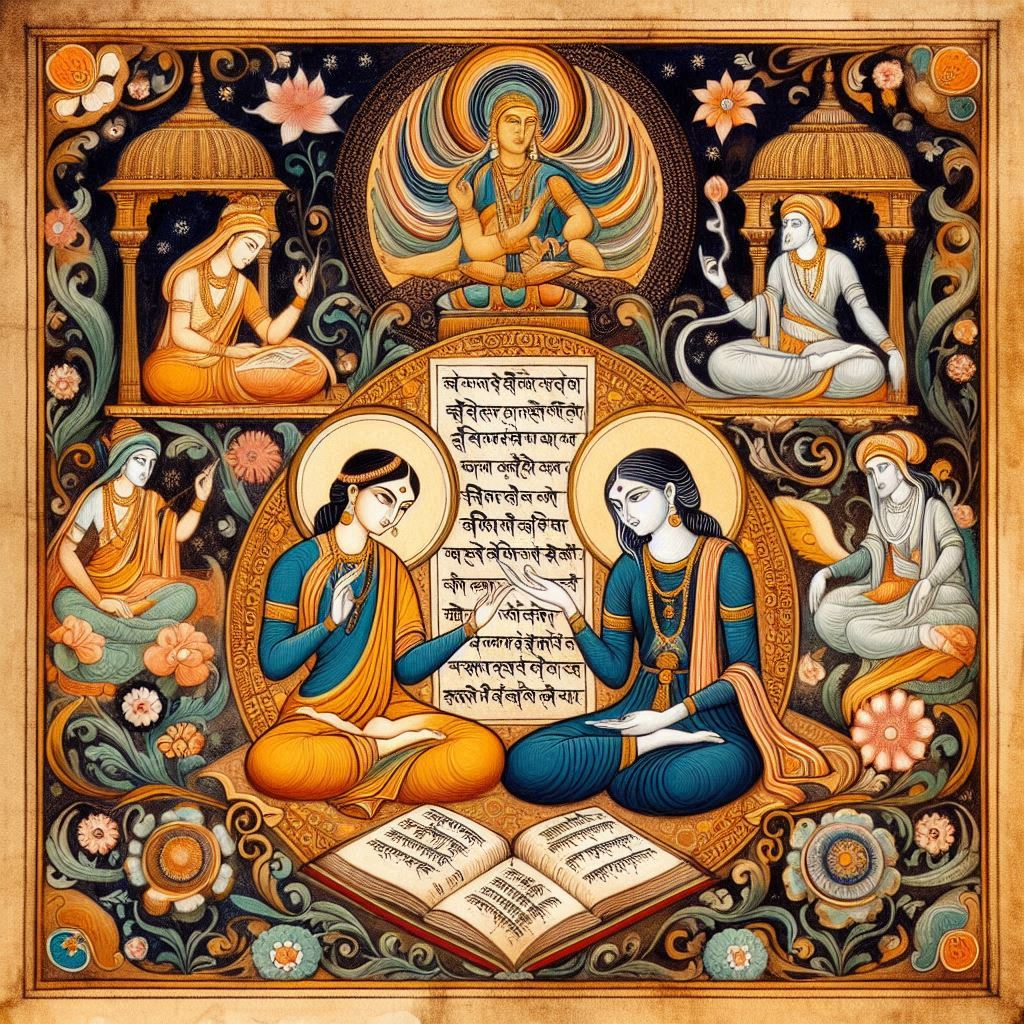
The Vedic Period (6000 B.C. – 800 B.C.)
The Vedas: The term ‘Veda’ (वेदः) is derived from the verbal root ‘vid’ (विद्) – to know. It is a treasure of knowledge (ज्ञान) which makes known many of the truths (सत्य) that cannot be ascertained or validated by any other means of proof.
Vedas are four in number. They are
(1) Rigveda (ऋग्वेदः),
(2) Yajurveda (यजुर्वेदः),
(3) Samaveda (सामवेदः), and
(4) Atharvaveda (अथर्ववेदः).
Based on its form, the Vedas can be classified into three –
(1) the hymns called Samhita (संहिता) which are in verse form,
(2) the prose narration of performance of sacrifices called Brahmana (ब्राह्मण), and
(3) the hymns set to music called Aranyaka (आरण्यक).
This is referred to as ‘Trayi’ (त्रयी). According to some others, ‘Trayi’ refers to Rigveda, Yajurveda, and Samaveda, excluding Atharvaveda. Based on the subject matter dealt with, the Vedic texts may be broadly grouped under two classes known as Karma-Kanda (कर्मकाण्ड) and Jnana-Kanda (ज्ञानकाण्ड). The Karma-Kanda deals with the performance of sacrifices and the Jnana-Kanda deals with the speculative or philosophical inquiries.
द्वितीयः वैदिकः कालः (Second Vedic Period)
The द्वितीयः वैदिकः कालः (Second Vedic Period) is a profoundly significant era in the history of प्राचीन भारतम् (ancient India), spanning from 4000 B.C. to 2500 B.C. This period saw the emergence and flourishing of वैदिक परम्परा (Vedic traditions), marked particularly by the compilation of the संहिताः. These sacred texts form the आधारः (foundation) of वैदिक साहित्य (Vedic literature) and have greatly influenced not only धार्मिक आचारः (spiritual practices) but also the समाजिक संरचना (social structure) of the time.
The द्वितीयः वैदिकः कालः represents a time of remarkable growth in the वैदिक परम्परा, when the composition of the संहिताः occurred, and the teachings of the वेदाः (Vedas) began to permeate throughout the entire आर्यावर्तः (Indian subcontinent).
The Importance of the संहिताः
The संहिताः are a collection of मन्त्राः (mantras), सूक्तानि (hymns), and प्रार्थनाः (prayers) that form the nucleus of वैदिक साहित्य. These texts are revered as परमपवित्रः शास्त्रः (sacred scriptures) and are categorized into four मुख्य विभागाः (main categories): ऋग्वेद संहिता (Rigved Saṃhitā), यजुः-संहिता (Yajus-Saṃhitā), साम-संहिता (Sāma-Saṃhitā), and अथर्ववेद संहिता. However, our focus will be on the first three, which are fundamental to understanding the वैदिक कर्मकाण्ड (Vedic rituals) and दर्शन (philosophies) of the time.
The ऋग्वेद संहिता: The Oldest Veda
The ऋग्वेद संहिता is the most ancient of the वेदाः (Vedas), comprising 1,028 सूक्तानि (hymns) organized into ten मंडलाः (books). These hymns are primarily स्तुतिः (praises) of various देवताः (deities), such as अग्निः (Agni), इन्द्रः (Indra), and वरुणः (Varuna). The ऋग्वेद is not just a धार्मिक ग्रन्थः (religious text); it provides profound insights into the प्रारम्भिक वैदिक समाजः (early Vedic society), their beliefs, and their connection with प्रकृति (nature).
Key Features of the ऋग्वेद संहिता
Hymns and Deities: The ऋग्वेद संहिता primarily consists of सूक्तानि dedicated to प्राकृतिक शक्तयः (natural forces) and देवताः.
Philosophical Concepts: It introduces fundamental concepts like ऋतं (Rita, cosmic order) and यज्ञः (Yajna, sacrificial rituals).
Social Structure: The text reflects the समाजिक संरचना (social structure) of the प्रारम्भिक वैदिक समाजः, where rituals held a central position.
यजुः-संहिता: The Foundation of Rituals
The यजुः-संहिता is closely linked with the कर्मकाण्ड (rituals) and यज्ञः (sacrifices). Unlike the ऋग्वेद, which is primarily काव्यात्मकः (poetic), the यजुः-संहिता combines both गद्य (prose) and पद्य (verse) to guide the performance of यज्ञः. It is divided into two मुख्य शाखाः (main branches): the शुक्ल यजुर्वेद and the कृष्ण यजुर्वेद.
The Role of यजुः-संहिता in वैदिक Rituals
Ritual Instructions: The यजुः-संहिता provides detailed निर्देशः (instructions) on how to conduct various वैदिक यज्ञाः, emphasizing the importance of शुद्धोच्चारणम् (precise recitation) and क्रियाः (actions).
Sacrificial Ceremonies: It outlines the procedures for various यज्ञाः, highlighting the importance of यज्ञोपकरणम् (ritual implements) and मंत्रोच्चारणम् (recitation of mantras).
Connection with the ऋग्वेद: While the ऋग्वेद is focused more on सूक्तानि, the यजुः-संहिता serves as a कर्मकाण्ड ग्रन्थः (practical manual) for implementing those hymns into rituals.
Branches of the यजुः-संहिता
शुक्ल यजुर्वेद: Also known as the श्वेत यजुर्वेद, it is more संगृहीतम् (organized) and straightforward.
कृष्ण यजुर्वेद: The कृष्ण यजुर्वेद is less systematic, blending मन्त्राः and व्याख्यानानि (explanatory prose).
साम-संहिता: The Veda of Melodies
The साम-संहिता or सामवेद is often referred to as the वेदः of melodies. It is closely related to the ऋग्वेद and primarily consists of मंत्राः taken from it, rearranged for गायनम् (singing) during rituals.
Understanding साम-संहिता
Musical Roots: The साम-संहिता forms the आधारः (foundation) for भारतीय शास्त्रीय संगीत (Indian classical music). Its verses are chanted with specific स्वराः (melodies) called सामन्.
Ritualistic Use: The text was recited during the सोमयज्ञः (Soma sacrifice), a crucial वैदिक अनुष्ठानः (Vedic ritual).
Influence on Music: The साम-संहिता has had a lasting impact on the development of भारतीय संगीत (Indian music), influencing both धार्मिक एवं लौकिक परम्पराः (religious and secular traditions).
The Evolution of वैदिक साहित्य (Vedic Literature)
The द्वितीयः वैदिकः कालः was a significant period in the evolution of वैदिक साहित्य. The compilation of the संहिताः laid the foundation for the later development of ब्राह्मणाः, आरण्यकाः, and उपनिषदः. These texts expanded on the ideas found in the संहिताः, offering deeper philosophical insights and more intricate कर्मकाण्डः.
तृतीयः वैदिकः कालः (Third Vedic Period) from 2500 B.C. to 1400 B.C.: The Emergence of the आरण्यकाः (Āraṇyakas)
Following the द्वितीयः वैदिकः कालः (Second Vedic Period), the तृतीयः वैदिकः कालः marks a transitional phase in the evolution of वैदिक साहित्य (Vedic literature). Spanning from 2500 B.C. to 1400 B.C., this period is most notable for the emergence of the आरण्यकाः (Āraṇyakas), texts that form a crucial bridge between the कर्मकाण्ड (ritualistic practices) of the संहिताः and the philosophical inquiry of the उपनिषदः.
Understanding the तृतीयः वैदिकः कालः (Third Vedic Period)
The तृतीयः वैदिकः कालः is characterized by a shift from the predominantly बाह्य (external) rituals of the earlier वैदिक ग्रन्थाः (Vedic texts) to a more अंतर्मुखी (internalized) approach to spirituality. This period saw the development of the आरण्यकाः, which reflect a growing interest in contemplation, meditation, and the mystical aspects of religion.
What are the आरण्यकाः (Āraṇyakas)?
The आरण्यकाः are a category of वैदिक ग्रन्थाः that serve as a commentary on the संहिताः and ब्राह्मणाः, offering symbolic interpretations of rituals and exploring the deeper spiritual meanings behind them. The term “आरण्यक” is derived from “आरण्य” (āraṇya), meaning “forest,” indicating that these texts were traditionally studied in the solitude of the जंगलाः (forests), away from the distractions of village life.
Purpose and Content of the आरण्यकाः
Transition from Rituals to Philosophy: The आरण्यकाः bridge the gap between the ritualistic focus of the संहिताः and the metaphysical speculations found in the उपनिषदः.
Symbolism in Rituals: These texts reinterpret the वैदिक यज्ञाः (sacrificial rituals) as symbols for inner spiritual processes, emphasizing the importance of internalization over external observance.
Preparation for Upanishadic Thought: The आरण्यकाः prepare the seeker for the philosophical teachings of the उपनिषदः by encouraging a deeper understanding of the self and the universe.
The Role of आरण्यकाः in वैदिक साधना (Vedic Practice)
The आरण्यकाः are considered to be more suited for those in the वानप्रस्थाश्रमः (forest-dwelling stage of life), where one withdraws from societal duties to focus on spiritual practices. These texts advocate for a life of simplicity, austerity, and contemplation, reflecting a shift from the यज्ञकर्म (ritualistic duties) towards आत्मान्वेषणम् (self-inquiry).
Key आरण्यकाः Texts
ऐतरेय आरण्यक: Associated with the ऋग्वेद, this आरण्यक explores the deeper meanings of rituals and introduces significant philosophical concepts.
तैत्तिरीय आरण्यक: Linked with the कृष्ण यजुर्वेद, it discusses the symbolic aspects of rituals and includes passages that later evolve into the तैत्तिरीय उपनिषद्.
बृहदारण्यक: One of the largest and most important texts, it is associated with the शुक्ल यजुर्वेद and serves as the concluding portion of the शतपथ ब्राह्मण.
The Evolution from Ritual to Philosophy
The तृतीयः वैदिकः कालः represents a crucial phase in the spiritual evolution of वैदिक धर्मः (Vedic religion). The focus of religious practice gradually shifted from the elaborate बाह्यकर्माणि (external rituals) of the earlier periods to the अधिकम् आन्तरिकम् (more introspective) forms of साधना (spiritual practice) emphasized in the आरण्यकाः.
Significance of the तृतीयः वैदिकः कालः
This period was essential for laying the groundwork for the profound दार्शनिक विचारधारा (philosophical thought) that would later be fully developed in the उपनिषदः. The introspective practices recommended by the आरण्यकाः fostered a deeper understanding of the ultimate reality, ब्रह्म (Brahman), and the nature of the आत्मा (soul).
Summary of the 4th Vedic Period (1400 BC to 800 BC)
The 4th Vedic Period, spanning from approximately 1400 BC to 800 BC, is a significant era in the evolution of Vedic literature and philosophy. This period marks a transition from the early Vedic texts to a more developed and systematic body of knowledge.
During this era, the Brahmanas and Aranyakas emerged, which are texts elaborating on the rituals and ceremonies described in the earlier Vedic literature. The Brahmanas, written in prose, provide detailed instructions on performing Vedic rituals and sacrifices, ensuring their proper execution and significance. They also offer explanations of the symbolic meanings behind various rituals.
The Aranyakas, which are considered part of the Brahmanas, focus on forest-dwelling hermits and ascetics, reflecting a shift towards spiritual practices and meditation in natural settings. These texts highlight the importance of asceticism and forest life as paths to spiritual knowledge.
Additionally, this period saw the composition of the Upanishads, specifically the early Upanishads such as the Aitareya Upanishad and the Taittiriya Upanishad. These philosophical texts explore profound concepts related to the nature of reality, the self (आत्मा), and the ultimate reality (ब्रह्म). They represent a shift from ritualistic practices to a focus on metaphysical questions and spiritual wisdom.
In summary, the 4th Vedic Period was characterized by a deepening of Vedic thought, with the introduction of significant texts that expanded on ritual practices and explored philosophical concepts, laying the groundwork for future developments in Hindu philosophy and spirituality.
Authorship of the Vedas
The Vedas are revered as the most ancient and authoritative scriptures in Hinduism, and their authorship is a topic deeply rooted in tradition and spirituality. According to Vedic tradition, the Vedas are अपौरुषेयः (apauruṣeya), meaning “not of human origin.” They are believed to be divine revelations received by the ancient sages or ऋषयः (ṛṣayas) through direct spiritual insight and meditation.
These texts are considered eternal and self-existent, transcending human authorship. They were revealed to the sages through स्मृति (smṛti), a term denoting that which is remembered or passed down through generations. The Vedic sages, including figures such as विष्णु (Viṣṇu), ब्रह्मा (Brahmā), and शिव (Śiva), are credited with preserving and transmitting these divine revelations.
The Vedas were composed in वेदिक संस्कृत (Vedic Sanskrit) and are structured into four main collections: ऋग्वेदः (Rigveda), यजुर्वेदः (Yajurveda), सामवेदः (Samaveda), and अथर्ववेदः (Atharvaveda). Each Veda encompasses a range of hymns, rituals, and philosophical discourses that were meant to guide spiritual and ritual practices. Despite their divine origin, these texts were compiled and organized by later scholars and teachers, who played a crucial role in preserving the Vedic knowledge across centuries.
In essence, while the Vedas themselves are considered beyond human authorship, the sages who transmitted and preserved these texts are honored as the instrumental conveyors of this eternal wisdom.
The Vedas are ancient Indian scriptures that form the foundation of Sanātana Dharma (Hinduism). They are considered अपौरुषेयः (apauruṣeya), meaning “not of human origin,” and are believed to have been directly revealed to ancient sages (ऋषयः) through divine inspiration. The Vedas are composed in Vedic Sanskrit and are divided into four primary texts: ऋग्वेदः (Rigveda), यजुर्वेदः (Yajurveda), सामवेदः (Samaveda), and अथर्ववेदः (Atharvaveda).
Number of Vedas
There are four Vedas, each serving a distinct purpose in Vedic rituals and knowledge. These texts contain hymns (संहिता), rituals (ब्राह्मण), philosophical discussions (आरण्यक), and spiritual knowledge (उपनिषद्).
Contents of the Vedas at a High Level
ऋग्वेदः (Rigveda):
Composed of hymns dedicated to various deities.
Focuses on the worship of natural forces like अग्नि (Agni), इन्द्र (Indra), and सूर्य (Surya).
Considered the oldest of the Vedas.
यजुर्वेदः (Yajurveda):
Contains the prose mantras needed for performing rituals.
Divided into two main branches: कृष्ण यजुर्वेदः (Krishna Yajurveda) and शुक्ल यजुर्वेदः (Shukla Yajurveda).
Guides the performance of sacrifices.
सामवेदः (Samaveda):
Consists of melodies and chants.
Used mainly for the musical recitation of the hymns during rituals.
Has a close connection to the ऋग्वेदः, as it borrows many of its hymns.
अथर्ववेदः (Atharvaveda):
Contains hymns, spells, and incantations aimed at practical aspects like healing, protection, and daily life.
Reflects the socio-cultural life of Vedic society.
Has a more mystical and magical tone compared to the other Vedas.
Comparison of Vedas and Their Related Upanishads
The Upanishads are philosophical texts that form the concluding part of the Vedas, focusing on spiritual knowledge and the nature of reality. Below is a comparison of each Veda and the prominent Upanishads associated with them:
Comparison of Vedas and Their Related Upanishads
Name of the Veda (वेदः) | Name of Upanishads (उपनिषदाः) | Brief Description |
ऋग्वेदः (Rigveda) | ऐतरेय उपनिषद् (Aitareya Upanishad) | Discusses the nature of the आत्मा (soul) and the process of creation. |
शुक्ल यजुर्वेदः (Shukla Yajurveda) | ईशोपनिषद् (Isha Upanishad) | Explores the concept of ईश्वर (God) and the oneness of आत्मा and ब्रह्म (Brahman). |
बृहदारण्यकोपनिषद् (Brihadaranyaka Upanishad) | Explores the nature of reality, the self, and the ultimate reality, and is one of the most extensive Upanishads. | |
कृष्ण यजुर्वेदः (Krishna Yajurveda) | तैत्तिरीय उपनिषद् (Taittiriya Upanishad) | Discusses ethics, the nature of reality, and the bliss of Brahman. |
कठोपनिषद् (Katha Upanishad) | Centers on the dialogue between नचिकेतस् and यम concerning the soul and liberation. | |
सामवेदः (Samaveda) | छान्दोग्य उपनिषद् (Chandogya Upanishad) | Explores meditation, the significance of OM, and the unity of the soul with Brahman. |
केनोपनिषद् (Kena Upanishad) | Discusses the nature of Brahman and the limitations of the human mind in understanding the ultimate reality. | |
अथर्ववेदः (Atharvaveda) | मुण्डक उपनिषद् (Mundaka Upanishad) | Discusses the distinction between higher knowledge (परविद्या) and lower knowledge (अपविद्या). |
प्रश्न उपनिषद् (Prashna Upanishad) | Contains questions and answers about the nature of the universe and the soul. | |
माण्डूक्य उपनिषद् (Mandukya Upanishad) | Focuses on the concept of “Om” and the nature of reality through the four states of consciousness. |
महावाक्य: The Great Sentences
महावाक्य (Mahāvākya) are profound, concise statements found primarily in the Upanishads, the philosophical texts of the Vedic period. These sentences are considered to be the ultimate truths of existence, encapsulating the essence of Vedantic philosophy.
While not explicitly named as ‘Mahāvākya’ in the Vedic period, their roots can be traced back to the Upanishadic era. These statements were orally transmitted and later documented in the Upanishads.
Key Characteristics of Mahāvākya:
- Concise and Profound: They are short but carry immense philosophical depth.
- Non-Dualistic: Most Mahāvākya emphasize the unity of the individual soul (Atman) with the universal consciousness (Brahman).
- Path to Liberation: They are considered to be the ultimate goal of Vedic philosophy, leading to liberation (Moksha).
Famous Mahāvākya:
- Aham Brahmasmi (I am Brahman) – Brihadaranyaka Upanishad
- Tat Tvam Asi (Thou art That) – Chandogya Upanishad
- Prajñānam Brahma (Consciousness is Brahman) – Mandukya Upanishad
These Mahāvākya form the core of Vedantic thought and have been extensively interpreted and elaborated upon by subsequent philosophers and commentators. They continue to be studied and meditated upon by seekers of spiritual knowledge.
Note: While the term ‘Mahāvākya’ itself might have gained prominence in later periods, the essence of these profound statements is deeply rooted in the Vedic and Upanishadic literature.
Conclusion
In conclusion, the Vedic Period stands as a cornerstone of ancient Indian civilization, reflecting a profound evolution in spiritual and intellectual thought. From its early beginnings around 6000 B.C. to the emergence of key texts such as the Āraṇyakas and the Upanishads, this era showcases the development of foundational texts that continue to influence Hindu philosophy and practice. Understanding the phases of the Vedic Period and the contents of the Vedas not only offers insight into the historical and cultural context of ancient India but also highlights the enduring significance of these sacred writings in shaping spiritual and philosophical traditions.